If you're on the hunt for beautiful free floral cross stitch charts, you've come to the right place. The internet is teeming with gorgeous patterns from talented, generous designers, just waiting to become your next masterpiece. From classic, intricate roses to minimalist modern botanicals, finding a high-quality free chart has never been easier.
Your Guide to Stunning Floral Cross Stitch
Welcome to the wonderful world of floral cross stitch! This is where the timeless beauty of botanicals meets the simple joy of needle and thread. We're going to walk through exactly where to find top-notch free charts and how to bring them to life as stunning pieces of art.
This guide is designed to cut through the clutter, giving you a clear roadmap from discovery to the final stitch. Let's get rid of the idea that you have to spend a fortune to create something truly special.
The Enduring Appeal of Floral Patterns
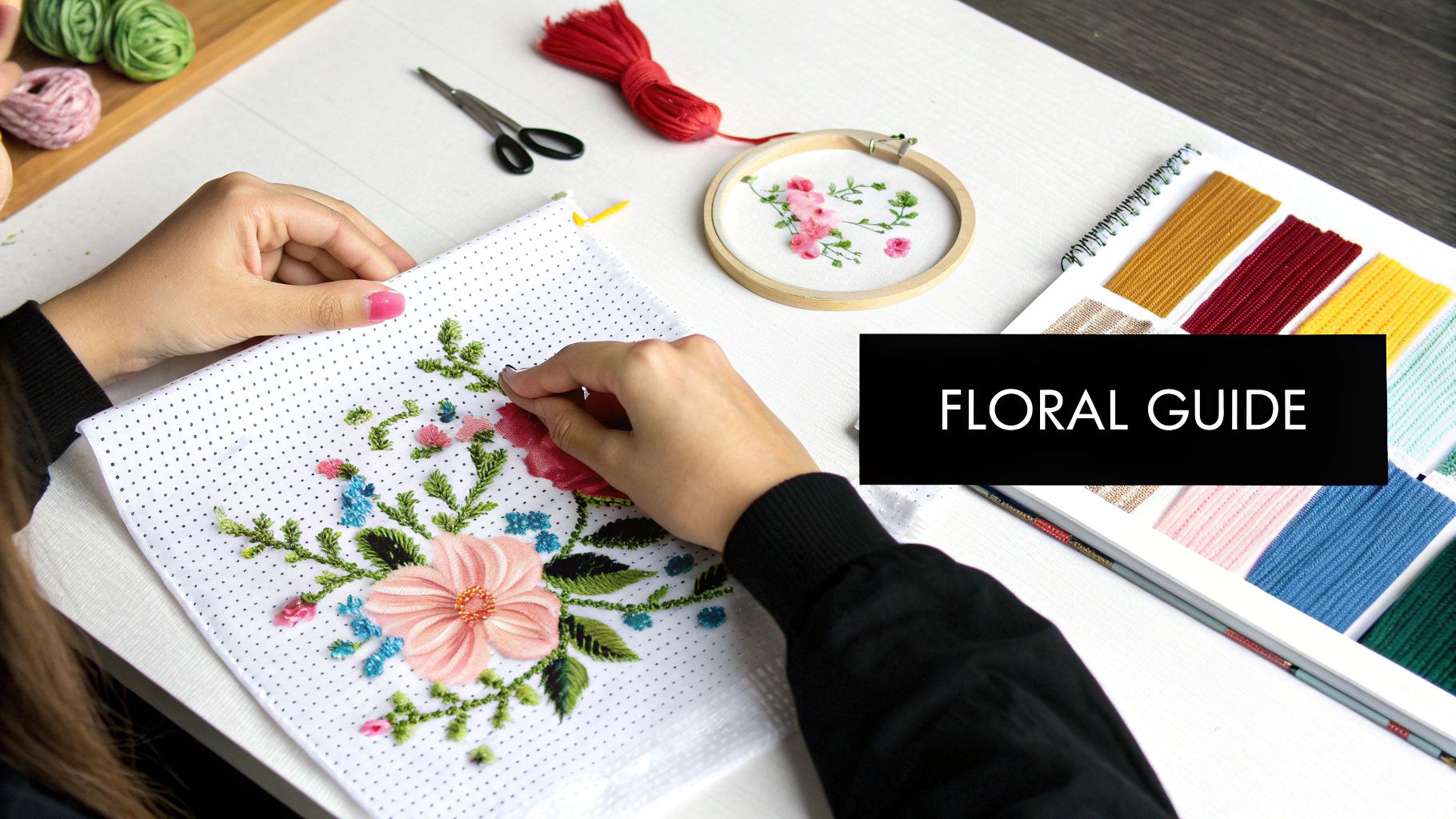
There's a reason floral designs have been a cornerstone of the cross-stitch community for generations. They have a classic elegance and incredible versatility that few other subjects can match. It doesn't matter if you're just picking up a needle for the first time or you're a seasoned pro—there's a floral pattern out there that fits your style and skill level perfectly.
This lasting popularity is part of a much bigger picture. The global cross-stitch market was recently valued at around USD 0.15 billion and is expected to keep growing, thanks in large part to the booming DIY culture. Stitchers are increasingly looking for unique, personalized kits and patterns to express their creativity.
Where to Look for Inspiration
Every great project starts with a spark of inspiration. The best part about floral stitching? Inspiration is literally all around you. You might find it in your own garden, on a walk through a local park, or even while flipping through old botanical illustrations. For a little extra creative fuel, check out these tips for growing amazing flower seeds—it might just inspire your next design.
A Quick Word on Quality: Free doesn't mean you have to settle for less. A fantastic free pattern will always have clear, easy-to-read symbols and a detailed color key, usually with specific thread codes for brands like DMC. We'll be focusing on how to spot these high-quality gems throughout this guide.
Finding Quality Patterns on the Web
The internet is a vast garden of free floral cross stitch charts, but let's be honest—not every bloom is a prize winner. It can be overwhelming to sift through a sea of options, with quality ranging from professionally polished gems to pixelated, unusable messes. The real trick is knowing where to look and what to look for.
Your best bet is to start with sources you can trust. I always tell new stitchers to look at what thread companies and established designers are offering. They often give away beautiful charts to introduce you to their style or products, and these are almost always professionally designed and tested. It's a much safer bet than a random image search.
Trusted Sources for Free Charts
Think of these places as your personal, curated nurseries for great patterns. Instead of getting lost in the weeds of the internet, start your search in a few key places. This saves a ton of time and helps you avoid the headache of a poorly made chart.
- Designer Blogs: Many independent designers I follow, like Lori Holt of Bee in My Bonnet, share gorgeous free patterns on their blogs. These are true passion projects, often released alongside their paid collections, so you know the quality is top-notch. Finding a few designers you love and following their blogs is an amazing way to build a personal library of charts.
- Company Websites: Don't overlook the big brands! Companies like DMC are absolute treasure troves. Since their main goal is to get you excited about using their threads, they put real effort into creating clear, accurate, and lovely designs. Their free pattern libraries are usually huge and cover just about every style you can imagine.
- Online Communities: Stitching forums and social media groups are fantastic. This is where you'll find fellow stitchers sharing patterns they've designed themselves or linking to high-quality freebies they’ve discovered. The best part is you can often see how a pattern looks when stitched by a real person, which is invaluable.
For a great starting point, you can dive into a huge collection of free downloadable cross stitch patterns in PDF format and see what catches your eye.
How to Spot a High-Quality Pattern
Okay, so you've found a floral design that looks promising. Before you hit "download," take just a minute to give it a quick quality check. A few seconds of inspection now can save you hours of frustration down the road. A good pattern isn't just a pretty picture; it's a clear, precise blueprint for your project.
A great free chart respects your time. It gives you everything you need to start stitching with confidence—clear symbols, a complete color key, and accurate stitch counts.
Here's what I always look for:
- File Format: Is the chart a PDF? This is a huge green flag. PDFs print cleanly and crisply, unlike a blurry JPEG you might find floating around.
- The Key: Does the chart include a key that shows both the symbol and the corresponding thread number? The best patterns will specify the brand (usually DMC), which makes shopping for your floss a breeze.
- Clarity: Can you actually read the symbols on the chart? If it's a mess of pixelated blobs, walk away. It's not worth the eye strain.
Finally, a quick word on usage rights. The vast majority of free charts are for personal use only. This means you can stitch them for yourself or as gifts, but not to sell. If you're hoping to sell your finished work, you need to find patterns that are explicitly in the public domain or come with a commercial license. The designer will almost always have these terms spelled out on their website. Respecting their hard work is what keeps our community full of generous and creative people.
So, you’ve found the perfect free floral cross stitch chart online. Fantastic! Now comes the fun part: turning that digital file into a practical, stitch-ready blueprint for your next project.
Getting this step right is the key to a stress-free stitching experience. A little bit of prep work now—thinking about the final size, the colours you want to use, and how you'll print the chart—will save you a ton of headaches later on.

Think of it this way: a quality pattern is your foundation. With that in hand, the digital prep work that follows becomes a whole lot easier.
Customizing Your Floral Pattern
One of the best things about cross stitch is that you’re not locked into the designer's original vision. You have the freedom to make it your own, whether that means resizing a design to fit a specific frame or swapping out the thread colours to better match your living room decor.
For example, many free patterns are charted for a specific size. You might download a lovely 'Flower Market' PDF with a stitch count of 50 wide by 60 high. On 14-count Aida, that comes out to about 3.5" x 4.3"—perfect for a small hoop. These charts often include helpful thread estimates with a 30% buffer built in. But what if you want that same design to be the centerpiece of a larger cushion?
This is where an online cross stitch calculator becomes your best friend. Just plug in the stitch count and your fabric count, and you'll see the final dimensions instantly. It lets you resize your project with confidence before you even cut your fabric.
Have you ever wanted to turn a personal photo into a unique pattern? Maybe a picture of a prize-winning rose from your garden?
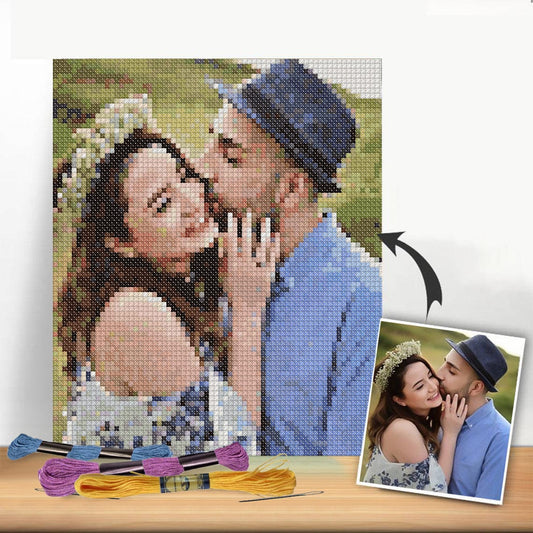
You can do exactly that with free online tools like Pic2Pat. You just upload an image, tell it the finished size you're aiming for, pick your fabric count, and select your preferred thread brand (like DMC). The tool does the heavy lifting and generates a complete, stitchable pattern for you.
If you get bitten by the design bug and want more control, you might also enjoy our guide on how to create a cross stitch pattern from scratch.
Handling Thread Substitutions
We’ve all been there. You’re excited to start a new project, you pull out your threads, and… you’re missing a few of the recommended DMC colours. Don't let that stop you! Swapping colours is a totally normal—and often necessary—part of the craft.
The secret to a good substitution is maintaining the original pattern's value and contrast. In other words, you want to match the lightness and darkness of the colours to keep the design's details sharp.
Here’s the simple process I follow:
- Check the Original: First, I look up the missing DMC number online to get a good look at the colour swatch.
- Shop Your Stash: Then, I dive into my own thread collection and pull out a few shades that seem close.
- Compare in Natural Light: I lay my potential substitutes next to the other colours in the pattern's palette. Does the new floss blend well? Is there still enough contrast between it and its neighbours?
For instance, if a pattern uses a dark forest green right next to a medium olive green, replacing that dark shade with another medium one could make the details muddy and hard to see. Always try to match the value of the original thread to preserve the design’s depth and clarity.
Printing Your Chart for Easy Use
Finally, you’ll want a physical copy of your chart that’s easy to read while you stitch. Squinting at a tiny, blurry printout is a surefire way to get eye strain and make mistakes. Your goal is a clear, comfortable reference guide.
If you have the option, always download the PDF version of a free floral chart. PDFs are made for printing and will give you much crisper, cleaner lines and symbols than a simple image file like a JPEG.
When you’re ready to print, keep these tips in mind for the best results:
- Go Big: Don't be afraid to print your chart across several pages. A larger, zoomed-in pattern is so much easier on the eyes.
- Print in Colour: If your chart uses coloured symbols (and many do), using a colour printer is essential.
- Highlight Your Progress: As you complete sections, mark them off with a highlighter. It’s a great way to keep your place and gives you a wonderful sense of accomplishment as you see the colour spread across the page.
Choosing Your Materials for a Perfect Project
Having a brilliant free floral cross stitch chart is a great start, but it's the materials you choose that will truly bring your design to life. Picking your fabric and threads isn't just a setup step; it's your first real creative decision, and it sets the stage for the entire look and feel of your finished piece.
The whole journey begins with your canvas. The fabric you select directly impacts the final size, detail, and texture of your floral artwork. For most stitchers, the choice boils down to three popular options, and each one has its own unique character.
Aida, Evenweave, and Linen Explained
Figuring out the differences between fabrics will help you land on the perfect one for your project. Your decision really hinges on how detailed your floral pattern is and the final aesthetic you're going for.
-
Aida Cloth: This is the fabric most of us start with, and plenty of experts stick with it for good reason. Its clear, grid-like weave of little squares makes finding where to put your needle incredibly simple. It comes in different "counts," like 14-count, which just means you'll have 14 squares to stitch in per inch.
-
Evenweave: Unlike the blocky grid of Aida, evenweave fabrics (like Jobelan or Lugana) are woven with single, smooth threads horizontally and vertically. This gives your finished piece a much softer, less pixelated look. You typically stitch "over two" threads, which means a 28-count evenweave will give you the same finished size as a 14-count Aida.
-
Linen: If you're aiming for a classic, heirloom quality, you can't go wrong with linen. It's also stitched over two threads like evenweave, but linen has natural little slubs and variations in the weave. These imperfections are what give it a beautiful, rustic texture that adds so much character.
For a deeper dive into these options, you can check out our comprehensive guide on essential cross stitch materials.
Threads and Essential Tools
Once you've settled on your fabric, it's time to think about color. Most free floral cross stitch charts you find will recommend DMC embroidery floss. It’s the industry standard for a reason—the color range is enormous and the quality is fantastic. A little bit of organization here goes a long way; winding your threads onto bobbins or using a floss box will save you from the dreaded "thread nest" and make your stitching time much more relaxing.
It's pretty amazing to think about, but the needlecraft pattern industry, which includes all these floral charts, is part of a global market valued at around USD 34 billion. And it's not slowing down—that market is projected to nearly double by 2035. This boom is largely thanks to the digitization of crafting, which has made free patterns so much more accessible to a whole new generation of stitchers. You can read more about these fascinating market growth insights on futuremarketinsights.com.
Finally, make sure you have your basic tools ready. A good pair of sharp embroidery scissors, a comfortable hoop or frame to keep your fabric tight, and a tapestry needle are really all you need to get started.
Pro Tip: When you cut your fabric, always add at least three extra inches of material on all four sides of your design area. This border is absolutely crucial for stretching and framing your piece later on, ensuring none of your beautiful stitches get hidden behind the frame. It's a small step that makes a huge difference in how polished and professional your floral art looks when it's ready for display.
Finishing and Framing Your Floral Art
That final stitch is such a satisfying moment! After pouring hours of care into your project, it’s time to give that beautiful floral artwork the finish it truly deserves. This final stage is what turns your stitched fabric into a polished piece of art, ready to be shown off.
Before you even think about framing, a gentle cleaning is in order. Even with the cleanest hands, oils from your skin can transfer to the fabric. Plus, hoops and Q-snaps often leave their mark. A quick, careful wash will make your piece look crisp and professional.
Preparing Your Piece for Display
To wash your project, grab a clean basin and fill it with lukewarm water and a drop of very mild soap. I find a gentle, clear dish soap or a specialized quilt wash works perfectly. Let your piece soak for about 15 minutes, then give it a good rinse with cool, clean water until there are no suds left.
Whatever you do, don't wring it out! That’s a surefire way to stretch the fabric. Instead, gently roll your piece in a clean, thick towel to blot out most of the water.
To get it perfectly flat, place the piece face-down on another clean, fluffy towel and press it from the back with your iron on a medium setting (no steam!). This technique is fantastic because it protects your stitches from getting flattened and helps them really pop.
Key Takeaway: Always iron your cross stitch from the back, on top of a fluffy towel. This simple trick protects the texture of your stitches and prevents them from getting squashed, giving your finished work a much more dimensional and professional appearance.
Mounting and Framing Ideas
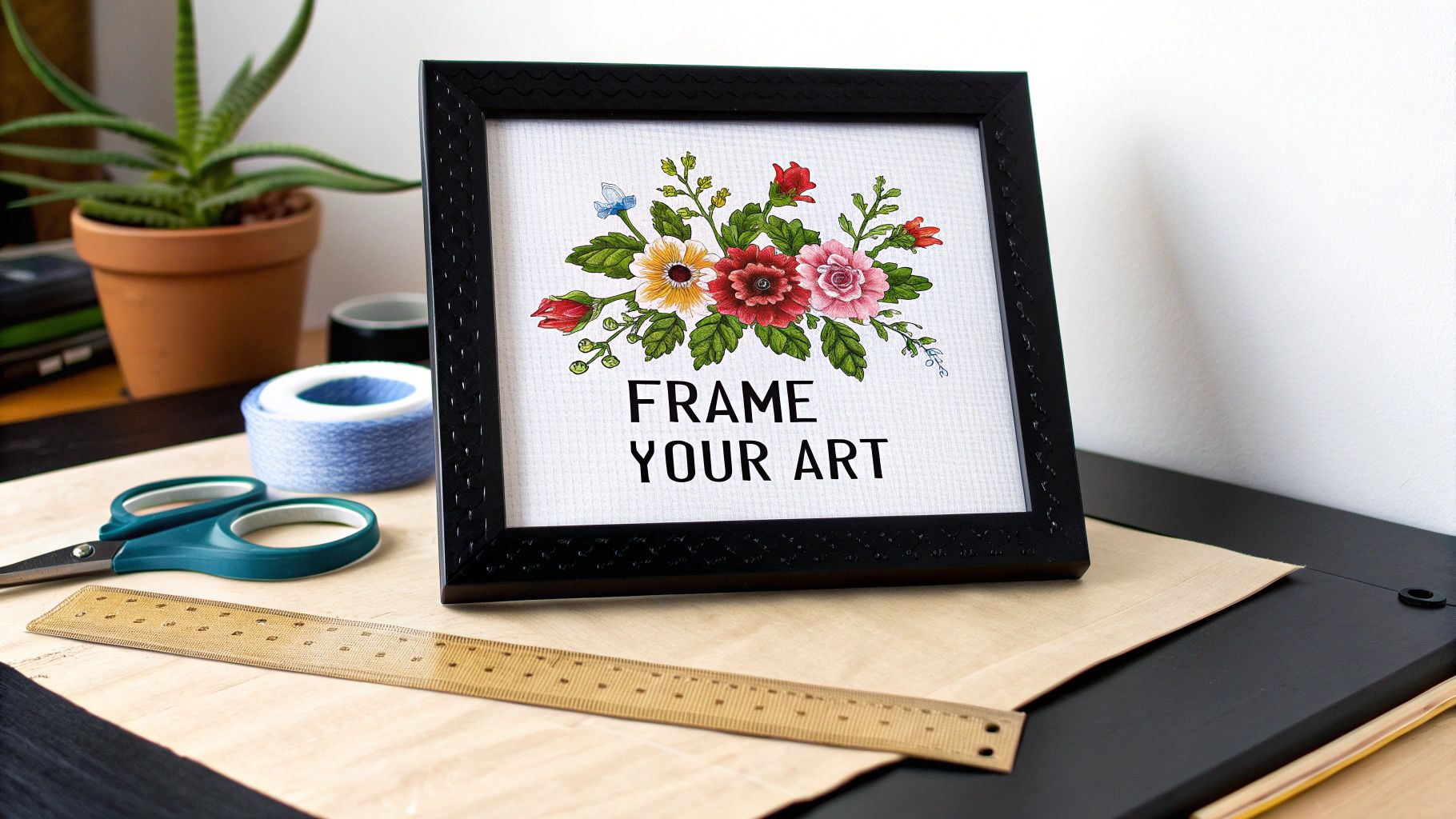
With your piece clean and pressed, it’s ready for its forever home. I always recommend mounting your fabric onto a sturdy backing, like an acid-free foam core, before you put it in a frame. This simple step prevents the fabric from sagging over time, keeping it taut and smooth for years to come.
When it comes to picking a frame, think about the vibe of your floral design. A rustic barn wood frame might be the perfect complement for a field of wildflowers, while a sleek, modern black frame could make a single, elegant rose really stand out. Don't be afraid to get creative here!
As you think about how to best showcase your stitched work, you might also find some interesting parallels in the methods to preserve real floral beauty, which focus on keeping natural flowers vibrant for longer.
Some of my favorite display options include:
- Traditional Frames: You can't go wrong with a classic. A frame, with or without a mat, is a versatile choice that suits any decor.
- Embroidery Hoops: For a more contemporary or cottage-core look, framing your piece right in its wooden hoop is a charming and popular option.
- Alternative Displays: Think outside the box! You can turn your floral piece into a pillow, a decorative wall banner, or even an insert on a tote bag.
How you display your art is the final creative flourish. Whether you worked from a free floral cross stitch chart or a custom pattern you designed yourself, a thoughtful finish ensures it will be a piece you'll cherish for a very long time.
Common Questions About Free Charts
Diving into the world of free floral cross-stitch charts is exciting, but it's natural to have a few questions pop up. Let's walk through some of the things I get asked most often so you can start your next project with total confidence.
The big one is always about usage rights. Can you really use these patterns for anything? Well, the short answer is usually no. The vast majority of free patterns are for personal use only. This means you're absolutely welcome to stitch it for your own wall or give the finished piece as a gift, but selling it is typically off-limits.
Before you download, always do a quick scan of the designer's website for a "terms of use" or copyright section. It'll clear up any confusion. If you're hoping to sell your finished work, you'll need to hunt for patterns specifically labeled for commercial use or those in the public domain.
Troubleshooting Common Issues
"Why is my printed chart so blurry?" This is a classic problem, and it almost always comes down to a low-resolution file. To sidestep this headache, always grab the PDF version if there's an option. PDFs are built to be printed and will give you a much crisper chart than a standard image file like a JPEG or PNG.
When you hit 'print,' pop into your printer settings and choose the "High Quality" option. If it still comes out fuzzy, my best advice is to just move on. It’s not worth the eye strain or the risk of making a mistake. Find another pattern—your eyes will thank you!
Pro Tip: One of the best parts of cross-stitch is making a pattern your own. Don't feel locked into the suggested floss colors on a free chart! Swap them out to match your home decor or simply to use up threads you already have in your stash. The trick is to keep the value and contrast similar—replace a dark with a dark and a light with a light—so the design's details don't get lost.
As for fabric, if you're just starting out, you can't go wrong with 14-count Aida. The grid is nice and clear, making it super easy to work with. For a finer, more detailed look, you could step up to a 16 or 18-count. If you prefer a smoother background without the visible holes, try a 28-count evenweave stitched "over two," which will result in the same finished size as 14-count Aida.
Ready to turn your own cherished memories into a timeless work of art? At Cross Stitched, our custom photo-to-pattern kits provide everything you need to create a personalized masterpiece. Start your custom cross stitch project today!