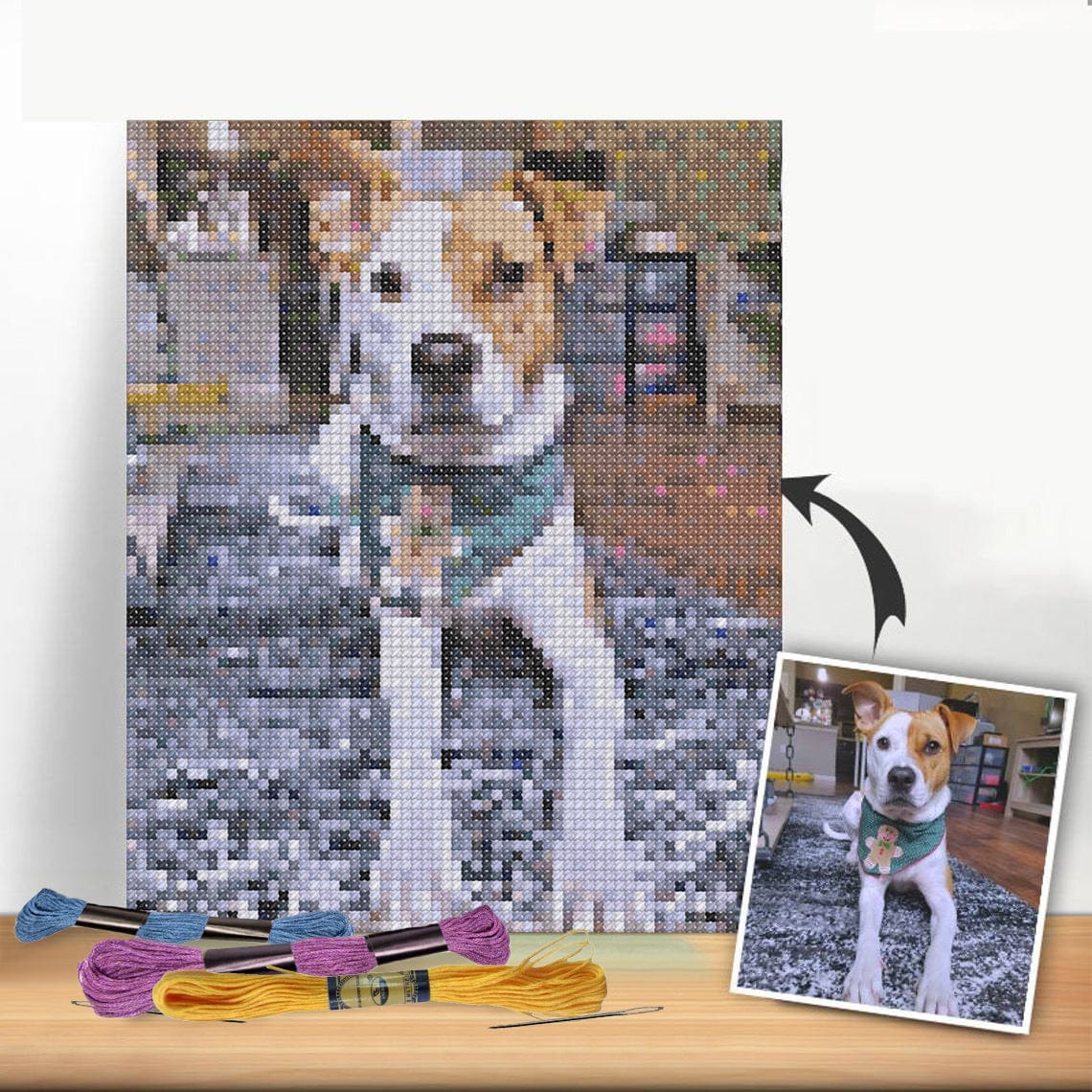

Cross Stitch vs Embroidery: What's the Difference?
A complete guide to understanding these two popular needlework techniques, their differences, and which one is right for you
Cross Stitch vs Embroidery: Quick Comparison
Here's a side-by-side comparison of the key differences between cross stitch and embroidery:
| Feature | Cross Stitch | Embroidery |
|---|---|---|
| Stitch Types | Primarily X-shaped stitches | Many stitch types (satin, chain, French knot, etc.) |
| Fabric | Even-weave fabric (Aida, linen) | Any fabric (cotton, silk, denim, etc.) |
| Pattern Style | Grid-based, counted stitches | Freeform, traced designs |
| Difficulty | Easier for beginners | Steeper learning curve |
| Appearance | Pixelated, geometric look | Flowing, painterly look |
| Needles | Blunt tapestry needles | Sharp embroidery needles |
| Learning Time | Minutes to learn basics | Hours to weeks for various stitches |
| Cost to Start | $10-25 for beginner kit | $15-40 for beginner kit |
| Best For | Detailed designs, pixel art, text | Organic shapes, florals, textures |
| Common Uses | Wall art, samplers, bookmarks | Clothing embellishment, home decor |
Cross Stitch
Grid-based X stitches create a pixelated effect
Embroidery
Freeform stitches create flowing, organic designs
What is Cross Stitch?
Cross stitch is a form of counted-thread embroidery that uses X-shaped stitches to create images and designs. It's one of the oldest and most popular forms of needlework, with a history spanning centuries across many cultures.
How Cross Stitch Works
Cross stitch uses a grid-based system where each stitch covers one intersection of the fabric's threads. You follow a pattern chart where each square represents one X-shaped stitch, similar to how pixels make up a digital image.
The Basic Technique
Each stitch is made by creating two diagonal lines that cross in the center, forming an X. Stitchers typically work in rows, completing all the bottom-left to top-right diagonals first, then coming back to complete the X's.
Key Characteristics of Cross Stitch
- Counted technique: Stitches are counted from a chart, not traced
- Even-weave fabric: Requires fabric with visible, countable holes (usually Aida cloth)
- Uniform stitches: All stitches are the same size and shape
- Geometric appearance: Creates a distinct pixelated or mosaic look
- Beginner-friendly: Only one basic stitch to learn
What is Embroidery?
Embroidery is a broad term for decorative needlework that encompasses many techniques, including cross stitch. When people refer to "embroidery" as distinct from cross stitch, they typically mean surface embroidery or freehand embroidery, which uses a variety of stitches to create designs.
How Embroidery Works
In surface embroidery, designs are typically traced or transferred onto fabric, then filled in using various stitch types. Unlike cross stitch's grid system, embroidery stitches can go in any direction and vary in length and style.
The Variety of Stitches
Embroidery includes dozens of stitch types: satin stitch for filling, chain stitch for outlines, French knots for texture, stem stitch for vines, and many more. Each creates a different effect.
Common Embroidery Stitches
Key Characteristics of Embroidery
- Freeform technique: Designs are traced or drawn, not counted
- Any fabric works: Can be done on cotton, linen, denim, silk, and more
- Multiple stitch types: Uses many different stitches for various effects
- Organic appearance: Creates flowing, painterly, realistic designs
- More complex: Requires learning many stitch techniques
Key Differences Between Cross Stitch and Embroidery
While cross stitch is technically a form of embroidery, there are significant differences that make them distinct crafts:
Fabric Requirements
Requires even-weave fabric with visible holes for counting. Aida cloth (with its obvious grid) is most popular, followed by evenweave linen.
Works on virtually any fabric - cotton, linen, silk, denim, felt, even leather. The fabric choice depends on the project.
Technique & Learning Curve
One basic stitch (the X) that can be learned in minutes. The skill comes from patience and accurate counting rather than complex techniques.
Requires learning multiple stitches, each with its own technique. Mastering embroidery takes longer but offers more creative possibilities.
Pattern & Design Style
Uses grid-based charts where each square = one stitch. Creates a distinctive pixelated look, excellent for geometric designs and text.
Uses traced line drawings as templates. Creates smooth, flowing designs ideal for florals, portraits, and organic shapes.
Tools & Needles
Uses blunt tapestry needles (sizes 24-28) that slip between fabric threads without splitting them. The blunt tip is essential.
Uses sharp embroidery needles (sizes 1-10) that pierce through fabric. Various needle types exist for different stitch techniques.
Time Investment
Projects can be very detailed and time-consuming. A large piece might take months. However, progress is easy to measure stitch by stitch.
Often faster for similar-sized pieces since stitches cover more area. Small projects can be completed in a few hours.
Final Appearance
Distinctive gridded, pixelated aesthetic. Think 8-bit video game art or mosaic tiles. Each stitch is uniform and geometric.
Painterly, textured, dimensional. Can mimic realistic drawings or paintings. Stitches vary in size, direction, and texture.
Which Should You Choose?
The best needlework craft for you depends on your goals, preferences, and patience level. Here's a guide to help you decide:
Choose Cross Stitch If You...
- Are a complete beginner to needlework
- Love pixel art, retro games, or geometric designs
- Want a relaxing, meditative hobby
- Prefer following precise patterns
- Like seeing measurable progress
- Want to create text-based designs (quotes, names)
- Enjoy detailed, intricate work over long periods
- Want to convert photos to stitchable patterns
Choose Embroidery If You...
- Want to personalize clothing or accessories
- Love florals, nature, and organic shapes
- Enjoy learning multiple techniques
- Prefer freeform creative expression
- Want quicker project completion
- Like dimensional, textured artwork
- Want more variety in your stitching
- Enjoy drawing or painting aesthetics
Quick Decision Guide
Can You Do Both?
Absolutely! Many needlework enthusiasts enjoy both cross stitch and embroidery. In fact, they complement each other beautifully.
Cross Stitch with Embroidery Accents
Many cross stitch patterns include backstitch outlines and French knots - both are embroidery stitches! Adding embroidery elements to cross stitch projects creates depth and detail.
Transferable Skills
Skills learned in one craft apply to the other: thread management, color theory, hoop tension, finishing techniques, and pattern reading all transfer between crafts.
Variety Prevents Burnout
Switching between crafts keeps needlework fresh and exciting. Work on a detailed cross stitch piece, then take a break with a quick embroidery project.
Start Your Journey
If you're new to needlework, we recommend starting with cross stitch. It's easier to learn, and the skills you develop will make learning embroidery later much simpler. Plus, cross stitch patterns are easy to create from any image!
Frequently Asked Questions
Is cross stitch considered embroidery?
Yes, technically cross stitch is a form of counted-thread embroidery. However, when people say "embroidery" versus "cross stitch," they usually mean surface/freehand embroidery with various stitch types. Cross stitch is distinct enough that it's typically considered its own category.
Which is easier to learn: cross stitch or embroidery?
Cross stitch is generally easier for beginners. You only need to learn one basic stitch (the X), and patterns are grid-based, which is straightforward to follow. Embroidery requires learning multiple stitch types and techniques, making the learning curve steeper.
Can I use the same supplies for both crafts?
Some supplies overlap: embroidery floss, hoops, and scissors work for both. However, you'll need different fabrics (Aida for cross stitch vs. regular fabric for embroidery) and different needles (blunt tapestry needles vs. sharp embroidery needles).
Which craft is more expensive to start?
Both are affordable hobbies. A basic cross stitch kit costs $10-25, while an embroidery starter kit runs $15-40. The difference is that embroidery might require more varied supplies (different needle sizes, fabric types) as you advance.
Can I turn a photo into cross stitch or embroidery?
Photos convert more easily to cross stitch because the technique naturally creates a pixelated image. Our free pattern generator can turn any photo into a cross stitch chart. Photos for embroidery typically need to be simplified into line drawings.
Which is faster to complete?
For similar-sized pieces, embroidery is usually faster because stitches like satin stitch and long-and-short stitch cover more area than individual cross stitches. However, this varies based on design complexity and stitch density.
Can I embroider on cross stitch fabric?
Yes! You can add embroidery stitches to Aida cloth, though the grid texture will show through. Many cross stitchers use backstitch, French knots, and other embroidery stitches to add details to their cross stitch projects.
Which is better for gifts?
Both make wonderful gifts! Cross stitch is great for personalized items with names, dates, or meaningful quotes. Embroidery excels at custom clothing embellishment and decorative pieces. Choose based on what the recipient would appreciate most.
Ready to Start Cross Stitching?
Turn any photo into a beautiful cross stitch pattern with our free generator, or get a complete custom kit with everything you need to start.