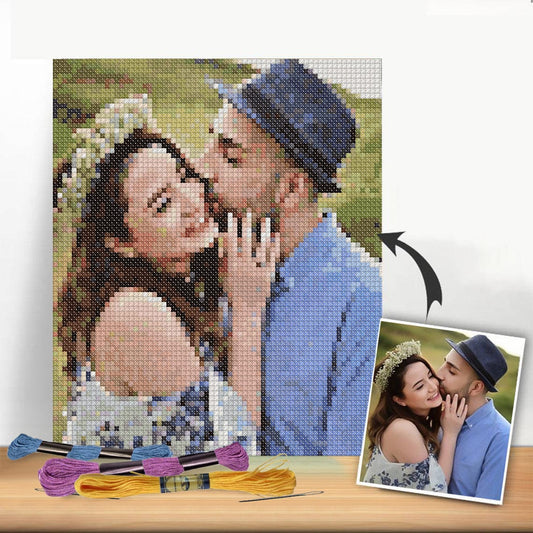
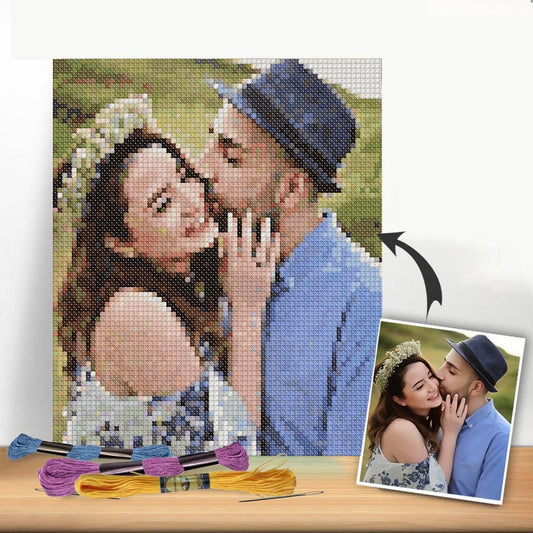
If you've ever admired a cross-stitch piece that looked less like a craft project and more like a work of art, chances are it was stitched on linen. Made from the fibers of the flax plant, linen is a high-quality, natural fabric that stitchers turn to when they want to create something truly special—an heirloom. It offers a much more refined and elegant background than the more common Aida cloth.
What Makes Cross Stitch Linen a Treasured Fabric
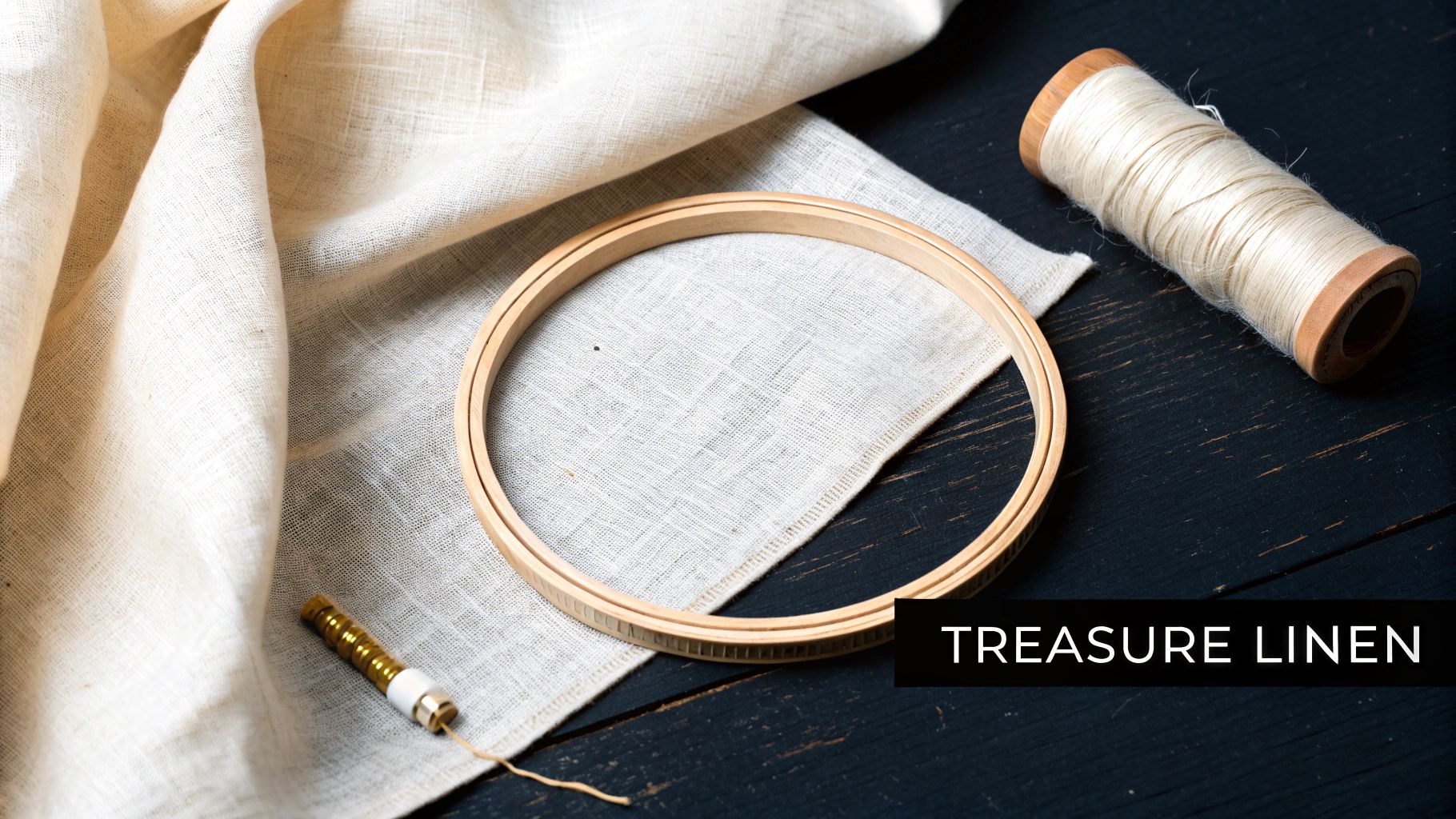
Think about the difference between a standard poster and an original watercolor painting. The watercolor paper isn't just a background; its unique texture and character are part of the art itself. That’s precisely what linen does for cross-stitch. It elevates your work, turning a project into a piece of genuine textile art.
Unlike the perfect, blocky grid of Aida, cross-stitch linen is woven from natural flax fibers. This organic process gives the fabric its signature look, which includes tiny variations called slubs. These aren't flaws—they're the hallmark of authentic linen. These small, thickened areas in the thread add a rustic elegance to your finished piece that you just can't get with machine-made fabrics.
The Stitcher's Journey to Linen
Most of us start our stitching journey on Aida cloth. It makes sense! Its clear, chunky weave is simple to count and very forgiving for newcomers. But as you gain confidence and your skills grow, you might find yourself craving a more sophisticated canvas. Making the switch to linen is a natural next step for anyone looking to take their craft to the next level.
Linen truly shines in projects where the fabric is meant to be seen and appreciated, not just covered up. It becomes the go-to choice for specific designs, such as:
- Detailed Portraits: The fine weave and smooth drape of linen are perfect for capturing subtle shading and incredible facial details.
- Intricate Samplers: Historically, traditional samplers were stitched on linen. Using it today creates a beautiful connection to that rich needlework heritage.
- Delicate Florals: The earthy, natural texture of linen provides the perfect backdrop for botanical and nature-inspired patterns.
Stitching on linen is about embracing the fabric's personality. Its slight irregularities mean every single project is one-of-a-kind, infusing your work with a charm and depth that perfectly uniform fabrics can't match.
The growing popularity of premium materials isn't just a feeling; it's a fact. The global cross-stitch market was valued at USD 0.15 billion in 2024 and is expected to keep growing, which points to a real demand for high-quality, traditional crafts. You can read more about the cross stitch market trends to see just how much people value this art form. This guide will help you get started on your own journey with this treasured fabric.
Choosing Your Fabric: Linen vs. Aida vs. Evenweave
Walking into the world of cross stitch fabric for the first time can be a little overwhelming. With so many choices, where do you even begin? Let's break down the three main players you'll encounter: Aida, Evenweave, and of course, our star for today, cross stitch linen.
Think of them less as rivals and more as different tools for different jobs. The fabric you choose is the very foundation of your project, and it has a huge impact on both the stitching process and how your finished piece looks and feels. It’s all about matching the fabric's personality to your pattern and your own stitching style.
The Reliable Starting Point: Aida Cloth
Most of us got our start with Aida, and for good reason! It’s a 100% cotton fabric woven into a perfect grid of little squares, with big, obvious holes at each corner. This genius structure makes counting your stitches a breeze, which is exactly why it’s the go-to for anyone just starting out.
You can think of Aida as a piece of graph paper made from cloth. Every square is a designated spot for one single 'X' stitch. It’s predictable and takes all the guesswork out of where to put your needle. In fact, it’s so stiff that many stitchers don’t even bother with a hoop.
The Smooth Transition: Evenweave
Evenweave is the perfect halfway point between the blocky grid of Aida and the organic, flowing feel of linen. It's usually made from a blend of fibers like cotton and rayon, and its threads are woven with perfect, machine-like uniformity. This creates a beautifully smooth surface without the chunky look of Aida.
Just like with linen, you’ll typically stitch "over two" threads on evenweave. The big difference is that since every single thread is identical in thickness, counting is much easier and more forgiving. It’s a great way to get a more refined, elegant look for your work without taking the full leap into linen.
The Artisan's Choice: Cross Stitch Linen
Linen is what you graduate to when you want to create something with a timeless, heirloom feel. It's woven from natural flax fibers, which gives it a wonderfully soft drape and an organic texture that you just can't fake. Linen threads have slight, natural variations in thickness—we call these slubs—and they give every piece of fabric its own unique character.
When you stitch on linen, the fabric itself becomes part of the art. Its subtle texture and elegant finish create a backdrop that elevates detailed patterns, from delicate portraits to intricate samplers. It gives the final piece a depth and charm that other fabrics just can't match.
Because of those beautiful, natural variations, stitching on linen demands a bit more concentration than Aida or evenweave. But trust me, the absolutely stunning result is more than worth the effort.
For a deeper dive into all the different kinds of materials available, feel free to explore our complete guide on cross stitch fabric.
Fabric Showdown: Linen vs. Aida vs. Evenweave
Sometimes, seeing everything side-by-side makes the choice crystal clear. Here’s a quick comparison to help you visualize the key differences between these three popular cross stitch fabrics.
| Feature | Cross Stitch Linen | Aida Cloth | Evenweave Fabric |
|---|---|---|---|
| Material | 100% Flax Fibers | 100% Cotton | Cotton/Rayon Blend |
| Weave | Natural, with slight variations (slubs) | Stiff, blocky grid with clear holes | Smooth, perfectly uniform threads |
| Best For | Heirloom projects, portraits, samplers | Beginners, full-coverage designs | Projects needing a refined look |
| Difficulty | Intermediate to Advanced | Beginner-friendly | Beginner to Intermediate |
Ultimately, there's no "wrong" choice here—only the right choice for your specific project and your comfort level. Each one offers a different experience and a unique final look.
Understanding Fabric Count and Stitching "Over Two"
Diving into the world of linen for cross-stitch can feel a little intimidating at first, but it all clicks once you grasp two key ideas: fabric count and the art of stitching over two threads. Get these down, and you’ll be able to tackle any linen project with confidence, and even adapt patterns originally meant for other fabrics.
Think of fabric count as the "resolution" of your fabric. The higher the count, the more threads are woven into every inch, creating a finer canvas for your stitches. So, when you see a piece of 32-count linen, it just means there are 32 tiny threads packed into every linear inch. It’s a far cry from the more open, blocky weave of something like 14-count Aida, giving your finished piece a more delicate, professional look.
The Magic of Stitching Over Two
Now for the part that really changes the game. With Aida, you make a single 'X' in each little woven square. On linen, the standard practice is to stitch over two threads. Picture the weave as a tiny grid. Instead of going from one hole to the very next, you'll skip a thread, making your stitch span a small two-by-two square of threads.
This simple technique is the secret to easily converting patterns from Aida to linen. When you stitch over two threads on 32-count linen, your finished stitches will be the exact same size as they would be on 16-count Aida. The math is beautifully simple:
32 threads per inch ÷ 2 threads per stitch = 16 stitches per inch
This little formula is your golden ticket. If a pattern you love calls for 14-count Aida, you can get the exact same finished size by using 28-count linen and stitching over two. For a deeper dive, our guide on how cross stitch fabric counts work breaks it all down.
This handy visual shows you exactly how the different fabric types stack up.
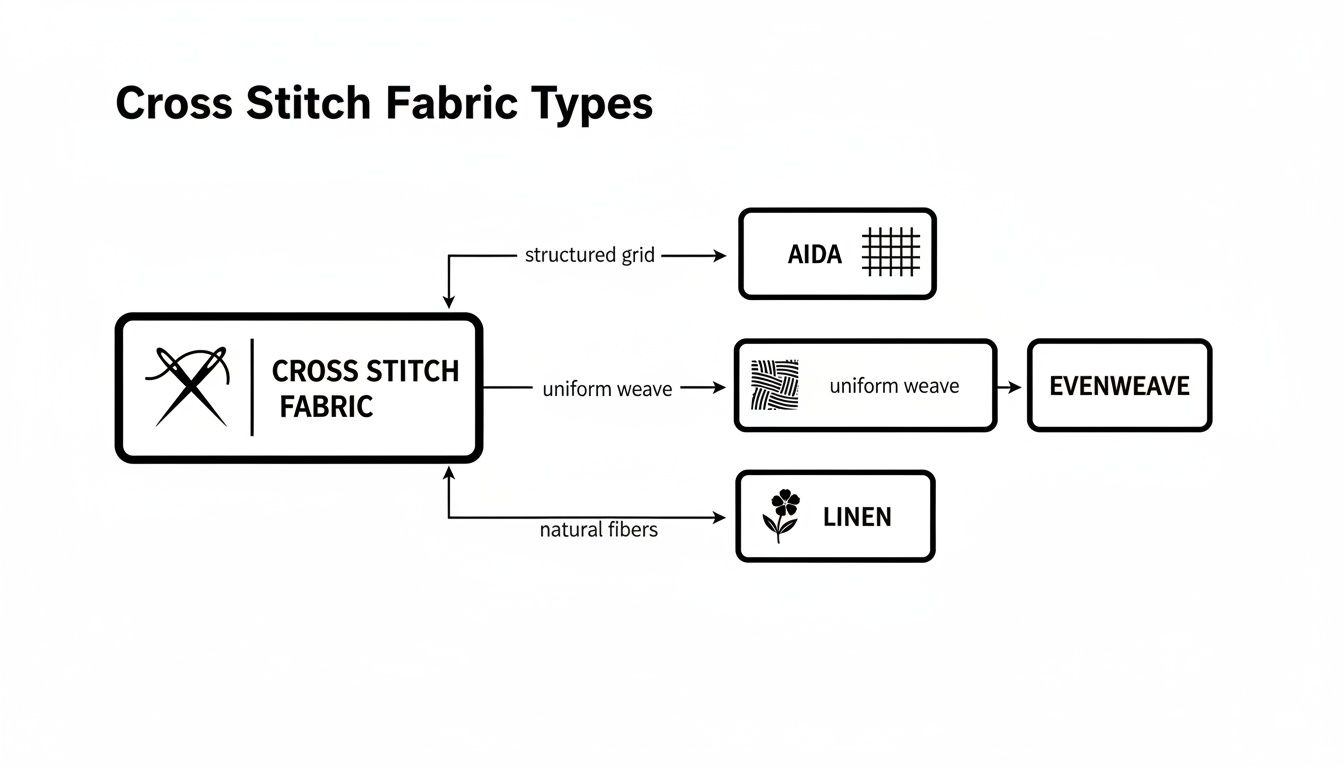
As you can see, linen's natural, organic weave is quite different from the rigid grid of Aida or the uniform structure of Evenweave, which is why that "over two" method is so essential.
When Would You Stitch Over One Thread?
But the versatility of linen doesn't stop there. For those moments when you need incredible detail or are working on a miniature piece, you have the option to stitch over one thread. This creates teeny-tiny, precise stitches that basically double the resolution of your work.
- Over Two: Your go-to method for standard-sized stitches that work for most patterns.
- Over One: Creates miniature stitches (often called "petit point") perfect for fine details.
Stitching over one thread on 32-count linen would cram 32 stitches into every inch! This is perfect for capturing the subtle shading on a portrait's face or creating exquisite, heirloom-quality ornaments. It's this flexibility that makes linen such a treasured fabric among stitchers who want to take their craft to the next level and have total control over the final look.
Getting Your Stitches Just Right on Linen
Making the leap to stitching on linen is exciting, but it definitely feels a little different than Aida. If you want a smooth, enjoyable experience that ends with a gorgeous piece you can be proud of, a few key techniques will make all the difference. Think of it like learning to use a new set of artist's brushes—the canvas is different, so your tools and technique need to adapt.
First things first: prep your fabric. Some people love the crispness of unwashed linen, but a quick, gentle pre-wash in cool water is a good safety net against any future shrinking. The most critical step, though, is securing the edges. Linen frays like nobody's business, so you absolutely have to serge the edges, use a product like Fray Check, or even just fold them over with a quick running stitch before you start.
Setting Yourself Up for Success
Once your fabric is ready, it's time to grab the right tools. Cross stitching on linen isn't like regular sewing; you'll want a tapestry needle. These needles have a nice blunt tip that slips between the linen threads instead of piercing them, which is exactly what you want to protect that delicate weave.
A hoop or frame is also something I’d consider non-negotiable. With stiff Aida, you can sometimes get away without one, but the softer drape of linen makes a hoop essential for keeping your tension even. And good tension is the secret to perfect, uniform stitches.
Pull your thread too tight, and the linen will pucker. Too loose, and your stitches will look floppy and messy. The sweet spot is a stitch that lays flat and full on the fabric without pulling the weave out of shape.
Finding that perfect tension takes a bit of practice. Using a hoop gives you a taut, stable surface to work on, making it so much easier to get the feel for it right from the start.
How Many Strands? Getting That Perfect Coverage
The number one question I hear from stitchers trying linen for the first time is, "How many strands of floss do I use?" It really depends on the fabric count and the look you're going for. The aim is to get full, beautiful stitches that cover the fabric well but aren't so bulky that you have to wrestle them through the holes.
Here’s a good rule of thumb for stitching "over two" threads:
- 28-count Linen: Two strands of floss will give you beautiful, full coverage.
- 32-count Linen: Two strands is the sweet spot here, too. It’s the classic choice for a reason.
- 36-count Linen: You can use one or two strands. One strand gives a very delicate, almost lacy look, while two is bolder.
- 40-count Linen: Stick with one strand. The weave is so fine that anything more will look crowded.
Mastering high-end materials like linen is becoming more popular than ever. The broader embroidery market, which cross-stitch is a part of, is expected to grow to USD 7.41 billion by 2033. This shows just how much people value creating beautiful, handcrafted pieces. You can read more about the growing embroidery market on businessresearchinsights.com.
We get how important this is at Cross Stitched. When you build one of our custom kits, we make sure you get just the right amount of floss for the specific fabric count you've chosen. It takes all the guesswork out of getting that perfect, professional-looking finish.
Tackling the Common Quirks of Stitching on Linen
Let's be honest, every stitcher runs into a little hiccup now and then, no matter how many projects they've finished. This is doubly true when you're making the jump to a new fabric like linen. The trick is to stop thinking of linen's unique traits as problems and start seeing them as the charming quirks that give your final piece its character.
One of the first things you'll meet are slubs. These are just tiny, thickened bumps in the flax thread, a totally natural part of the weave. Instead of trying to strong-arm your needle through a slub, just nudge your stitch to sit right beside it. This tiny shift maintains the fabric's beautiful, organic texture and keeps your tension smooth. Trust me, once the piece is done, you'll never even notice those little adjustments.
Getting Over the Fear of Counting
The biggest mental hurdle for most people switching to linen is the counting. Without the obvious grid of Aida, linen's delicate weave can feel a bit intimidating at first. But don't let that stop you! There are a couple of tried-and-true methods to keep your place and stitch with total confidence.
- Grid It Out: This is a game-changer. Use a water-soluble pen or a special gridding thread to mark a 10x10 stitch grid right onto your fabric. It gives you a clear roadmap and makes counting practically foolproof.
- Mark Your Pattern: Go low-tech and use a highlighter or a colored pencil on your paper chart. As you finish a section, color it in. It’s a simple but incredibly effective way to see exactly what you've done and where you need to go next.
Think of these challenges less like roadblocks and more like new skills to learn. Once you get the hang of techniques like gridding, the whole process feels so much more manageable. You can finally just relax and enjoy the rhythm of creating beautiful, even stitches on this amazing fabric.
With the United States making up 24% of the global buyer count for cross-stitch supplies, it's clear there's a massive community of stitchers eager to level up their craft. Knowing how to troubleshoot a premium fabric like linen is a key part of that growth. You can see more interesting stats about the global cross stitch buyer market on seller.alibaba.com. When you reframe these little hurdles as part of the fun, you can dive into your next linen project knowing you've got the skills to handle anything it throws your way.
Caring for Your Finished Linen Artwork
After pouring so much time and care into every single stitch, the final step is giving your linen masterpiece the finish it deserves. This isn't just about cleaning it; it's about making your work look truly professional and ensuring it can be treasured for years to come.
Washing and Drying
First things first, you'll want to give your project a gentle hand wash. A quick bath in cool water with a tiny bit of mild soap will wash away any oils from your hands or stray marks from your hoop.
Be careful not to wring or twist the delicate linen fabric! A much better way is to lay your piece flat on a clean, thick towel. Then, roll it up like a jelly roll and press down firmly to soak up the extra water. This little trick keeps the fabric weave and your stitches from getting distorted.
The Perfect Press
Now for the magic touch. While your piece is still a little damp, lay it face down on another clean, dry towel and press it with an iron from the back.
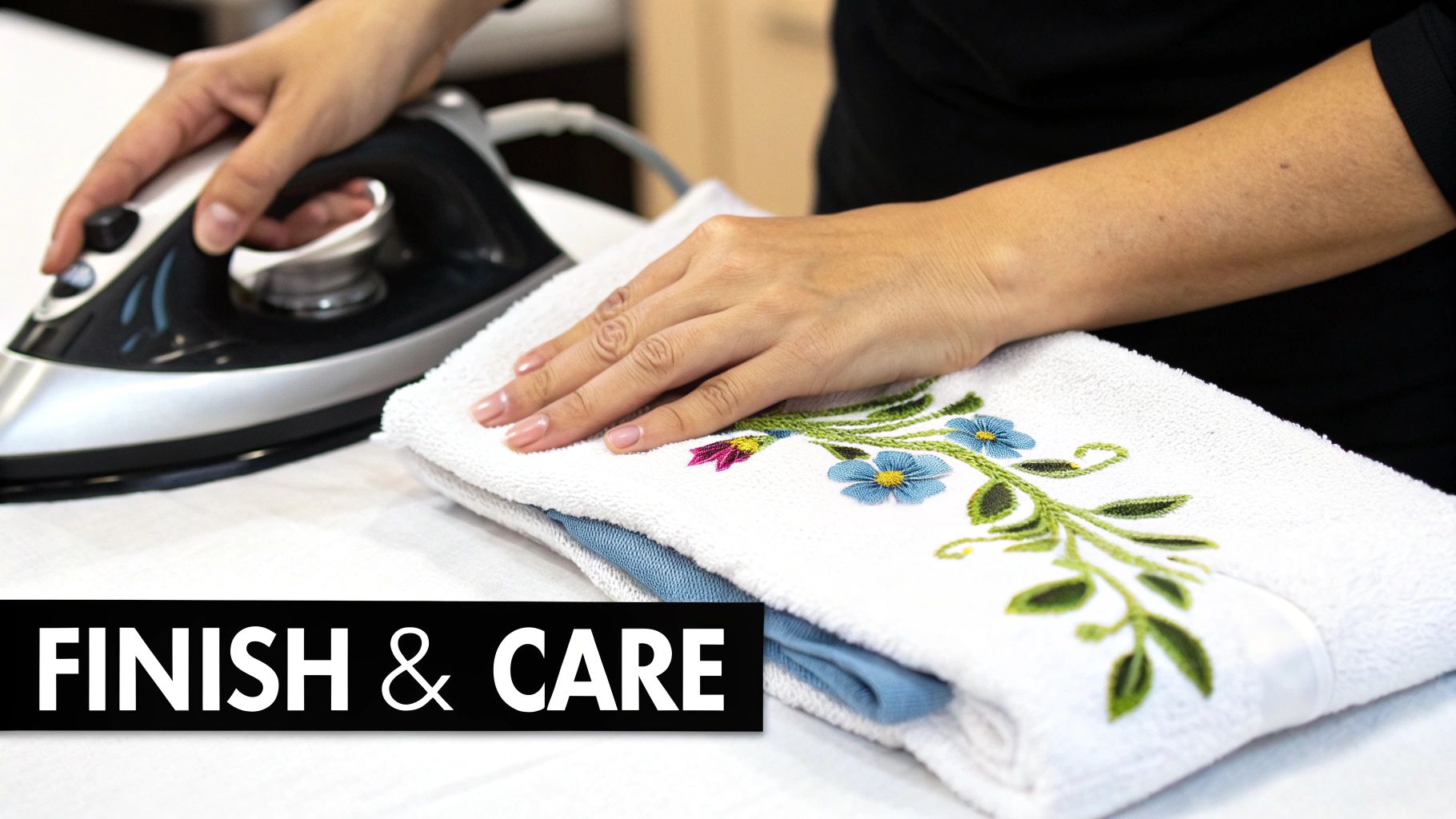
Pressing from the back lets the iron smooth out the linen while your stitches stay plump and defined, giving them that beautiful, professional-looking dimension.
Properly washing and pressing your finished work is a non-negotiable step. It evens out the weave, makes your stitches pop, and prepares your cross stitch linen for framing, transforming it from a project into a true piece of art.
Taking the time for these simple steps ensures your beautiful artwork stays flawless. For a deeper dive into framing and display options, take a look at our guide on how you can finish your cross stitch project.
Got Questions About Stitching on Linen? Let's Unpack Them.
Even seasoned stitchers hit a few bumps when they switch to a new fabric. It's totally normal. Getting those nagging questions answered is the best way to build confidence and really start to enjoy the unique feel of stitching on linen.
Let's tackle some of the most common things people ask when they're getting started with this beautiful material.
Should I Pre-Wash My Linen Fabric?
Ah, the great pre-wash debate! Honestly, this one comes down to personal choice. A lot of stitchers, myself included, prefer working with linen straight off the bolt. The manufacturer's sizing gives it a bit of stiffness, which makes it much easier to handle and count the threads.
On the other hand, if you're working with a very dark or richly colored linen, or if you're worried about shrinkage, giving it a quick, gentle hand-wash in cool water is a smart move. It’s a little bit of insurance that guarantees your finished project won’t change size after its first real wash.
How Many Strands of Floss Do I Need?
This is where the artistry comes in! The number of strands you use really depends on two things: your fabric count and the look you're going for. The sweet spot is finding a balance where your stitches look lush and full, but not so thick that you're wrestling the needle through the fabric.
A fantastic starting point for stitching 'over two' is to use two strands of floss for 28-count and 32-count linen. When you move up to finer counts like 36-count or 40-count, dropping down to a single strand usually gives a more delicate, elegant finish.
My best advice? Before you dive into the main event, stitch a tiny test area in a corner. It's the only way to know for sure if you'll love the coverage before you commit.
Can I Use a Pattern Meant for Aida on Linen?
You absolutely can! This is one of the best tricks to have up your sleeve. Swapping a pattern from Aida to linen is incredibly simple once you understand the "stitching over two" concept.
To make sure your finished piece ends up the exact same size as the Aida version, you just need to double the fabric count. It's simple math:
- A pattern designed for 14-count Aida becomes the exact same size on 28-count linen (when you stitch over two threads).
- A project calling for 16-count Aida will translate perfectly to 32-count linen (again, stitched over two).
Once you get the hang of this, a whole universe of patterns opens up to you.
Here at Cross Stitched, we take the guesswork out of the equation. When you upload a photo to create a custom kit, you can select your fabric type and count. We'll automatically calculate and send you the perfect amount of pre-sorted floss for gorgeous coverage, every time. Create your personalized masterpiece with us today!