

The perfect cross stitch needle size really boils down to your fabric's count—how tightly woven it is. If you're working with the ever-popular 14-count Aida fabric, your go-to needle should be a size 24 tapestry needle.
Here's a simple way to remember the relationship: as the fabric count goes up (meaning the holes are smaller and closer together), the needle number also goes up (meaning the needle itself gets smaller and finer).
Your Quick Guide to Cross Stitch Needle Sizes
Think of choosing a needle like picking the right key for a lock. A needle that’s too big will stretch and distort the holes in your fabric, leaving visible gaps. On the other hand, a needle that's too small can be a real pain to work with, constantly slipping through your fingers and making the process feel clumsy.
The goal is to find a needle that passes through the fabric's holes smoothly without changing their shape. It should feel just right.
Luckily, you don't have to guess. Over the years, a clear standard has emerged. Most cross stitch projects use tapestry needles ranging from size 24 to 28. A size 24 is the workhorse for common fabrics like 14-count and 16-count Aida, making it the most frequently used needle in the craft.
To make things even easier, here is a handy chart to help you find the perfect match every time.
Needle and Fabric Pairing Quick Reference Chart
Use this chart to quickly match your fabric count to the recommended tapestry needle size for perfect cross stitch results.
| Fabric Count (Holes Per Inch) | Recommended Tapestry Needle Size | Ideal For |
|---|---|---|
| 11 to 14-Count | Size 22 or 24 | Aida, beginner projects, and quick-to-stitch designs. |
| 16 to 18-Count | Size 24 or 26 | Aida and Evenweave, offering more detailed results. |
| 22 to 28-Count | Size 26 or 28 | Evenweave and Linen, for intricate patterns. |
| 32-Count and Higher | Size 28 | Fine Linen and projects worked "over two" threads. |
Getting this pairing right from the start is one of the simplest ways to make your stitching experience more enjoyable and ensure your final piece looks polished and professional.
A correctly sized needle is one of the most important yet overlooked cross stitch materials for achieving a professional finish. It ensures your stitches lay flat and your fabric grid remains perfectly uniform.
Treat this chart as your trusted guide. When your needle and fabric are in harmony, your stitches will look neater, your fabric will stay pristine, and you'll have a much better time bringing your project to life.
Why a Blunt Tip and Big Eye Are Your Best Friends
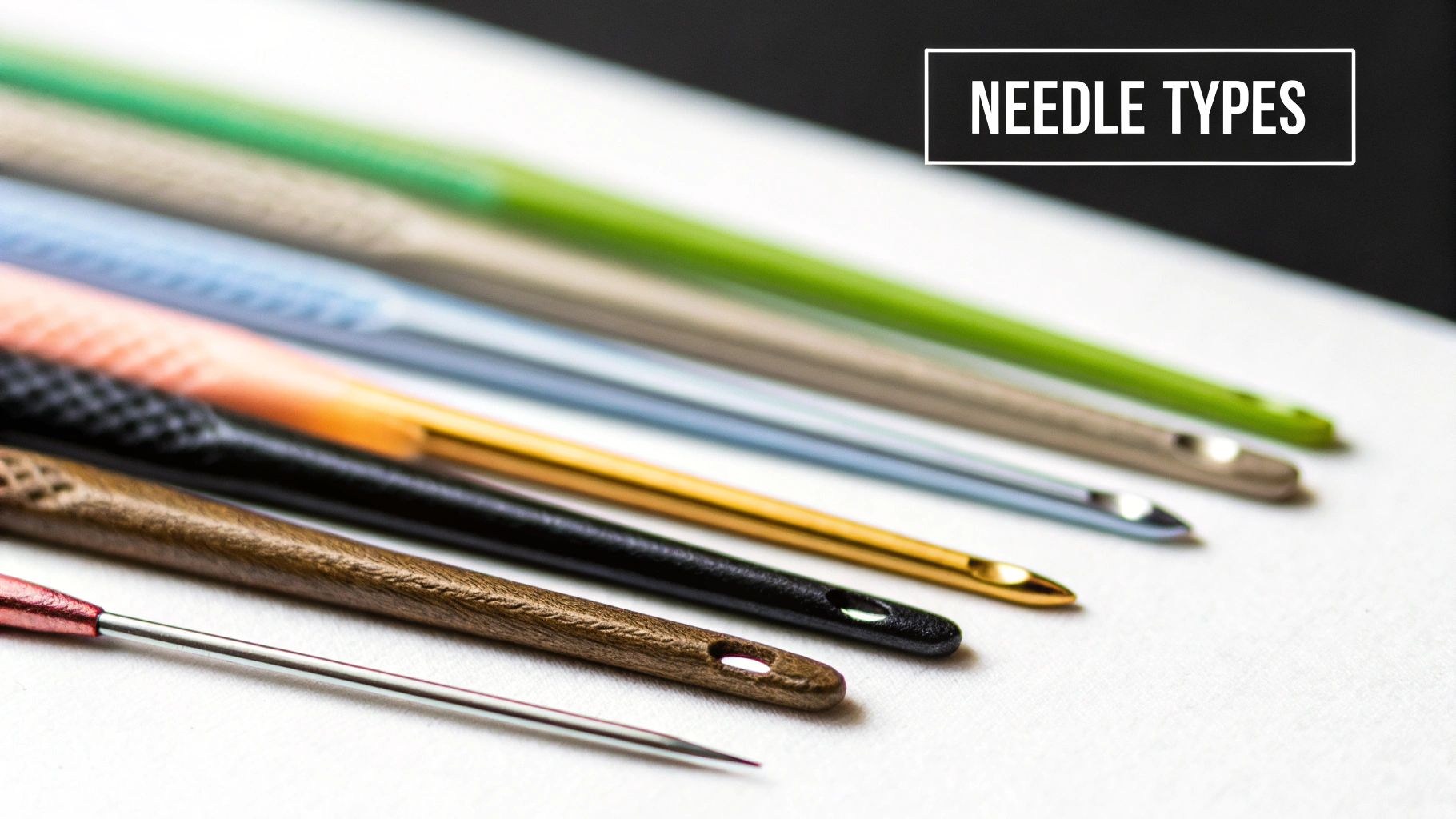
Before we get into the nitty-gritty of sizes, let's talk about what makes a cross-stitch needle different from the sharp little guys in your sewing kit. It’s all about using the right tool for the job. You wouldn't use a butter knife to chop an onion, right? The same logic applies here.
Cross-stitch needles, which you'll also hear called tapestry needles, have two special features that make them absolutely perfect for this craft.
First up is the blunt, rounded tip. A regular sewing needle is sharp for a reason—it’s designed to pierce through solid fabric. But in cross-stitch, we work with Aida or evenweave fabric that already has perfect little holes for us. A sharp needle would be a disaster, constantly snagging fibers, splitting threads, and messing up the beautiful grid of your fabric. The blunt tip, on the other hand, just nudges its way gently into the existing holes.
The second key feature is a large, elongated eye. This isn't just for making threading easier (though it’s a huge bonus!). It’s built to handle multiple strands of embroidery floss without a struggle. Trying to pull six strands of cotton through a tiny needle eye would shred your floss, leaving it weak, fuzzy, and prone to tangles.
A Match Made in Stitching Heaven
These two features—the blunt tip and the big eye—work in perfect harmony. The tip finds the hole without damaging the fabric, and the eye pulls the floss through without a fuss. It’s this smart design that makes for a smooth, relaxing stitching session.
Think of it this way: A sharp needle is the enemy of a clean cross-stitch grid. A needle with a tiny eye is the enemy of smooth, happy floss. Using the right tapestry needle is non-negotiable for good results.
Ultimately, the unique anatomy of a tapestry needle gives you:
- Pristine Fabric: Your needle works with the fabric's weave, not against it, so there's no accidental piercing or stretched-out holes.
- Strong, Smooth Thread: Less friction means your floss won't fray or break as you stitch.
- Neater Stitches: The needle creates just the right amount of space for your floss to pass through and lay flat, giving you beautifully uniform stitches.
Once you understand why these needles are shaped the way they are, picking the right size becomes much more intuitive. It’s all about finding the perfect match for your fabric’s holes.
Matching Your Needle to Your Fabric Count
When it comes to cross-stitch, the real magic happens when your needle and fabric are in perfect harmony. It’s a bit like finding the right key for a lock; you need a precise fit. If you try to force a thick needle through a high-count fabric with a tight weave, you’ll end up stretching and distorting the holes. The result? Messy, uneven stitches.
On the flip side, using a needle that's too skinny for a low-count fabric is just as frustrating. It feels wobbly, offers poor control, and can easily slip through your fingers. The sweet spot is when your needle parts the fabric threads just enough for the floss to glide through, then allows them to settle back into place. This is the secret to getting those plump, uniform stitches we all strive for.
This handy visual guide breaks down how to pick the right needle size based on your fabric count.
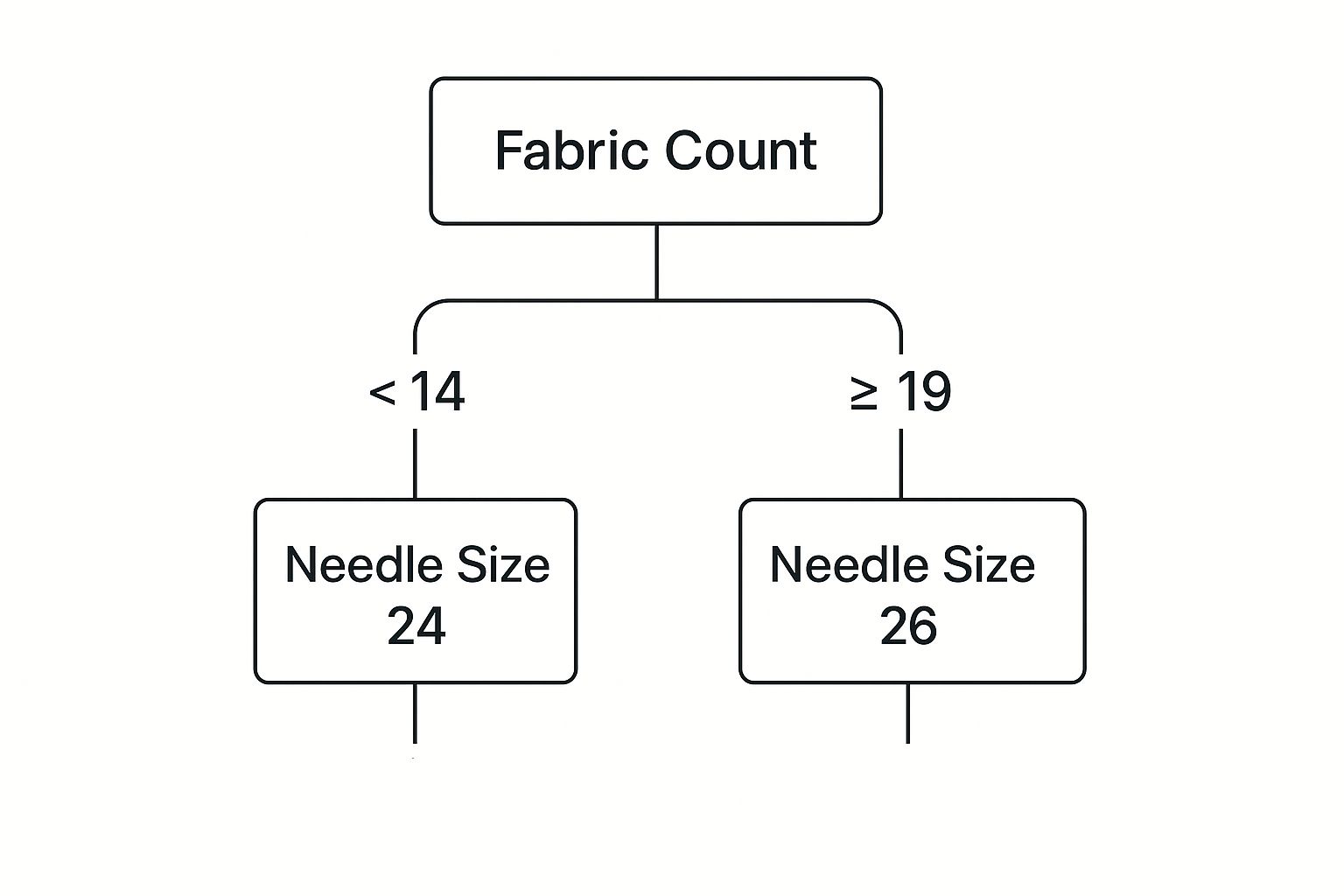
As you can see, the higher the fabric count, the higher the needle size number. And remember, with tapestry needles, a higher number means a finer, thinner needle. This simple rule of thumb ensures your fabric's grid stays pristine.
Common Pairings for Perfect Stitches
Let’s talk about the go-to combinations you'll encounter most often. The vast majority of cross-stitch kits are built around 14-count Aida fabric, which is a wonderful starting point for beginners but also loved by seasoned stitchers. For this fabric, the size 24 tapestry needle is your absolute best friend. It has the ideal diameter to slip through the Aida holes without any pulling or stretching. If you want to dive deeper into fabrics, check out our guide on what is Aida fabric.
As you venture into more detailed projects with finer fabrics, you’ll need to switch to a finer needle.
- For 16-count and 18-count Aida: Grab a size 26 needle. It's just a bit slimmer than the 24, making it a perfect match for the smaller holes in these fabrics.
- For 28-count and higher (like Linen): You'll want to move to a size 28 needle. This is the most delicate of the common tapestry needles, designed to pass through the tight weave of linen without leaving a mark.
If you ever find yourself struggling, it's often a sign that your tools aren't quite matched up. Here’s a quick guide to diagnose and fix common issues.
Troubleshooting Mismatched Needles and Fabric
| Symptom | Likely Cause | Solution |
|---|---|---|
| Fabric holes look stretched or warped | The needle is too large for the fabric | Switch to a higher-numbered, smaller needle. |
| Stitches feel loose or uneven | The needle is too small for the fabric | Try a lower-numbered, larger needle. |
| Thread is fraying or shredding | The needle's eye is too small for the floss | Use a needle with a larger eye or fewer strands. |
| It’s hard to pull the needle through | The needle is too thick for the fabric | Move to a finer needle (higher number). |
Getting the pairing right makes the entire stitching process smoother and more enjoyable. It's a small detail that makes a huge difference in the final look of your project.
How Many Threads Can Your Needle Handle?
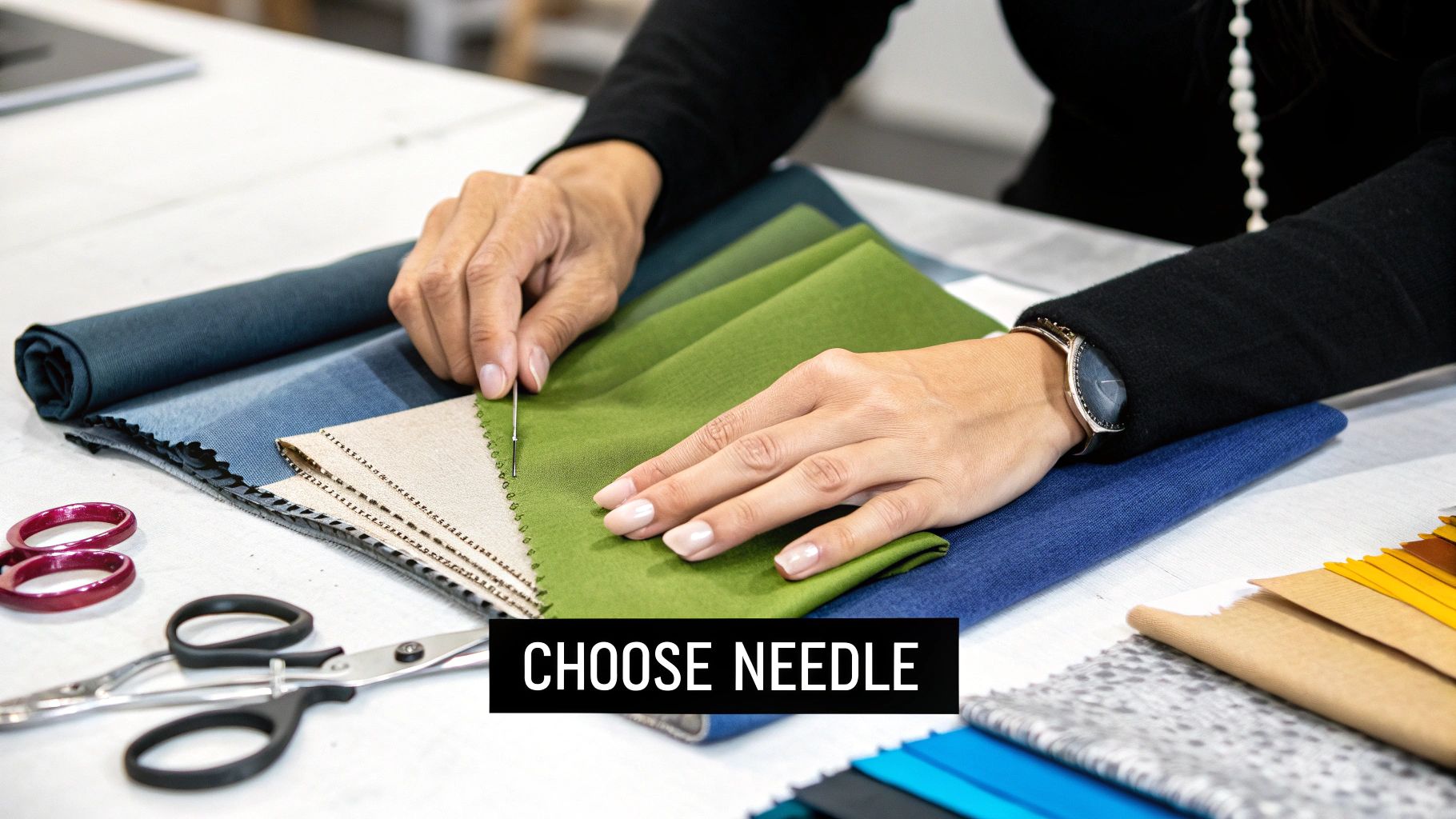
We've talked about matching your needle to your fabric, but there's one more piece to this puzzle: your embroidery floss. The number of strands you're working with has a direct say in which needle you should grab, and it all comes down to the needle's eye.
Think of it like trying to pull a thick rope through a tiny keyhole. It’s just not going to work well. If you force too many strands of floss through an eye that's too small, you're creating a ton of friction. That friction will shred and fray your thread, weakening it before you even make a single stitch.
Most cross-stitch patterns call for two strands of floss. The standard needle recommendations—like a size 24 needle for 14-count Aida—are all based on that magic number. But what happens when you decide to go off-script?
Adjusting for Different Thread Counts
Sometimes, a project just calls for a fuller look. Using three strands on 14-count Aida, for instance, can give you richer coverage and make your colors pop. When you increase the number of strands, though, you have to make sure your needle's eye can handle the extra bulk.
Here's how to check if you have the right fit:
- Do a quick thread test. Before you even touch the fabric, try pulling your floss through the needle's eye. Does it glide through easily? Or do you have to yank it? If you feel any resistance, the eye is too small.
- Look for signs of damage. That constant friction doesn't just make threading a pain; it actively damages your floss. You'll start to see it get fuzzy or, even worse, break while you're stitching.
- Consider sizing up. If you're using three or four strands on 14-count Aida, that trusty size 24 needle might be a bit snug. Try moving to a size 22 needle. It's a bit larger and has a bigger eye, which will make your life much easier.
The perfect needle doesn't just fit the fabric; it also respects the thread. A smooth pass through the eye is the first step to a smooth, lustrous stitch.
At the end of the day, you want the thread to move freely without a fight. This preserves its strength and shine from the skein to the fabric. To learn more about the threads we use, check out our guide on the versatile nature of embroidery floss cotton. Choosing the right needle is the best way to ensure your beautiful floss stays that way.
Taking a Look at Specialty Cross Stitch Needles

Once you've gotten the hang of a standard tapestry needle, you might find yourself curious about the other options out there. Specialty needles aren't a necessity for every project, but for certain situations, they can be a total game-changer for your stitching experience.
Think of it like this: your trusty chef's knife can handle most jobs in the kitchen, but a specialized bread knife makes slicing a fresh loaf so much easier. Specialty needles offer that same kind of targeted advantage.
Needles Built for Comfort and Precision
Most modern needles are made of steel, often plated with nickel or gold to make them more durable and help them slide through fabric smoothly. While a standard size 24 needle is the go-to for about 60% of projects, it's worth knowing what else is available. You can find some interesting stats about the broader needlecraft market on futuremarketinsights.com.
Some of the most common specialty needles you’ll come across include:
- Gold-Plated Needles: A fantastic choice if you have a nickel allergy. Many stitchers also swear they glide through fabric like a hot knife through butter.
- Petite Needles: These are shorter than standard needles. Some people find the shorter length gives them more control, allowing for more precise stitches.
- Ball-Point Needles: The tip of this needle has a tiny, rounded ball. Its purpose is to help you slip perfectly into the center of the holes on Aida or between the threads of evenweave and linen, preventing you from accidentally splitting them.
Finding the right needle is really a personal journey that changes as you grow as a stitcher. Don't be afraid to experiment with different types—you might just discover a new favorite that makes your hobby even more comfortable and fun.
Common Needle Goofs and How to Sidestep Them
We’ve all been there. Even after years of stitching, it's easy to fall into a few bad habits with our needles. But figuring out these common slip-ups is the secret to making your stitching experience smoother and your finished project look that much better.
One of the biggest culprits? Stitching with the same needle for way too long. Just like any well-used tool, a needle wears out. Its protective coating rubs off, it can get a little grimy, and the surface becomes less smooth. A worn-out needle can snag your fabric or, even worse, leave little rust or tarnish marks on your beautiful work.
Another classic mistake is trying to muscle a needle that’s too big through a fabric with a high thread count. When you do this, you're basically punching holes in the material that are too large. This can permanently stretch the fabric's weave, leaving your stitches looking loose and uneven.
Quick Fixes for Frustration-Free Stitching
The good news is that these problems are incredibly easy to avoid. A little bit of mindfulness goes a long way.
- Switch It Out: Get into the habit of grabbing a new needle after about 8-10 hours of stitching. A fresh needle will glide through the fabric so much more smoothly.
- Size Matters, Every Time: Before you thread that first strand, double-check that you're using the right needle size for your fabric count. Getting this match right is probably the single most important thing you can do for a professional-looking finish.
- The Eye Test: Is it a struggle to get your floss through the needle's eye? That’s a red flag. Forcing it will only fray your thread, making it weaker and more likely to snap while you're working.
Think of a fresh, correctly sized needle as the cheapest insurance policy for your project. It’s a tiny investment that protects your fabric, your floss, and most importantly, your sanity.
Your Cross Stitch Needle Questions, Answered
Even with a great chart in hand, a few questions about needles always seem to come up. Let's clear up some of the most common ones so you can get back to stitching without any snags.
Can I Just Use a Regular Sewing Needle?
It’s tempting, but you really shouldn't. A standard sewing needle has a sharp point designed to pierce through fabric. For cross stitch, you want a blunt-tipped tapestry needle.
Think of it this way: a sharp needle will rip through the delicate grid of your Aida or evenweave fabric. A tapestry needle, with its rounded tip, is designed to slide right into the existing holes, keeping your fabric and floss perfectly intact.
How Often Should I Change My Needle?
I usually recommend grabbing a fresh needle after about 8 to 10 hours of stitching. It might seem like a small thing, but needles wear out. The coating can rub off, which makes them drag, catch on your thread, or worse, leave little tarnish marks on your project.
A good rule of thumb is if you feel any resistance or roughness as you pull the needle through the fabric, it's time for a new one. Don't wait until it starts snagging your floss!
What's the Best Needle for Plastic Canvas?
When working with plastic canvas, you're usually dealing with thicker yarn and a wider grid. For the common 7-count plastic canvas, a size 18 tapestry needle is your best bet. Its eye is big enough to handle the yarn, and the larger size feels sturdy and comfortable for this type of project.
Ready to stitch something truly personal? At Cross Stitched, we take your favorite photos and turn them into custom, all-in-one cross stitch kits. You get everything you need to start creating a one-of-a-kind piece. Design your own custom kit and start stitching your memories.