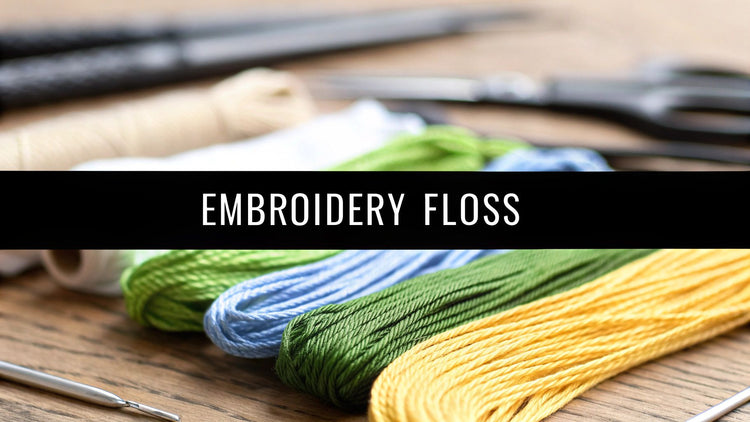
Embroidery floss is the thread that brings your needlework to life, and it comes in a surprising variety of flavors. The most common you'll see are 6-strand cotton, pearl cotton, and a whole world of specialty threads like silk and metallics. Think of floss as your paint palette—the type you pick completely changes the texture, shine, and final vibe of your work.
Your Essential Guide to Choosing Embroidery Floss
Stepping into the floss aisle can feel a little overwhelming at first, but don't worry. Getting to know the main players is the key to unlocking your creative potential. Every type of floss has its own personality, perfect for creating different effects.
Choosing the right thread isn't just a minor detail; it's a crucial decision that shapes the outcome of your project. A delicate, vintage-style floral might need the soft glow of a silk thread, while a punchy, modern piece could look amazing with the bold, twisted texture of pearl cotton.
This guide is your roadmap. We'll break down the most popular types of embroidery floss so you can choose your next thread with total confidence. We'll look at:
- Material: What’s it made of? Cotton, silk, rayon?
- Structure: Can you split it into thinner strands, or is it a single, indivisible thread?
- Sheen: How shiny is it? Does it have a soft matte finish or a bright, glossy shine?
- Best Uses: Where does this particular floss really sing?
By the end, you'll know exactly which thread to reach for to make your next project a masterpiece.
Understanding Stranded Cotton: The All-Purpose Floss
If you close your eyes and picture embroidery thread, what you're seeing is almost certainly stranded cotton floss. It’s the undisputed workhorse of the stitching world and by far the most popular and versatile choice out there. Loved by absolute beginners and seasoned pros, you can find it in a rainbow of hundreds of colors in just about any craft store.
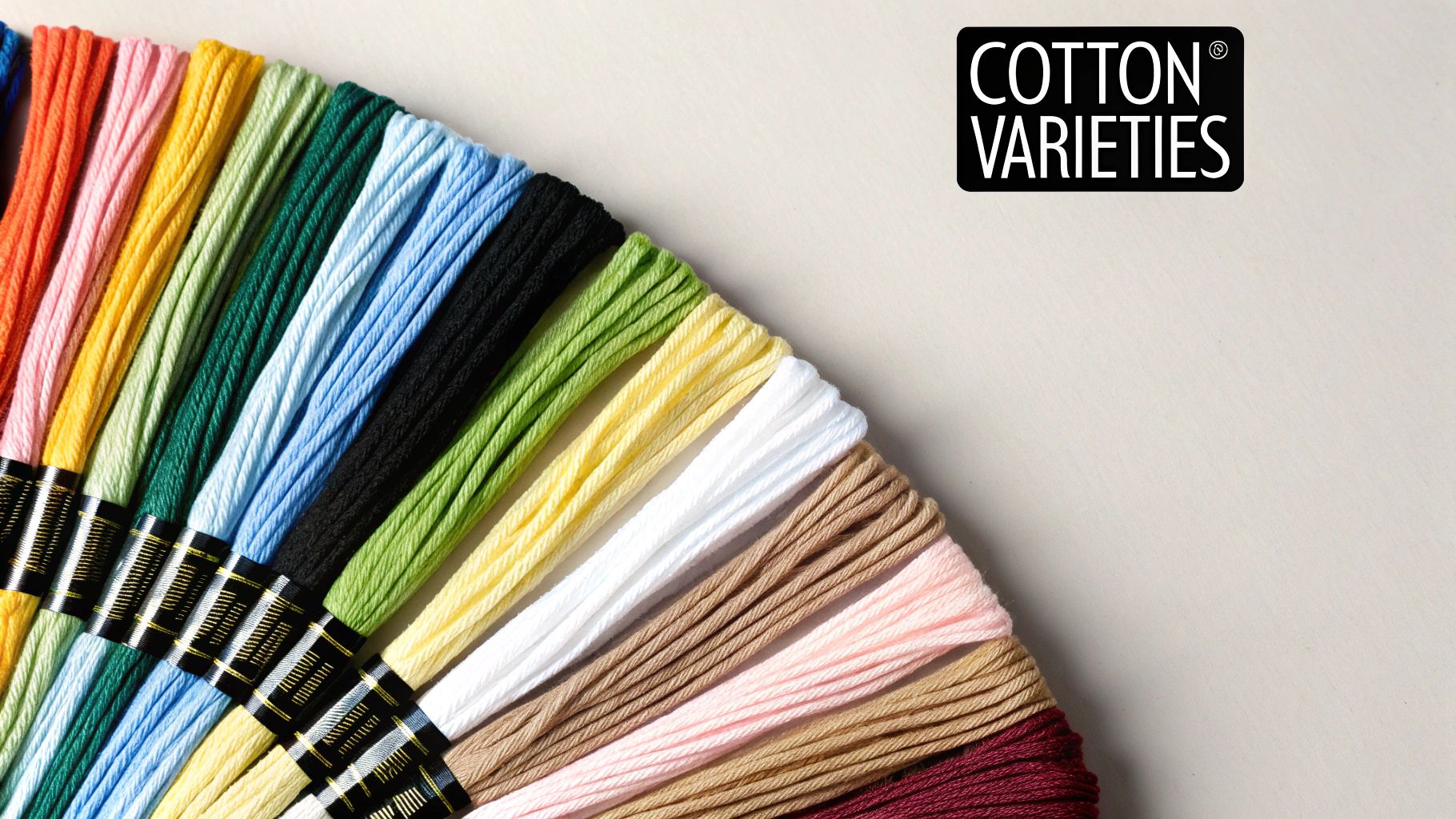
The real magic of this floss is how it’s made. Each skein is actually a bundle of six fine strands of mercerized cotton, all loosely twisted together. This construction is its superpower. You can easily separate these strands, giving you total control over the weight and thickness of your stitches.
Adjusting Your Thread Count
Being able to separate the strands is a game-changer for customizing your project’s look. Need a bold, thick line to fill in a large area or create a dramatic outline? Use all six strands together.
But if you're working on fine lettering or a design with tons of tiny details, you can pull out just one or two strands for delicate, whisper-thin lines. This incredible flexibility is what makes it a perfect match for so many different types of embroidery stitches. Plus, most stranded cotton is colorfast, so you don't have to worry about your beautiful work bleeding or fading in the wash.
Pro Tip: Separating strands without ending up with a tangled nightmare is easy once you know the trick. Cut a comfortable length of floss—about 18 inches is a good start. Pinch one end, and with your other hand, pull a single strand straight up and out. The other strands will bunch up a bit, but they’ll straighten right out once the thread is free. Repeat until you have the number of strands you need!
This simple technique is key to harnessing the power of stranded cotton, making it the perfect all-rounder for just about any stitching project you can dream up.
Exploring Specialty Floss for Unique Textures
Once you’ve mastered the standard 6-strand cotton, a whole new world of specialty floss opens up. Think of these threads as your secret weapon for adding incredible dimension and personality to your work. They’re specifically designed to create unique textures and visual effects, turning a simple design into something truly memorable.
The Bold Sheen of Pearl Cotton
One of the most popular specialty threads you'll encounter is Pearl Cotton. Unlike its stranded cousin, Pearl Cotton is a single, non-divisible thread with a tight twist. This unique construction gives it a gorgeous, rope-like appearance and a distinct pearlescent sheen that really catches the light.
Since you can't separate the strands, Pearl Cotton creates bold, raised stitches that are perfect for making a statement. It’s fantastic for outlines, decorative borders, and dimensional stitches like French knots or bullion knots. Its smooth, rounded finish also makes it a favorite for needlepoint and Hardanger embroidery, where that beautiful texture can really shine.
Adding Softness with Wool Floss
If you're looking to add a soft, fuzzy texture, look no further than Wool Floss. Often called Crewel wool, this thread is made from fine wool fibers, giving it a much cozier and more rustic feel than cotton. It's the perfect way to bring a natural, touchable quality to your stitching.
Wool floss is an amazing choice for stitching things like:
- The fluffy fur on an embroidered animal
- The soft, velvety petals of a flower
- Cozy details on a winter-themed design, like a woolen scarf or a fuzzy hat
To get a better sense of how these two popular specialty threads compare, let's break them down side-by-side.
Specialty Floss Comparison: Pearl Cotton vs. Wool Floss
| Feature | Pearl Cotton | Wool Floss |
|---|---|---|
| Structure | Single, tightly twisted, non-divisible strand | Single, loosely twisted, fuzzy strand |
| Texture | Smooth, rounded, and rope-like | Soft, fuzzy, and slightly rustic |
| Sheen | Pearlescent, high sheen | Matte, low sheen |
| Best For | Bold outlines, decorative borders, Hardanger | Textured fills, natural elements (fur, foliage) |
Ultimately, both Pearl Cotton and Wool Floss offer incredible opportunities to add depth and tactile interest to your projects. The choice simply comes down to the final look and feel you want to achieve.
This image highlights how even within a single material like silk, different types of floss can offer vastly different results in strand count and sheen.
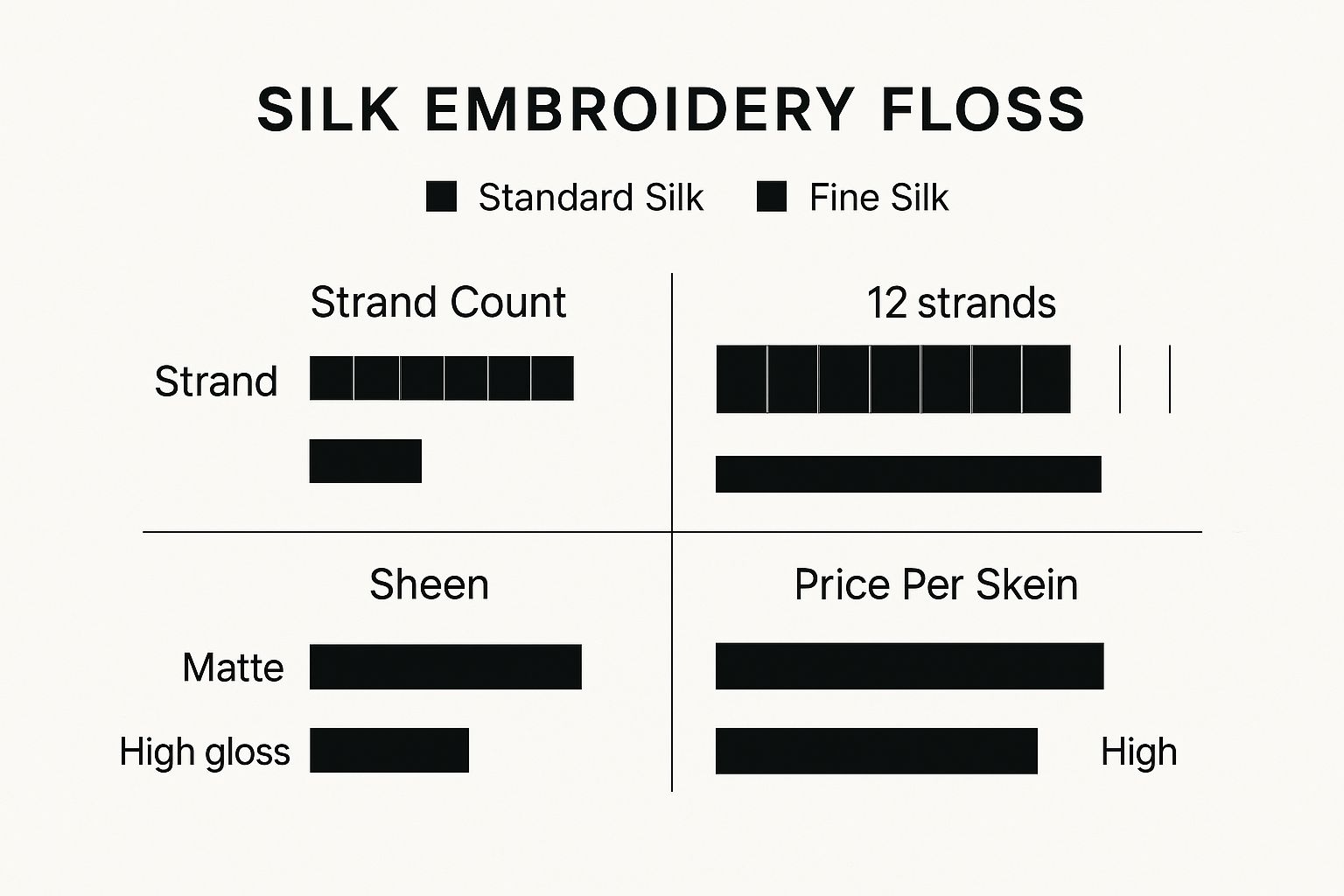
As you can see, while Standard Silk has a more matte finish and fewer strands, Fine Silk provides more strands for intricate work and a high-gloss look, which is reflected in its higher cost.
The real magic of specialty floss is its power to transform a flat design into a dynamic, tactile piece of art. By simply swapping standard cotton for wool, you can make a stitched rabbit feel soft to the touch. This simple switch adds an entirely new sensory element to your work.
Adding Luster with Silk and Satin Floss
When you want to give your embroidery a touch of elegance and a beautiful shimmer, nothing beats silk and satin floss. These threads are all about sheen, turning even the simplest stitches into something special.
They're perfect for adding little highlights, creating a stunning focal point, or stitching a design that just deserves to stand out.
Silk floss is the classic choice, prized for its natural luster and incredibly soft feel. Spun from the filaments of silkworms, it gives off a delicate, subtle glow that’s both sophisticated and timeless. This makes it my go-to for fine, detailed work like heirloom pieces or delicate floral patterns where you want just a hint of shine.
Satin floss, usually made from rayon, is a whole different story. It brings the drama with an intense, high-gloss shine that looks almost liquid. If you want your stitches to practically leap off the fabric with brilliant light, satin floss is your best bet.
Mastering Slippery Threads
That beautiful smoothness comes with a catch: both silk and satin floss can be slippery and a bit of a challenge to work with. They have a tendency to snag or unravel, but don't let that scare you off. A few little adjustments will have you stitching like a pro.
Here are my top tips for taming these slick threads:
- Use Shorter Lengths: Work with a much shorter strand than you normally would—about 12-14 inches is perfect. This one change dramatically cuts down on tangles and fraying as you stitch.
- Try a Thread Conditioner: A light pass through some beeswax or a commercial thread conditioner works wonders. It helps the floss glide through the fabric with less friction, which means fewer snags.
- Manage Your Tension: Keep a close eye on how tight your stitches are. Pulling too hard will pucker the fabric, but leaving them too loose creates messy loops. The goal is a relaxed, even tension.
The love for high-end floss isn't just a hobbyist thing. The industrial embroidery thread market, which supplies threads for everything from fashion to home decor, is projected to be a $2.5 billion industry by 2025. This just goes to show how much value these premium threads add to quality textiles. You can learn more about the growing embroidery thread market and its applications.
Creating Dazzling Effects with Metallic and Novelty Threads
When you want your stitching to really pop, standard cotton floss won't always cut it. This is where metallic and novelty threads come into play, offering that extra touch of magic to make your work truly stand out. They're designed specifically to add sparkle, interesting textures, and even a playful glow to your fabric.
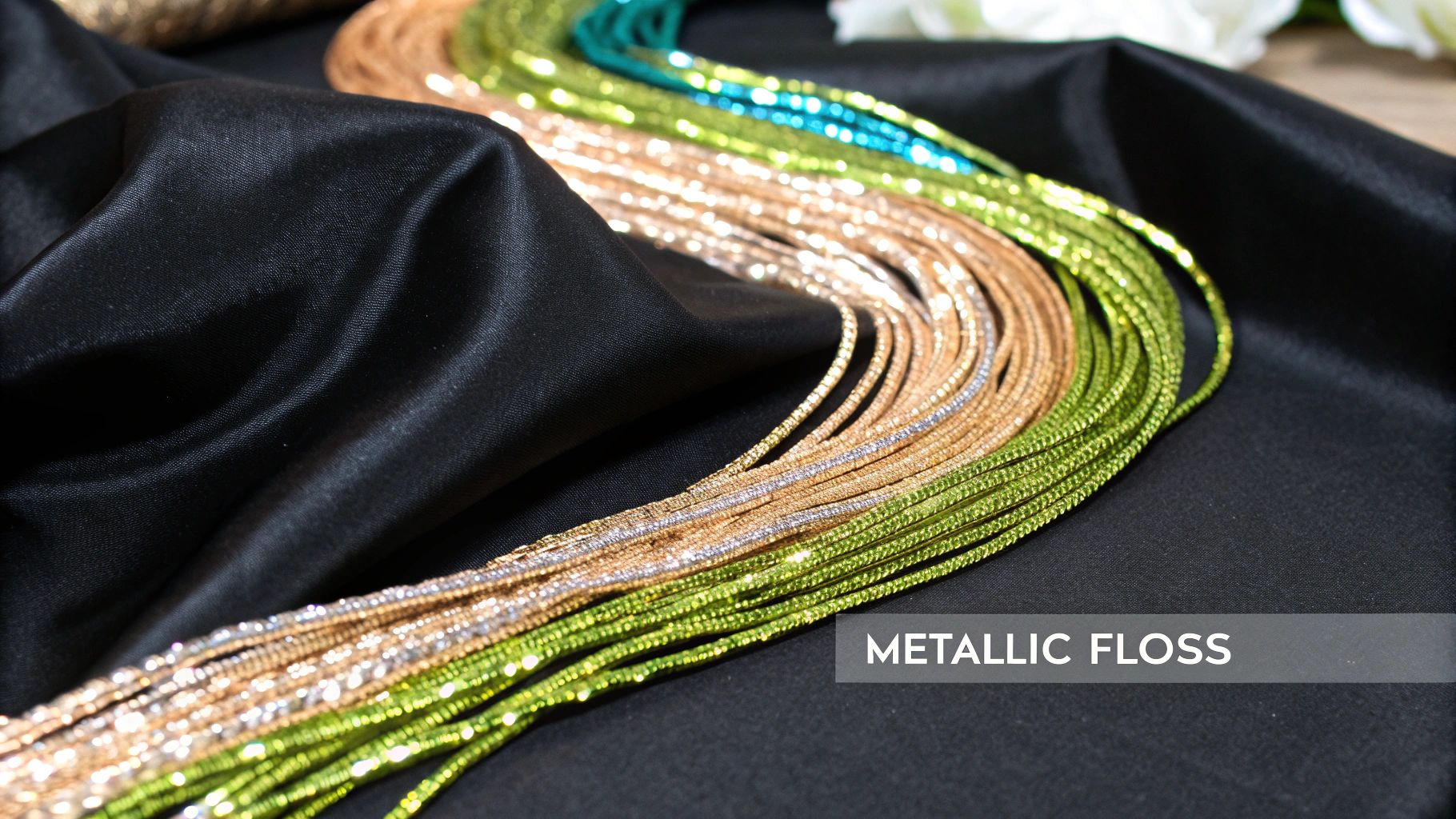
Think of metallic floss as jewelry for your embroidery. It's usually made with a strong synthetic core that's been wrapped in a thin, shimmering foil. Just one strand can catch the light like real gold, add the cool glint of silver, or create an iridescent shimmer, instantly elevating a simple project into something spectacular.
Tips for Taming Tricky Threads
Let’s be honest, though—these specialty threads can sometimes be a real headache. Their unique texture makes them prone to snagging, fraying, and twisting into knots. But don't let that scare you off! A few simple tricks can make all the difference.
- Go bigger with your needle: Using a needle with a larger eye is a game-changer. It gives the thread more room to pass through, which dramatically cuts down on friction and fraying.
- Work with shorter strands: It’s tempting to cut a long piece of thread, but resist the urge. Sticking to shorter lengths of about 12 inches will save you a world of frustration from tangles and knots.
- Use a thread conditioner: A quick pass through some beeswax or a commercial thread conditioner can work wonders. It smooths the fibers and helps them glide through the fabric like a dream.
The secret to stitching with metallic floss is all about patience and prep. If you set yourself up with the right tools and work in shorter, manageable lengths, you can skip the frustration and just enjoy the beautiful results.
Beyond pure sparkle, the world of novelty threads is full of creative options. Variegated floss, for instance, cycles through different shades of the same color all on one strand. This creates a gorgeous, natural-looking gradient effect in your stitching without you ever having to switch colors.
Then you have fun options like glow-in-the-dark floss, which adds a completely unexpected and whimsical element to your work. It's perfect for things like kids' pajamas or Halloween decorations. With so many brands creating unique effects, you'll always find something new to try. If you're swapping between brands, this handy thread color conversion chart can help you find the right shades. Playing with these threads is one of the best ways to make your embroidery art truly your own.
How to Store and Organize Your Floss Collection
There's nothing quite like having a rainbow of embroidery floss at your fingertips. But let's be honest—that beautiful collection can turn into a tangled nightmare in a heartbeat without a solid organization system. Storing your floss correctly does more than just save you the headache of untangling knots; it protects your threads from dust and sunlight, making sure those brilliant colors stay vibrant for your next masterpiece.
The go-to method for most stitchers is winding floss onto plastic or cardboard bobbins. These little cards are perfect for keeping each skein tidy. Once wound, you can file them away in clear organizer boxes, sorting them by color family or brand number. It makes grabbing that perfect shade of blue a breeze. If you’d rather not wind up every skein, floss drops or simple storage rings are fantastic alternatives that keep them intact.
Finding Your Perfect System
Ultimately, the best system is the one you'll actually use. To get your creativity flowing, check out these creative sewing room storage ideas for some really clever ways to organize threads and all your other supplies. The key, no matter what you choose, is consistency. A well-organized stash not only makes it easier to see what you have but also sparks the inspiration to sit down and start stitching.
A well-organized collection is more than just tidy—it's an investment. With the global embroidery thread market projected to hit USD 5.7 billion by 2033, protecting your supplies ensures they last. You can discover more insights about the growth of the embroidery thread market on datahorizzonresearch.com.
Don't forget that caring for your floss extends to your finished projects, too. Always defer to the care instructions for the most delicate thread you used. A gentle hand wash and letting it air dry is usually the safest bet to preserve your hard work for years to come. Now that your supplies are sorted, you’re ready to dive into some fun projects, like these free embroidery patterns for beginners.
Got Questions About Embroidery Floss? Let's Untangle Them.
Diving into the world of embroidery floss can feel a little overwhelming at first. With so many options, it's natural to have questions pop up. Let's get them answered so you can stitch with confidence.
Can I Mix Different Types of Embroidery Floss in One Project?
Go for it! Mixing different floss types is one of my favorite ways to create depth and unique textures in a piece. Imagine using standard cotton for the main part of your design, then adding a single strand of metallic floss to catch the light, and finishing with a bold outline in pearl cotton for a raised, 3D effect.
The only real catch is to think about how you'll care for the finished piece. If you combine a delicate, hand-wash-only silk with sturdy, machine-washable cotton, you'll have to treat the entire project by the silk's rules. Always default to the care instructions for the most sensitive thread you've used.
What Is the Difference Between Embroidery Floss and Embroidery Thread?
You'll hear these terms thrown around a lot, and often people use them to mean the same thing. But if we're getting specific, there's a small difference.
Embroidery floss almost always refers to that classic, divisible 6-strand cotton skein we all know and love. On the other hand, embroidery thread is more of an umbrella term. It covers any thread used for embroidery, from non-divisible types like pearl cotton to spools made for embroidery machines.
How Do I Stop My Floss from Tangling While I Stitch?
Ah, the dreaded thread-knot. We've all been there! Tangled floss is one of the biggest frustrations in stitching, but you can absolutely keep it at bay with a few good habits.
- Keep it short. Working with a manageable length of floss is the number one trick. A piece about 18 inches long—roughly the distance from your fingertips to your elbow—is ideal. Any longer and it's just asking to get tangled.
- Let it unwind. Every few stitches, just let your needle and thread dangle from your work. You'll see it spin as it naturally untwists itself. This simple pause works wonders.
- Try a thread conditioner. A little bit of beeswax or a synthetic conditioner can make a huge difference. It coats the fibers, making them smoother so they glide through the fabric with less friction and fewer snags.
It’s no surprise that needlework continues to capture our hearts. The entire global embroidery market, which includes all these amazing floss types, is expected to hit around USD 3.7 billion by 2025. This just shows how much creative potential is packed into these little skeins. You can find more details about the growing embroidery market on cognitivemarketresearch.com.
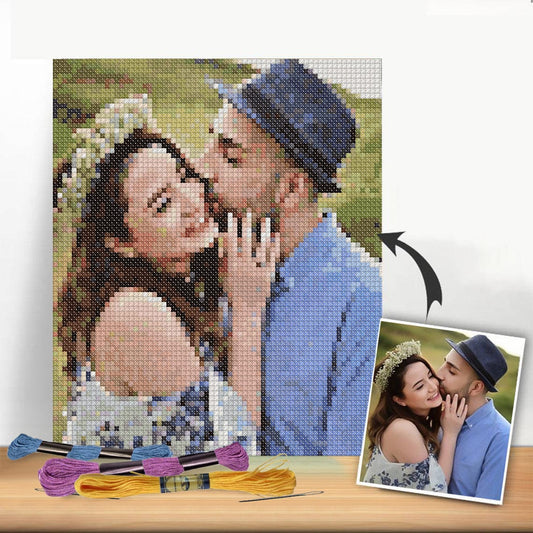
Ready to see your favorite photo come to life in thread? At Cross Stitched, we transform your images into custom cross-stitch kits, giving you everything you need to create a personal masterpiece. Design your personalized kit today!