Quick answer: DMC stranded cotton is organised by a numbered colour system with over 500 thread colours, each assigned a unique number (e.g. DMC 321 is a classic red). The DMC colour card is the definitive reference, grouping threads by colour family. Conversion charts exist to translate between DMC and Anchor thread numbers for pattern substitution.
Frequently asked questions
How does the DMC thread numbering system work?
DMC assigns each thread colour a unique number (such as 321 for red or blanc for white). Numbers do not follow a simple colour sequence — they are assigned historically. The DMC colour card (sold separately) shows physical thread samples beside each number.
How many DMC thread colours are there?
DMC produces over 500 colours of standard stranded cotton (mouliné), plus specialty threads including metallic, fluorescent, and colour-variation ranges. The exact count changes as new colours are introduced or discontinued.
What is the difference between DMC and Anchor threads?
DMC and Anchor are both six-strand cotton embroidery floss brands of similar quality. Their colour numbering systems are different, so a pattern specifying DMC 321 will need a conversion chart to find the nearest Anchor equivalent.
Where can I find a DMC to Anchor conversion chart?
Official DMC-to-Anchor conversion tables are widely published online and in needlework reference books. DMC's own website provides a digital colour comparison tool. Note that not every colour has a perfect match between brands.
What is DMC blanc versus DMC white (B5200)?
DMC Blanc is a warm, slightly off-white thread. DMC B5200 is a bright, cool, optical white. Patterns often specify one or the other deliberately — using the wrong white can give a noticeably different result, especially on coloured fabric.
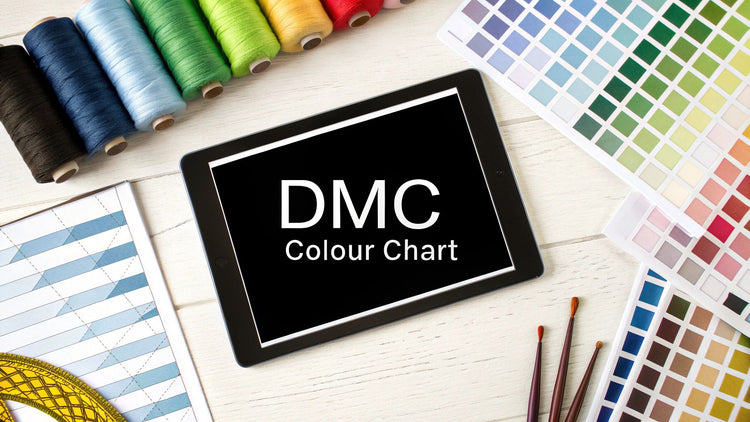
The DMC thread colour chart is your master key to a world of colour. It’s the one tool every single cross-stitcher and embroiderer needs, providing a complete, standardized reference for every shade of floss DMC makes. Think of it as your colour bible—the ultimate resource for identifying, matching, and choosing the perfect hues for any project you can dream up.
This guide isn't just a list; it’s a fully downloadable and searchable chart designed to make your creative life so much easier.
Your Essential DMC Thread Colour Reference
Welcome to your complete reference for the most popular embroidery floss on the planet. The beauty of the DMC system is its elegant simplicity. By assigning a unique number to each distinct shade, it brings a beautiful order to a literal rainbow of possibilities. It’s this simple but powerful method that ensures a stitcher in Tokyo can follow a pattern from Toronto and get the exact same stunning result.
This guide is built to be your go-to hub for everything related to the DMC palette. Whether you're finally taming your stash, kicking off a new project, or converting a pattern from another brand, a reliable chart is completely non-negotiable. It takes the guesswork out of the equation, letting you make colour decisions with total confidence.
Navigating This Guide
I’ve structured this resource so you can find what you need, fast. We'll cover it all, from the basics of reading the chart to the finer points of digital colour matching.
Here’s a quick look at what’s inside:
- Downloadable & Searchable Charts: Grab a high-quality PDF to print or use our interactive table, which includes HEX/RGB values perfect for digital design work.
- Practical How-To Guides: I’ll walk you through reading the chart, printing it for accurate colour, and converting threads between different brands and even floss types.
- Troubleshooting & Tips: We’ll tackle common headaches like dye lot variations and the tricky business of matching colours from a photograph.
The DMC thread color chart has been pivotal in standardizing color references for needleworkers everywhere. As of 2023, the chart includes 547 distinct shades of its beloved stranded cotton, each identified by a unique number. This incredible palette has grown over decades, with colours added or retired based on what stitchers like us are using.
Of course, knowing your colours is only half the battle; understanding the floss itself is just as important. For a closer look at the different materials you're working with, check out our detailed article on the types of embroidery floss for cross-stitch. Combining that knowledge with an accurate colour chart will seriously elevate the precision and quality of everything you stitch from now on.
How to Read and Navigate the DMC Chart
Once you get the hang of a DMC thread chart, it stops being just a list of numbers and becomes your most powerful creative tool. The real magic is in the numbering system itself. Colours are almost always grouped into families, which means threads with similar numbers will have a similar hue.
Take the 700-series, for instance—it’s packed with greens. The 900-series is full of rich oranges and rusts. This simple organization is the key to finding perfect gradients. If your pattern calls for DMC 742 (Tangerine), a quick glance at 740, 741, and 743 will show you the lighter and darker shades right next to it. This little trick makes blending and shading so much easier.
Decoding the Numbers and Symbols
The numbering system is the heart of the chart, but don't overlook the other small details. You might see a special symbol, like a dot or an asterisk, next to certain colours. These usually mark the newer colours that might not appear on older, printed charts. Always check the chart's key to see what these symbols mean.
Learning to tell a part very similar shades is another crucial skill. A classic mix-up is between DMC 310 (Black) and 3371 (Black Brown). On a screen or a printed page, they can look almost the same. But knowing that 3371 is grouped with other dark browns helps you grab the right one and avoid a mistake that could subtly throw off your entire project.
Having a physical DMC thread colour chart—either a high-quality printout or, even better, one made with real floss—is a game-changer. It lets you see the true colour and sheen in a way a digital screen just can't, making your colour matching far more accurate.
Building Your Colour Palettes
Once you're comfortable finding colours, the chart becomes a playground for building your own palettes from scratch. Don't feel locked into the exact threads a pattern suggests; use the chart to explore!
Here are a few ways you can start building a palette:
- Monochromatic Schemes: Pick a single colour and then choose several shades from its numerical group. For example, grabbing 3838, 3839, and 3840 gives you a beautiful lavender blend for a sophisticated look.
- Complementary Colours: Find colours on opposite sides of the colour wheel for a pop of contrast. Try pairing a vibrant orange from the 740s with a deep blue from the 790s for a really dynamic feel.
This is how you move from following instructions to making your own artistic choices. If you want to dig deeper into the numbering system and its history, we have a whole guide on DMC embroidery floss numbers. Mastering the chart is your first step to becoming truly confident with colour.
Downloadable and Searchable Digital Colour Chart
Every stitcher knows that having the full DMC palette at your fingertips is a must. While nothing beats a real-thread colour card, a digital version offers a level of convenience and power that's hard to ignore, especially if you're designing patterns or just trying to keep your stash organized. We've built two fantastic digital tools to help you do just that.
First up, you can grab a high-quality, printable PDF of the complete DMC thread colour chart. We’ve optimized it for the best possible colour accuracy, so you can print a reliable copy to keep on hand. It's perfect for tucking in your bag for a trip to the craft store or for laying out next to you while you kit up a new project.
Using the Interactive Colour Table
If you want a more dynamic tool, our interactive table is your new best friend. It’s more than just a list; it’s a powerful database that helps you find exactly what you’re looking for in seconds. You can sort the entire stranded cotton collection by number or even group threads by colour family, which is a massive help when you're searching for the perfect gradient.
The search bar is incredibly smart. You can look up threads in a few different ways:
- By DMC Number: Just type in a number like 310 to get all its details instantly.
- By Colour Name: Can't remember the number for "Tangerine"? No problem, type in the name and see 742 pop up.
- By Digital Value: This is a huge one for digital designers. You can search by HEX or RGB codes to find the thread you need.
Our chart helps you visualize how each thread is identified by its hue, shade, and the symbol used on a pattern.

As you can see, a thread is defined by more than just its colour; its number tells you where it sits within its specific colour family, which is key to making smart choices.
Here’s a quick look at our interactive chart. Feel free to search, sort, and play around with it to see how it works.
Interactive DMC Stranded Cotton Colour Chart
| DMC Number | Colour Name | Colour Swatch | HEX Code | RGB Value |
|---|---|---|---|---|
This is a live table. You can click on the column headers to sort the data or use the search box to filter for specific numbers, names, or colour codes.
Bridging Digital Design and Physical Threads
Including HEX and RGB values is a real game-changer if you use design software like Procreate, Photoshop, or specialized cross-stitch programs like PCStitch. These codes are the bridge between the colours on your screen and the physical thread in your hand.
This is especially crucial when you’re converting a photograph into a cross-stitch pattern. You can use your software’s eyedropper tool on a photo, grab the HEX/RGB value, and pop it into our table’s search bar. In an instant, you’ll know the closest DMC thread to use for a perfect real-world match.
Let's say you're designing a sunset and your software picks out a gorgeous orange with the HEX code #FB982B. A quick search in our chart will tell you that DMC 970 (Light Burnt Orange) is an almost identical match. This completely removes the guesswork, ensuring the colours in your finished piece are just as vibrant as they were in your original digital design.
A Practical Guide to Thread Conversion
Have you ever found the perfect pattern, only to realize it calls for a brand of thread you don't have on hand? It’s a classic stitcher’s dilemma. But don't rush out to buy a whole new collection just yet. A good conversion chart is your best friend, helping you find a close match from the threads you already own. It's a simple trick that saves both time and money.
Switching between brands like DMC and Anchor is something stitchers do all the time. While both of these titans of the thread world offer incredibly similar colour ranges, their numbering systems are completely different. This is where a reliable dmc thread colour chart with conversion data becomes an absolutely essential tool for making any pattern work with your stash.
Converting DMC to Anchor and Vice Versa
The most common swap is between DMC and Anchor stranded cotton. While you can find a nearly perfect match for most colours, it's important to remember that they are rarely a 100% identical twin. Each manufacturer has its own unique dyeing process and materials, which can lead to subtle differences in shade, tone, and even sheen.
For instance, DMC 310 is the go-to black, and its Anchor equivalent, 403, is a very solid match. But for a delicate shade like the light blue of DMC 3755, you might find that its Anchor counterpart, 162, has a slightly different undertone. In a large sky or a watery landscape, that tiny variation could be noticeable.
Expert Tip: If you're swapping threads for a large project, it's always best to stick with one brand for all the colours if you can. Mixing DMC and Anchor threads of the "same" colour in a single block of stitching can sometimes create a visible shift in texture and how the light catches it.
For a quick lookup, this table shows some of the most common DMC to Anchor conversions.
DMC to Anchor Thread Conversion Chart
| DMC Number | DMC Colour Swatch | Anchor Number | Anchor Colour Swatch |
|---|---|---|---|
| 310 | 403 | ||
| Blanc | 2 | ||
| 321 | 46 | ||
| 743 | 298 | ||
| 995 | 133 | ||
| 700 | 246 |
Remember, this is just a starting point. Your own eyes are the best judge, so always compare the physical skeins in good, natural light if you can.
Matching Different DMC Thread Types
Conversion isn't just about jumping between brands—it's also handy within the DMC family. DMC produces a fantastic range of specialty threads, like the glossy Satin Floss or the dazzling Light Effects, each with its own numbering system. If a pattern specifies a Satin Floss colour but you only have the standard cotton, a chart can point you to the right substitute.
Here are a couple of things to keep in mind when substituting these specialty flosses:
- Satin Floss: This thread is all about its brilliant, high-gloss sheen. When you substitute it with standard cotton, you'll nail the colour but lose that signature silky finish. For example, the vibrant purple of Satin S552 has a direct colour match in the standard cotton DMC 552.
- Light Effects: This range includes all the fun stuff—metallics, fluorescents, and even glow-in-the-dark threads. Converting these to standard cotton means you're only matching the base colour and sacrificing the special effect entirely.
Knowing these little details helps ensure your finished project looks just the way you imagined, even when you have to make a few substitutions. For a more comprehensive list, our complete guide to DMC conversion charts has detailed tables to make the whole process a breeze. It’s the key to adapting patterns and making smart choices when you can't get your hands on the exact thread listed.
Tips for Printing an Accurate Colour Chart
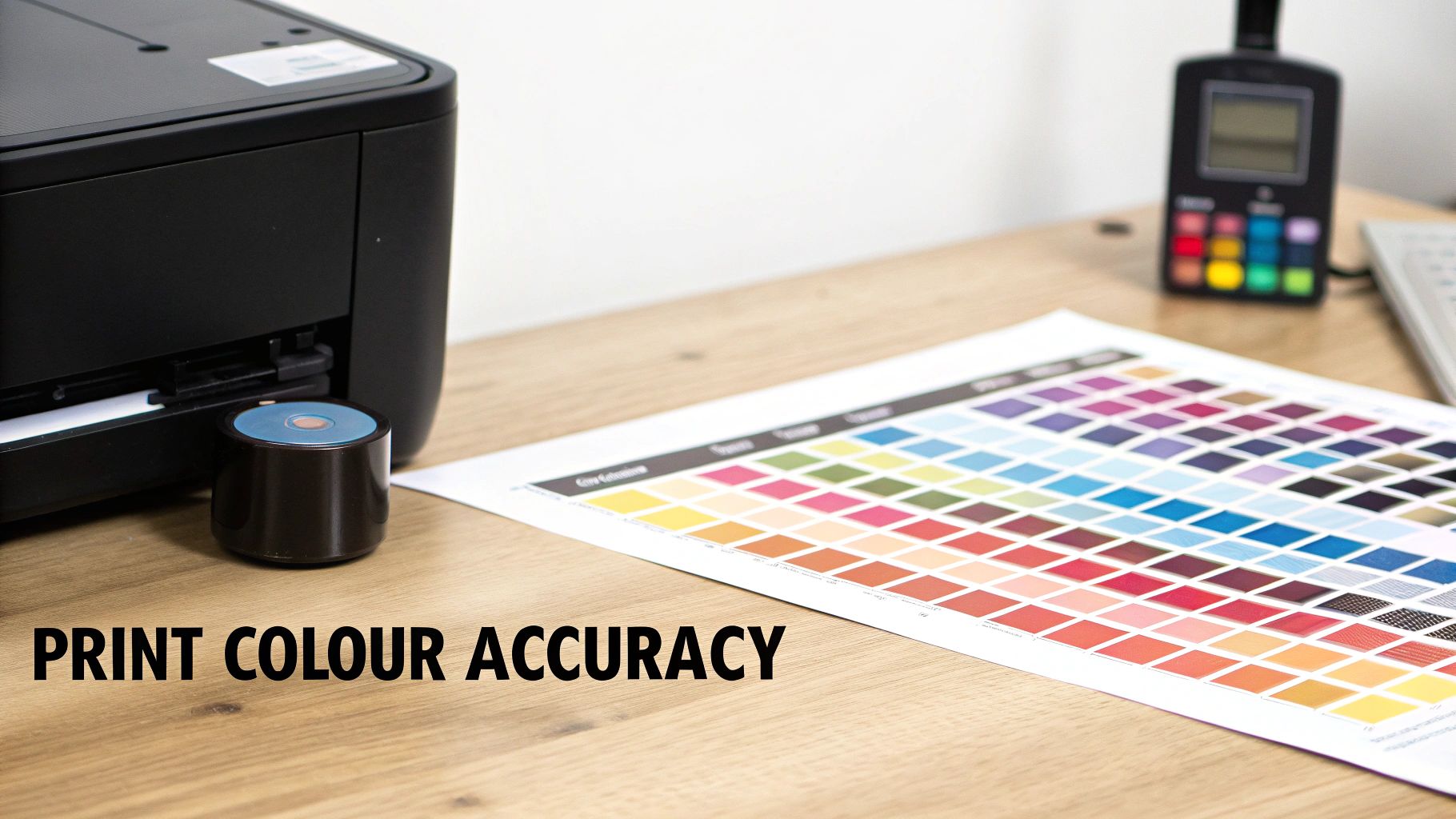
A printed DMC thread colour chart is an amazing tool to have in your stitching basket, but it's only useful if the colours are accurate. What you see on your screen almost never matches what comes out of your printer perfectly. That’s because of all the variables at play—screen calibration, printer inks, and even the paper you use.
But don't worry. Following a few straightforward steps can make a huge difference in your print quality, turning your chart into a reliable reference you can count on. The whole point is to close that gap between the digital swatch and the physical thread, letting you confidently match floss without any guesswork.
Calibrate Your Printer and Monitor
Before you even click "print," it's worth taking a few minutes to calibrate your gear. Most computer operating systems have built-in screen calibration tools. They'll walk you through adjusting brightness, contrast, and gamma to make sure the colours you're seeing are as true-to-life as possible.
Your printer needs a little love, too. Dig into your printer’s maintenance software and run a nozzle check and a print head alignment. It’s a simple step, but it prevents the kind of streaky or blurry printing that can completely throw off the colour swatches. A great print always starts with well-maintained hardware.
Choose the Right Paper and Settings
The type of paper you print on is a game-changer. For the most vibrant and accurate colours, I’d steer clear of standard copy paper. Instead, grab some high-quality, bright white matte photo paper or a good presentation paper. This kind of paper is made to absorb ink evenly, which stops the colours from looking muddy or washed out.
Next, you'll want to get your printer settings just right.
- Print Quality: Always choose the highest quality option your printer offers. It might be called "Best," "High," or "Photo."
- Paper Type: Tell your printer what it's printing on! Be sure to select the specific paper you're using from the dropdown menu, like "Matte Photo Paper." This helps the printer release the correct amount of ink.
- Colour Management: If you have the option, let the printer manage the colours. This usually gives much better results than letting your PDF viewer or photo app try to handle it.
A very common problem is that printed colours look much darker than they did on the screen. This happens because our screens are backlit, which naturally makes colours appear brighter. Printing on good matte paper at the highest quality setting helps make up for this difference, getting you much closer to the real-world thread colour.
For those of us who create digital patterns or take pictures of our floss, getting the colours right is everything. If you're serious about perfect colour matching, using a product photography light box for consistent color capture can be a real game-changer. These tips should help you create a trusty, physical dmc thread colour chart for all your future projects.
Understanding How the DMC Chart Has Changed Over Time
The DMC thread colour chart isn't just a static reference; it's a living document that has grown and adapted over many decades. If you've ever inherited a floss collection or worked from a vintage pattern, you know how important it is to understand this history. It's the key to figuring out older threads, knowing why some colours have disappeared, and appreciating the story behind the numbers.
This historical context is incredibly practical. A pattern from the 1970s might call for a number that seems completely unfamiliar today. The story of the DMC chart—with its expanding colour palette, subtle dye lot shifts, and evolving skein labels—explains why. Knowing these details helps you confidently adapt older projects with modern threads.
Key Moments in the Chart's History
The DMC chart's journey is marked by several major updates that reflect the brand's growth and industry shifts. You can often spot these milestones right on the skein labels, which offer fantastic clues about a thread's age. For a stitcher, these small details can be surprisingly useful when trying to date a vintage stash or figure out why one skein looks different from another.
The look of the chart and the skein labels has changed a few times. For instance, back in 1958, DMC gave its packaging a modern refresh, putting the company name on the bottom band of the skein. They also tweaked the top band to the style we see today, adding the number ‘25’ and the standard 8-meter length. Then, in 1963, a company merger brought in the iconic black label, replacing the old dark blue one. You can dive deeper into these fascinating label changes and what they mean on the lordlibidan.com blog about DMC thread history.
From Vintage Numbers to Today's Palette
One of the biggest parts of the chart's evolution is the sheer expansion of colours. Over the years, DMC has added hundreds of new shades to keep up with the creative demands of stitchers and designers everywhere.
This has resulted in a few interesting quirks you might encounter:
- Discontinued Colours: Some older colours have been retired for good. If a vintage pattern lists a colour you can't find anywhere, it's likely out of production. In these cases, a modern conversion chart is your best friend for finding the closest available match.
- New Colour Ranges: The launch of entirely new sets of colours—often marked with a symbol like a dot or an asterisk on newer charts—radically expanded the creative possibilities.
This timeline is more than just trivia. Let's say you find a skein with a dark blue label in your grandmother's sewing box. Right away, you know it was probably made before 1963. Suddenly, your floss stash isn't just a collection of colours; it's a tangible piece of needlework history.
Solving Common Colour Matching Challenges
Even with the best chart laid out in front of you, matching colours can sometimes be a real headache. A printed DMC thread colour chart is an incredible tool, but it can't always predict the little quirks that pop up in the real world. Knowing what to look out for is half the battle in making sure your finished piece looks just right.
One of the biggest culprits you'll run into is dye lot variation. DMC’s quality control is top-notch, but tiny, almost imperceptible differences can happen between batches of thread dyed at different times. This means a skein of DMC 823 you buy today might be just a smidge different from one you bought a year ago. It’s not usually a big deal, but you might notice it in a large, solid block of colour.
From Digital Photo to Physical Thread
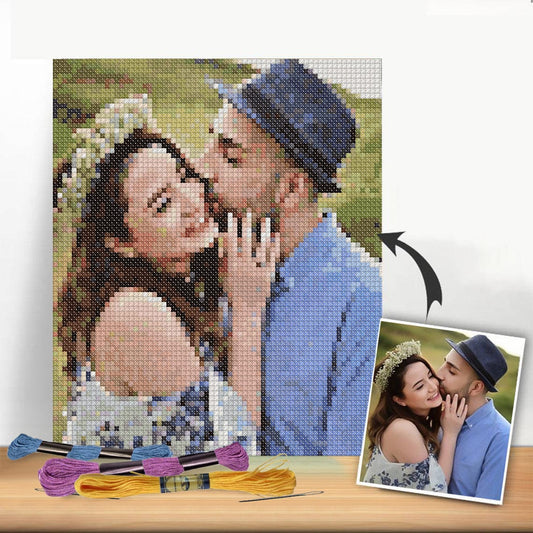
Turning a favorite photo into a cross-stitch pattern is a fantastic way to create something truly personal. But this is where colour matching gets really interesting. The software that converts your image is great at giving you a starting point, but it often misses the subtle details that our eyes pick up so easily.
For example, a program might see a shadow and just call it grey. But when you look closer, you can see it's so much more. Your chart is the key to finding a richer, more lifelike alternative.
- Manual Tweaks Are Your Best Friend: Don't ever take a software-generated colour list as gospel. Think of it as a rough draft. Get your floss box and your chart out to make the real artistic choices yourself.
- Look for the Nuances: Study the photo. Is that shadow a cool, steely grey or a warm, earthy one? Your chart can help you spot the difference, pointing you toward a shade with a hint of blue (like DMC 3753) or a touch of brown (like DMC 3782) to bring that shadow to life.
- Cut Down on Colours: Software often goes overboard, suggesting a crazy number of nearly identical shades. Use your chart to group them. You can often create a beautiful, smooth gradient with just three or four well-chosen colours instead of ten that are barely different.
The DMC thread colour chart, which you might see officially called the DMC Mouliné Spécial 25 colour card, has been an essential part of a stitcher's toolkit since the middle of the 20th century. It features over 500 distinct shades, giving us the massive palette we need for these kinds of detailed tweaks. If you're curious about its backstory, you can dive into the history of DMC thread aging and identification.
Pro Tips for Perfect Colour Matching
To save yourself a lot of frustration and get your colours spot-on every time, try to build these habits into your stitching routine:
- Use Natural Daylight: Artificial light lies! Always, always check your colours in bright, indirect natural daylight. A bulb can completely change how a thread looks, making a blue seem purple or a red look orange.
- Stitch a Little Test Patch: When you're on the fence about a colour, just stitch a small 10x10 block on a scrap of your project fabric. This is the only way to see exactly how it will look once it's actually in your project.
- Trust the Floss, Not Just the Chart: If the thread in your hand doesn't seem to perfectly match the little swatch on your printed chart, always go with the physical thread. Remember, a printed chart is an excellent guide, but the real floss is the final word.
DMC Thread FAQs: Your Questions Answered
When you're in the middle of a project, questions are bound to pop up. It happens to everyone, from first-time stitchers to seasoned pros. Having a quick answer for those common little uncertainties about your floss and the DMC thread colour chart can be a real time-saver.
Think of this as your go-to spot for those practical, in-the-moment questions. We've gathered some of the most common queries we see in the stitching community to help you get the clarity you need and stitch with confidence.
How Many Colours Are in the DMC Stranded Cotton Line?
The classic DMC stranded cotton line (officially Article 117) is massive and keeps getting bigger. Right now, the collection boasts over 500 unique colours. That's an incredible palette to play with, covering all the solid shades, the beautiful variegated threads, and even the newer colours they've added over the last few years.
Because DMC is always tuning its palette to what designers and stitchers want, that exact number can change. We keep our downloadable chart updated regularly, so you can be sure you always have the most current list and don't miss out on any new additions.
What Is the Difference Between a Printed Chart and a Real Thread Chart?
This is a great question, and it really gets to the heart of colour accuracy. A printed chart, like the PDF we offer, uses high-quality ink on paper to show you the thread colours. It’s an incredibly handy, affordable, and easy-to-use tool for everyday stitching.
However, for absolute precision, nothing beats a real thread chart (often called a colour card).
- Printed Chart: A fantastic, close approximation of the colours. Just keep in mind that its accuracy can be slightly influenced by your printer's settings and the type of paper you use.
- Real Thread Chart: This is the gold standard. It has actual strands of each floss mounted right onto the card, giving you 100% perfect accuracy for colour, texture, and sheen. It completely bypasses any screen or printer variations.
If you're a designer, a pattern maker, or any stitcher who needs absolute certainty in your colour matching, a real thread chart is a worthwhile investment. It takes all the guesswork out of the equation, ensuring what you see is exactly what you get.
Is DMC Thread Colourfast and Washable?
Yes, absolutely. DMC Stranded Cotton is made to be 100% colourfast and very resistant to fading. You can confidently wash your finished pieces without worrying about the colours bleeding into each other.
For the best results, we recommend hand washing your embroidery in lukewarm water with a mild, pH-neutral soap. Rinse it well, then gently squeeze out the excess water—never wring it, as that can pull your stitches out of shape. Roll your piece up in a clean towel to blot out more moisture, then lay it flat to dry. To get a perfect finish, iron your work on the reverse side while it's still a little damp, using a clean cloth between the iron and your stitching.
Why Does My New Skein of Thread Look Different From an Old One?
If you’ve ever held up a new skein next to an old one and noticed a slight difference, you're not imagining things. You’re seeing a variation between dye lots. While DMC has an incredible reputation for colour consistency, tiny, almost imperceptible shifts can happen in batches of thread dyed at different times.
For most projects, you'd never even notice this. But if you're working on a large, solid block of colour—like a sky or a background—a switch in dye lots could become visible. The best way to avoid this is to buy all the skeins you need for a particular colour at the same time. This is the best way to ensure they all came from the same batch, giving you a perfectly uniform finish across your project.
Ready to turn your most cherished photos into timeless works of art? At Cross Stitched, we provide everything you need to create a personalized cross-stitch masterpiece. Upload your picture today and receive a complete, custom kit with pre-sorted DMC threads, high-quality fabric, and a detailed pattern delivered right to your door. Start stitching your memories now at https://cross-stitched.com.