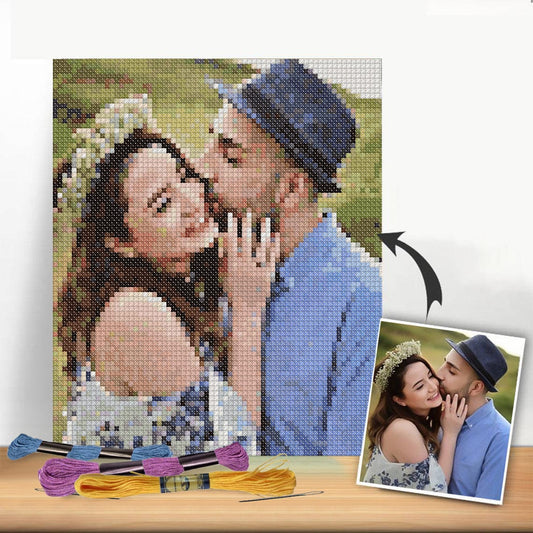
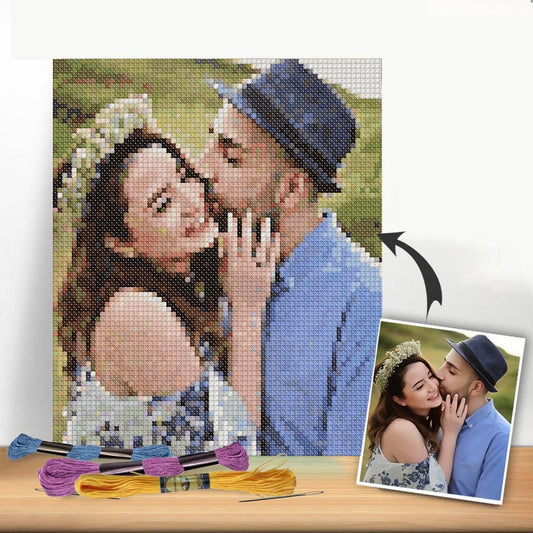
While the simple 'X' of a cross stitch forms the foundation of this beloved craft, a whole world of texture, detail, and artistry opens up when you explore the full spectrum of cross stitch types of stitches. Moving beyond the basic grid allows you to transform a flat, pixelated design into a dynamic piece with depth, smooth lines, and intricate accents. Mastering these additional stitches is the key to elevating your projects from simple patterns to handcrafted works of art, giving you the control to create realistic shading, crisp outlines, and beautiful decorative effects.
This comprehensive guide is designed to be your go-to resource for expanding your stitching vocabulary. We will break down ten essential stitches, moving from the fundamental cross stitch to more advanced techniques used for outlining, filling, and adding unique textures. For each stitch, you will find a clear, practical overview covering its primary use, difficulty level, and step-by-step guidance to help you execute it perfectly. We'll also provide tips on thread selection, fabric considerations, and specific project ideas where each stitch truly shines.
Whether you're a beginner aiming to tackle your first detailed kit or an experienced stitcher looking to refine your skills, this listicle provides the actionable insights you need. You'll learn not just how to make each stitch, but why and when to use it, empowering you to make more intentional creative choices. Prepare to unlock a new level of detail and sophistication in your needlework, turning your next cross stitch project into your most impressive one yet.
1. Cross Stitch (X Stitch)
The Cross Stitch, or X Stitch, is the foundational building block of the entire cross-stitch craft. It's the most iconic and frequently used of all cross stitch types of stitches, forming the pixel-like squares that create detailed, gridded images. This stitch consists of two diagonal lines crossing over each other to form a perfect 'X'. Each X is typically worked over one square of Aida fabric or over two threads on evenweave or linen, creating a uniform and tidy appearance essential for intricate patterns.
This stitch is the engine behind photo-to-pattern conversions, where its grid-based nature perfectly translates digital pixels into thread. Its precision makes it ideal for everything from large, complex portraits to small, charming holiday ornaments.
How to Execute the Cross Stitch
The Cross Stitch is created in two simple movements. First, bring your needle up from the back of the fabric at the bottom-left corner of a square and push it down through the top-right corner to create the first diagonal leg (/). Next, bring the needle up through the bottom-right corner and down through the top-left corner to complete the 'X'.
Best Practices for Flawless Cross Stitches
To achieve a professional, polished finish, consistency is key. Always make sure your top stitches lie in the same direction across the entire project (e.g., all top stitches go from bottom-right to top-left). This creates a smooth, even texture and light reflection. For efficiency, many stitchers use the "row method," where they complete a row of bottom legs (////) first, then work back across the row to complete the top legs (\\). This method is faster and helps maintain even tension. The right fabric choice is also crucial for neat stitches; discover more about the best fabric for cross stitch on cross-stitched.com to set your project up for success.
2. Half Cross Stitch
The Half Cross Stitch is exactly what its name suggests: one-half of a full cross stitch. It consists of a single diagonal stitch (/) instead of a complete 'X'. This seemingly simple stitch is a powerful tool for creating depth, texture, and nuance in a design. It's especially effective for background elements, shading, and creating a sense of distance, as the sparser coverage makes areas appear softer or further away compared to areas with full cross stitches.
This stitch is a go-to for photo-to-pattern conversions, where it masterfully replicates subtle gradients and shading found in photographs. By using only half the thread of a full stitch, it not only conserves materials but also speeds up the stitching process for large background areas, making it a favorite for extensive landscape or portrait projects. Its efficiency and artistic effect make it one of the most versatile cross stitch types of stitches.
How to Execute the Half Cross Stitch
To create a Half Cross Stitch, simply perform the first leg of a standard cross stitch. Bring your needle up from the back of the fabric at the bottom-left corner of a square and push it down through the top-right corner. This creates a single diagonal line (/), and that's it. For a row, you would work a series of these single diagonal stitches across the fabric.
Best Practices for Flawless Half Cross Stitches
Consistency is paramount when working with half stitches to ensure a uniform appearance. All your half stitches must slant in the same direction across the entire project (e.g., all bottom-left to top-right). This prevents a messy, uneven look and ensures the light reflects consistently off the thread. When used for shading, combining half stitches with full cross stitches creates a fantastic contrast, making foreground elements pop. This technique is perfect for adding subtle depth to smaller projects, like those in the 8"x12" kit sizes, without overwhelming the design.
3. Backstitch
If the cross stitch creates the pixels of an image, the Backstitch draws the lines that give it definition and life. This fundamental linear stitch is the key to transforming a blocky, pixelated image into a sharp and detailed work of art. It creates solid, continuous lines, much like a pen outline on a drawing. Backstitch is essential for outlining shapes, defining borders, and adding intricate details that cross stitches alone cannot capture, such as text, facial features, or delicate patterns.
This stitch is the secret weapon in custom photo cross-stitch kits, where it crisply defines the features of a beloved pet's face or the lettering on a personalized family keepsake. Its ability to create clean lines makes it one of the most versatile and indispensable cross stitch types of stitches for adding clarity and a professional finish to any project.
How to Execute the Backstitch
The Backstitch is worked by creating a line of individual, connected stitches. To begin, bring the needle up from the back of the fabric one stitch length away from your starting point. Then, take the needle back down through the starting point. For the next stitch, bring the needle up one stitch length ahead of the first stitch and then bring it back down into the same hole where the first stitch ended, creating a seamless line.
Best Practices for Flawless Backstitches
To achieve clean, crisp outlines, tension is crucial. Keep your stitches firm but not so tight that they pucker the fabric. For incredibly fine details, such as eyelashes or whiskers in a pet portrait, using a single strand of thread is highly effective. When working on a pattern, it's often easiest to complete all the cross stitches first and add the backstitching last. This prevents you from accidentally piercing the backstitch threads while you work. For a complete walkthrough, our guide on how to backstitch on cross-stitched.com provides step-by-step instructions.
4. French Knot
The French Knot is a decorative stitch that introduces texture and dimension to the flat surface of a cross-stitch project. Unlike the gridded, uniform nature of standard cross stitches, this stitch creates a small, raised dot on the fabric. It is formed by wrapping the embroidery floss around the needle before passing it back through the fabric, resulting in a tiny, elegant knot that stands out from the background.

This stitch is perfect for adding delicate details that require a three-dimensional effect. Common uses include creating the centers of flowers, pupils in eyes, stars in a night sky, or any small, circular embellishment. Its ability to add intricate accents makes it an invaluable skill among the various cross stitch types of stitches, elevating a simple design into a more dynamic piece of art.
How to Execute the French Knot
To create a French Knot, bring the needle up from the back of the fabric. Hold the floss taut with your non-dominant hand and wrap it around the needle once or twice, close to the fabric surface. While keeping the tension on the floss, insert the needle back into the fabric just a single fabric thread away from where it first emerged. Gently pull the needle through to the back, allowing the knot to form and tighten on the surface.
Best Practices for Flawless French Knots
Consistency is crucial for beautiful French Knots. To control the knot's size, vary the number of wraps around the needle (typically one to three) rather than changing your thread count. Always insert the needle one fabric thread away from the entry point, not back into the same hole, to prevent the knot from pulling through to the back. Maintaining even tension on the floss as you pull the needle through is the secret to a neat, tight knot. It’s highly recommended to practice on a scrap piece of fabric first to perfect your technique.
5. Long Stitch (Straight Stitch)
The Long Stitch, often referred to as a Straight Stitch, is a simple yet incredibly versatile stitch used to create straight lines of varying lengths. It’s formed by bringing the needle up through the fabric at one point and down at another, spanning multiple squares or threads. While not a cross stitch itself, it is frequently incorporated into cross-stitch designs to add linear details, fill large areas quickly, and create unique textures that stand in contrast to the gridded ‘X’ stitches.
This stitch is particularly effective in photo-to-pattern conversions for rendering elements like flowing hair, blades of grass, or the serene blues of a sky or body of water. Its ability to create directional lines provides a sense of movement and depth that pixel-based cross stitches alone cannot always achieve, making it a valuable tool in the stitcher's arsenal.
How to Execute the Long Stitch
To create a Long Stitch, bring your needle up from the back of the fabric at your desired starting point. Then, pull the thread across the fabric to the end point of the line you wish to create and push the needle down through the fabric. The length of the stitch can be customized, spanning two or more squares of the fabric grid.
Best Practices for Flawless Long Stitches
To make your Long Stitches look their best, maintaining even tension is crucial to prevent puckering the fabric or leaving loose, loopy stitches. When filling a larger area, work in organized rows to ensure uniform coverage and a neat appearance. For creating realistic textures, such as wood grain or fur, vary both the length and direction of your stitches. Combining Long Stitches with traditional cross stitches adds wonderful contrast and definition, allowing key elements to pop. Using a medium to full thread thickness (3-6 strands) will also ensure the stitches are prominent and provide good coverage.
6. Stem Stitch
The Stem Stitch is a classic linear embroidery stitch often incorporated into cross-stitch projects to create smooth, flowing lines that other cross stitch types of stitches, like the backstitch, cannot easily achieve. It forms a textured, rope-like line, making it ideal for outlining curved shapes, stems, and vines. Unlike the discrete steps of a backstitch, the Stem Stitch creates a more fluid and dimensional line by angling each stitch and having the thread emerge beside the previous one.
This stitch is indispensable for adding graceful, organic elements to a grid-based cross-stitch pattern. It beautifully renders cursive text, delicate floral stems, and the soft contours of a portrait, providing a refined finish that elevates the entire piece. Its elegant appearance makes it a go-to for decorative borders and intricate detailing in custom designs.
How to Execute the Stem Stitch
To create the Stem Stitch, bring your needle up from the back of the fabric to start your line. Make a straight stitch forward, but before pulling the floss tight, bring the needle up again halfway through the stitch and just to the side of it. Pull the first stitch taut, with the working thread staying below your needle. Repeat this motion, making a second stitch and bringing the needle up beside the midpoint of the previous stitch to create a continuous, overlapping line.
Best Practices for Flawless Stem Stitches
Consistency is crucial for a beautiful Stem Stitch. Always keep the working thread on the same side of the needle, typically below or to the right, to ensure the stitches twist uniformly and create that signature rope-like texture. Maintaining even tension prevents puckering and keeps the line smooth and consistent.
For delicate curves and sharp detail, using a single strand of floss is highly effective. Practice on a piece of scrap fabric to master the angle and rhythm of the stitch before applying it to your final project. When outlining, work slowly and carefully to maintain the stitch angle, ensuring your lines are elegant and precise.
7. Split Stitch
The Split Stitch offers a refined alternative to the standard backstitch, creating a solid, textured line ideal for outlines and lettering. Unlike the segmented appearance of a backstitch, this stitch forms a continuous, chain-like row by piercing the thread of the preceding stitch. This technique results in a smoother, more substantial line that is perfect for adding fine details, text, and elegant borders to cross-stitch projects, giving them a distinct, embroidered finish.
This stitch is particularly favored for adding personalized elements to a design. It excels at rendering delicate curves and sharp lettering, making it invaluable for adding names to a family keepsake, embroidering quotes on a custom gift, or defining the subtle features in a portrait conversion. Its solid line quality adds a premium feel that elevates the overall look of a finished piece.
How to Execute the Split Stitch
To create a Split Stitch, first make a single straight stitch. Bring your needle up from the back at your starting point and down at the end of the stitch. Next, bring the needle up through the center of that first stitch, splitting the floss fibers. Push the needle back down into the fabric a short distance away to create the next stitch in the line. Continue this process, always bringing the needle up through the middle of the previous stitch.
Best Practices for Flawless Split Stitches
For the cleanest execution, consistency is crucial. Using a single strand of thread makes splitting the floss much easier and results in a very fine, delicate line. Keep your stitches relatively short and uniform, around a quarter-inch, to maintain control and create smooth curves. Working with good lighting and even a magnifier can be a huge help, especially with darker fabrics. For the most professional look, try to be consistent in how you split the thread, either always between the same strands or in the same direction, to create an even, rope-like texture.
8. Satin Stitch
The Satin Stitch is a decorative filling stitch used to create a smooth, solid area of color with a distinctively lustrous finish. Unlike the gridded 'X' of a traditional cross stitch, this technique involves placing a series of straight, parallel stitches closely together to completely cover a designated shape. This method abandons the pixelated look in favor of a sleek, polished surface, making it one of the most effective cross stitch types of stitches for adding texture and dimension.
This stitch is perfect for highlighting specific elements within a larger cross-stitch design, such as the glossy petals of a flower or the flowing fabric of a dress in a personalized portrait. Its ability to create solid color blocks makes it invaluable for designs that require a departure from the standard grid, offering a touch of classic embroidery elegance to any project.
How to Execute the Satin Stitch
To create a Satin Stitch, begin by bringing your needle up on one edge of the shape you wish to fill. Carry the thread across the shape and push the needle down on the opposite edge, creating a single straight stitch. Bring the needle back up right next to where your first stitch started and repeat the process, laying each new stitch perfectly parallel and snug against the previous one until the entire area is covered.
Best Practices for Flawless Satin Stitches
A pristine Satin Stitch relies on uniformity and control. To prevent puckering, maintain consistent and even thread tension; it should be firm enough to lay flat but not so tight that it distorts the fabric. For the most luxurious, high-sheen finish, consider using silk or rayon threads. Before you begin, you can create a small "split stitch" outline around the shape to help guide your stitches and create a clean, raised edge. Always ensure your stitches lay perfectly parallel to one another for that signature smooth, satin-like appearance.
9. Seed Stitch
The Seed Stitch is a versatile filler stitch that introduces a delightful, organic texture to cross-stitch projects. Unlike the uniform grid of the standard cross stitch, the Seed Stitch consists of small, straight stitches placed randomly within a designated area. These stitches vary in direction and sometimes length, creating a speckled, textured effect that adds depth and visual interest without completely obscuring the fabric beneath.
This stitch is particularly effective for breaking up large blocks of color and mimicking natural surfaces. It's an excellent choice for adding realistic texture to elements like grassy fields, sandy beaches, stone pathways, or a mottled sky. Its scattered nature makes it one of the more creative cross stitch types of stitches, allowing for artistic interpretation within the pattern's boundaries.
How to Execute the Seed Stitch
Executing the Seed Stitch is wonderfully intuitive. Simply bring your needle up from the back of the fabric at your desired starting point within the fill area. Make a small, straight stitch by pushing the needle back down a short distance away. Continue making these individual straight stitches, varying their angle and placement randomly until the area is filled to your liking. The goal is to create an evenly scattered, "seeded" look.
Best Practices for Flawless Seed Stitches
For an authentic, textured appearance, randomness is your friend. Intentionally vary the direction of each stitch to avoid creating any discernible pattern. Using two to four strands of floss will make the stitches more prominent and enhance the textural effect. Keep the individual stitches small, typically a quarter-inch or less, to maintain a refined, delicate look rather than a chaotic one. When working from a pattern, use the color chart as a guide for placement, but feel free to blend multiple shades of thread to achieve a more complex and realistic effect, perfect for natural landscapes.
10. Blending Stitch (Thread Blending)
The Blending Stitch, also known as Thread Blending, is a sophisticated technique used to create seamless color transitions and realistic gradients. Unlike other cross stitch types of stitches that use a single, solid color, thread blending involves combining strands of two or more different colors in the needle at the same time. This intermixing of shades allows for subtle, nuanced shading that is impossible to achieve with solid blocks of color, making it essential for photorealistic designs.
This technique is the key to creating lifelike depth and dimension in complex patterns. It’s particularly valuable for projects converted from photos, such as custom portrait kits or detailed landscapes, where subtle shifts in tone are crucial for realism. Blending can soften the hard edges between color blocks, resulting in a more painterly and professional finish.
How to Execute the Blending Stitch
To create a Blending Stitch, you simply take one strand from two (or more) different thread colors and thread them through your needle together. You then work a standard Cross Stitch as you normally would. For example, to create a gentle transition between light blue and medium blue, you would use one strand of the light blue floss and one strand of the medium blue floss, treating them as a single two-stranded thread.
Best Practices for Flawless Blending
Success with thread blending relies on careful color selection and a consistent technique. For the most natural-looking gradients, choose colors that are closely related on the color chart, such as two DMC shades that are only one or two numbers apart. It's wise to practice on a scrap piece of fabric first to see how the colors will combine before committing them to your main project. Using a thread conditioner can also help keep the different strands from tangling as you stitch. To master this and other nuanced methods, you can explore more advanced cross stitch techniques on cross-stitched.com.
Comparison of 10 Cross-Stitch Stitches
| Stitch | 🔄 Complexity | ⚡ Resources & speed | ⭐ Expected outcome | 📊 Ideal use cases | 💡 Key advantage / tip |
|---|---|---|---|---|---|
| Cross Stitch (X Stitch) | Low — basic, repetitive technique; consistent tension needed | Moderate thread use; works on Aida/evenweave; slower for large areas | Precise, pixelated imagery ⭐⭐⭐⭐ | All skill levels; photo-to-pattern conversions; full-coverage designs | Work in rows/blocks; use pre-sorted DMC for color accuracy |
| Half Cross Stitch | Medium — requires strict stitch direction | Low thread use (~50% of full X); faster than full cross | Subtle shading, less coverage ⭐⭐⭐ | Shading/gradient areas; large projects needing thread economy | Combine with full X for contrast; keep directional consistency |
| Backstitch | Medium — steady hand and precise placement required | Low thread use; can be time-consuming when detailed | Sharp, defined outlines and fine detail ⭐⭐⭐⭐ | Outlining faces, text, borders, feature definition | Use single-strand for precision; moderate tension to avoid puckering |
| French Knot | High — needs practice for consistent size | Low thread per knot but slow for many knots | Small dimensional accents, texture ⭐⭐⭐ | Flower centers, decorative accents, focal points | Wrap 1–3 times; practice on scrap; control tension closely |
| Long Stitch (Straight Stitch) | Low–Medium — simple execution but tension-sensitive | Efficient for large fills; faster coverage; moderate thread use ⚡ | Directional texture and quick fills ⭐⭐⭐ | Backgrounds, large areas (water/sky), directional shading | Vary length/direction for texture; secure ends to prevent snagging |
| Stem Stitch | Medium — requires angle consistency (~45°) | Moderate thread use; slower than simple outline stitches | Smooth, natural curved lines ⭐⭐⭐⭐ | Curved outlines, organic shapes, portrait contours | Practice angle control; use single-strand for fine curves |
| Split Stitch | Medium–High — careful thread splitting needed | Moderate thread use; time-consuming for precision work | Solid, textured lines suitable for text ⭐⭐⭐⭐ | Lettering, fine outlines, detailed personalization | Use single-strand; keep stitches short and consistent |
| Satin Stitch | High — precise parallel stitches and tension control | High thread consumption; slow for large areas | Smooth, lustrous fills with polished finish ⭐⭐⭐⭐ | Highlighting features, solid fills, luxury finishes | Keep stitches parallel and tension even; silk for sheen |
| Seed Stitch | Medium — artistic placement; forgiving but time-consuming | Moderate thread use; more time due to random placement | Speckled, natural texture ⭐⭐⭐ | Grass, foliage, stone textures, background depth | Vary direction/length and colors for realism; keep stitches small |
| Blending Stitch (Thread Blending) | High — advanced color selection and technique | High planning and thread management; slow setup | Seamless gradients and realistic shading ⭐⭐⭐⭐ | Photo-realistic portraits, subtle gradations, advanced kits | Combine 1 strand of nearby shades; practice blends on scrap |
Final Thoughts
Embarking on a cross stitch journey is like learning a new language. You begin with the basic alphabet, the simple Cross Stitch, and soon discover a rich vocabulary of techniques that can express texture, emotion, and intricate detail. As we've explored, the world of needlework is vast, extending far beyond the foundational 'X' that gives the craft its name. Mastering the diverse array of cross stitch types of stitches is the key to unlocking your full creative potential and transforming a simple pattern into a breathtaking piece of art.
From the clean, defining lines of the Backstitch to the delicate, textural pop of a French Knot, each stitch serves a unique purpose. Think of them as different tools in your creative toolkit. A project might call for the smooth, glossy finish of a Satin Stitch to depict a calm lake, while a nearby field could be brought to life with the scattered, organic feel of the Seed Stitch. Understanding when and how to deploy each one elevates your work from a simple, pixelated image to a dynamic, multi-dimensional masterpiece.
Your Stitching Journey: From Knowledge to Mastery
The true value in learning these varied stitches lies not just in their individual execution, but in their combination. Consider how a simple design can be enhanced:
- Add Depth and Dimension: Use Long Stitches to create the illusion of flowing hair or a shimmering waterfall, breaking free from the grid-like nature of standard cross stitch.
- Create Realistic Textures: A fluffy sheep in a pastoral scene becomes infinitely more tactile and believable when its wool is rendered with clusters of French Knots instead of flat white stitches.
- Achieve Subtle Blending: The Thread Blending technique is your secret weapon for creating soft, photorealistic gradients, essential for capturing the subtle color shifts in a sunset or a portrait.
- Define with Precision: The Stem Stitch and Split Stitch offer elegant alternatives to the Backstitch for outlining, providing a more fluid, rope-like or braided appearance that can perfectly complement a design's aesthetic.
This journey is about building confidence. It starts with recognizing that you have more options than just the half and full cross stitch. As you practice, you will develop an intuitive sense of which stitch will best achieve your desired effect. Don't be afraid to experiment. If a pattern calls for a standard Backstitch, consider if a Stem Stitch might add a more graceful curve to a flower's stem. This is where your personal artistry begins to shine.
The beauty of cross stitch is its accessibility. With just a needle, thread, and fabric, you can start building this incredible skill set. Each successfully executed French Knot and every perfectly straight Long Stitch is a small victory that contributes to the larger, stunning picture. Continue to practice these different cross stitch types of stitches, refer back to this guide whenever you need a refresher, and watch as your ability to translate ideas into threaded art grows exponentially. Your needle is your paintbrush; now you have a full palette of techniques to create with.
Ready to put your newfound knowledge into practice with a design that's uniquely you? At Cross Stitched, we transform your favorite photos into beautiful, easy-to-follow cross stitch kits, complete with everything you need to start stitching. Visit Cross Stitched to create your custom kit and see how these stitches can bring your personal memories to life.