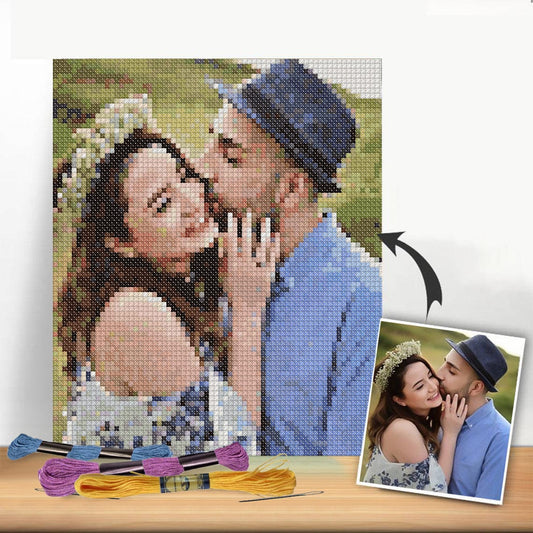
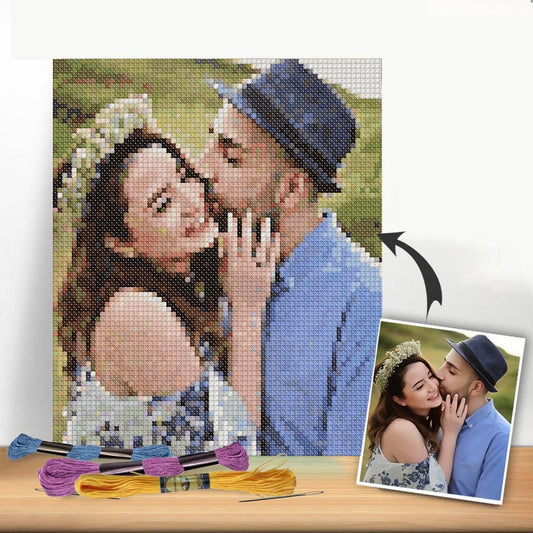
Quick answer: The best fabric for beginners is 14-count white Aida cloth, which offers a clear grid, comfortable stitch size, and wide availability. For finer work, 28-count or 32-count linen evenweave gives more detail per inch. Fabric choice depends on the desired stitch count, finished size, and the stitcher's experience level.
Frequently asked questions
What is the best cross stitch fabric for beginners?
14-count Aida cloth in white or cream is the standard beginner fabric. The distinct grid of holes makes counting easy and the stitch size (about 2mm) is comfortable to work. It is available in a wide range of colours from craft retailers.
What is the difference between Aida and linen for cross stitch?
Aida has a prominent block weave that forms obvious holes. Linen (and other evenweave fabrics) have a finer, more regular thread structure — stitchers work over two threads per stitch, enabling higher stitch counts and finer detail in the finished piece.
What fabric count should I use for a cross stitch kit?
Most commercial cross stitch kits include 14-count or 16-count Aida. Higher-count fabrics (18, 28, 32-count) produce a finer finished image and are better suited to detailed or photographic designs.
Can you cross stitch on regular cotton fabric?
Counted cross stitch requires an evenweave fabric to count stitches accurately. Plain cotton fabric lacks the regular grid, making accurate counting very difficult. Waste canvas can be basted onto plain fabric as a temporary guide, then removed after stitching.
If you're wondering what the best fabric for cross stitch is, you'll almost always hear Aida cloth recommended, and for good reason—especially if you're just starting out. Its perfectly square weave creates an easy-to-follow grid that makes stitching straightforward and less prone to errors.
For those with a bit more experience or projects that call for finer detail, fabrics like Evenweave and Linen offer a smoother, more refined backdrop for your work.
Understanding Your Fabric Options
Choosing the right fabric is arguably the most crucial decision you'll make before you even thread your needle. The material you pick sets the tone for the entire project, affecting everything from the final look to the actual experience of stitching. Things like thread count, the fiber it's made from, and the weave structure all play a part in how easy the fabric is to work with and how detailed your finished piece can be.
This handy decision tree gives you a quick visual guide to help you figure out which fabric is the best launchpad for your next project, factoring in count, detail, and cost.
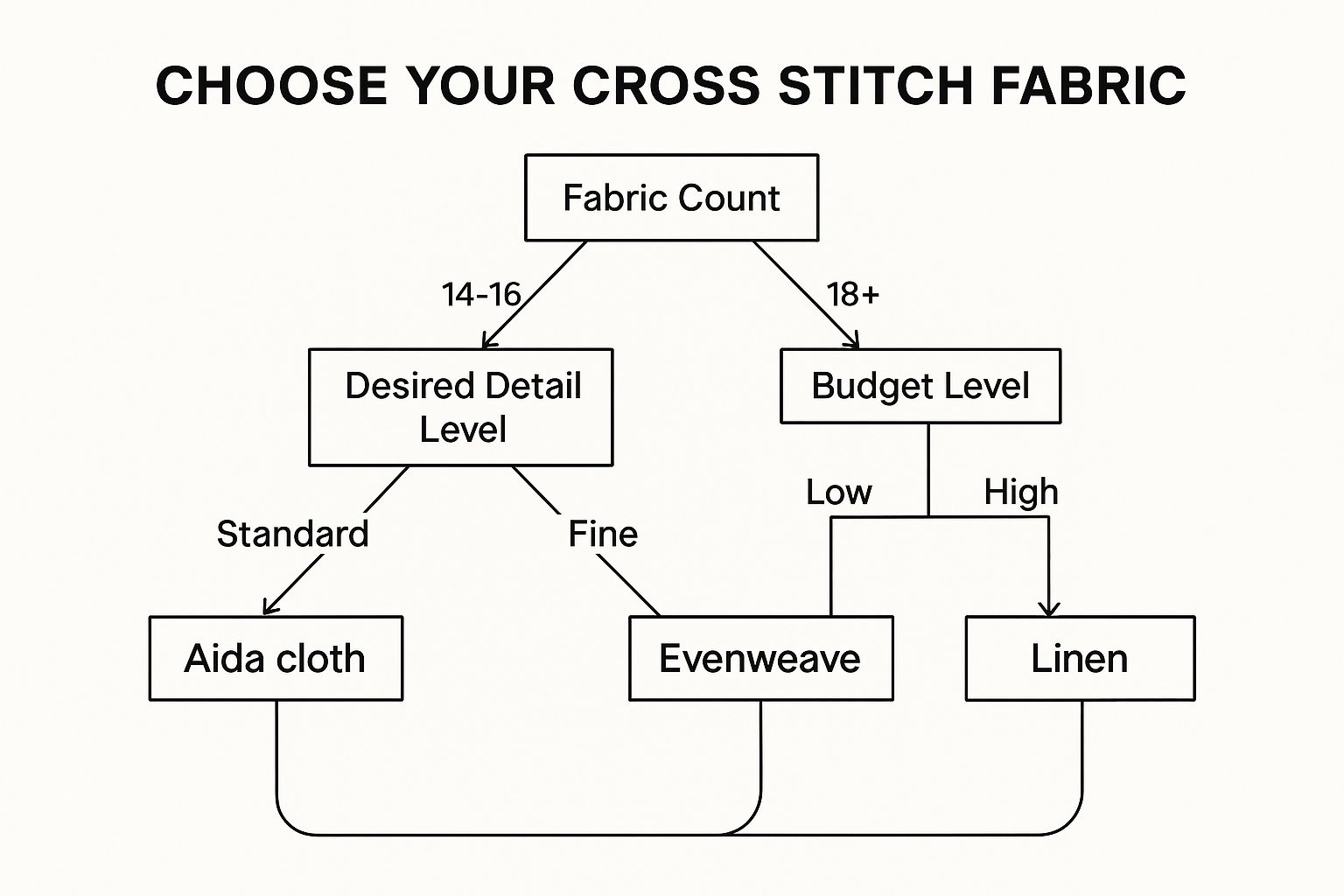
As you can see, Aida is your go-to for most standard projects, but when those tiny, intricate details matter, you'll find yourself reaching for Evenweave or Linen.
To make the choice even clearer, here's a quick rundown of the three most common fabrics you'll encounter.
Cross Stitch Fabric At a Glance
This quick comparison of the most common cross stitch fabrics is designed to help you choose the right one for your project level and style.
| Fabric Type | Material | Best For | Common Counts | Skill Level |
|---|---|---|---|---|
| Aida | 100% Cotton | Beginners, full-coverage designs, clear stitch definition | 11, 14, 16, 18 | Beginner |
| Evenweave | Cotton/Rayon Blend | Intermediate stitchers, designs with fractional stitches, smooth backgrounds | 25, 28, 32 | Intermediate |
| Linen | 100% Flax | Advanced projects, heirloom pieces, organic and traditional textures | 28, 32, 36, 40 | Advanced |
Each fabric really has its own personality and purpose.
Think of it this way: Aida is your reliable, structured guide. Evenweave is the smooth, polished canvas for more refined artwork. And Linen? That's the classic, timeless choice for creating heirlooms that are full of character.
Remember, the fabric's count is just as critical as its type. It directly impacts the size of your stitches, which in turn determines the right needle for the job. You can learn more about how to choose the right size needle for cross stitch in our detailed guide. Getting these fundamentals right from the start is the key to a stress-free process and a beautiful result you can be proud of.
How Fabric Count Defines Your Project
Once you’ve landed on the right type of fabric, your next big decision is the count. This one number pretty much defines your entire project, influencing everything from its final size to how much detail you can pack in. In simple terms, fabric count just means the number of threads (or squares) per inch of fabric.
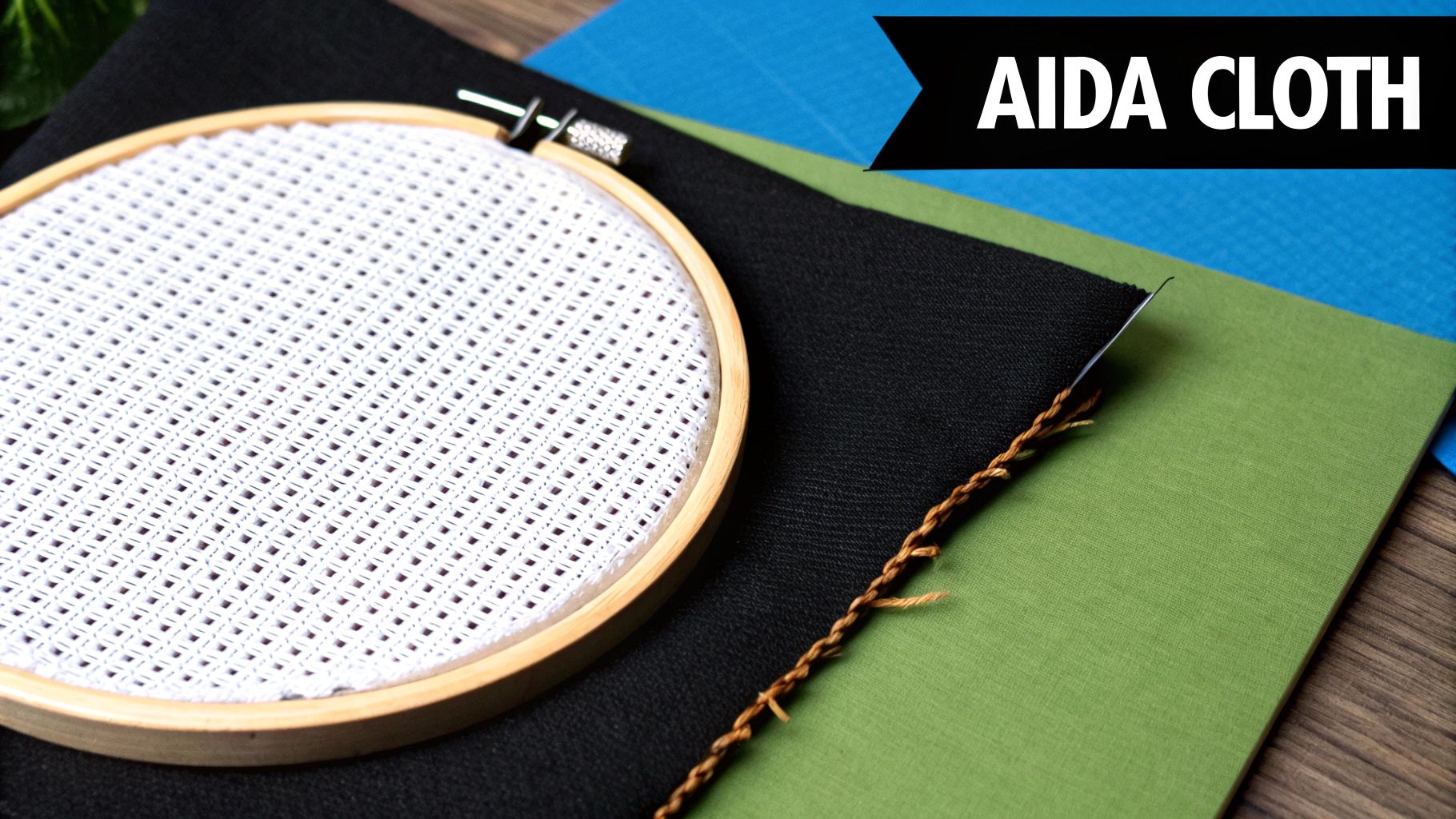
A low number, like 11-count Aida, gives you 11 big squares per inch. This makes for large, chunky stitches that are a breeze to see. On the other end of the spectrum, a high number like 18-count Aida or 32-count Linen means you have way more threads per inch, resulting in tiny, delicate stitches. Understanding this relationship is the key to planning your work.
Low Count vs. High Count Fabrics
So, should you go low or high? It’s not about which one is "better"—it's about what’s right for your vision. Each has its place.
- Low-Count Fabrics (e.g., 11-count, 14-count): These are fantastic for beginners. The holes are large, making them easy on the eyes and simple to count. They’re also perfect for bold, graphic patterns where you want the stitches to stand out. You'll cover the area much faster, which is always satisfying.
- High-Count Fabrics (e.g., 18-count, 28-count, 32-count): This is where you go for those incredibly detailed, intricate designs. Think of patterns that look more like paintings. The smaller stitches blend seamlessly, creating smooth color transitions and crisp lines.
The difference in your project's final size can be dramatic. A pattern that's 100 stitches wide will finish at nearly nine inches on 11-count fabric. But on 18-count? It shrinks to just five and a half inches. Before you commit, it's a great idea to plug your numbers into our handy cross stitch calculator to see exactly how big your piece will turn out.
A fabric's count is the grammar of your design. A low count creates bold, clear statements, while a high count allows for nuanced, poetic descriptions full of detail.
Making The Right Choice
Choosing the right fabric is all about striking a balance between how easily you can see your stitches and how much detail your pattern needs. It's no surprise that fabric count and type are the most critical factors that shape a project's final look and feel.
In fact, there's a reason an estimated 75% of cross stitch projects are stitched on 14-count Aida. It’s the sweet spot—the perfect middle ground that offers great stitch definition without sacrificing the potential for detail. It’s just a wonderfully versatile choice for almost any stitcher.
Aida Cloth: The Best Fabric for Beginners
If you're just dipping your toes into the world of cross-stitch, Aida cloth is your best friend. Honestly, there's a reason it's the go-to recommendation for anyone starting out, and that reason is its brilliantly simple design. The fabric is woven in a way that creates a perfect grid of squares, which takes all the guesswork out of where to put your needle.
This structure is a game-changer. It makes counting stitches a breeze and dramatically cuts down on those frustrating little mistakes that can trip up newcomers.
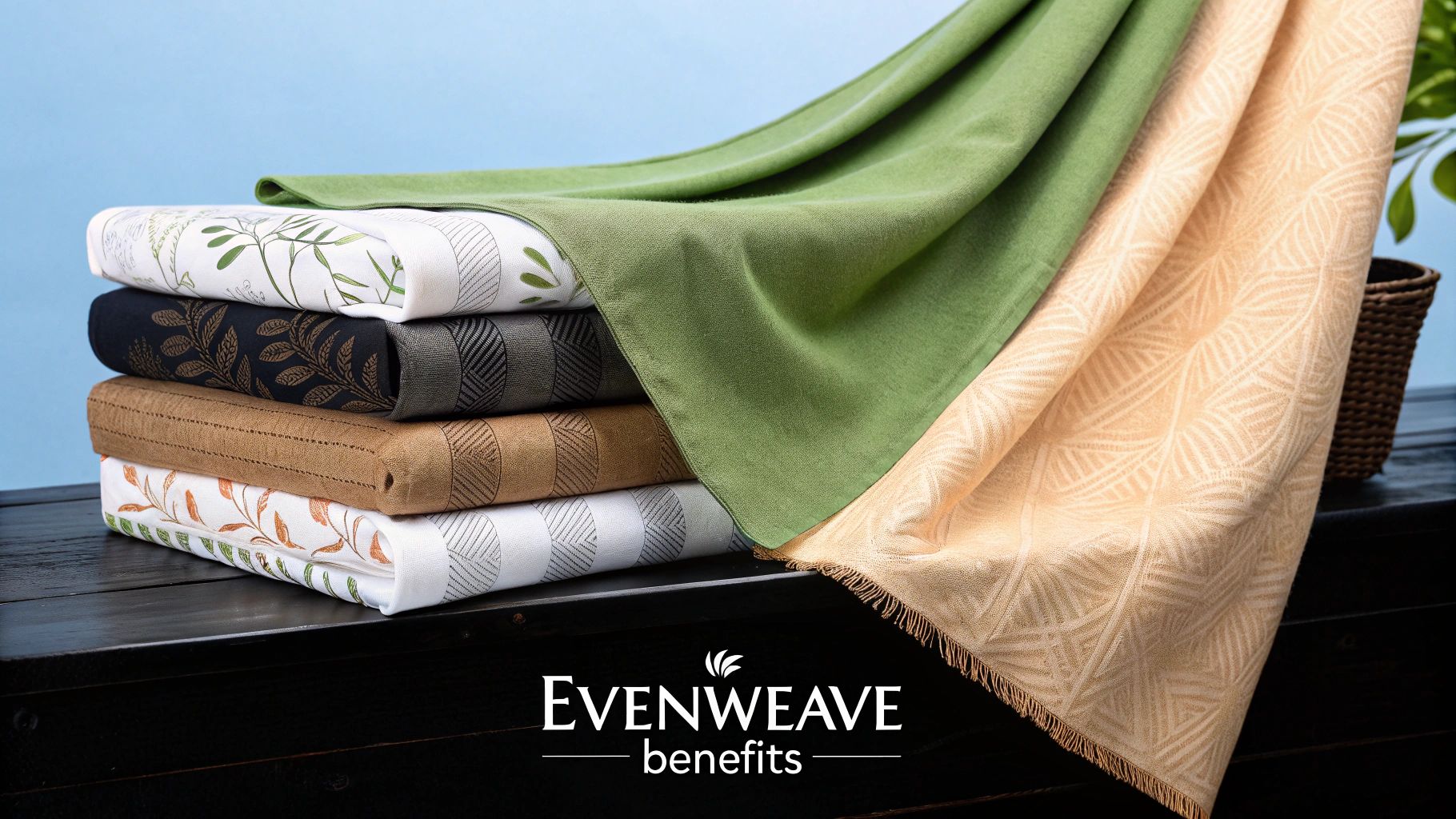
Aida was literally made for this craft. It’s typically 100% cotton and has a certain stiffness to it, thanks to a bit of starch. This is a huge help because it means the fabric holds its shape in your hoop or frame, making it easier to keep your stitch tension nice and even. You won't have to fight with puckering or stretching fabric while you work.
It's this combination of a clear grid and a sturdy base that makes Aida the fabric so many of us learn to cross stitch on. It lets you relax and get into the flow of stitching instead of constantly struggling to find your place.
Understanding Aida Counts
One of the first things you'll notice about Aida is that it comes in different "counts." This number simply tells you how many squares (or stitches) fit into one inch of fabric. Picking the right count is pretty important for getting the final look you're after.
- Low Counts (6- to 11-count): Think big, chunky stitches. The holes are very easy to see, which makes this count fantastic for kids' projects, teaching someone the basics, or even stitching with thicker yarn. The final result has a bold, graphic feel.
- Medium Counts (14- to 16-count): This is the sweet spot and what you’ll find in most kits. 14-count Aida is easily the most popular choice worldwide. The squares are still clear enough to see without straining your eyes, but they're small enough to create lovely detail in your finished piece.
- High Counts (18- to 22-count): For the more intricate, detailed patterns. These higher counts produce tiny, refined stitches that look almost like a painting. They demand a bit more patience and a steady hand, so they're usually preferred by more experienced stitchers.
What makes Aida so distinct is that predefined weave. Every little block of threads creates a perfect square with a hole at each corner. It's an unmistakable roadmap for your needle and floss.
From its invention to today, Aida has stayed at the top of the list because of its grid. Its popularity is undeniable; Aida cloth is estimated to make up over 50% of the entire cross stitch fabric market. This isn't just a coincidence—it's proof that it offers a reliable, straightforward foundation for countless beautiful projects.
Evenweave vs. Linen: A Tale of Two Fabrics
Once you venture past the straightforward grid of Aida, you’ll discover the nuanced worlds of Evenweave and Linen. These fabrics are where advanced techniques truly shine, especially "stitching over two." This is where a single cross stitch spans over two vertical and two horizontal threads, creating a beautifully integrated look. Your stitches don't just sit on top of the fabric; they become part of its very texture.
While you might use either for similar high-count projects, their unique personalities lend themselves to very different artistic outcomes. The choice isn't about which one is "better." It's about deciding what texture and stitching experience will bring your pattern to life. Evenweave delivers predictable perfection, while Linen offers an organic, rustic charm.
The Case for Evenweave: Smoothness and Predictability
Evenweave is a fabric that's been specifically engineered for needlework. Usually a blend of cotton and rayon, its defining trait is a perfectly uniform weave. Every single thread has the same thickness, which gives you a smooth, consistent surface free of the natural variations you'd find in linen.
This absolute regularity makes it a fantastic choice when you need a flawless background that won’t distract from your design. It's perfect for detailed portraits or patterns with large areas of "negative space" where the fabric itself is a key visual element. That uniform texture ensures every stitch is identical in size and shape, giving your work a highly polished, professional finish.
Consider reaching for Evenweave in these situations:
- Detailed Character Portraits: When you're stitching faces or intricate figures, the smooth surface makes fractional stitches (like quarter and three-quarter stitches) much easier to execute cleanly.
- Modern, Graphic Designs: Patterns with bold, clean lines and solid blocks of color look incredible on Evenweave. The consistent grid sharpens their contemporary feel.
- Projects on Dark Colors: The perfectly spaced holes on dark Evenweave can be a little easier to see than on dark linen, which really helps reduce eye strain during those long stitching sessions.
Because it’s a blended fabric, Evenweave is also softer and more pliable than a heavily starched Aida, making it a joy to hold. It also tends to crease less, which simplifies the final steps of washing, ironing, and framing.
Evenweave is like a perfectly prepped gesso canvas for a photorealistic painter. It provides a flawless, non-intrusive background that allows your skill—the stitching—to be the undisputed star of the show.
Its predictable grid makes it the perfect stepping-stone for stitchers graduating from Aida. You get the benefits of a higher thread count without the added challenge of navigating linen's natural bumps and slubs. For many, this makes it a strong contender for the best fabric for cross stitch for anyone moving into intermediate-level projects.
The Allure of Linen: Classic and Full of Character
Linen, woven from the fibers of the flax plant, is one of the oldest and most beloved textiles in history. Its signature quality is its beautiful, slightly irregular texture. You’ll notice subtle variations in thread thickness—often called "slubs"—that give the fabric a unique, organic, and rustic feel.
This inherent character is precisely why so many experienced stitchers choose it for their heirloom-quality pieces. Instead of providing a sterile background, linen adds its own layer of depth and history to the finished work. A design stitched on linen feels timeless and authentic, as if it already has a story to tell.
Linen is the perfect backdrop for projects like these:
- Antique Samplers or Reproductions: To get that truly authentic, historical look, nothing beats linen. Its texture beautifully mimics the fabrics used centuries ago.
- Folk Art and Rustic Designs: Patterns featuring nature, cottages, or traditional motifs are wonderfully complemented by linen's earthy, natural weave.
- Delicate, Low-Coverage Patterns: When the fabric itself is meant to be a prominent part of the design, linen’s texture adds a visual interest that enhances the entire piece.
Stitching on linen does ask for a bit more of your attention. Those slubs mean that not every "square" you stitch over will be perfectly identical, a challenge that many advanced crafters find deeply rewarding. The result is a piece with unmatched texture and a truly handmade soul. It drapes beautifully and has a wonderful weight, making it a premium choice for projects that will be cherished for generations to come.
Ultimately, the choice between Evenweave and Linen comes down to the personality you want your project to have.
Choosing Fabric for Specialty Projects
While Aida, Evenweave, and Linen are the workhorses for most traditional projects, the world of cross stitch doesn't end with framed art. Sometimes, the best fabric for cross stitch isn't fabric at all. It might be a tool that lets you stitch on a denim jacket, a baseball cap, or even a piece of paper. These specialty materials are where your creativity can really run wild.
Stepping into this realm lets you turn ordinary items into something truly personal and unique. Think about adding a little floral design to a shirt collar or crafting a three-dimensional Christmas ornament. The right material is what takes your skills off the hoop and into the real world.
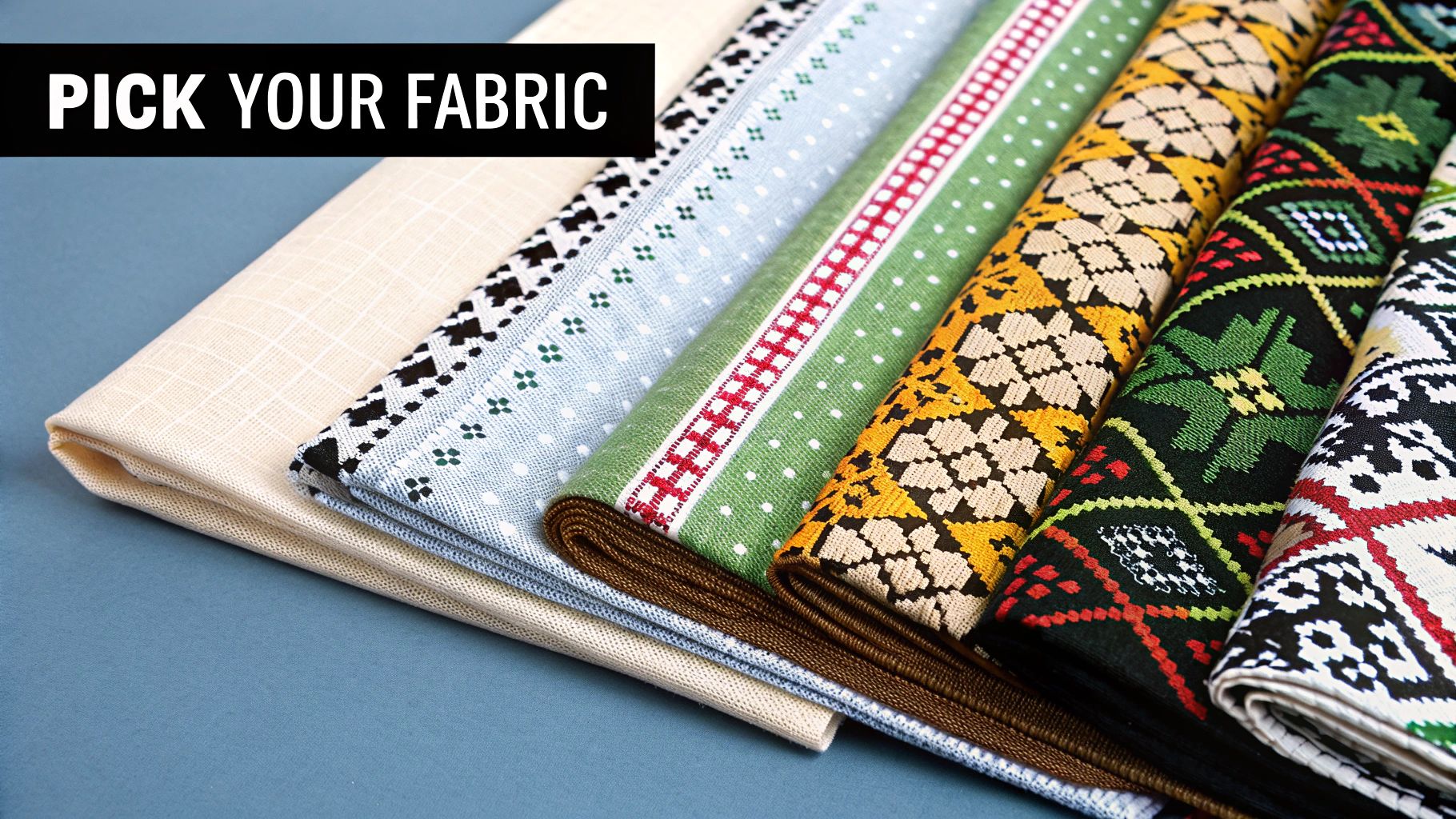
Stitching on Any Material with Canvas Guides
Ever wanted to stitch a design onto a t-shirt or a tote bag? This is where waste canvas and soluble canvas come in. Think of them as magic guides. These clever materials give you a temporary grid on fabrics that don't have a countable weave, so you can make perfect stitches just about anywhere.
Waste canvas is a stiff, grid-like fabric that you tack onto your item. You stitch your pattern right through both the canvas and the material underneath. When you're all done, you wet the project. This softens up the starchy waste canvas, and you can pull its threads out one by one, leaving your gorgeous stitching behind.
Soluble canvas works in a similar way but makes cleanup even easier. It's a plastic-like grid that you also tack onto your surface. The big difference? Once your design is complete, you just pop it in some warm water, and the entire canvas dissolves away. No need to pull out a single thread.
Think of these canvases as temporary scaffolding for your stitches. They provide the structure you need on an unstable surface and then disappear once the job is done, revealing a flawless design that looks like it was stitched directly onto the item.
Exploring Rigid Stitching Surfaces
Cross stitch can also be a three-dimensional craft. If you want to create standalone objects that hold their shape, you'll need something with a bit more structure. That's where materials like perforated paper and plastic canvas shine.
-
Perforated Paper: This is pretty much what it sounds like: sturdy cardstock with a grid of holes punched into it, just like Aida cloth. It's a fantastic choice for making lightweight, delicate things that won't get a lot of rough handling.
- Best Uses: Holiday ornaments, gift tags, bookmarks, and greeting cards.
- Pro Tip: Be mindful of your thread tension here. If you pull too tightly, you can easily tear the paper. The goal is smooth, even stitches.
-
Plastic Canvas: This is a durable, flexible sheet of plastic with a grid of holes. It's built to last. It comes in different counts and can be cut into any shape you can imagine, which makes it perfect for building sturdy, 3D objects.
- Best Uses: Coasters, tissue box covers, keychains, and small decorative boxes.
- Pro Tip: You'll want to use a tapestry needle with a slightly larger eye and a blunt tip to keep from snagging the plastic as you stitch.
These specialty materials are a great way to push your needlework beyond the frame. They really encourage you to experiment and find new, creative ways to apply your cross-stitching skills to all sorts of fun and functional projects.
Common Questions About Cross Stitch Fabric
Diving into the world of cross-stitch fabric can spark a few questions, especially when you're trying a new material or tackling a challenging project. Getting these little details right can make a huge difference, helping your project flow smoothly from the first stitch to the last. Let's clear up some of the most common questions stitchers ask.
Should I Wash My Cross Stitch Fabric Before Starting?
For the most part, you don't need to wash standard Aida or Evenweave fabric before you start. They come off the bolt ready to go. That said, some stitchers swear by pre-washing to get rid of the factory starches, which softens the fabric and makes it a bit more flexible to work with.
If you do decide to wash it, just use cool water and a mild, pH-neutral soap. Let it air dry, then give it a good iron to get it perfectly flat before you pop it into your hoop or frame. The one time pre-washing is non-negotiable is with hand-dyed fabrics—you’ll want to check for colorfastness to make sure no dye bleeds onto your floss later on.
What Is the Best Way to Stitch on Dark Fabric?
Stitching on black or navy fabric can be tough on the eyes; those little holes just seem to disappear! The simplest and most effective trick I've found is to lay a white cloth or even just a plain sheet of paper on your lap while you stitch. The light background makes the holes pop.
For an even bigger boost in visibility, a good light source is a lifesaver. You can get a small craft light that clips right onto your hoop, or you can place a lightbox underneath your work. Either way, you'll find the whole process much more relaxing and precise.
The key to dark fabric is contrast. By creating a bright background—whether with a simple piece of paper or a specialized tool—you force the fabric’s dark holes to stand out, transforming a frustrating task into a manageable one.
Can I Cross Stitch on Fabrics Like Denim or Canvas?
You absolutely can! You can take your cross-stitch skills to just about any fabric you can think of. The secret is using a temporary grid like waste canvas or soluble canvas to guide your stitches on non-countable fabrics, like a denim jacket or a canvas tote bag.
Here's how they work:
- Waste Canvas: This is a gridded canvas you tack onto your fabric. You stitch your design right through both layers. When you're done, you wet the canvas, which makes it easy to pull out the individual threads, leaving your beautiful stitching behind.
- Soluble Canvas: This clever material is even easier. It's a plastic-like grid that you stitch through just like waste canvas. Once your design is complete, you simply soak the project in warm water, and the canvas completely dissolves away.
While finding the perfect fabric is a huge part of any project, having a well-stocked portable sewing kit on hand with plenty of needles and thread options will set you up for success no matter what you decide to create.
At Cross Stitched, we make it simple to turn your cherished memories into timeless art. Explore our custom photo-to-pattern kits and discover the perfect project to start your creative journey. Visit us today at https://cross-stitched.com to create your own masterpiece.