A good, comprehensive DMC thread chart is a stitcher's best friend. It’s your go-to reference for every floss colour, all laid out with their official numbers. It takes the guesswork out of identifying, matching, and organizing your stash, giving you the confidence to plan your projects accurately.
Many modern charts, including ours, also list the digital HEX and RGB codes, which is a huge help for designers.
Quick Reference DMC Thread Colour Chart
Trying to make sense of the vast world of embroidery floss can feel like a lot, but a quick reference chart cuts right through the noise. It’s perfect for those moments when you're trying to identify a stray skein, hunt down a specific shade for a new pattern, or even translate a physical thread colour into a digital format.
This chart is all about bridging the gap between your physical thread collection and the digital tools you might use for pattern creation. It's designed for speed, giving you the most important info—the number, name, and digital codes—in one quick glance. This is incredibly handy for designers working with software like Pic2Pat or for any stitcher wanting to mock up a project digitally before taking a single stitch.
Understanding the Key Colour Codes
To really get the most out of any DMC chart, you need to know what you're looking at. Every colour has a few key identifiers, and this little breakdown shows you what they are.
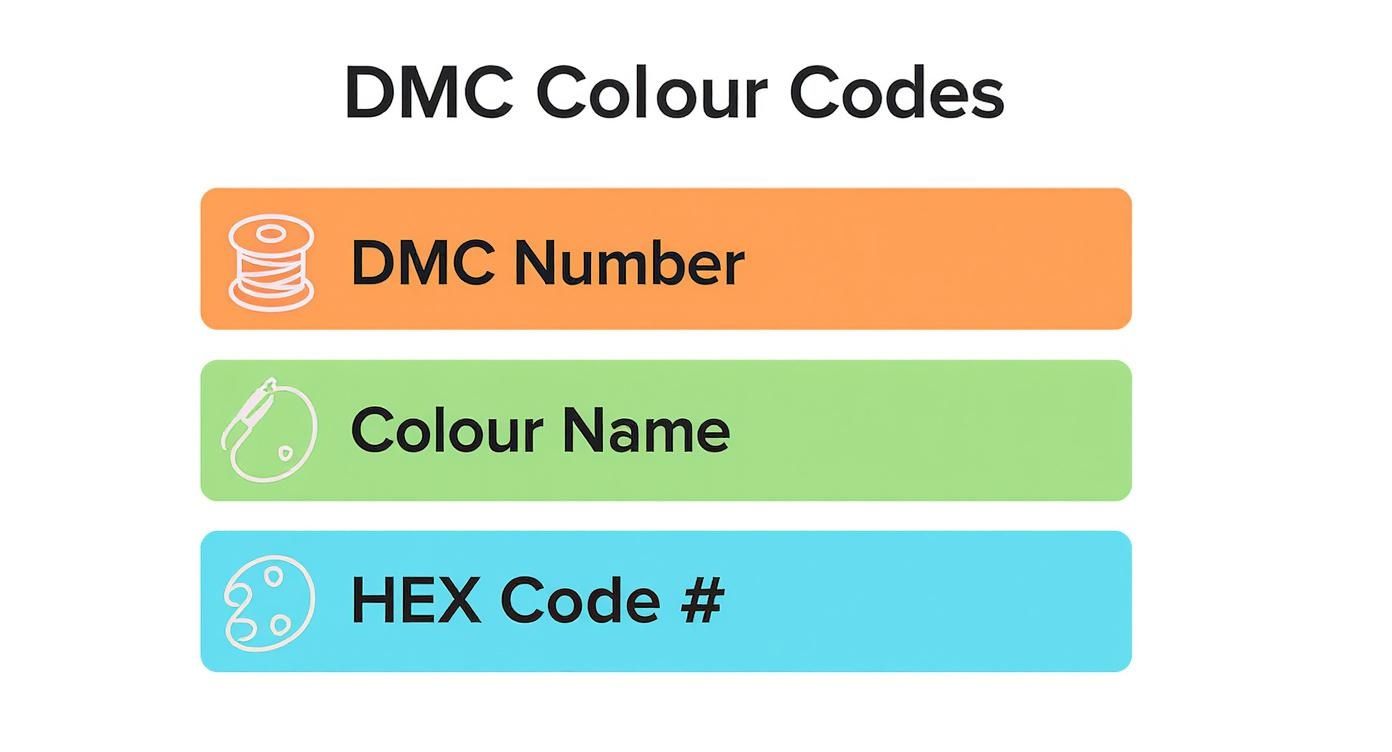
As you can see, the DMC number, colour name, and HEX code all work together to define a specific shade. Getting familiar with these will make sure your colours are spot-on, whether you're stitching by hand or designing on a screen.
Quick Reference DMC Colour and Digital Code Chart
Here’s a quick-lookup table I’ve put together with some of the most popular DMC floss colours. It includes their names, a visual swatch to help you see the colour, and their corresponding digital codes for any design work you might be doing.
| DMC Number | Colour Name | Colour Swatch | HEX Code | RGB Value |
|---|---|---|---|---|
| 310 | Black | |
#000000 | 0, 0, 0 |
| B5200 | Snow White | |
#FFFFFF | 255, 255, 255 |
| 743 | Med Yellow | |
#FBCB4A | 251, 203, 74 |
| 816 | Garnet | |
#AF2B38 | 175, 43, 56 |
| 995 | Dk Electric Blue | |
#2A77BC | 42, 119, 188 |
| 906 | Med Parrot Green | |
#389E5B | 56, 158, 91 |
| 3865 | Winter White | |
#FDF5E6 | 253, 245, 230 |
This table is super useful for quick conversions and lookups, so feel free to bookmark it for future reference
Getting to Grips with DMC's Numbering System
The first step into the colourful world of DMC floss is figuring out its numbering system. At first glance, it might seem a bit random, but there’s a solid logic behind it all. Every skein of the standard six-strand cotton floss has a unique number that directly links to a specific shade, making it a universal language for stitchers. This is why a skein of DMC 310 is always black, whether you buy it in London or Tokyo.
The main range of solid colours, officially called Article 117 or Mouliné Spécial, generally covers numbers 1 to 3866. You'll definitely spot some big gaps in that sequence. Don't worry, that's not a mistake! DMC intentionally left those gaps open to make room for new colours down the line, allowing them to slot new shades right into their proper colour families without messing up the whole system.
Telling Thread Types Apart by Their Numbers
The number on a skein does more than just identify the colour; it can also tell you what type of thread you're holding. Knowing these little clues is super helpful for following a pattern accurately.
Here’s a quick breakdown:
- Classic Solid Colours: These are your go-to threads, numbered from 1 to 3866.
- The 35 Newest Colours: Added to fill in some gaps in the palette, these run from 01 to 35.
- Variegated Threads (Color Variations): Look for numbers in the 4000s range, like 4020 (Tropical Sunset).
- Light Effects (Metallics): These all start with an "E," such as E3821 (Light Gold).
- Étoile (Sparkle): These have a "C" in front of the classic number. For example, C310 is the sparkly version of standard black.
Getting these distinctions straight makes organizing your stash—and substituting colours—a whole lot easier. For a more detailed look, check out our guide to DMC embroidery floss numbers.
The Full DMC Thread Spectrum
Most of us build our collections around the core 500 solid colours, but the entire DMC inventory is much, much bigger. In fact, if you count everything from Étoile to Coloris and Light Effects, there are 667 different DMC six-strand threads available. This massive range includes specialty threads and even some region-specific exclusives, giving you an incredible palette to play with for any project.
It's a common myth that the numbers follow a perfect colour gradient from start to finish. That’s only true within specific colour families. For example, you can see how the numbers for pinks from 600 to 605 run neatly from light to dark, which was done on purpose to make choosing shades for blending a breeze.
Downloadable DMC Thread Colour Charts
While having a digital DMC thread chart on your screen is handy, there's just something about a physical copy you can hold in your hands. A printed chart lets you see the colours in natural light, take it with you to the craft store, and plan out your next project without staring at a screen. That’s exactly why we’ve put together a few high-quality, downloadable charts for every kind of stitcher.
Think of these printables as your personal reference library for all things DMC. Whether you just need a quick numerical list or a more visual guide organized by colour family, these charts make managing your stash a whole lot easier. They're perfect for tracking what you have and making sure you don't accidentally buy the same skein twice.
Available Chart Formats
We all organize our supplies differently, so we offer a few versions of our printable charts. Each one is set up to help you find what you need, fast.
- Complete Numerical Chart: This is your no-fuss list from 1 to 500, showing each DMC number alongside its colour name and a swatch. It's the best for quick lookups when a pattern gives you a specific number.
- Colour Family Chart: This version is for the visual planners. It groups threads by their hue—all the reds together, all the blues, and so on. It’s a huge help when you’re trying to pick out the perfect shades for blending and creating gradients.
- Inventory Checklist: A simple, checkable list of every DMC number. It's the easiest way to keep a running tally of the threads you own and what you still need for that next big project.
For the best colour accuracy, I always recommend printing your charts on a high-quality setting. Use a bright white cardstock or photo paper if you have it; this stops the ink from bleeding and gets the printed swatches as close as possible to the real thread colour.
These downloads are a fantastic, tangible way to get to know your thread collection. If you're looking for some inspiration on how to put them to use, check out the patterns in our collection of DMC free cross stitch charts to get started on your next piece.
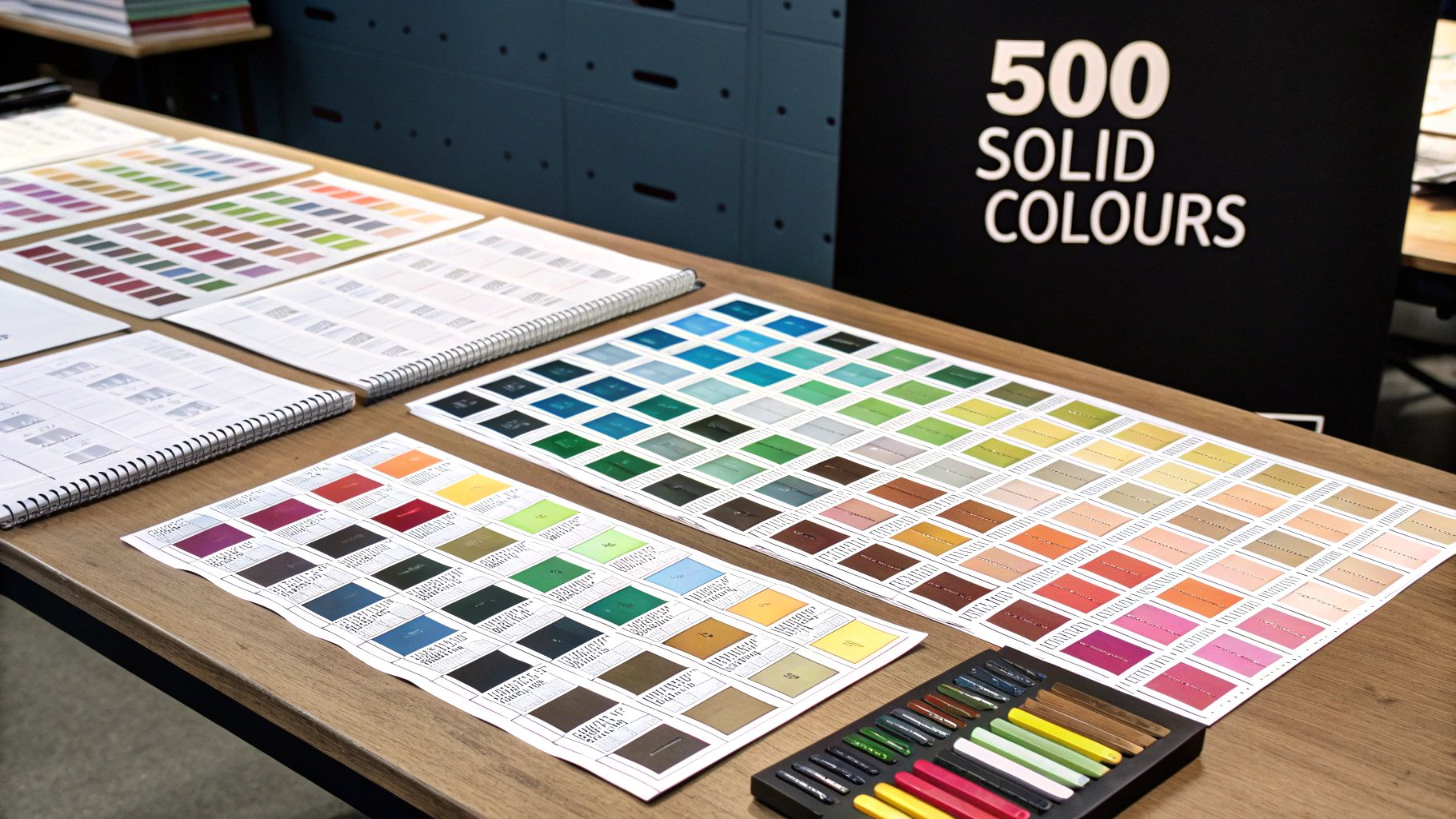
The Complete 500 Solid DMC Colours Chart
For any stitcher who's serious about their craft, a reliable reference for the core DMC thread colours isn't just nice to have—it's essential. This section is designed to be that definitive library, detailing all 500 solid colours in the DMC six-strand cotton floss collection. Think of it as your ultimate guide, organized numerically so you can find what you need in a flash.
From the deepest, inkiest blacks to the palest pastels, this chart covers every single shade in the standard range. We've included the official DMC number, the colour name, a high-quality swatch for visual matching, and the corresponding digital HEX and RGB codes. That level of detail is a game-changer for everything from planning a new project to creating digital patterns, making sure what you see on screen is what you get on your fabric.
Why The 35 Newest Colours Matter
A while back, DMC expanded its palette by adding 35 brand-new colours, numbered 01-35. This was a pretty big deal in the embroidery community because DMC rarely adds to its core line. These weren't just random additions, either. They were carefully chosen to fill noticeable gaps in the colour families, especially within the greys, greens, and soft neutrals.
What does this mean for you? It means more subtle and nuanced options for shading and blending. The expanded grey family, for instance, makes it so much easier to stitch realistic stone, metal, and lifelike shadows. And the new greens offer those delicate variations that bring botanical and landscape pieces to life. Adding these to your stash really opens up a richer, more sophisticated world of colour.
DMC has been a giant in the crafting world for over 120 years, so when they make a move, people notice. The decision to add 35 new colours, bringing their flagship DMC 117 Mouliné Spécial line to an even 500 shades, was a clear sign of their commitment to the craft. You can read more about the history and evolution of DMC's colour range on lordlibidan.com.
How to Use This Comprehensive Chart
We've set this chart up numerically to be a quick and dependable lookup tool. So, whether you're trying to find a specific number called for in a pattern or just trying to identify that mystery skein in your floss box, you can find it here right away.
Here are a few practical ways to put this resource to work:
- Following a Pattern: When your pattern lists a DMC number, use this chart to double-check the colour name and look at the swatch. It's a simple way to confirm you have the right thread before you even make the first stitch.
- Digital Designing: If you're creating your own patterns with a tool like our Pic2Pat generator, the HEX and RGB values are indispensable. They ensure the colours you pick on your computer will be a true match to the physical DMC threads.
- Making Substitutions: Can't find a specific colour? Just look at its neighbours in the numerical chart. Colours grouped closely together are usually from the same family, which makes finding a good-enough alternative much easier.
For example, say a pattern calls for DMC 798 (Delft Blue), but all you have is DMC 799 (Medium Delft Blue). A quick look at the chart will show you they're very close relatives, meaning 799 will probably work beautifully.
Complete DMC Solid Colours Numerical Chart (Excerpt)
Here’s a little snapshot of the complete list of 500 solid DMC colours. It shows you the format we use for the full chart, which you can download for offline reference. Each entry gives you everything you need to identify, match, and work with every colour in the standard DMC collection.
| DMC Number | Colour Name | Colour Swatch | HEX Code | RGB Value |
|---|---|---|---|---|
| 01 | White Tin | |
#DADBDD | 218, 219, 221 |
| 04 | Dark Steel Gray | |
#303437 | 48, 52, 55 |
| 208 | V LT Lavender | |
#A686BC | 166, 134, 188 |
| 211 | LT Lavender | |
#C2AED6 | 194, 174, 214 |
| 310 | Black | |
#000000 | 0, 0, 0 |
| 415 | Pearl Gray | |
#C6C8C7 | 198, 200, 199 |
| 500 | V DK Blue Green | |
#004633 | 0, 70, 51 |
Having this full numerical list at your fingertips gives you the power to stitch with both precision and creativity, knowing you have the most accurate information for the entire spectrum of DMC solid colours.
A Guide to DMC's Specialty Thread Charts
While the core 500 solid cotton colours are the workhorse of any stitcher's stash, DMC's specialty threads are where the real magic happens. These are the threads you reach for when you want to add texture, a bit of sparkle, or beautiful colour shifts that standard cotton just can't deliver. Getting to know these different lines is your ticket to unlocking a whole new level of creativity in your projects.
This guide will walk you through the most popular specialty threads, helping you figure out which one is right for adding that extra something to your work. From a subtle glimmer to a bold metallic shine, each type offers a completely different look. Once you understand their quirks and best uses, you can start adding incredible dimension to your needlework.
DMC Light Effects Metallic Floss
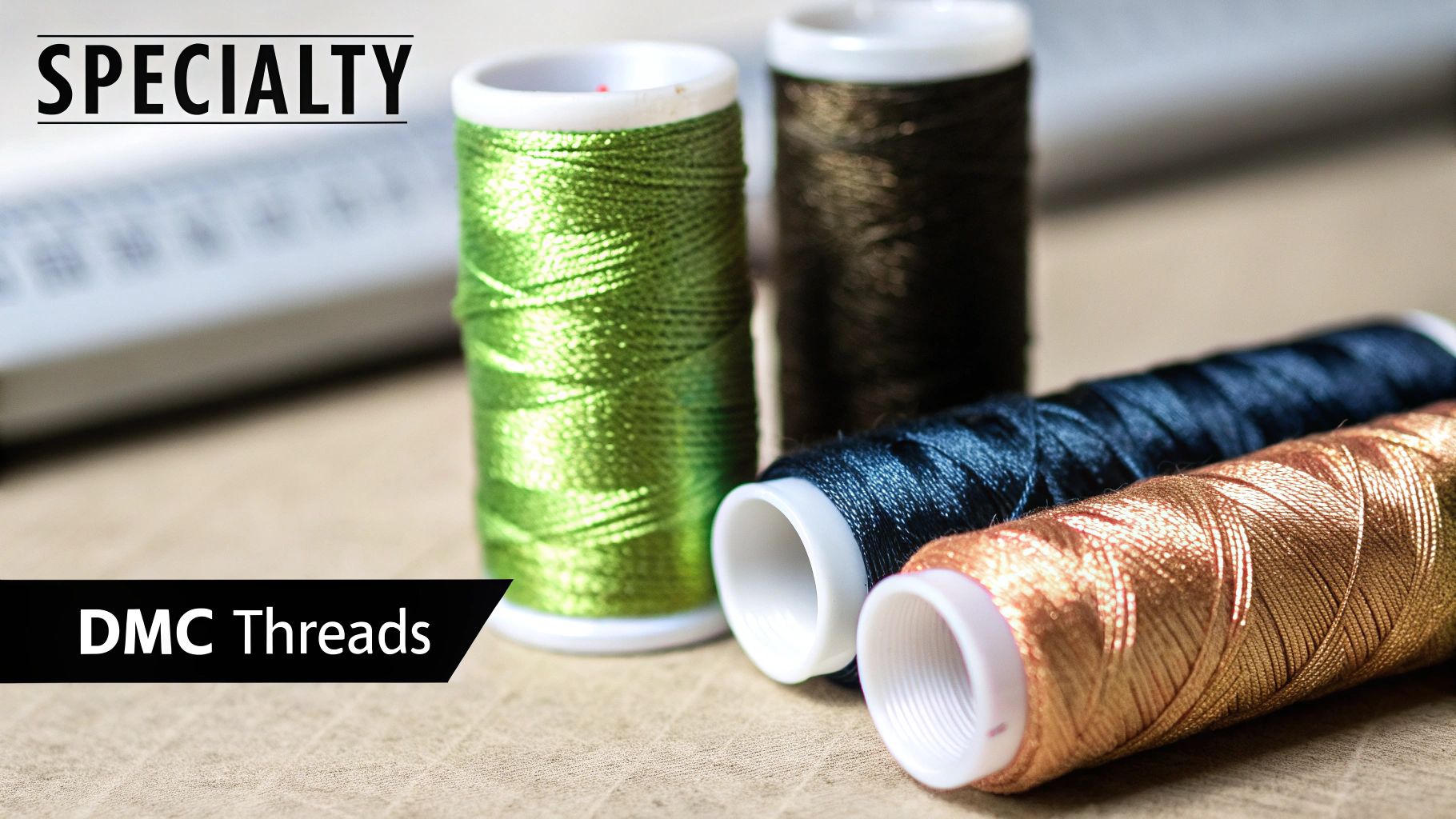
DMC Light Effects is the go-to range for adding a metallic or pearlescent finish. This line covers everything from classic precious metals like gold and silver to rich jewel tones, and even includes a few glow-in-the-dark options. They're absolutely perfect for stitching festive details, adding sparkle to magical elements, or making text stand out.
- Numbering: You'll spot these by the "E" prefix before the number (e.g., E3821 Light Gold).
- Best For: Christmas ornaments, shimmering crowns, starry night skies, or anywhere you need a serious dose of shine.
- Stitching Tip: Light Effects thread has a reputation for being a bit tricky and can sometimes fray. My advice is to work with shorter lengths (about 12 inches) and consider using a thread conditioner to make the whole process much smoother.
DMC Étoile Sparkle Thread
If you're after a more understated shimmer, DMC Étoile is your best friend. This thread isn't a full-on metallic; instead, it's a cotton floss with a sparkly strand woven into it, creating a delicate, twinkling effect. It's a fantastic way to add a hint of magic without it screaming for attention.
The numbering system for Étoile couldn't be easier: it uses the classic DMC colour number with a "C" prefix. So, C310 is the sparkly version of the standard black 310 floss. This makes it a breeze to swap out a standard colour for its shimmering cousin in any pattern. Think of stitching a night sky with C310 for a subtle, star-dusted look.
DMC Coloris Multi-Colour Thread
DMC Coloris threads are little skeins of art, designed to give you a stunning, variegated look from a single strand. Each thread is a blend of four distinct but complementary colours that shift every few inches. The result is a gorgeous, painterly effect that works beautifully for flowers, landscapes, and borders.
The real genius of Coloris is how it avoids the harsh "striping" you can get with other variegated threads. The colours are blended to flow seamlessly, creating a watercolour-like finish that adds instant depth and sophistication.
- Numbering: Look for these in the 4500 range (e.g., 4514 Twilight).
- Best For: Botanical stitches like leaves and petals, sunsets, or filling in geometric patterns with a dynamic burst of colour.
DMC Satin Floss
When your project calls for a luxurious, silky-smooth finish, reach for DMC Satin floss. Made from 100% rayon, these threads have a brilliant sheen that catches the light in a way cotton just can't. The finish is noticeably softer and more lustrous, making it ideal for elegant and refined designs.
- Numbering: These are marked with an "S" prefix (e.g., S700 Bright Green).
- Best For: Rich floral embroidery, monogramming on high-quality linens, and adding a touch of opulence to any piece.
- Stitching Tip: Just like Light Effects, Satin floss behaves better when you use shorter thread lengths. This helps prevent tangles and keeps that beautiful smooth texture intact.
How to Match and Choose DMC Colours
Choosing the perfect thread colours can feel more like an art than a science, but having a solid dmc thread chart colours reference and a few good techniques in your back pocket makes all the difference. When you master colour selection, you can move beyond just following a pattern and start creating palettes that are truly your own. It's the skill that takes your stitching to the next level, ensuring the finished piece perfectly matches the vision in your head.
Whether you're trying to create a subtle gradient for realistic shading or picking bold, complementary colours that make your design pop, a little bit of colour theory is your best friend. It’s all about understanding how colours play off each other to create harmony, contrast, and depth.
Creating Gradients and Shading
One of the best ways to bring a flat design to life is through careful shading, and that means building a smooth gradient. This technique involves picking a series of colours from the same family that transition seamlessly from the lightest to the darkest tones.
To get started, first identify the main colour you need for a specific area. Grab a DMC chart that's organized by colour family, find your shade, and then simply select a few of its neighbours—one or two that are lighter, and one or two that are darker.
Let's say you're shading a red rose petal. A great sequence might look something like this:
- DMC 321 (Red - your mid-tone)
- DMC 816 (Garnet - for the deep shadows)
- DMC 666 (Bright Red - for the main highlight)
- DMC 3705 (Dark Melon - for the brightest pop of light)
Stitching with this progression creates a beautiful, natural-looking transition from shadow to light, giving the object a convincing three-dimensional feel.
Substituting Unavailable Colours
We've all been there. You're excited to start a new project, but you're missing one specific floss number and can't just run to the store. This is where making smart substitutions becomes an essential skill for any stitcher. Nothing beats a real thread colour card for this task.
Unlike a chart you print or see on a screen, a physical card has actual strands of floss, giving you 100% colour accuracy. Just take the thread you have and hold it up to the card in natural daylight to find the absolute closest match. If you're working with a different brand, you can find a comprehensive thread color conversion chart to see how shades from other manufacturers like Anchor or Sullivans stack up.
When you're subbing a colour, always think about its role in the pattern. If it’s just a muted background shade, a close-enough match will probably work just fine. But if it’s a key feature—like the vibrant yellow in a sunflower—a near-perfect match is crucial to keep the design looking right.
Once you get comfortable with the charts, you'll be selecting colours for all kinds of creative projects, like these inspiring embroidery projects for beginners. With these techniques, you can start building beautiful and harmonious colour palettes with total confidence.
Common Questions About DMC Colours
As you dive into the world of DMC threads, a few questions tend to pop up, especially if you're new to stitching or working through a particularly tricky project. Getting straight answers is the key to stitching with confidence. Think of this section as your go-to for solving those little mysteries and getting to know the DMC system inside and out.
We'll cover everything from how many colours actually exist to the best way to care for your finished masterpiece. Let's get these common questions answered so you can get back to what you love—stitching.
How Many Official DMC Thread Colours Are There?
The number you'll hear most often is 500 solid colours. This refers to the standard DMC 117 Mouliné Spécial six-strand cotton floss, which is the foundation of countless cross-stitch patterns.
But that's just the beginning. If you count all the specialty lines—like the sparkly Light Effects, the shimmering Étoile, the variegated Color Variations, and the silky Satin floss—the entire DMC family grows to well over 600 unique threads. The 500 solids are your workhorses, but the specialty threads are perfect for adding that extra creative flair.
Are DMC Colour Numbers Universal?
Yes, and this is one of the best things about stitching with DMC. The numbering system is the same everywhere. A skein of DMC 310 is the same deep black whether you buy it in New York, Paris, or Tokyo. This global consistency is why designers and stitchers trust the brand—it takes the guesswork out of getting your supplies.
A quick tip on dye lots: While the numbers are universal, there can sometimes be tiny, almost unnoticeable, differences in shade between manufacturing batches. If you're working on a big project with large blocks of a single colour, it’s always a good idea to buy all the skeins you need at once. This helps ensure they all come from the same dye lot.
What Is the Best Way to Match an Old DMC Thread?
Without a doubt, the most reliable way to match an old or unknown thread is with a physical DMC Colour Card—the kind with real thread samples wrapped on it. Digital charts are incredibly handy, but screen settings can throw off how a colour looks. A real-thread card shows you the genuine article, no digital distortion involved.
For the most accurate match, take your mystery thread and the colour card into natural daylight. Artificial lighting can play tricks on your eyes. If you think the colour might be discontinued, a quick search for online conversion charts can usually point you to the closest modern equivalent still being made.
Can I Wash Projects Made with DMC Floss?
Absolutely! DMC's standard cotton floss (Mouliné Spécial) is famous for being colourfast, so you don't need to worry about the colours bleeding or fading when you wash it.
Here’s the method DMC recommends for keeping your work looking its best:
- Gently hand wash your piece in lukewarm water with a mild, pH-neutral soap.
- Rinse it well, but don't wring or twist the fabric, as this can distort your stitches.
- Instead, roll the piece up in a clean, thick towel to gently squeeze out the extra water.
- Lay it flat on a dry surface and let it air dry completely.
Just remember to double-check the care instructions for any specialty threads you've used, since metallics and satins sometimes need slightly different handling.
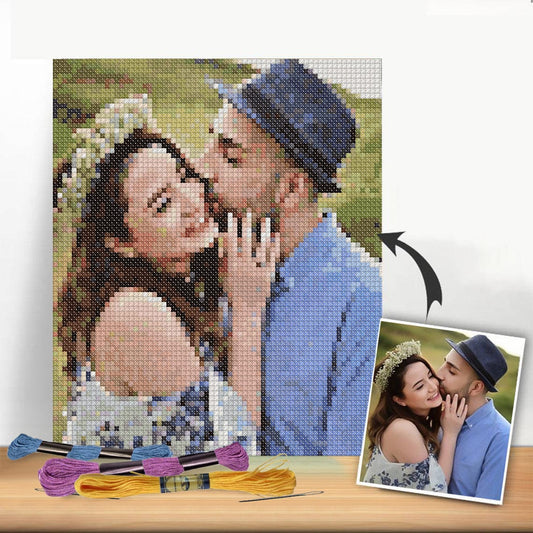
Ready to turn your favourite photos into timeless art? With Cross Stitched, you can create a custom cross-stitch kit from any image, complete with pre-sorted DMC threads, high-quality fabric, and everything you need to start stitching your memories. Design your personalised kit today!