Picking the right size needle for cross stitch can feel a bit like a puzzle, but it's actually quite straightforward. It all boils down to one simple thing: your fabric's count.
Here’s the golden rule every stitcher learns: the higher the needle's number, the smaller and finer the needle is. So, a tiny size 28 needle is much more delicate than a chunkier size 24.
Your Quick Guide to Cross Stitch Needle Sizes
So, how do you pick the perfect one? Think of your needle as a key that needs to fit the lock on your fabric. It should glide through the holes smoothly without forcing them open or getting lost in them. Using a needle that's too big will stretch the fabric's weave, leaving you with distorted stitches. Too small, and it won't create a clean path for your thread, which can lead to frustrating tangles and uneven tension.
The entire goal is to match the needle’s thickness to the fabric’s weave. You want it to be just right.
Matching Needle Size to Fabric Count
I’ve put together a handy chart to take the guesswork out of it. This little table matches the most common fabric counts with their ideal needle sizes, so you can get it right every time. Feel free to bookmark this page for your next project!
Cross Stitch Fabric Count and Needle Size Chart
This table is your go-to reference for pairing fabric with the perfect tapestry needle.
| Fabric Count | Recommended Needle Size | Common Project Type |
|---|---|---|
| 11-14 Count Aida | Size 22 or 24 | Beginner kits, bold designs |
| 16-18 Count Aida | Size 24 or 26 | Detailed patterns, standard projects |
| 28-32 Count Linen/Evenweave | Size 26 or 28 | Advanced projects, fine detail work |
| 36+ Count Linen/Evenweave | Size 28 | Miniature work, heirloom pieces |
Using this chart ensures your needle creates the perfect hole for your floss, leading to neater, more uniform stitches.
The various needles you'll come across might look similar at first glance, but their subtle differences are key.
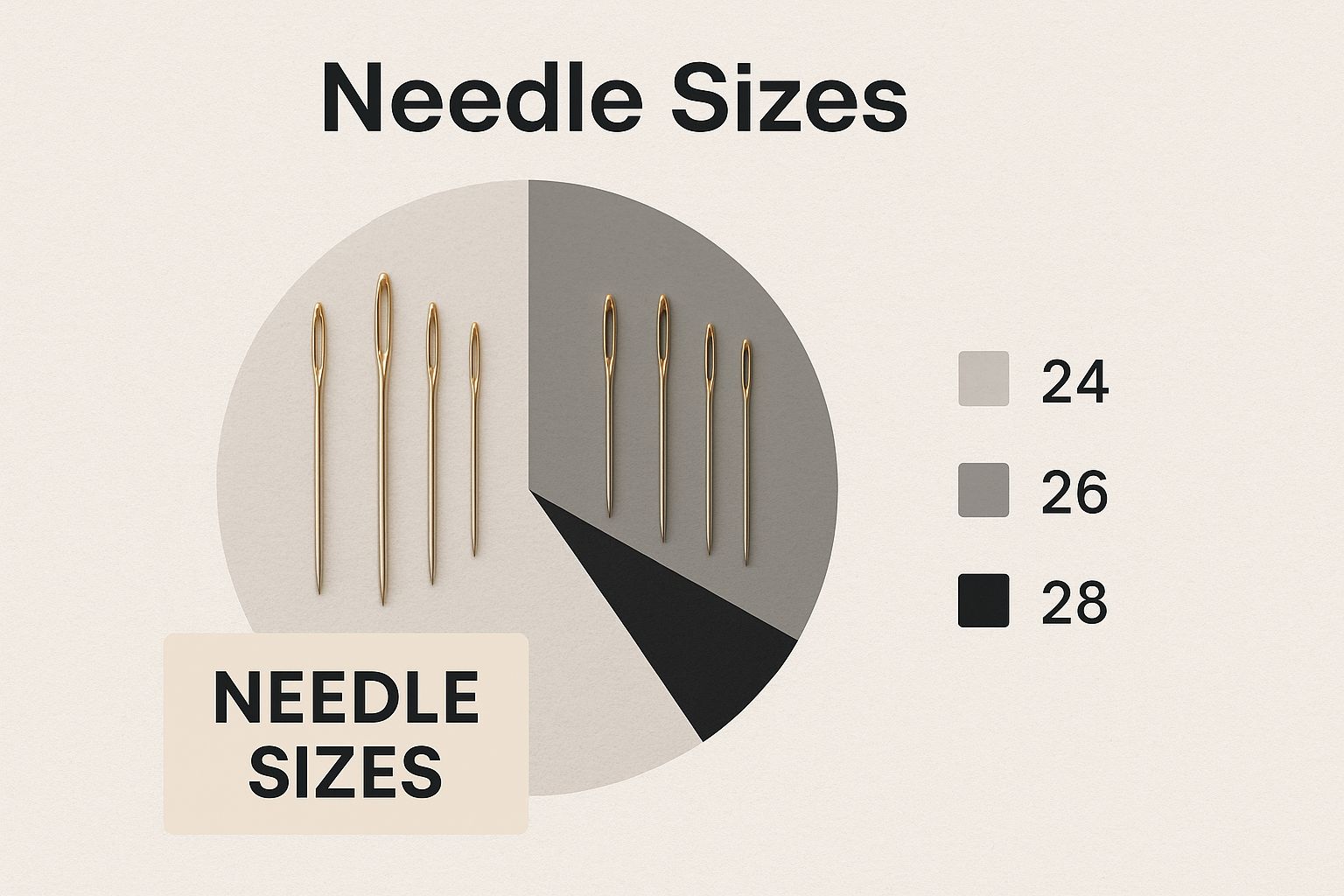
As you can see, the higher the size number, the thinner the needle—a perfect visual for what we’ve been talking about.
A simple rule of thumb: The higher the fabric count, the higher the needle size number you should use. This ensures the needle glides through the fabric without distorting its weave.
Cross stitch needles, also known as tapestry needles, usually range from size 24 to 28. For most stitchers, sizes 24 and 26 are the workhorses of their collection, especially for Aida fabric between 11 and 18 count. In fact, a size 24 needle is the classic choice for 14-count Aida, the most popular fabric out there. It just works.
Learning this simple pairing is one of the most powerful cross stitch tips for beginners and will instantly make your stitching look more professional.
Why the Right Needle Makes All the Difference
Before we dive into needle sizes, it helps to understand what makes a cross-stitch needle special in the first place. You might hear it called a tapestry needle, and its design is completely different from the sharp needles you’d use for sewing or mending. Getting a feel for its unique anatomy is the first step to picking the perfect needle for any project, almost by instinct.
The Magic of a Blunt Tip
Think of a regular sewing needle—it’s designed to pierce through tightly woven fabric. A tapestry needle does the exact opposite. It has a blunt, rounded tip for a very specific reason.
This rounded point isn't meant to stab through fabric. Instead, it glides smoothly between the woven threads of your Aida or linen, effortlessly finding the natural holes in the grid. It gently nudges the fibers aside rather than splitting or tearing them. This is key to creating those beautiful, uniform stitches we all strive for. A sharp needle would just shred your fabric and floss, turning a relaxing hobby into a frustrating mess.
Why a Big Eye is Your Best Friend
The other hero of the story is the needle's eye. Cross-stitch needles have a noticeably long, wide eye, and it’s not just for easier threading (though that’s a nice bonus!).
The larger eye is designed to comfortably hold multiple strands of embroidery floss without squishing, fraying, or creating extra friction as you stitch.
Imagine trying to pull two or three strands of floss through a tiny opening. The thread would get pinched and damaged with every single stitch, leading to annoying tangles and weakened, fuzzy-looking results. A properly sized eye lets the strands lie flat and pass through the fabric smoothly, preserving their natural sheen and strength. Choosing a needle with the right eye is just as crucial as matching its thickness to your fabric.
Matching Your Needle to Your Fabric Count
Getting the right size needle for cross stitch is all about creating a perfect partnership with your fabric. This relationship between your needle's thickness and your fabric’s thread count is the secret to beautiful, uniform stitches. Get it right, and your thread will glide through the fabric effortlessly. Get it wrong, and you're in for a frustrating time.
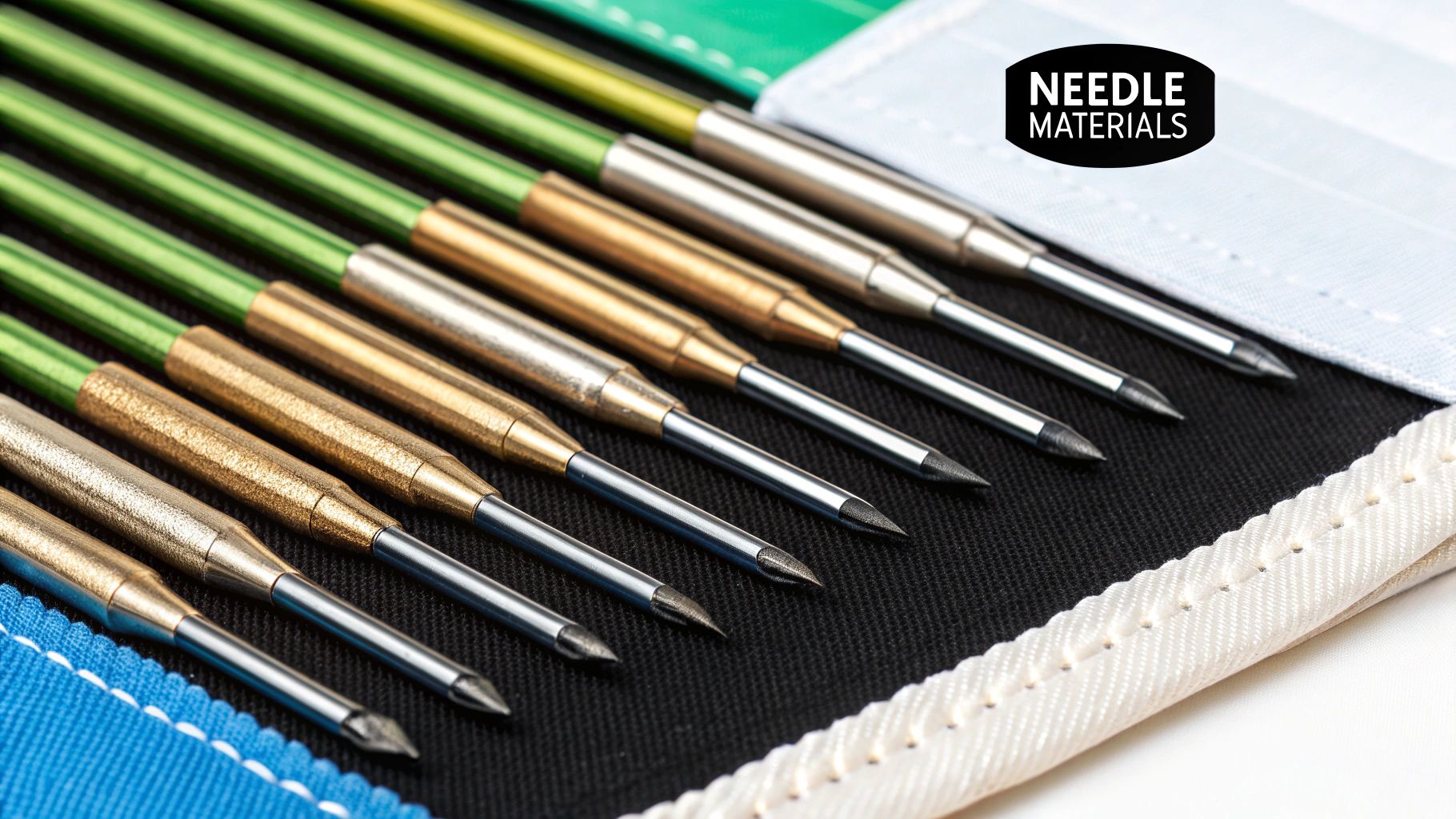
Think of it like parking a car. Forcing a thick needle (like a size 22) through a high-count fabric (like 18-count Aida) is like trying to squeeze a huge truck into a tiny parking spot. You’ll end up stretching the fabric’s holes, distorting your stitches, and making the whole process a struggle.
On the other hand, using a needle that’s too thin for your fabric creates its own set of problems. A tiny needle on a low-count fabric is like a bicycle in an airplane hangar—it’s just too small to part the threads properly. It won't create a clean path for your floss, which can lead to loose stitches and shredded thread.
The Ideal Pairing Principle
The goal here is simple: pick a needle that gently parts the fabric's threads, creating an opening just large enough for your floss to pass through without friction or force. This is exactly why a size 24 needle is the go-to choice for 14-count Aida. It’s the perfect size to slide between the threads, creating the ideal pathway for your floss to follow.
Your needle should never fight the fabric. It should feel like a key turning smoothly in a lock, opening the way for your thread to create a flawless stitch.
This growing appreciation for the craft is reflected across the industry. The needlecraft patterns market, valued at over USD 34 billion in 2025, is projected to soar to USD 63.87 billion by 2035. This demand pushes manufacturers to produce specialized needles, particularly in sizes 24 to 28, designed specifically for cross stitch to ensure a perfect stitching experience. You can read more about the growing needlecraft market and its trends.
Achieving this balance is what ensures every "X" you make is uniform and neat, transforming your project from a simple craft into a work of art. Mastering this pairing is a fundamental step toward getting professional-looking results every single time.
How Many Floss Strands Are You Using?
It’s easy to focus only on your fabric, but picking the right size needle for cross stitch is really a balancing act between your fabric, needle, and thread. When you get this trio working together, your stitching becomes so much smoother and more enjoyable.
The number of floss strands you're working with is a huge factor. Just think about it: the more strands you use, the thicker your thread bundle becomes, and the larger the needle's eye needs to be to let it pass through easily.
Adjusting Needles for Floss Thickness
A common starting point for many stitchers is using two strands of floss on 14-count Aida with a size 24 needle. There's a reason this combination is so popular—it just works. The needle opens up the Aida holes perfectly, and the eye is just the right size for two strands to glide through.
But what if you want a fuller, more lush look for your stitches? Let's say you decide to use three, or even four, strands on that same 14-count Aida. That trusty size 24 needle is suddenly going to feel a bit tight.
A needle's eye that's too small for your floss will basically act like sandpaper. With every stitch, it shreds and frays the thread, leaving your work looking fuzzy and worn before you’re even finished.
To avoid that headache, you’d simply move up to a larger needle, like a size 22. Its bigger eye gives that thicker bundle of floss plenty of room to breathe, protecting it from damage as you stitch.
On the flip side, if you're doing very fine, detailed work—maybe with a single strand of floss on high-count linen—you’ll want to go in the opposite direction. A tiny size 28 needle would be your best friend. Its delicate eye holds the single strand securely, giving you better control and preventing your stitches from looking loose. Matching your needle to your thread is a small step that makes a huge difference in the final quality of your work.
Taking Your Stitching to the Next Level with Specialty Needles
So, you've mastered the basics and are comfortable with your standard tapestry needle. What's next? Welcome to the fascinating world of specialty needles, where you'll find tools designed to solve specific stitching challenges and make your hobby even more enjoyable.
Think of it like a chef upgrading their knives. A standard needle gets the job done, but the right specialty needle can transform your stitching, giving you more comfort, control, and a more polished result. It’s all about finding the perfect tool for your hands and your project.
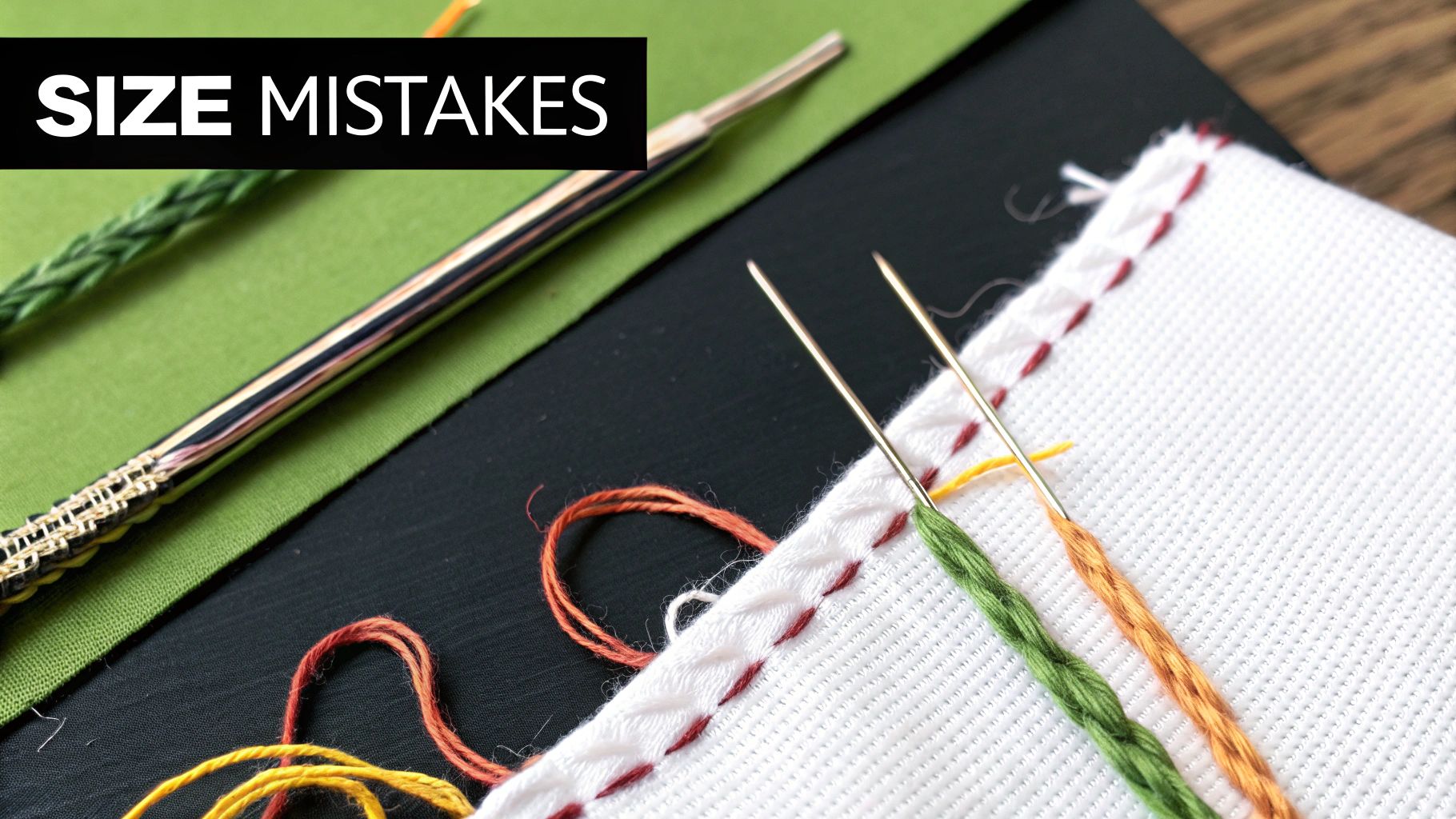
Finding the Right Tool for the Job
Let's look at a couple of the most popular specialty options you'll come across: petite needles and plated needles. They might seem like small changes, but they can make a huge difference.
- Petite Needles: Just as the name suggests, these are shorter versions of regular tapestry needles. Their smaller size gives you incredible maneuverability, which is fantastic for intricate patterns or for stitchers who use methods like the "parking method" where you're juggling lots of different threads in a small area.
- Gold or Platinum-Plated Needles: These are a real lifesaver for stitchers who have sensitivities to nickel. Beyond being hypoallergenic, the real magic of these needles is how smoothly they glide through fabric. This slick surface means less friction and less strain on your hands, so you can stitch for hours in comfort.
Specialty needles are your problem-solvers. Whether you need more control, a smoother stitching experience, or a solution for sensitive skin, there's a needle out there designed to help you work more comfortably and achieve better results.
The quality of our stitching tools is constantly improving, thanks in part to innovations in other industries. The global needles market was valued at USD 11.12 billion in 2025 and is expected to hit USD 18.56 billion by 2032. While this growth is mainly from the medical field, the advancements in precision manufacturing and materials often trickle down to us in the crafting world. You can read more about the growth of the global needles market on coherentmarketinsights.com.
Experimenting with different needles is the best way to figure out what you love. You'll often find these specialty types included in higher-end beginner cross stitch kits, giving you a great opportunity to discover your personal preferences and perfect your technique.
Common Questions About Cross Stitch Needles
Even after you've got the hang of the basics, some practical questions always seem to come up. Let's tackle some of the most common things stitchers wonder about when choosing the right size needle for cross stitch.
Can I Use a Sewing Needle for Cross Stitch?
It's a question every new stitcher asks, but the short answer is no, you really shouldn't. Think of it this way: a sewing needle is designed to pierce fabric, so it has a sharp point. A cross stitch needle, which is a type of tapestry needle, has a blunt, rounded tip.
That blunt tip is your best friend. It’s designed to gently glide between the woven threads of your Aida or evenweave fabric without splitting them. Using a sharp sewing needle will tear those delicate fabric threads, snag your floss, and throw off the neat, grid-like appearance of your stitches. Stick with a tapestry needle to protect both your fabric and your sanity.
How Often Should I Change My Needle?
Needles definitely have a shelf life, and stitching with a worn-out one is a recipe for frustration. You'll want to toss your needle as soon as it feels rough, looks tarnished, or gets bent. A damaged needle is notorious for snagging floss, and worse, it can leave behind tiny rust or tarnish marks on your project.
A great habit to get into is starting every new project with a fresh needle. They are wonderfully inexpensive, and a new needle glides so smoothly, making the whole experience more enjoyable from the very first stitch.
This simple step ensures your tools are never working against you. If you're just starting, this is a great tip to remember as you explore easy cross stitch patterns for beginners and build your skills.
Does the Needle Brand Really Matter?
Honestly, any tapestry needle of the right size will get the project done. But if you stitch a lot, you’ll likely notice a real difference with premium brands like John James or Bohin. It all comes down to quality control.
These higher-end needles usually have smoother plating, which means they pass through the fabric with less drag. They're also more resistant to bending, and their eyes are often more polished, which significantly reduces the chances of shredding your floss. For a frequent stitcher, a small investment in quality needles can make a huge difference.
What if My Kit Came with the Wrong Size Needle?
It happens more than you might think! Sometimes the needle included in a kit just doesn't feel right for the fabric. If your needle seems to be stretching the fabric holes, shredding your thread, or you feel like you're forcing it through, trust your instincts.
It is perfectly okay to swap it out for a different needle from your stash. Just refer back to a needle size chart. For instance, if a kit with 16-count Aida came with a size 24 needle that feels tight, grabbing a size 26 will almost certainly feel much better and make your stitching a whole lot smoother.
At Cross Stitched, we believe that the right tools make all the difference. Turn your favorite memories into timeless works of art with our custom photo cross-stitch kits. Start your personalized project today!