So, you've got a pattern that calls for Classic Colorworks floss, but you've got a stash of DMC ready to go. Or maybe it's the other way around. Swapping between these two popular brands is something stitchers do all the time, and this guide is here to help you find the closest DMC match for your Classic Colorworks threads.
Keep in mind that because of the way these threads are made, a perfect one-to-one match isn't always on the cards. But you can get incredibly close and still create a beautiful project.
Understanding Thread Differences
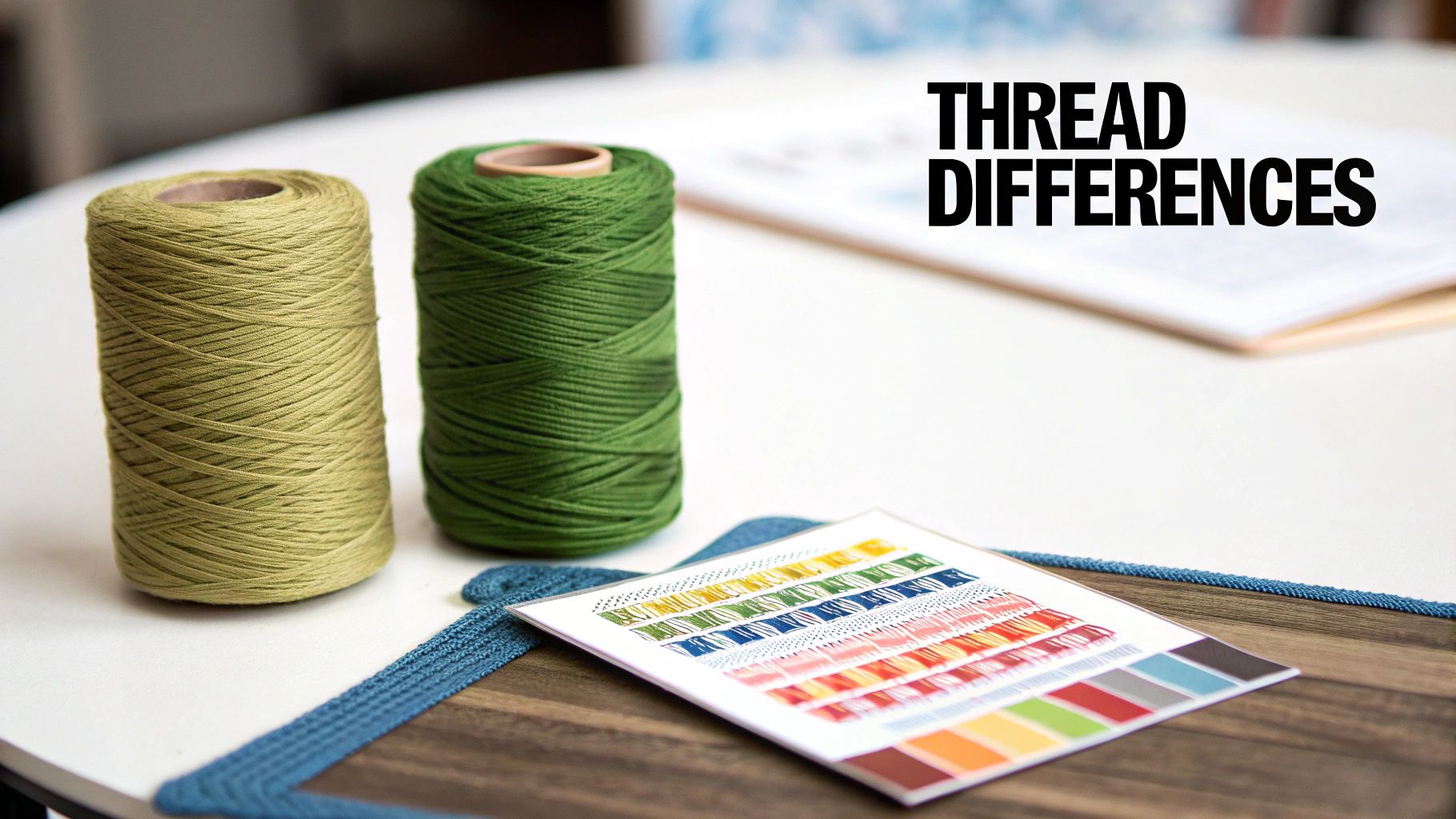
The biggest thing to know is how Classic Colorworks (CCW) and DMC threads are made, as that's what makes them look and behave differently in your stitching. Getting a feel for these differences is the first step to making smart substitutions.
Classic Colorworks floss is hand-dyed, giving it those lovely, subtle color variations. A single strand will often flow through several different shades and tones, which adds incredible depth and a one-of-a-kind texture to your work. That's part of their magic—no two skeins are identical.
On the other hand, DMC is the gold standard for solid-colored, six-strand embroidery floss. The color is completely uniform and consistent, dye lot after dye lot. This makes it super reliable for projects where you need a specific, unchanging color. If you want to dive deeper, you can learn more about the makeup of cotton embroidery thread and see why these qualities matter.
The Appeal of Each Brand
Choosing between the two really boils down to the final look you're hoping to achieve.
- Classic Colorworks: This is your go-to when you want to add texture, dimension, and a bit of a rustic or vintage vibe. The gentle color shifts can bring even a simple design to life.
- DMC: Perfect for patterns that need sharp, defined lines and precise colorwork. It's the top choice for photorealistic pieces or any project where exact color matching is crucial.
Why Conversion Is Necessary
Being able to switch between brands is a huge plus for any stitcher. Classic Colorworks (which you might remember as Crescent Colors) offers a beautifully curated palette, but DMC boasts a massive range of over 500 solid colors.
Since something like 90% of commercial patterns are designed using DMC thread numbers, conversion charts are an absolute must-have. They let you use the unique, hand-dyed look of CCW in a pattern written for DMC, or vice-versa. This flexibility really opens up your creative options, letting you blend the best of both worlds in your projects.
How to Use This Conversion Chart
Swapping out Classic Colorworks floss for DMC doesn't have to be a guessing game. I've designed this chart to be a quick, reliable reference so you can find the best substitute for your project and stitch with confidence.
To get started, just find the name of the Classic Colorworks thread you need to replace in the first column. Everything is listed alphabetically to make it as easy as possible to find what you're looking for.
Breaking Down the Chart
Once you've spotted your color, just read across the row. Each column gives you a different piece of the puzzle to help you make the best choice.
- CCW Name: This is the official name of the Classic Colorworks floss you're swapping out.
- Best DMC Match: Here you'll find the closest DMC color code. Don't be surprised if you see two numbers listed; sometimes a CCW color sits perfectly between two standard DMC shades.
- Substitution Notes: Pay close attention to this column! This is where I'll add important context. For example, I'll point out if a CCW thread is super variegated, which might mean you'd need a few different DMC solids to get a similar effect.
If you want to get a better handle on how the DMC numbering system works, our guide on DMC embroidery floss numbers is a fantastic resource. Knowing the logic behind the numbers can really help when you're making those tricky substitution calls.
Tips for Making a Smart Swap
Getting a beautiful result is about more than just a direct number-for-number swap. Remember, hand-dyed threads are notorious for their dye lot variations. The skein you have in your hand might look a little different from the one I used to make this chart.
Ultimately, you have to trust your eyes. If a suggested DMC number doesn't look quite right next to your CCW skein, the best thing to do is take your thread to the store. Hold it up against a real DMC color card and see what looks best. This simple step is the surest way to keep your project's color palette looking just right.
The Complete Classic Colorworks to DMC Chart
Here it is—the resource every stitcher needs. This is my complete, go-to conversion chart for finding the best Classic Colorworks to DMC matches. To get you stitching faster, I’ve organized everything alphabetically by the Classic Colorworks name.
You'll see the Classic Colorworks name first, followed by the closest DMC match I’ve found. Pay close attention to the "Substitution Notes" column. It's where I add my own experience on whether a thread is variegated and how you might tackle substituting it with a solid DMC color.
This quick infographic breaks down the process into three simple steps. Just find your CCW color, grab the DMC equivalent, and check the notes for any heads-up.
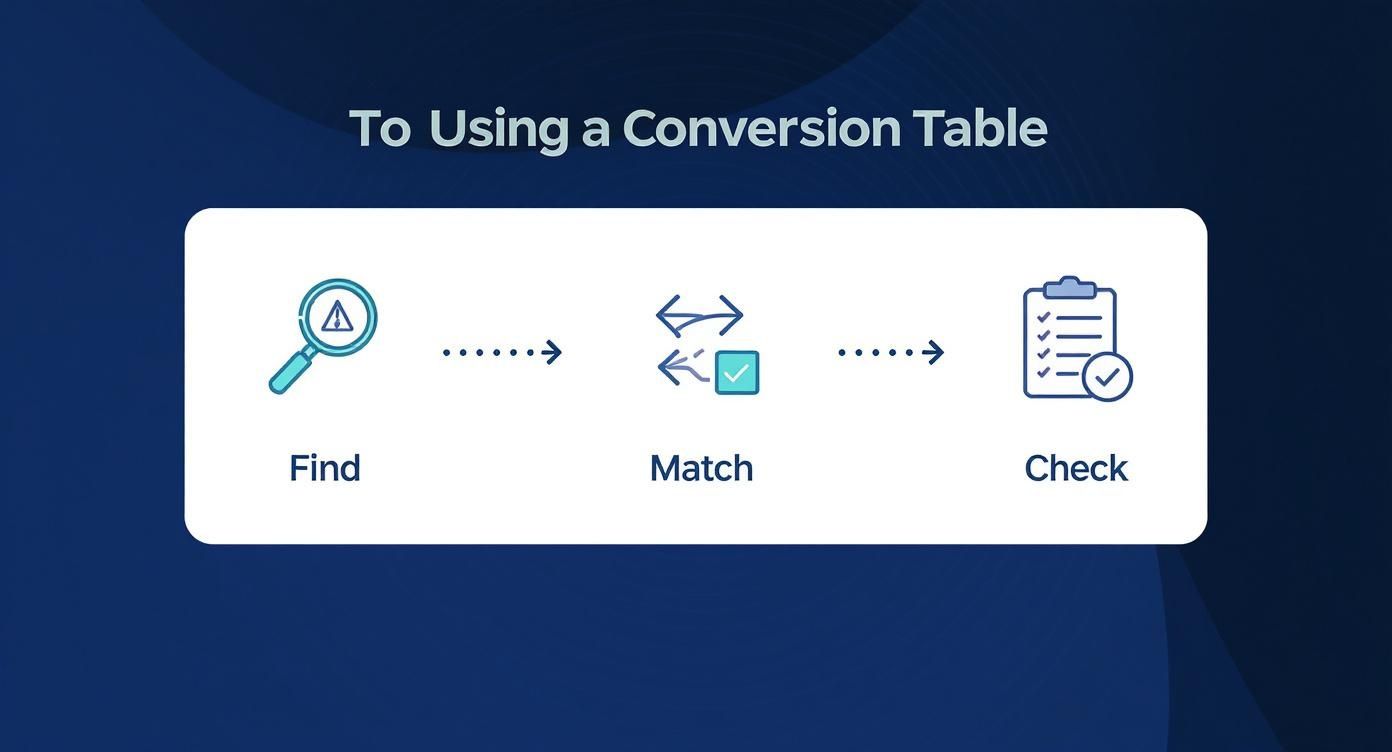
Following this workflow means you’re not just grabbing a number; you’re making a smart choice that respects the original design of your pattern.
Classic Colorworks to DMC Conversion (Example A-C)
To keep things loading quickly and easy to read on any device, I've split the full chart into smaller, more manageable pieces. This first table covers all the Classic Colorworks threads from A to C, giving you a fast and simple lookup tool.
| Classic Colorworks Name | Best DMC Match(es) | Substitution Notes |
|---|---|---|
| Almost Amethyst | 3747 | Slightly variegated, subtle purple tones. |
| Aunt Marie's Violets | 3041 / 3042 | Highly variegated. Use 3041 for darker areas and 3042 for lighter ones. |
| Autumn Spice | 434 / 435 | A mix of medium browns. 434 is the dominant shade. |
| Baby Chick | 3822 / 3823 | Soft, buttery yellow. 3823 is the lighter shade. |
| Baby's Got the Blues | 794 | A gentle, light blue with subtle variation. |
| Bamboo | 3046 | Muted yellow-green. A very popular and versatile shade. |
| Barn Door | 3777 | A deep, rustic red. Fairly solid color. |
| Bean Sprout | 3348 | Fresh, light green. Excellent for foliage and springtime patterns. |
| Belle Soie | 927 | A soft, grayish-green. Variegation is very subtle. |
| Bing Cherry | 815 | Rich, deep red. Closest to a solid color. |
| Black Coffee | 310 | A classic black. A reliable one-to-one swap. |
| Blackbird | 3799 | Dark charcoal gray, not quite black. |
| Blue Beadboard | 932 | Muted, medium-light blue. |
| Blue Corn | 930 | A deep, dusty blue-gray. |
| Blueberry | 792 | A strong, dark cornflower blue. |
| Brandied Pears | 422 / 729 | Golden-brown blend. Use 729 for the gold and 422 for the tan tones. |
| Brown Sugar | 840 | A warm, medium beige-brown. |
| Bunny Honey | 739 / 738 | A soft tan color. 739 is the closer match. |
| Buttercup | 728 | A bright, cheerful golden yellow. |
| Buttered Nuts | 436 / 437 | A classic light tan, versatile in many patterns. |
| Cabbage Patch | 3364 / 3363 | Earthy green. 3364 is the primary match. |
| Camouflage | 936 | A deep, dark green. |
| Candy Corn | 721 / 741 | Variegated. Use 741 for the orange and 721 for the rust sections. |
| Caramel | 434 | A rich, warm brown. |
| Carriage Black | 310 | Essentially a solid black. |
| Carrot | 970 | A bright, true orange. |
| Cayenne | 355 | A fiery, dark terra cotta red. |
| Chai | 612 / 613 | A very light tan or beige. |
| Cherry Cobbler | 304 / 498 | Variegated red. Use both to capture the light and dark shades. |
| Cherry Tomato | 321 | A bright, classic red. |
| Chocolate Cream | 842 | A very light, creamy beige. |
| Cinnamon Toast | 433 | A rich, medium-dark brown. |
| Cloud | 3753 | A very pale, off-white blue. |
| Colonial Rose | 224 | A dusty, antique pink shade. |
| Copper Penny | 919 / 921 | Burnt orange tones. 919 is the main color. |
| Country Lane | 832 | A warm golden-brown. |
| Crazy Eights | 3865 | Off-white, similar to DMC's Winter White. |
| Creamy Peach | 3770 | A very pale, creamy flesh tone. |
| Creeping Jenny | 988 / 989 | A medium, mossy green. |
Remember to keep checking back for the other sections of the alphabet as you need them!
Going Beyond the Numbers
While this Classic Colorworks to DMC chart gives you the closest technical matches, you have to remember the artistic side of things. Hand-dyed threads just have a special character that a mass-produced solid floss can't perfectly mimic.
A direct swap gives you a functional substitute, but the most stunning results often come from trusting your own creative eye. Never be afraid to pick a slightly different DMC shade if it feels right with your fabric or the other colors in your project.
Here are a few things I always keep in mind:
- Dye Lot Quirks: The Classic Colorworks skein in your hand might look a bit different from the one I used for this chart. When in doubt, always trust what you see.
- Handling Variegated Threads: For those beautifully variegated CCW threads, a single DMC color just won't cut it. I often use two or three different DMC shades and alternate my stitches to recreate that lovely color flow. It’s a technique sometimes called "tweeding."
- Fabric is a Game-Changer: The color of your Aida or linen can completely change how a thread looks. A DMC 310 (Black) will pop dramatically on white fabric but look much more subtle on a dark navy or black fabric.
By keeping these points in your back pocket, you can use this chart as a powerful starting point to make deliberate, artistic choices. The real goal is to create a piece that is uniquely yours. Be sure to check out the other chart sections for the rest of the conversions
Matching Variegated Threads to Solids

Here's where things get tricky. The biggest challenge in any Classic Colorworks to DMC conversion is figuring out what to do with variegated floss. A single skein of CCW thread is a work of art, often flowing through several distinct shades. A solid DMC colour just can't duplicate that on its own.
Trying to swap a multi-tonal thread for a single solid one often falls flat. You lose all the beautiful, subtle texture the designer intended, and the result can look a bit one-dimensional. The secret is to think more like a painter than a matcher—you're trying to replicate the effect of the original thread, not just find a single color match.
This usually means picking a small "family" of two or three solid DMC shades. These should represent the lightest, medium, and darkest tones you can see in the Classic Colorworks skein.
Selecting Your DMC Color Family
The first step is to really look at your CCW thread. Unwind a little and examine it under good, natural light if you can. What are the main colors that jump out at you?
For instance, a skein of CCW "Autumn Spice" might have hints of a light tan, a dominant medium brown, and flecks of a deep rust. To recreate that feel, your DMC family could be something like DMC 435 (very light brown), 434 (light brown), and a dash of 919 (red orange) for that spicy pop.
Here’s a simple way to approach it:
- Identify the Lightest Tone: Find the palest color in the variegated thread. That’s your first DMC match.
- Find the Dominant Mid-Tone: Now, find the color that seems to appear most often. This will be the main DMC shade you'll use.
- Select the Darkest Accent: Finally, pick a DMC color that matches the darkest parts of the CCW thread. This shade will add depth and create shadows.
The Tweeding Technique for Blending
Once you’ve chosen your DMC family, how do you use them? One of the best methods for mimicking a variegated look is called tweeding. It’s simpler than it sounds: you just use single strands of two different DMC colors in your needle at the same time.
For example, instead of using two strands of DMC 792, you could thread your needle with one strand of DMC 792 and one strand of DMC 793. When you stitch with them together, the colors blend visually, creating a soft, mottled look that beautifully imitates the gentle shifts in a hand-dyed thread.
Tweeding is a fantastic way to add back the complexity that a solid color lacks. By mixing and matching your light, medium, and dark DMC choices, you can create a piece that truly honors the unique character of the original Classic Colorworks floss.
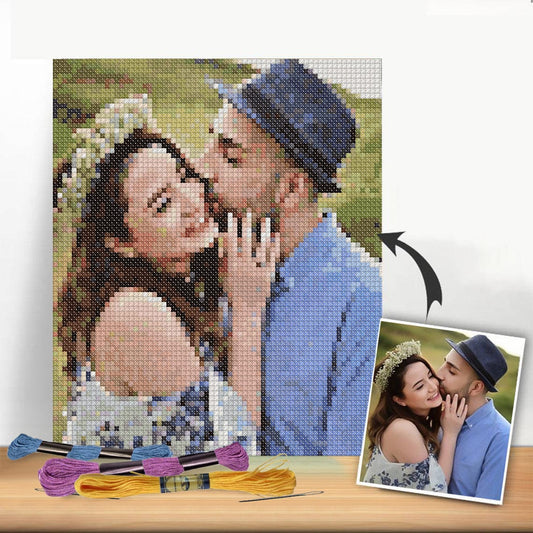
Using Substitutions in Custom Kits and Pic2Pat Patterns
So, you've got a custom cross-stitch kit on the way, or maybe you're playing with a cool pattern generator like Pic2Pat. The one thing they almost always have in common? They spit out a floss list based entirely on the standard DMC color palette.
At first glance, this can feel limiting if your heart is set on the rich, nuanced look of hand-dyed threads. But I like to think of it as a starting point—a perfect chance to put your own creative stamp on the project. With a good Classic Colorworks to DMC conversion chart in hand, you can translate that basic list into a vibrant, hand-dyed masterpiece. You get the blueprint from the pattern, but the artistry comes from your thread choices.
How to Make the Swap
Swapping out the colors is actually pretty simple if you tackle it systematically. Just grab the DMC list from your kit or pattern and let's walk through it.
- Start with the DMC Code: Look at the first DMC number on your pattern's key.
- Find its CCW Partner: Use the conversion chart in this guide to find the best Classic Colorworks match. Don't forget to check the notes—they'll tell you if the CCW thread is variegated, which is a key part of the decision.
- Think About Its Job: Now, look at your pattern. Where is this color used? Is it filling in a huge patch of sky, or is it for tiny, blended details on a flower petal?
- Decide on the Effect: For those areas with lots of subtle shading, a variegated CCW thread can add incredible depth and texture that a solid DMC just can't match. On the other hand, for a large, flat area, you might decide to stick with the recommended DMC solid for a more uniform look. It's your call!
Here's the most important thing to remember: keep the color harmony. If the original pattern calls for three shades of green to create a smooth gradient on a leaf, make sure your chosen Classic Colorworks threads also flow nicely from light to dark. Test them out! A few stitches on a scrap piece of fabric will show you exactly how they'll play together before you commit.
Taking a few extra minutes to think through these swaps is what elevates a project. It ensures your finished piece not only looks like the original design but also has that beautiful, hand-dyed character that makes it uniquely yours.
Looking Beyond Classic Colorworks and DMC
While this guide zeroes in on the popular Classic Colorworks to DMC conversion, it's worth remembering that the world of embroidery thread is vast and full of amazing options. Getting a feel for the bigger picture helps you understand why conversion charts are such a must-have for stitchers who love to play with different threads.
You'll find brands like Weeks Dye Works, which, much like Classic Colorworks, is famous for its beautiful hand-dyed floss with subtle, overdyed variations. Then you have companies like Sullivans, which offer a great budget-friendly alternative; their numbering system is often compatible with DMC, making it an easy swap for bigger projects.
The Big Names in the Thread Game
There are countless specialty thread brands out there, but DMC’s influence is hard to overstate. It’s pretty much the industry standard, making up about 90% of the colors called for in commercial patterns and offering a massive catalog of over 500 colors.
But the alternatives are fantastic, too. For instance, Cosmo has its own gorgeous palette of over 500 colors, while a brand called CXC actually mirrors DMC's numbering system, which is super handy if you're looking for a compatible substitute.
This sheer variety is a huge win for stitchers. It gives us incredible creative freedom to pick threads based on texture, sheen, or price. But it also means that knowing how to convert colors is an essential skill.
Figuring out how to navigate these differences is what it's all about. Whether you're swapping a specialty floss into a standard DMC pattern or going the other way, having solid resources on hand is a lifesaver. For a closer look at other conversions, you can dive into our guide on other useful DMC conversion charts.
Got Questions? We've Got Answers
When you're swapping out hand-dyed floss for DMC, a few questions always seem to pop up. Here are some quick answers to the most common ones, so you can get back to stitching.
Can I Use This DMC Conversion Chart for Any Cross-Stitch Pattern?
You sure can. Most patterns you'll find, whether from a big designer or a small indie shop, are charted with DMC floss numbers. This conversion list is your key to using those beautiful Classic Colorworks threads in pretty much any project you can dream up.
A little word of advice, though: if you're working on a photorealistic piece with lots of subtle shading, it's smart to stitch a small test patch first. This just makes sure the new colors blend as smoothly as the original ones would.
Why Do Some Classic Colorworks Have More Than One DMC Match?
That's the beauty and complexity of hand-dyed floss! A single strand of Classic Colorworks can have several different tones woven through it, and sometimes, one solid DMC color just can't capture that richness.
When a CCW thread is super variegated, or its main color sits right between two DMC shades, we list a couple of options. This lets you decide. You can pick the DMC that best matches the main color you see in your skein, or get creative and use both to mimic that lovely, subtle color shift.
What if My Skein of CCW Looks Different From the Chart?
That happens all the time with hand-dyed threads, and it's completely normal. The small-batch dyeing process means one dye lot can look quite different from the next.
When this happens, trust your own eyes, not the chart. If your Classic Colorworks floss doesn't look like a good match for the suggested DMC, the best thing to do is take your skein to the store. Hold it right up against the DMC strands or a real DMC color card to find the absolute best match for the specific skein you have in your hand.
Ready to turn your favorite photo into a timeless stitched memory? At Cross Stitched, we create custom cross-stitch kits with everything you need, including perfectly sorted DMC threads. Start your personalized project today at https://cross-stitched.com.