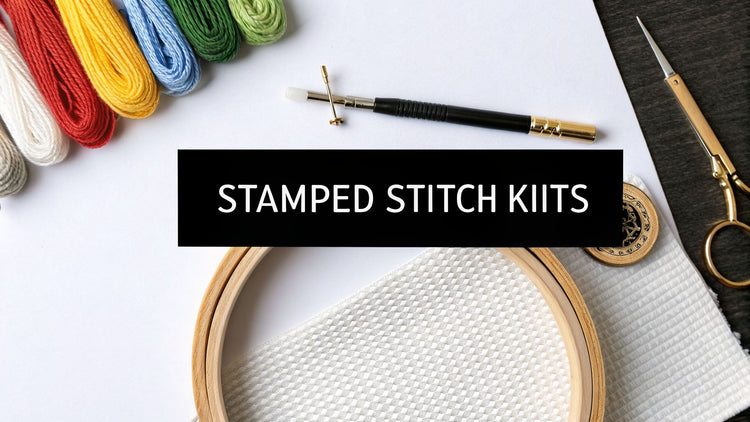
If you've been searching for the perfect entry point into the world of crafting, look no further. Beginner stamped cross stitch kits offer a wonderfully simple, guided experience that's easy to fall in love with. The best way to think of it? It’s like painting-by-numbers, but with a needle and thread. The pattern is printed right onto the fabric, showing you exactly where each and every stitch goes.
Welcome To The World Of Stamped Cross Stitch
 beginner cross stitch pattern with colorful threads and various designs on fabric.">
Have you ever admired beautiful needlework but felt a little intimidated by all those intricate charts and the thought of meticulous counting? If so, stamped cross stitch is about to become your new best friend. These kits are designed to sweep away the biggest barrier for newcomers by giving you a visual roadmap directly on your fabric canvas. No more squinting at a separate paper chart or losing your place while counting tiny squares; you simply follow the colors and symbols already printed for you.
This "guided stitching" approach completely changes the game. What could feel like a daunting task becomes a wonderfully relaxing and almost meditative activity. As you start filling in the design, you're not just making a piece of art—you're stepping into a mindful practice known to reduce stress and sharpen focus. It’s no wonder so many people are drawn to tactile hobbies like this to find a little bit of balance.
The Growing Appeal of Guided Crafting
The charm of an accessible craft like stamped cross stitch is undeniable. In fact, the global cross-stitch market is valued at USD 0.166 billion in 2026 and is forecast to climb to USD 0.24 billion by 2035. A huge driver of this growth is the boom in DIY crafting, especially among beginners who find stamped kits incredibly rewarding and simple to get started with. Studies even show these kits can boost completion rates by up to 90% when compared to more traditional methods. You can learn more by checking out the complete cross-stitch market research.
When you think about it, this surge in popularity makes perfect sense. Stamped kits offer a clear, straightforward path to a finished project, which is hugely motivating. Instead of starting with a blank fabric and a confusing chart, you're greeted with a beautiful design just waiting for you to bring it to life.
Key Takeaway: Stamped cross stitch acts as its own guide, making it a nearly foolproof way for beginners to start. It takes the stress of counting off your plate so you can focus on the simple joy of stitching.
Why Stamped Kits Build Confidence
When you're diving into a new hobby, those early successes are what keep you going. Beginner stamped cross stitch kits are designed specifically to give you that amazing "I made this!" feeling, right from the get-go. Here’s why they’re so fantastic for building your confidence:
- Immediate Clarity: The printed pattern leaves no room for guesswork. You can see exactly what to do next, which gets rid of any hesitation or confusion.
- Focus on Technique: Since you don't have to count, you can put all your energy into mastering the simple, rhythmic motion of making the cross stitch itself.
- Guaranteed Progress: Every single stitch you make visibly adds to the final picture, giving you constant and encouraging visual feedback.
- A Beautiful Result: After you're done stitching, the printed ink washes away easily with water. All that's left is your clean, stunning handiwork that you can be truly proud of.
This supportive framework empowers you to create something lovely on your very first try. It makes the whole process feel less like a test and more like the fun, creative adventure it's supposed to be.
So, you've decided to dip your toes into the world of cross stitch. Fantastic! Opening your first stamped cross stitch kit is a genuinely exciting moment—it’s like getting a creative project in a box, with none of the usual startup stress.
Think of it as one of those meal delivery kits, but for crafting. Everything you need is already measured out, organized, and ready for you to start stitching. Let's take a look inside and get familiar with the tools of the trade. Once you know what each piece does, you'll be ready to dive in.
The Stamped Aida Fabric: Your Canvas
The heart and soul of your kit is the stamped Aida fabric. This is a special type of cotton cloth woven into a clear grid of squares, which makes stitching incredibly straightforward. But here’s the best part: the design is printed right onto the fabric in water-soluble ink. It's your personal roadmap, showing you precisely which color to stitch and where.
Most kits designed for beginners use 14-count Aida. This simply means there are 14 squares per inch, making the grid big enough to see and work with comfortably. No squinting or guessing required!
The Embroidery Floss: Your Color Palette
Next up, the beautiful bundles of embroidery floss—the thread that brings your design to life. A good kit will have all the floss pre-sorted and labeled for you on an organizer. This is a huge timesaver and helps you avoid the headache of trying to match dozens of loose threads to a chart.
You'll usually find high-quality cotton floss that's smooth, strong, and less likely to tangle. Each color is assigned to a symbol or color block printed on the fabric, so you'll always know you're using the right shade. This takes all the guesswork out of the equation.
Key Insight: The real magic of a stamped kit is how the pre-sorted floss and the printed fabric work together. You aren't just handed a pile of colors; you're shown exactly where each one goes, making the whole process incredibly relaxing and intuitive.
Needles And Instructions: Your Tools and Guide
Of course, you can't stitch without a needle! Your kit will come with one or two tapestry needles. These aren't your average sewing needles. They have a blunt tip designed to slide through the holes in the Aida fabric without splitting the threads, and a larger eye, which makes threading the floss so much easier.
Finally, you'll have an instruction sheet. This little piece of paper is more important than it looks. It typically serves two functions:
- The Color Key: This is the official guide that connects the symbols on the fabric to the specific thread numbers on your floss organizer.
- Basic Instructions: It will usually have a few simple diagrams showing you how to make a cross stitch and how to start and end your thread—perfect for a quick refresher.
And that's it! With the fabric as your map, the floss as your paint, and the needle as your brush, you have everything you need. The tedious prep work is already done, leaving you to enjoy the simple, meditative act of stitching.
Mastering Your First Stitches: A Step-By-Step Guide
Alright, you've unboxed your kit and have a good sense of what everything is. Now for the fun part: bringing that design to life with your very first stitches. This is where the real magic happens, and I'll walk you through it every step of the way, from prepping your fabric to making that perfect little 'X'.
Think of this as a friendly, one-on-one lesson. The goal here isn't perfection right out of the gate. It's all about the joy of creating something beautiful with your own two hands. So, take a deep breath, relax, and let's get started on turning that printed fabric into a piece of art.
Preparing Your Fabric And Thread
Before you make a single stitch, a little prep work will make the whole process so much smoother.
If your kit came with an embroidery hoop (or if you have one), now’s the time to pop your fabric in. You want to pull the fabric taut, so it feels like a little drum. This gives you a nice, firm surface that makes stitching a breeze and helps keep your stitches looking even.
Next up is your thread. Embroidery floss usually comes as a thick skein made of six individual strands. For most beginner stamped cross stitch kits on 14-count Aida fabric, you'll only need to use two strands at a time.
- Pick Your Color: Look at the color key in your kit. Find the symbol for the area you want to start stitching and grab the matching floss from your organizer.
- Cut a Good Length: Snip off a piece of floss that's about 18 inches long—roughly the distance from your fingertips to your elbow. It's tempting to cut a super long piece to save time, but trust me, that's just asking for a tangled, knotty mess.
- Separate the Strands: Now, gently pull two single strands away from the main six-strand piece. The key here is to go slowly so they don't bunch up and knot.
Once you have your two strands, thread them through the eye of your needle. A little trick is to moisten the very end of the thread. If your kit included a needle threader, even better! With your needle threaded, you're officially ready to stitch.
This quick diagram shows the simple setup process.

It really is that straightforward: get your fabric set, your thread organized, and your needle ready to go.
Making Your First Cross Stitch
At its heart, a cross stitch is just two diagonal stitches forming a neat 'X'. The secret to a professional-looking project is consistency. You'll want to make all your bottom stitches go in the same direction (like ///) and all your top stitches go in the opposite direction (like \\).
Let's make your first 'X':
- Bring your needle up from the back of the fabric at the bottom-left corner of a printed square. Leave about an inch of thread—a "tail"—on the back.
- Push the needle down through the top-right corner of that same square. You've just made your first half-stitch! As you make the next few stitches, just catch that tail on the back to secure it. No knots needed!
- Now, bring the needle back up through the bottom-right corner of the square.
- Finish the 'X' by going down through the top-left corner. And that's it! You've just completed your first cross stitch.
If you want a closer look at different stitches, we have a helpful guide that breaks down all the basic cross stitch stitches you'll run into.
Pro-Tip for Rows: When you've got a whole row of the same color to do, it's much faster to work it in two passes. First, do all the bottom half-stitches along the row (like this: /////). Then, come back along the row completing all the top stitches (like this: \\). This method, called the Danish method, is a great time-saver and also helps keep your tension nice and even.
Changing Colors And Finishing Threads
As you work your way through the pattern, you'll naturally need to switch from one color to another. When you finish a section or start running low on thread, you'll need to secure it neatly on the back.
It's simple: just run your needle and the remaining thread under three or four completed stitches on the back of your fabric. This locks the thread in place perfectly. Then, snip the excess thread close to the fabric. Try to avoid using knots, as they can create little bumps that show through on the front of your work.
Once you've secured the old color, you're all set to thread your needle with a new one and start stitching in a different area. This rhythm of starting, stitching, and securing your threads will quickly become second nature.
For more inspiration on your journey, exploring resources on embroidering for beginners can offer great ideas and techniques. With these fundamental steps under your belt, you have everything you need to finish your beginner stamped cross stitch kit with confidence.
Choosing The Perfect Beginner Stamped Cross Stitch Kit

Walking into a craft store or browsing online can feel a little overwhelming, right? The sheer variety of kits is enough to make anyone’s head spin. But don't worry—finding the perfect one for your first project is much easier than it looks. This guide is your personal shopping checklist to help you pick a kit you’ll not only enjoy but also proudly finish.
The secret to a great first experience is choosing a project that builds momentum. When you start with a manageable design, you see progress quickly, and trust me, that's incredibly motivating. Pair that with high-quality materials, and every stitch will feel smoother and more satisfying. Let's break down exactly what to look for.
Your Beginner Kit Buying Checklist
Think of this checklist as your secret weapon for confident shopping. Keeping these points in mind will help you filter through all the options and find the ideal beginner stamped cross stitch kit that sets you up for a fantastic creative journey. A great kit is about more than just a pretty picture; it’s about the entire experience.
Here’s what to pay close attention to:
- Design Size: For your first project, think small and mighty. A design around 5x7 inches or 6x6 inches is perfect. It’s big enough to feel like a real accomplishment but won't take so long that you lose steam.
- Low Color Count: Look for kits with fewer than 15 colors. This really simplifies things, as you won't have to constantly switch threads. It helps you get into a comfortable rhythm and focus on your stitching technique.
- Fabric Quality and Count: A good kit will have quality Aida fabric that feels sturdy but not stiff. Most beginner kits use 14-count Aida, which means there are 14 stitches per inch. This count is ideal because the holes are easy to see and work with.
- Clear Instructions and Key: The instructions should come with a clear, easy-to-read color key that matches the symbols on the fabric to the pre-sorted floss. This is your most important tool for a frustration-free project!
Key Takeaway: The best first kit isn't the most complex or impressive one on the shelf. It’s the one designed for learning—with a simple pattern, limited colors, and clear instructions that guide you straight to a successful finish.
The Power Of A Personal Connection
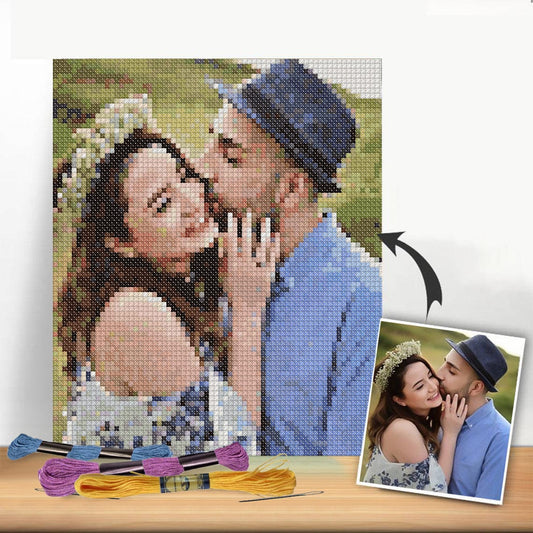
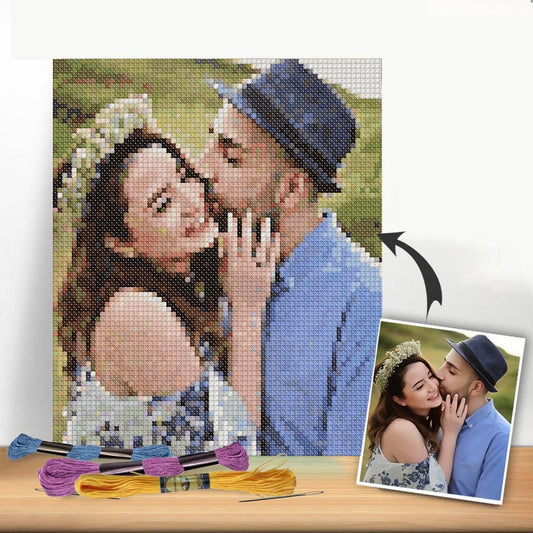
Honestly, one of the biggest motivators for any crafter is feeling a personal connection to their project. This is where personalized kits truly shine. Platforms like our own can turn a cherished photo—of a pet, a family member, or a favorite vacation spot—into a stitchable pattern. Working on something that already holds deep personal meaning makes the creative process incredibly rewarding.
This personal touch is a huge driver in the crafting world. Retailer surveys show that stamped and beginner kits are top sellers in 55% of stores, and personalized gifts cause sales to spike by up to 30% during the holidays. Even small online sellers have found that consistently adding new designs can significantly boost their profits. You can find more details on how sellers can thrive in the cross-stitch market on lordlibidan.com.
Whether you choose a pre-made design or a custom one, picking a theme you love will make you eager to see it come to life. If you want to explore more options, you can also check out our guide on finding the right cross stitch beginner kit for your needs.
Finishing And Displaying Your Masterpiece

You’ve placed the final stitch, and your design is officially complete. That feeling of accomplishment is huge, but your creative journey isn't quite over yet. Now comes the really fun part: the finishing touches that will turn your stitched fabric into a true work of art.
This final stage is incredibly rewarding. It's when you finally get to wash away the printed pattern and reveal the crisp, vibrant stitching you've worked so hard on. Don't worry, this step is far easier than it sounds and it’s the key to making your masterpiece shine.
The Big Reveal: Washing Your Project
The most magical moment when using a beginner stamped cross stitch kit is washing it for the first time. All those printed lines and colorful symbols are about to vanish, leaving only your beautiful handiwork. The ink used in these kits is designed to be completely water-soluble, making this step both simple and deeply satisfying.
First, fill a basin with cool or lukewarm water and add a tiny drop of mild soap. Submerge your project and let it soak for 15 to 20 minutes, swishing it around gently every now and then. You’ll see the ink start to lift right off the fabric—it's like magic!
After soaking, rinse the fabric thoroughly under cool, running water until the water runs completely clear. To dry it, lay your piece flat on a clean towel, place another towel on top, and gently press to squeeze out the extra water. Let it air dry the rest of the way on a flat surface.
Creative Ways To Display Your Work
Once your project is washed, dried, and pressed, it’s time for the final decision: how will you show it off? The way you display your work is the last creative flourish, turning it from a piece of fabric into a piece of decor. Here are a few simple but stylish ideas that are perfect for beginners.
-
Frame It in the Hoop: This is one of the easiest and most popular methods right now. Simply using the embroidery hoop you stitched in as a frame gives your piece a charming, rustic look. Just trim the extra fabric around the back and secure it with a bit of glue or a few quick stitches.
-
Create a Mini Pillow: Smaller designs make for adorable little decorative pillows. All you have to do is sew your finished piece to a matching backing fabric, leave a small opening for stuffing, and then stitch it closed.
-
Make a Greeting Card: A small stitched design can be mounted onto blank cardstock to create a beautiful, one-of-a-kind handmade card. It’s a personal touch that shows you really care.
-
Craft a Unique Patch: Why not turn your art into wearable art? You can easily make your design into a patch for a denim jacket, tote bag, or backpack. Just trim the fabric, fold the edges under, and stitch it onto whatever you like.
Final Touches: No matter how you choose to display it, this final step brings a wonderful sense of closure and pride. It's that moment you can finally step back and say, "I made that"—and get inspired to start your next project.
For a deeper dive into this stage, our guide on how to finish a cross stitch project offers even more detailed tips and techniques.
Common Questions About Beginner Stamped Cross Stitch
As you get ready to dive into the world of stamped cross stitch, a few questions are bound to pop up. It's totally normal! Think of this section as a chat with a seasoned stitcher, designed to answer those common "what ifs" and help you start your first project with confidence.
Let's clear up some of those nagging doubts so you can focus on the fun part.
What Happens If I Make A Mistake?
This is probably the number one fear for anyone starting a new craft. But here’s the good news: in stamped cross stitch, mistakes are no big deal! Because the correct pattern is printed right there on the fabric, you always have a perfect roadmap to follow.
If you notice a stitch is in the wrong place or the wrong color, just grab your needle or a handy little tool called a seam ripper to gently pull out the stitches. Once they're out, you can simply re-thread your needle and do it over again. Your first project is all about learning and enjoying the process, not chasing perfection.
Will The Printed Ink Wash Out Completely?
Yes, it absolutely will! The ink on beginner stamped cross stitch kits is specially formulated to be water-soluble. Its only job is to guide your needle, and once that's done, it disappears.
After you've placed your final stitch, a gentle hand wash in cool water is all it takes. You'll see the printed lines dissolve, leaving behind nothing but your beautiful, clean stitching. It's one of the most magical parts of the whole process! Just be sure to glance at your kit’s instructions for any specific washing advice.
Seeing the grid vanish to reveal your finished piece is incredibly satisfying.
How Do I Keep My Thread From Tangling?
Ah, the dreaded thread tangle! Those pesky knots, sometimes called "floss fairies," can be a real nuisance, but you can definitely outsmart them. The main culprit is usually working with a piece of thread that's way too long.
Here are a few tricks I've learned to keep things smooth:
- Go shorter: A piece of floss about 18 inches long (roughly the distance from your fingertips to your elbow) is the perfect length. It's long enough to work with but short enough to control.
- Let it dangle: Every so often, just let your needle and thread hang down. This allows the floss to naturally untwist itself.
- Try a thread conditioner: Products like beeswax or synthetic conditioners are a stitcher's best friend. They coat the floss, helping it glide through the fabric with less friction, which means fewer tangles.
Can I Use An Embroidery Hoop With My Kit?
Even if your kit doesn't come with one, I highly recommend getting an embroidery hoop. It's a simple, inexpensive tool that makes a world of difference for both your comfort and the final look of your project.
A hoop holds the fabric taut (think of a tiny drum skin). This even tension is the secret to creating beautifully uniform stitches. Plus, it gives you a solid frame to hold onto, which can really help prevent your hands from cramping up during those longer, relaxing stitching sessions.
Ready to turn your own favorite photos into timeless keepsakes? At Cross Stitched, our custom kits give you everything you need to start your next creative masterpiece.
Explore our personalized patterns and best-selling designs today and find the perfect kit to get you started.