If you've ever looked at a cross-stitch pattern, you've almost certainly seen a list of DMC colors. It’s not just a coincidence; DMC has become the common language for stitchers everywhere. Why? Because for centuries, they've delivered on a simple promise: exceptional quality, an incredible range of colors, and results you can count on.
Why DMC Is the Gold Standard in Cross-Stitching
Think of it like a painter's palette. A painter needs reliable pigments that produce the same color every single time, whether it's today, tomorrow, or a decade from now. For us stitchers, DMC floss is that reliable pigment. Their whole reputation is built on that unwavering consistency, which has rightfully made them the benchmark for the entire industry.
This long history of excellence means pattern designers can create with total confidence. They know that a stitcher in Tokyo using DMC 310 will get the exact same rich black as a stitcher in Toronto. It’s this global standardization that makes the whole system work so seamlessly.
A Legacy of Quality and Trust
DMC's story starts way back in 1746 in France, and they’ve spent centuries perfecting their craft. Their flagship product, the classic Six-Strand Embroidery Floss, is a testament to this. It's made from the finest Egyptian cotton and goes through a special double mercerization process. That's what gives it that beautiful sheen, impressive strength, and—most importantly—makes it colorfast.
This commitment has clearly resonated with crafters. Today, DMC holds a massive 18-22% market share in the needlecraft pattern world, cementing its spot as the leader. You can get a sense of just how big the needlecraft market is over on futuremarketinsights.com.
The colorfast guarantee is a huge part of DMC's appeal. It means you can pour hundreds of hours into a project, wash it, and hang it on your wall for decades without the colors fading or bleeding. That's peace of mind you can't put a price on.
A quick look at the official DMC website shows just how deep their roots in the crafting community go.
Right away, you can see how they balance their rich heritage with a modern, creative vibe, making it clear they’re still the go-to resource for stitchers today.
Navigating the World of DMC Threads and Colors
Diving into the full range of DMC threads can feel like opening a treasure chest. There are so many options, each with a unique texture and finish for your projects. While it might seem a little overwhelming at first, getting to know the core types is pretty simple and can seriously level up your creativity. The undisputed star of the show, of course, is the classic Six-Strand Embroidery Floss.
This is the workhorse thread that nearly every cross-stitch pattern calls for. Made from high-quality, double-mercerized Egyptian cotton, its real magic is in its design: six individual strands are gently twisted together. This means you can easily separate them, giving you total control over the thickness and coverage of your stitches. For most projects on 14-count Aida, you'll find yourself using two strands, but it’s this adaptability that makes it the go-to choice for stitchers everywhere.
Exploring Specialty Threads
Once you're comfortable with the basics, DMC's specialty threads are where the real fun begins. Think of these as your secret weapons for adding a bit of flair and dimension that can turn a great design into something truly spectacular.
- Light Effects: This thread has metallic fibers woven in, giving your work a beautiful sparkle. It’s absolutely perfect for adding festive details, magical shimmers, or just a little pop of light.
- Satin Floss: Made from rayon, this floss is silky smooth and has an incredible sheen. It’s the one to reach for when you want a luxurious, high-lustre finish for things like flower petals or flowing water.
- Variegated Floss: With this thread, the color subtly changes every few inches within a single skein. It creates gorgeous, multi-tonal effects without you having to change your thread, making it brilliant for stitching natural elements like leaves, skies, and landscapes.
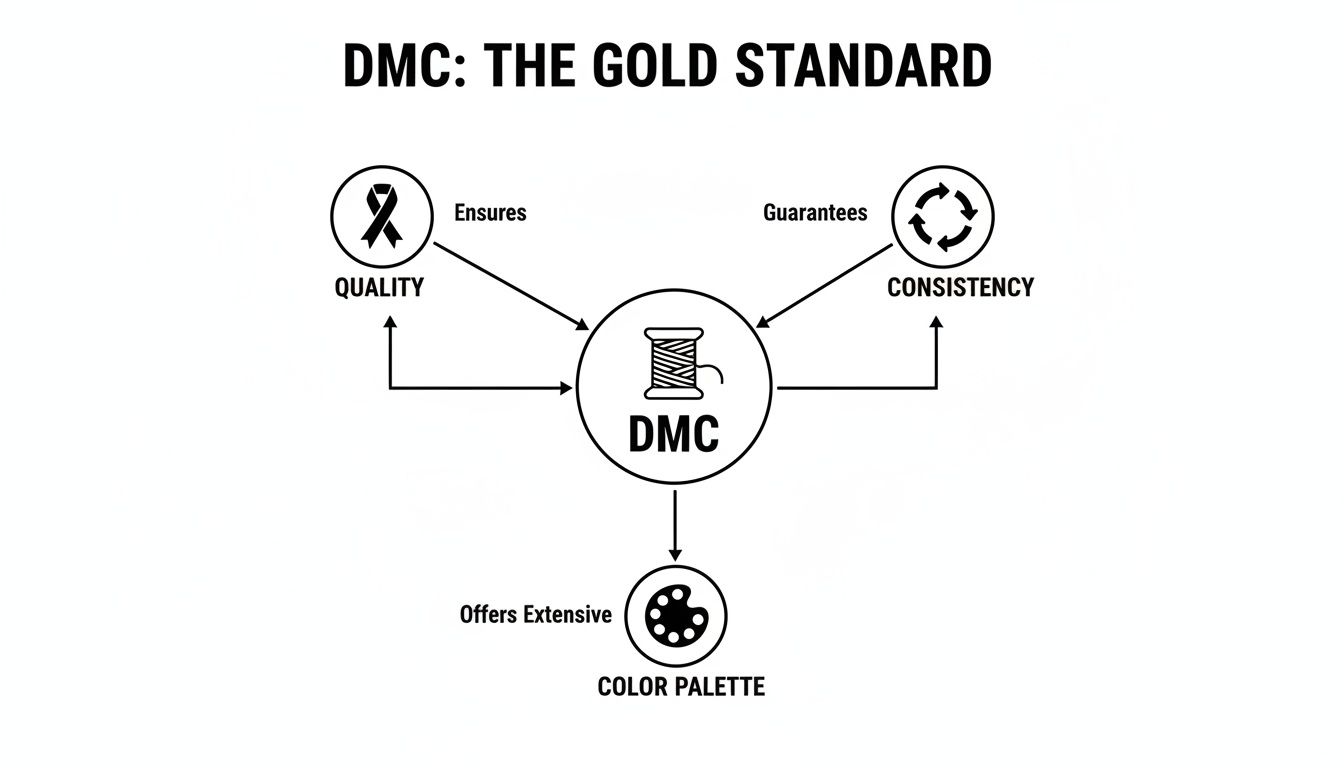
As you can see, it’s this powerful combination of quality materials, reliable consistency from skein to skein, and that massive color palette that has built DMC's stellar reputation among stitchers.
Cracking the DMC Color Code
With over 500 solid colors in the six-strand cotton range alone, you need a good system to find the right shade. Thankfully, DMC’s numbering system is basically a library for color, neatly organized into families to make life easier.
Think of it like the color wheel. All the reds are grouped together, the blues have their own section, the greens another, and so on. For example, you'll find lots of browns and greens in the 300s, while the 700s are packed with vibrant greens and reds. This clever organization means that numbers close to each other, like DMC 742 and DMC 743, are typically sequential shades of the same color—in this case, a pair of lovely yellows.
Understanding this system changes everything. Suddenly, your pattern's color key isn't just a random list of numbers. It's a carefully chosen palette designed to help you create seamless gradients and realistic shading in your stitched artwork.
To make sure you're picking the perfect hues and handling any color conversions, it’s always a good idea to have a DMC embroidery thread color chart bookmarked. These charts are invaluable for matching colors accurately, especially if a pattern lists threads from another brand. For a complete list focused just on DMC, you can also explore our detailed DMC thread colour chart and keep it handy for all your future projects. It makes finding substitutes or personalizing a pattern a total breeze.
Preparing Your Floss and Fabric for Perfect Stitches
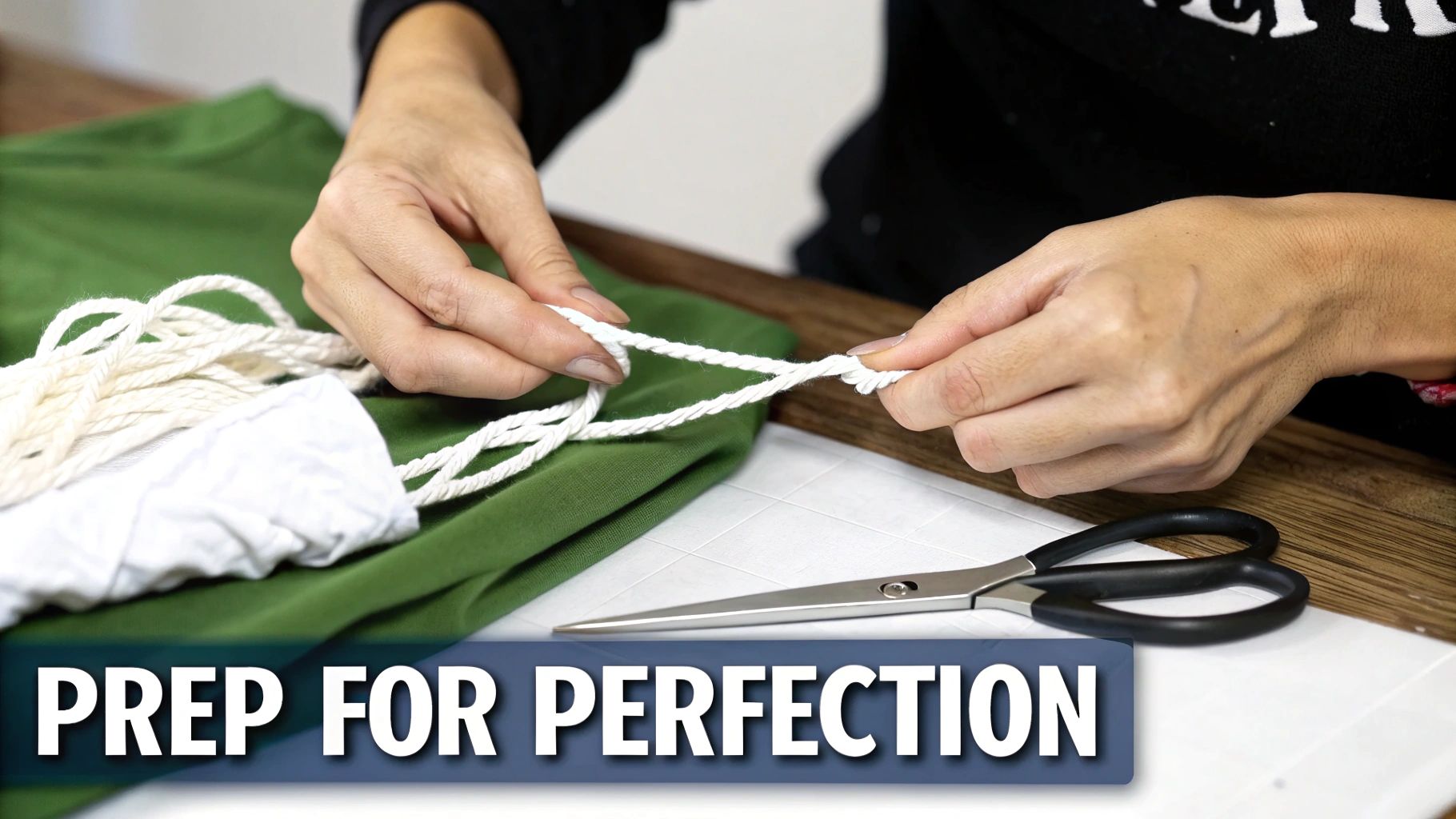
The secret to getting those beautifully neat stitches you see in finished projects? It all starts before you even thread your needle.
So many beginners get tangled up (literally!) because they skip the prep work. But taking a few minutes to get your DMC floss and fabric ready is what sets the stage for a professional-looking piece. It's the difference between a frustrating, knot-filled session and a smooth, enjoyable one.
Think of it like a chef getting their mise en place ready before cooking. You wouldn't just toss ingredients in a pan; you chop, measure, and organize first. For DMC cross stitching, that means wrangling your floss and getting to know your fabric before you make that very first X.
Taming Your DMC Floss
That pristine little skein of DMC Six-Strand Floss looks perfect, but pulling thread directly from it is asking for trouble. It's a one-way ticket to a knotted bird's nest. Instead, you'll want to gently pull the thread from the bottom of the skein to get a workable length.
A great rule of thumb I’ve always used is the "crafter's elbow" method. Just hold the end of the floss in your hand and pull the skein out towards your elbow. This length—usually about 18 inches—is the sweet spot. It’s long enough that you can get into a good rhythm but short enough to keep annoying tangles and knots at bay.
Once you’ve cut your length, the next step is to separate the strands.
- First, gently fan out one end of the thread so you can see all six individual strands.
- Pinch a single strand between your thumb and forefinger.
- Now, slowly and smoothly pull that one strand straight up and out. The other five will bunch up a bit, but don't worry—they won't knot.
- Repeat this until you have the number of strands you need (most patterns call for two on 14-count Aida). Then, just group your separated strands back together to thread your needle.
Taking the time to separate strands this way is a game-changer. It allows your floss to lie flat on the fabric, which makes your stitches look fuller and neater. It also stops the thread from twisting on itself as you work.
Choosing Your Aida Fabric
Your fabric is the canvas for your masterpiece, and its "count" is the most important thing to know about it. The Aida count simply tells you how many squares (and therefore, stitches) there are per inch. Getting this right helps you figure out the final size of your project and pick the best fabric for the level of detail you’re aiming for.
Here’s a quick rundown of the most common types:
- 14-Count Aida: This is the go-to for most stitchers, especially if you're just starting out. With 14 stitches per inch, the holes are easy to see and work with. Two strands of DMC floss give you fantastic coverage here.
- 16-Count Aida: Ready for a bit more detail? This fabric has 16 stitches per inch. Your stitches will be slightly smaller, creating a more refined look in the finished piece.
- 18-Count Aida: For highly detailed and complex patterns, 18-count is a great choice. The 18 stitches per inch result in an even finer finish, really making intricate designs pop.
Of course, your prep doesn't stop with just thread and fabric. Investing in good tools, like quality embroidery hoops, makes a world of difference. A good hoop keeps your fabric taut and your tension even, which is another key to achieving perfect stitches.
Turn Your Favorite Photos into Cross Stitch Art
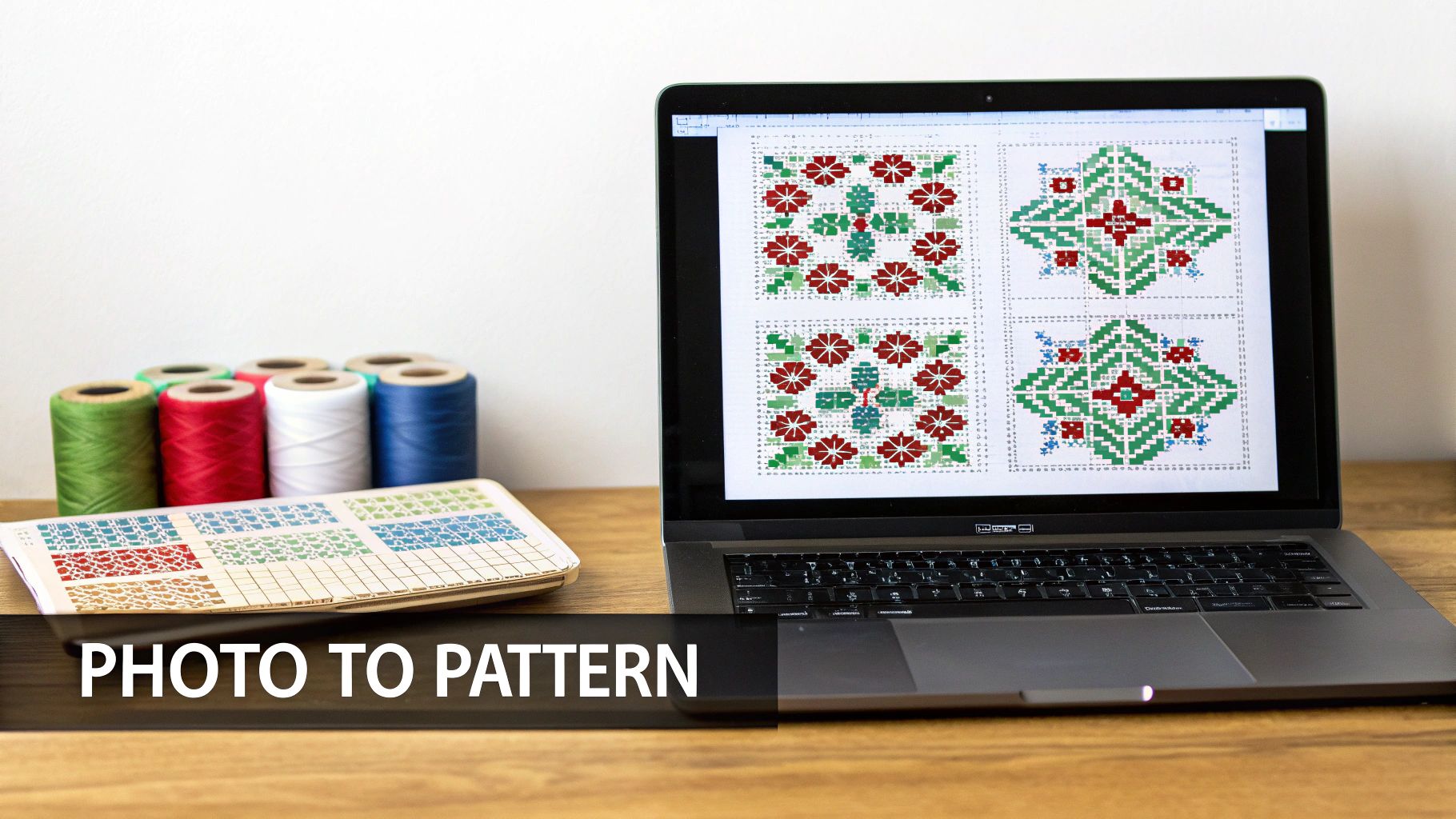
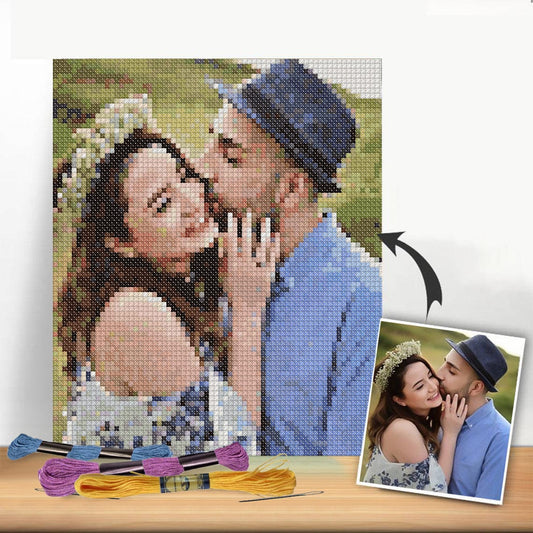
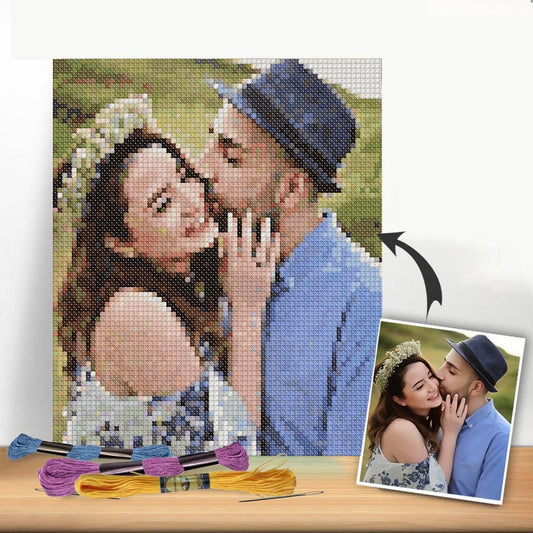
Ever thought about turning a cherished family portrait, a stunning vacation photo, or even a snap of your beloved pet into a beautiful, hand-stitched work of art? This is where the real magic of DMC cross stitching happens. It’s your chance to create something deeply personal and truly one-of-a-kind, and thanks to some handy modern tools, it's easier than you might think.
The concept is pretty straightforward but incredibly powerful. Special software analyzes the pixels in your photograph and maps each tiny square to a specific DMC thread color. With its massive palette of over 500 shades, DMC floss is pretty much made for this job. It can capture all the subtle gradients and fine details needed to bring a photo to life with just a needle and thread.
This move toward personalization is a huge part of what's driving the crafting world today. The global cross-stitch market was valued at USD 0.15 billion recently and is on track to hit USD 0.22 billion by 2033. That growth says a lot about how much people love DIY and custom projects. You can see more on this trend over at businessresearchinsights.com.
From Pixel to Pattern
First things first: you need to pick the right photo. For the best results, look for images with good lighting, strong contrast, and a clear, well-defined subject. A blurry, low-resolution photo is just going to give you a muddled, indistinct pattern. I’ve found that simpler backgrounds often work better, as they keep the focus squarely on the main event.
Once you’ve got your picture, it’s time to find a pattern generator. There are lots of online tools out there, but one of the most popular is Pic2Pat. These programs let you upload your photo and then tweak a few key settings to get your pattern just right.
The screenshot above gives you a peek at what you'll see when you start the process. This is where you'll plug in details like your fabric count and the final size you want before the software works its magic.
Fine-Tuning Your Custom Design
After you upload your image, you'll have control over a few important variables that will shape both the final look and your stitching experience.
- Stitch Count and Size: You can set the final dimensions of your project in either inches or stitches. Just remember, a larger size will capture more detail, but it will also demand more time and, of course, more thread.
- Number of Colors: This setting is a big one. Using more DMC colors will create a more realistic, photo-like piece with smooth, beautiful shading. A lower color count will give you a more stylized, posterized look, which can be an amazing artistic choice in its own right.
- Fabric Count: Don't forget to tell the software your Aida count (like 14, 16, or 18). This ensures the pattern’s final size is calculated correctly.
Think of yourself as an art director. You're guiding the software, telling it how to interpret your photo. Experimenting with these settings is the best way to find that perfect balance between realism and stitchability for your specific image.
Once you’re happy, the software will generate a printable PDF pattern. It comes complete with a symbol chart and a shopping list of all the DMC thread numbers you’ll need.
If you want to go even deeper, check out our guide on making cross stitch from photos, which is packed with more detailed tips and tricks. It’s a wonderful way to turn a simple digital image into a tangible, heirloom-quality piece of art.
How to Care for Your DMC Masterpiece
You’ve poured hours, maybe even weeks, into your cross-stitch project. Now it’s time to take care of that beautiful piece of art so it lasts a lifetime. Proper care is what turns a finished project into a true heirloom, keeping those DMC colors as vibrant as the day you tied the last knot.
It all starts with how you handle your supplies, even before the project is done. Think of your floss collection like a painter’s palette—keeping it organized makes everything easier. Winding your DMC skeins onto sturdy bobbins is a game-changer. Just label each one with the color number, and you'll never have to hunt for that specific shade of blue again.
If you've really built up a stash, floss storage boxes with little compartments are a fantastic investment. They keep your bobbins tidy, dust-free, and out of the light, which goes a long way in preserving their color.
Finishing and Cleaning Your Project
Once that final stitch is in place, the next step is to give your work a gentle wash. This might sound scary, but it’s crucial for removing any oils from your hands, dust, or those stubborn hoop marks. The good news is that DMC threads are famously colorfast, so you can wash your piece without worrying about the colors running.
Here’s a simple way to do it:
- Prepare a Gentle Bath: Fill a clean sink or basin with lukewarm water and a few drops of a mild, pH-neutral soap. Steer clear of harsh detergents or anything with bleach.
- Wash Carefully: Submerge your cross-stitch and give it a gentle swish. Let it soak for about 15 minutes. There’s no need to scrub; that can pull at the stitches.
- Rinse Thoroughly: Drain the soapy water and rinse your project under cool, running water until the water runs clear and all the suds are gone.
- Dry with Care: Never, ever wring out your project! Instead, lay it flat on a clean, thick towel. Roll it up like a burrito and gently press to squeeze out the excess water. Then, unroll it and let it air dry completely on a fresh, dry towel.
For a more detailed walkthrough, you can learn exactly how to clean a cross stitch with our step-by-step guide.
Ironing is the final touch before framing. Always place your project face down on a clean, fluffy towel and press it from the back with your iron on a medium setting. This protects the texture of your stitches while giving the fabric a crisp, professional finish. Now it’s ready to be framed and admired for years to come.
Your Top DMC Cross-Stitching Questions, Answered
Once you start stitching with DMC threads, a few questions inevitably come up. It happens to everyone! Maybe you're a beginner nervous about washing your first project, or perhaps you're a seasoned stitcher trying to figure out a tricky pattern conversion.
Think of this section as a chat with a friend from your stitching group. I'll give you the straightforward, practical advice you need to handle these common situations with total confidence.
Are DMC Threads Colorfast? Can I Actually Wash My Project?
Yes, you absolutely can! DMC's flagship Six-Strand Embroidery Floss is designed to be 100% colorfast and resistant to fading. This is a huge part of why it’s trusted for creating pieces that are meant to be passed down through generations. You can confidently wash your finished work to get rid of any oils from your hands, dust, or marks left by your hoop. The colors won't bleed.
The best way to do it is by hand. Just use lukewarm water and a gentle, pH-neutral soap. Steer clear of harsh detergents or bleach—they're a definite no-go. After a quick soak and a good rinse, roll your piece in a clean towel to blot out the extra water, then lay it flat to air dry.
What’s the Real Difference Between DMC and Cheaper Floss?
It really comes down to three things: quality, consistency, and color accuracy. DMC uses premium, long-staple Egyptian cotton and a double-mercerization process that gives the thread its beautiful sheen and makes it incredibly strong. This quality directly translates to fewer headaches for you—less fraying, splitting, and knotting as you stitch.
But the biggest deal is that the DMC color numbering system is the gold standard in the cross-stitch world. Patterns are designed specifically with these shades in mind. While an off-brand thread might look close, using it can lead to noticeable mismatches that throw off the entire look of your project, especially in finely shaded areas.
How Do I Convert a Pattern from Another Brand to DMC?
For this, online conversion charts are your best friend. A quick search for something like "Anchor to DMC conversion chart" will pull up tons of resources that match thread colors to their closest DMC equivalent. These charts are fantastic for getting you started.
A word of caution, though: an exact match isn't always possible. Different brands use different dyes and materials. If you're working on a project where precise shading is key, like a realistic portrait, it's always a good idea to compare the physical floss skeins side-by-side to make sure the colors will blend just right.
How Many Strands of DMC Floss Should I Use?
This is probably the most-asked question in cross-stitch! The answer really depends on your fabric count and the look you're going for. You want your stitches to cover the fabric so no white shows through, but you don't want them to look so bulky that they're crammed into the holes.
Here’s a solid rule of thumb that most stitchers follow for full cross-stitches:
- 14-Count Aida: Use 2 strands. This gives you perfect, solid coverage.
- 16-Count Aida: Stick with 2 strands here, too. It provides a lovely, full look.
- 18-Count Aida: This is where you have a choice. Use 2 strands for dense coverage or drop down to 1 strand for a more delicate, detailed finish.
- Backstitching: For crisp outlines and text, 1 strand is almost always the way to go, no matter the fabric count.
Ready to turn one of your own photos into a stitched work of art? At Cross Stitched, we've made it simple. Our custom photo-to-pattern kits come with everything you need, including pre-sorted DMC threads and high-quality Aida fabric. Explore our kits and find your next project today