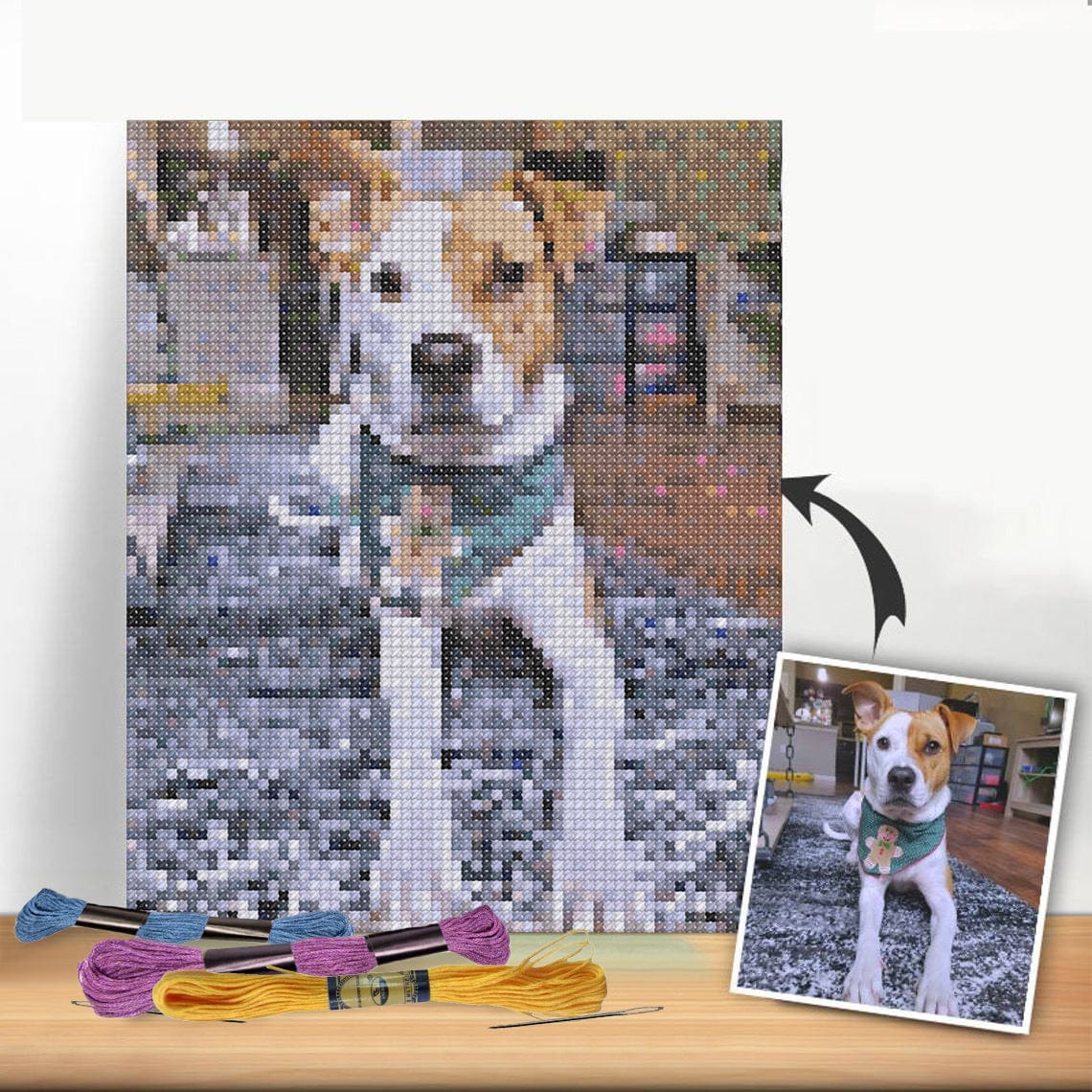

How to Start & End Cross Stitch Threads
Master the essential techniques for starting and ending your cross stitch threads cleanly. Learn multiple methods to achieve a neat, professional finish every time.
Why Proper Thread Starting & Ending Matters
How you begin and finish your threads has a significant impact on your finished cross stitch piece. Taking the time to learn proper techniques will:
- Create a smoother front surface - No bumps or lumps showing through from knots on the back
- Prevent unraveling - Properly secured threads stay in place through handling and framing
- Enable easier framing - A flat back lies smoothly against mounting boards
- Allow for future adjustments - You can remove stitches if needed without knot tangles
- Look more professional - Clean backs are the hallmark of quality needlework
Loop Start Method
The Most Popular Starting Technique
The loop start creates a completely invisible anchor on the back of your work. It's clean, secure, and uses no knots at all.
How to Do the Loop Start:
- Cut your thread twice the length you normally would (e.g., 36 inches instead of 18)
- Fold the thread in half and thread the cut ends through your needle, leaving the loop at the other end
- Bring your needle up through the fabric where you want to start
- Pull the thread through until only the small loop remains on the back
- Make your first half-stitch, going down through the fabric
- On the back, pass your needle through the loop
- Pull gently to secure - the loop will tighten around your first stitch
- Continue stitching as normal
Away Waste Knot Method
Perfect for Odd Numbers of Strands
The away waste knot uses a temporary knot that you'll remove later. It's versatile and works in any situation.
How to Do the Away Waste Knot:
- Tie a knot at the end of your thread (this is temporary)
- From the front of the fabric, push your needle down about 1-2 inches away from where you'll start stitching, in the direction you'll be working
- The knot should be on the front of the fabric, with the thread running along the back
- Bring your needle up where you want to begin stitching
- Stitch normally - your stitches will secure the thread on the back as you work toward the knot
- Once you've stitched over the thread tail (about 4-5 stitches), snip off the knot from the front
- The thread is now secured by your stitches with no knot remaining
Pin Stitch Start
For Isolated Stitches and Specialty Work
The pin stitch creates a tiny, nearly invisible anchor stitch that secures your thread without adding bulk.
How to Do the Pin Stitch:
- Come up through the fabric where you want to anchor (this should be hidden by your upcoming stitch or in the same hole)
- Go down through the fabric, catching just one or two fabric threads
- Come back up through the same hole you started in
- Repeat this tiny stitch 2-3 times in the same spot
- The pin stitches stack on top of each other, creating a secure anchor
- Now begin your actual stitching from this anchored position
How to End Threads
Weaving Under Existing Stitches
The standard method for ending threads in cross stitch is weaving under existing stitches on the back of your work. This creates a secure finish without any knots.
How to End Your Thread:
- When you have about 4-6 inches of thread remaining, stop stitching
- Turn your work over to see the back
- Slide your needle under 4-5 existing stitches (horizontal runs work best)
- Pull the thread through gently, but don't pull too tight
- For extra security, weave back in the opposite direction under 2-3 more stitches
- Trim the thread close to the fabric, leaving about 1/8 inch tail
Alternative Ending Methods
| Method | When to Use | Security Level |
|---|---|---|
| Basic Weave | Most situations with nearby stitches | High |
| Figure-8 Weave | When extra security is needed | Very High |
| Pin Stitch End | Isolated areas with no stitches | Medium-High |
| L-shaped Weave | When stitches only run one direction | High |
Securing Threads Without Knots
Traditional cross stitch wisdom says "never use knots" - and there are good reasons for this rule. Here's why knot-free stitching is preferred and how to achieve it:
Why Avoid Knots?
- Lumps and bumps - Knots create raised areas that show through the fabric front
- Framing issues - Knots prevent the fabric from lying flat against mounting boards
- Thread tangles - Knots can catch other threads while you're stitching
- Difficult removal - If you need to undo stitches, knots make it much harder
- Potential damage - Tight knots can distort the fabric weave over time
Quick Reference: Knot-Free Methods
Common Mistakes to Avoid
-
Using knots on the back
Knots create bumps that show through on the front and make framing difficult.
Use the loop start, away waste knot, or pin stitch instead.
-
Not leaving enough thread to end properly
Running out of thread with only 1-2 inches left makes it nearly impossible to secure.
Stop stitching when you have 4-6 inches remaining.
-
Weaving under different colored threads
Dark threads woven under light stitches can shadow through to the front.
Always weave under same-color or darker threads.
-
Pulling too tight when weaving
Over-tightening can distort your stitches and pucker the fabric.
Weave with gentle, even tension that matches your stitching.
-
Not weaving under enough stitches
Only going under 1-2 stitches leaves threads prone to coming loose.
Weave under at least 4-5 stitches, more for slippery threads.
-
Cutting threads too close to the fabric
Threads can slip out if cut flush with the weaving.
Leave a tiny tail of about 1/8 inch after trimming.
-
Starting with the loop method using odd strands
The loop method only works with even numbers of strands.
Use away waste knot or pin stitch for 1 or 3 strands.
Tips for Neat Backs
A tidy back isn't just for show - it makes your stitching easier and your finished piece more professional. Here are the top tips for maintaining a clean reverse side:
Travel Thoughtfully
Don't carry threads across large gaps. End and restart instead of trailing thread across the back.
Keep Threads Short
Work with 12-18 inch lengths. Longer threads tangle and wear thin from passing through fabric.
Trim Tails Consistently
Keep all your ending tails the same short length for a uniform appearance.
Stitch in Rows
Complete rows rather than individual crosses to keep back threads running in the same direction.
Check Periodically
Flip your work over regularly to catch tangles, loose threads, or mistakes early.
Avoid Overlapping
When weaving to end threads, don't stack them all in the same place.
Ready to Practice These Techniques?
Create your own custom cross stitch pattern to practice starting and ending threads. Our free pattern generator makes it easy to design beginner-friendly projects.
Frequently Asked Questions
While traditional cross stitch avoids knots, some stitchers use tiny knots in specific situations - like when stitching on very loose weave fabric or when doing punch needle work. However, for standard cross stitch on Aida or evenweave, knot-free methods produce better results. If you must use a knot, make it as small as possible and place it where it won't show or interfere with framing.
The loop start is perfect for beginners because it's simple, secure, and completely invisible. Since most patterns use 2 strands of thread, you'll be able to use the loop start almost all the time. For ending threads, the basic weave-under method is straightforward and reliable. Master these two techniques first, then add the away waste knot when you need to use 1 or 3 strands.
Weave under a minimum of 4-5 stitches for security. For extra slippery threads like rayon or silk, weave under more stitches or do a back-and-forth weave. If you're ending thread that will experience handling (like on a bookmark or ornament), add a few extra weaves for durability. The thread should feel secure when you give it a gentle tug before trimming.
Use the pin stitch method for isolated stitches like single French knots or distant backstitching. Make 2-3 tiny pin stitches that will be hidden under your decorative stitch. Alternatively, use an away waste knot positioned so your stitching path will eventually cover the thread tail, even if that coverage comes later in your project.
If your started threads are slipping, make sure you're completing the loop start correctly - the needle must pass through the loop before you pull tight. For ending threads that slip, you may not be weaving under enough stitches, or you might be cutting too close. Try weaving under 5-6 stitches in a figure-8 pattern, and leave a small tail when trimming. Also ensure your tension when weaving matches your stitching tension.
Metallic threads can be tricky with the loop start because they're often stiffer and more slippery. You can try it, but you may find the away waste knot works better for metallics. Another option is to start with a loop start using regular floss, stitch a few crosses, then switch to your metallic thread by weaving it under those initial stitches. This gives you a secure anchor for the challenging metallic thread.
While "neatness" is subjective and some very accomplished stitchers have messy backs, there are practical reasons to aim for tidiness. A neat back means: threads don't catch while you stitch, the fabric lies flat for framing, thread shadows don't show through light fabrics, and you use thread more efficiently. That said, don't stress about perfection - a functional back that's secure is more important than an Instagram-worthy one.
Continue Learning
Now that you've mastered starting and ending threads, explore these related topics: