Welcome to the wonderfully satisfying world of cross-stitch, a craft often described as "painting with thread." It's a simple, relaxing way to create beautiful pieces of art, one stitch at a time. At its core, the hobby breaks down into two main types: counted cross-stitch, where you follow a pattern chart to place stitches on blank fabric, and stamped cross-stitch, where the design is conveniently pre-printed right onto the fabric for you.
Your Journey into the World of Cross-Stitch
Starting your first cross-stitch project is an incredibly rewarding experience. There's a certain magic in turning a blank piece of fabric and some colorful thread into a personal masterpiece. Think of it like learning to play the piano; you begin by learning the basic notes and scales before you can tackle a complex sonata. This guide is here to walk you through the entire process, from the fundamental techniques to the materials that will bring your vision to life.
We'll start by exploring the core differences between the counted and stamped methods. Understanding these two approaches is the crucial first step in your creative journey, helping you choose the best starting point to build your skills and confidence.
Setting the Stage for Success
To get you started on the right foot, it helps to know what’s ahead. This guide is laid out to build your knowledge step-by-step, making sure you feel ready for whatever comes next.
Here’s what we’ll cover:
- Core Methodologies: We’ll take a deep dive into counted versus stamped cross-stitch so you can decide which is right for you.
- Essential Stitches: You'll master the basic building blocks of every pattern, from the full cross-stitch to the simple but effective backstitch.
- Tools of the Trade: We'll talk about how to select the right fabric and thread to make your project shine.
- Project Selection: Learn how to match your skill level with the perfect pattern, ensuring a fun and successful stitching experience.
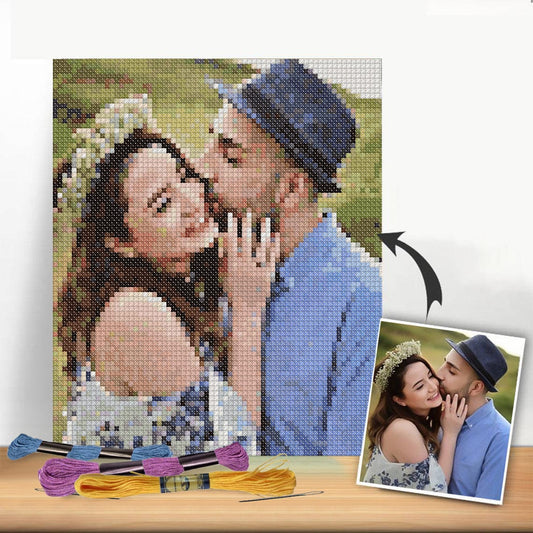
Cross-stitch is so much more than just a craft; it's a timeless way to create and preserve memories. Whether you're stitching a family portrait from a treasured photo or a quirky, modern design, each tiny 'x' adds to a story you can literally hold in your hands.
This introduction is just the beginning of your adventure into the different types of cross-stitch. With a little guidance and the right tools, anyone can master this classic art form. Let's get started
2 Main Types of Cross Stitch: Counted vs. Stamped
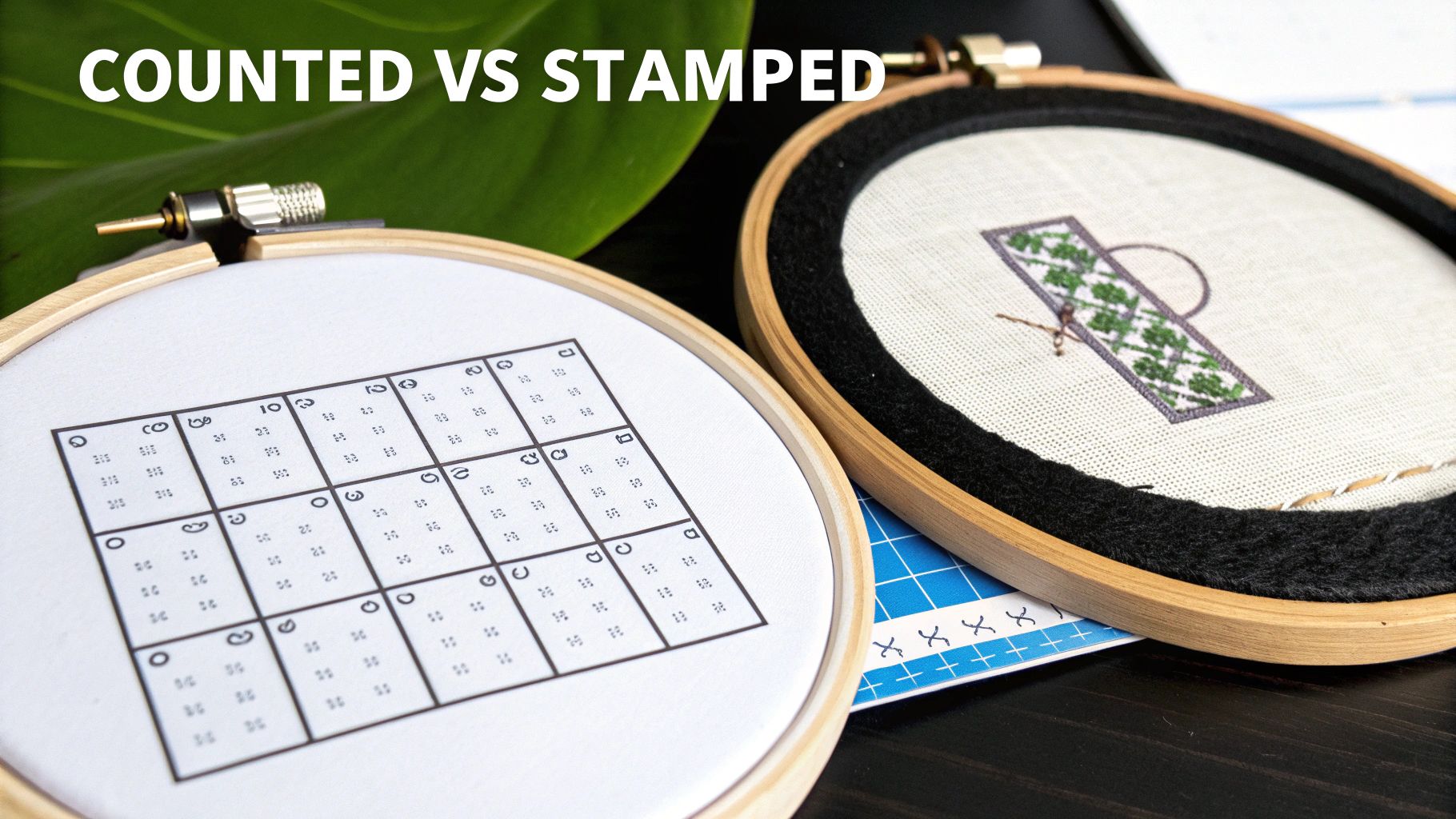 embroidery hoops comparing counted (pattern) and stamped (finished) cross stitch.">
When you first dip your toes into the world of cross stitch, you'll immediately encounter two terms: "counted" and "stamped." These aren't just minor variations; they represent the two fundamental approaches to the craft, and the one you choose really shapes your entire stitching experience.
Think of it like this: counted cross stitch is like navigating with a map and a compass, while stamped cross stitch is like following a "paint-by-numbers" guide right on your canvas. Both get you to a beautiful destination, but the journey is completely different.
Counted Cross Stitch: The Classic Method
Counted cross stitch is, by far, the most popular and traditional method out there. The kit comes with a piece of blank, evenly woven fabric (like Aida cloth) and a separate paper chart. This chart is your roadmap, covered in a grid of symbols where each symbol corresponds to a specific thread color.
Your job is to literally count the squares on the fabric and replicate the pattern from the chart, stitch by stitch. It sounds a little intimidating at first, but it quickly becomes a relaxing, rhythmic process.
Because you’re working on a clean slate, the final result is incredibly crisp and professional-looking. There are no printed lines to worry about covering up. This method gives you the freedom to choose any fabric you want, making it the go-to for incredibly detailed and artistic projects.
If you’re ready to learn more about this foundational technique, check out our in-depth guide on what counted cross stitch is.
Stamped Cross Stitch: The Beginner-Friendly Approach
On the flip side, we have stamped cross stitch. This is the perfect starting point if you're a complete beginner, stitching with kids, or just want a project you can relax with without too much intense focus.
With a stamped kit, the cross stitch pattern is printed directly onto the fabric in color-coded ink. All you have to do is match your thread to the color on the fabric and stitch right over it. It’s wonderfully simple—no counting, no charts, no chance of getting lost.
The ink is designed to wash away completely once you're done stitching, leaving behind your beautiful, finished piece. It’s a fantastic way to build confidence and get a feel for the rhythm of stitching.
Counted vs Stamped Cross Stitch: A Quick Comparison
To help you decide which path to take, here’s a straightforward comparison of the two main cross stitch types.
| Feature | Counted Cross Stitch | Stamped Cross Stitch |
|---|---|---|
| Process | You count squares on blank fabric using a separate chart. | You stitch over a pre-printed pattern on the fabric. |
| Difficulty | Requires more concentration and can be a learning curve. | Very easy and beginner-friendly; no counting needed. |
| Best For | Detailed, complex patterns and heirloom-quality pieces. | Simple designs, kids' projects, and quick, relaxing gifts. |
| Fabric Choice | Unlimited; you can use any Aida, linen, or evenweave. | Limited to the specific fabric included in the kit. |
| Final Look | A very clean, professional finish with no underlying marks. | Can sometimes see ink if stitches aren't dense enough. |
So, which one is right for you? It really comes down to what you want from the experience. Do you crave the artistic challenge and pristine finish of creating a masterpiece from scratch? Or are you looking for the simple joy of filling in a beautiful, pre-planned design? There's no wrong answer
Mastering the Essential Cross Stitch Stitches
Every single cross stitch project, whether it's a tiny keychain or a massive, full-coverage masterpiece, is built from the same small family of stitches. Think of them as your toolkit. The full cross stitch is your trusty hammer, but learning the others is what lets you build something truly special.
And it seems more people than ever are picking up this craft! The global cross-stitch market was valued at USD 0.15 billion and is expected to grow to USD 0.22 billion by 2033. This isn't just a niche hobby anymore; it's part of a huge DIY movement where people are rediscovering the satisfaction of making things with their own two hands.
The Building Blocks: Full, Half, and Fractional Stitches
At the heart of it all is the full cross stitch—the little 'X' that gives the craft its name. You make one diagonal stitch from corner to corner of a single fabric square, then lay another one right over top to complete the 'X'. Here's a pro tip: always make sure your top stitches all slant in the same direction. This one simple habit will give your finished piece a smooth, professional look.
But designs aren't always blocky. To create smooth curves and subtle details, you need to break down that 'X'. That's where fractional stitches come into play.
- Half Stitch (/ or ): This is exactly what it sounds like—just one leg of the full 'X'. It's fantastic for creating a sense of depth in backgrounds or for filling in large blocks of a single color a bit faster.
- Quarter Stitch (¼): This tiny stitch goes from a corner to the dead center of a fabric square. It’s the key to getting rid of that pixelated look, helping you create beautifully rounded edges on things like flowers or letters.
- Three-Quarter Stitch (¾): This is your detail-work superstar, combining a quarter stitch and a half stitch. It gives you the control to shape the delicate curve of a petal or the subtle slope of a character's face with amazing precision.
Fractional stitches are the secret weapon for turning a grid-based pattern into something that looks fluid and organic. They let you "paint" with thread, capturing all the little nuances that would otherwise be lost.
For a great visual guide to all of these, be sure to bookmark our complete cross stitch stitches chart.
Adding Definition and Texture
Once the main colors are filled in, a few finishing stitches can take your work from flat to fantastic. These are the details that really make a design pop off the fabric.
The backstitch is your go-to for outlining. Think of it like a pen you use to draw clean lines around your stitched shapes. It’s a simple straight stitch that’s perfect for defining objects, adding text, or creating fine lines like whiskers on a cat. It gives everything crisp, clean edges and makes the whole design look polished.
When you want to add a bit of texture, the French knot is an absolute classic. This little knotted stitch sits right on top of the fabric, creating a tiny, raised dot. It’s perfect for adding eyes to a character, the centers of flowers, or a field of stars. It might take a few tries to get the hang of it, but the three-dimensional effect is so worth the practice.
By getting comfortable with these essential stitches, you'll have the confidence to bring any pattern to life.
Choosing Your Canvas and Thread
Think of your fabric as the canvas and your thread as the paint. The materials you choose are the very foundation of your cross-stitch project, and getting this combination right is the first step toward creating something you'll be proud of. It might seem like there are a million options out there, but once you grasp a couple of key concepts, you'll be able to choose your supplies with confidence.
First up is a term you'll see everywhere: fabric count. It’s simpler than it sounds. This number just tells you how many little squares or holes there are in one inch of the fabric. The higher the count, the more stitches you can squeeze into that inch, which means your finished design will be smaller and more detailed.
A low count, like 11-count Aida, gives you bigger "X"s that are easy to see and stitch—perfect if you're just starting out or working on a quick project. On the other hand, a high count, like 28-count linen or higher, creates tiny, delicate stitches that are ideal for those intricate, heirloom-quality pieces.
Finding the Right Fabric for You
The kind of fabric you pick really changes the feel of stitching and the final look of your work. While the rabbit hole of fabric choices goes deep, most cross-stitchers stick to one of three main types.
- Aida Cloth: This is the go-to fabric for beginners, and for good reason. Aida is woven into a clear grid of squares with perfectly visible holes, so there’s no guesswork about where to put your needle. It's usually a bit stiff, which makes it easy to hold, and 14-count is the most popular starting point.
- Evenweave: Once you've got a few projects under your belt, you might want to try an evenweave fabric like Jobelan or Lugana. They have a higher thread count and a softer, less blocky look because you typically stitch "over two," meaning your X covers a 2x2 square of threads.
- Linen: For that truly classic, rustic charm, nothing beats linen. It has a gorgeous, natural texture that many experienced stitchers love. Be warned, though—its threads can be a bit irregular, which adds character but also a bit of a challenge. The result is a beautifully delicate and refined finish.
If you want to explore these materials in more detail, check out our complete guide on how to choose the best fabric for cross stitch.
Understanding Embroidery Floss
Now, let’s talk about the "paint" for your canvas: the thread. The gold standard in the cross-stitch world is DMC six-strand embroidery floss. It’s a high-quality cotton thread that comes in a dazzling array of hundreds of colors.
Each piece of floss, called a skein, is made up of six tiny strands twisted together. Most patterns, especially those for 14-count Aida, will ask you to use just two strands at a time. This means you’ll need to gently separate two strands from the main group of six before you start stitching. It’s a simple but crucial step that helps your stitches lie flat and look perfectly neat.
Selecting your materials is an integral part of the creative process. The texture of the fabric and the sheen of the floss contribute just as much to the final artwork as the stitches themselves.
This handy concept map shows you the basic stitches you'll be making on your fabric.
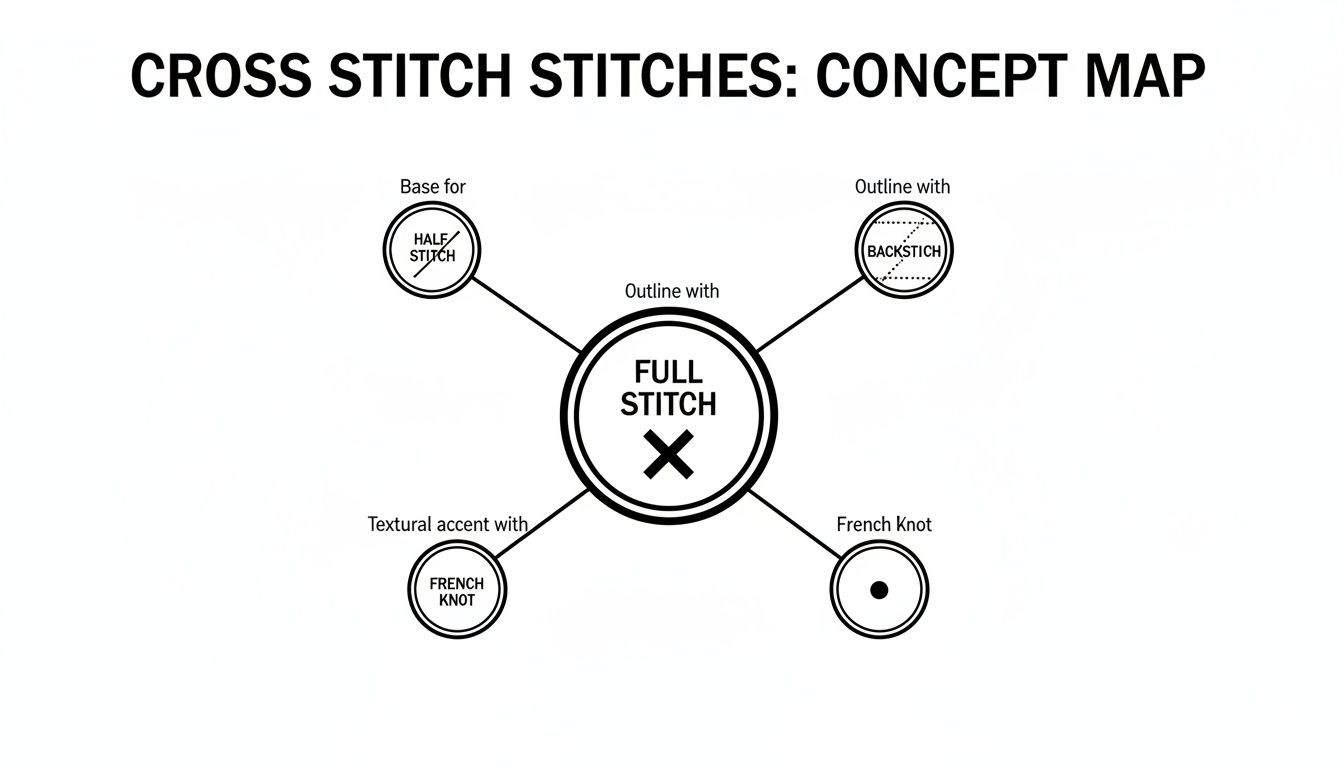
As you can see, the half stitch and backstitch are really just building blocks or companions to the full cross stitch, which is the heart of it all. Cross-stitch is a major player in the massive $34 billion needlecraft patterns market, a figure that's expected to nearly double by 2035. The boom in beginner-friendly kits is a huge reason for this growth, making it incredibly easy for new people to fall in love with the craft. And while you're focused on cross-stitch, you might find this comprehensive guide to machine quilting threads offers an interesting perspective on the wider world of threads.
Finding the Perfect Project for Your Skill Level
Okay, you've got the rundown on the different types of cross-stitch and the basic stitches. Now for the really fun part: picking your first (or next!) project.
Choosing a pattern that matches where you are in your stitching journey is the secret to a good time. It’s like learning to bake; you start with chocolate chip cookies, not a five-tiered wedding cake. Get this right, and you'll avoid frustration and end up with something you're proud of.
For Absolute Beginners: Your First Stitches
If you're brand new to this, the name of the game is building confidence and getting the hang of the basic full cross-stitch. You want a small, manageable project that gives you a quick, satisfying win.
Our best advice? Start with a counted cross-stitch kit made just for beginners. Here’s what to look for:
- Low Fabric Count: 14-count Aida fabric is your new best friend. The grid is big and easy to see, so you know exactly where to put your needle. No squinting required!
- Simple Designs: Pick a pattern with big blocks of solid color. Think cute animals, simple geometric patterns, or a bold monogram. You're focusing on the motion, not tiny, fussy details.
- Limited Color Palette: A project with fewer than 10 colors is perfect. This lets you get into a nice stitching rhythm without constantly stopping to switch threads.
Think small! Projects like bookmarks, keychains, or little designs you can pop into a 3-inch hoop are fantastic first-timers. You can often finish one in a weekend, which gives you that "I made this!" buzz and the motivation to keep going.
For Intermediate Stitchers: Stepping Up Your Game
So, you've got the full cross-stitch down and you can read a pattern without breaking a sweat. Awesome! You're ready to start sprinkling in some new techniques to make your work look more polished and dynamic.
Look for projects that will let you practice some of the other stitches we've talked about:
- Fractional Stitches: Find a pattern with some curves or rounded edges. Floral designs or anything with script lettering are great for getting comfortable with quarter and three-quarter stitches.
- Backstitching: Pick a design where backstitch is used to outline shapes and add sharp details. It’s amazing how a little backstitching can make the whole piece pop.
- More Colors: Go for it! Take on a pattern with more colors and some subtle shading. This is where your stitching really starts to look like a piece of art.
A custom portrait from a photo or a detailed landscape scene are perfect intermediate-level challenges. They push you to blend colors and use different stitches to create a real sense of depth.
For Experienced Stitchers: The Advanced Challenge
For the seasoned stitcher, the real joy is in the challenge of a complex, heirloom-worthy project. This is your time to play with high-end materials and specialty stitches that create stunning effects.
Consider taking on a project using fine 28-count or 32-count linen, stitching "over two" threads for that delicate, traditional look. You could also seek out patterns that call for specialty threads—think metallics that shimmer, silks that gleam, or variegated floss that changes color on its own.
Large, full-coverage art reproductions or incredibly intricate samplers are the kind of epic projects that become breathtaking masterpieces.
Your Top Cross Stitch Questions, Answered
As you start digging into all the different ways to cross stitch, you'll naturally have a few questions. It happens to everyone! Getting these sorted out early on builds your confidence and makes the whole process so much more fun.
Let's clear up some of the most common things new stitchers wonder about.
What's the Best Way to Start if I'm a Total Beginner?
If you're just dipping your toes into cross stitch, your best friend is a small counted cross stitch kit. Seriously, this is the way to go.
Look for a kit that specifically mentions it comes with 11-count or 14-count Aida fabric. This fabric is a game-changer for beginners because it has a really obvious, open weave. You can easily see exactly where your needle needs to go, which removes a ton of frustration right from the start.
For your first project, pick a simple design with just a handful of colors. This lets you get comfortable with making the basic full cross stitch without getting overwhelmed by a complicated pattern or constantly swapping out your thread. You'll finish your first piece feeling accomplished and ready for more.
Can I Actually Mix Different Stitches in the Same Project?
Not only can you, but you absolutely should! This is where the real magic happens. Combining different stitches is what gives a finished piece that "wow" factor, adding texture, detail, and a professional-looking finish.
Most patterns you'll come across are designed to use a mix of stitches to bring the image to life. Think of it like this:
- Full Cross Stitches are your workhorse, used to fill in the big blocks of color.
- Backstitching comes in afterward to create clean outlines, add text, or define tiny details that would otherwise get lost.
- French Knots are perfect for adding little raised dots, like the twinkle in an eye, stars in the sky, or the center of a flower.
Learning to combine these techniques is what will elevate your work from a simple grid of X's to a dynamic piece of art. It's a fundamental skill you’ll pick up as you grow.
Think of a pattern as a recipe. The full stitches are your main ingredients, but the backstitches and French knots are the spices that give the dish its unique character and flavor. Without them, the final result just wouldn't be as exciting.
How Can I Stitch a Pattern of My Own Photo?
These days, turning a personal photo into a cross stitch project is surprisingly easy. There are amazing services that use software to do all the heavy lifting for you. You just upload your picture, and it analyzes all the colors and pixels, translating them into a complete cross stitch chart.
The best part is that these companies then package it all up for you. You get a kit with your custom pattern, the right fabric, all the thread colors you'll need (often pre-sorted!), and a couple of needles. It’s the perfect way to turn a favorite family portrait, pet picture, or vacation snap into a handcrafted heirloom you'll treasure forever.
Ready to turn your own memories into a beautiful stitched masterpiece? At Cross Stitched, we specialize in creating custom, all-in-one kits from your photos. Explore our custom kit options and start your personalized project today.