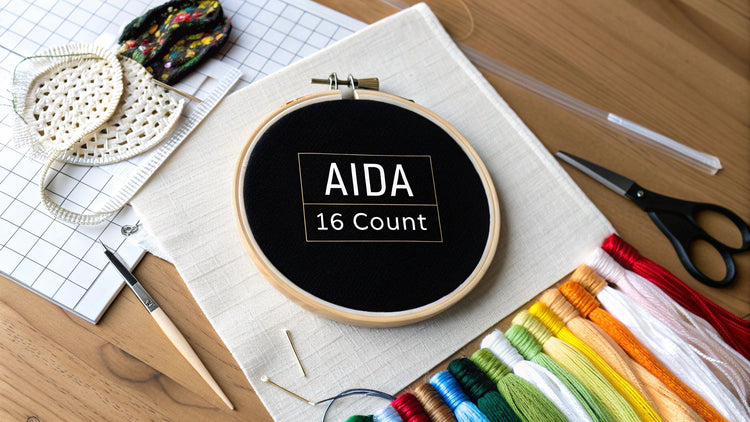
When you're starting a new cross-stitch project, choosing your fabric is a bit like an artist choosing their canvas. Think of the 'count' of the fabric as the resolution—the higher the count, the more detail you can pack in. 16-count Aida is like the sweet spot, a perfect middle ground that gives you a beautifully detailed picture without being too tricky to work on.
Essentially, 16-count Aida has 16 squares (or stitches) per linear inch. This tighter weave is what makes it so popular with both beginners looking to step up their game and seasoned stitchers who love a polished result.
Why Stitchers Love 16-Count Aida
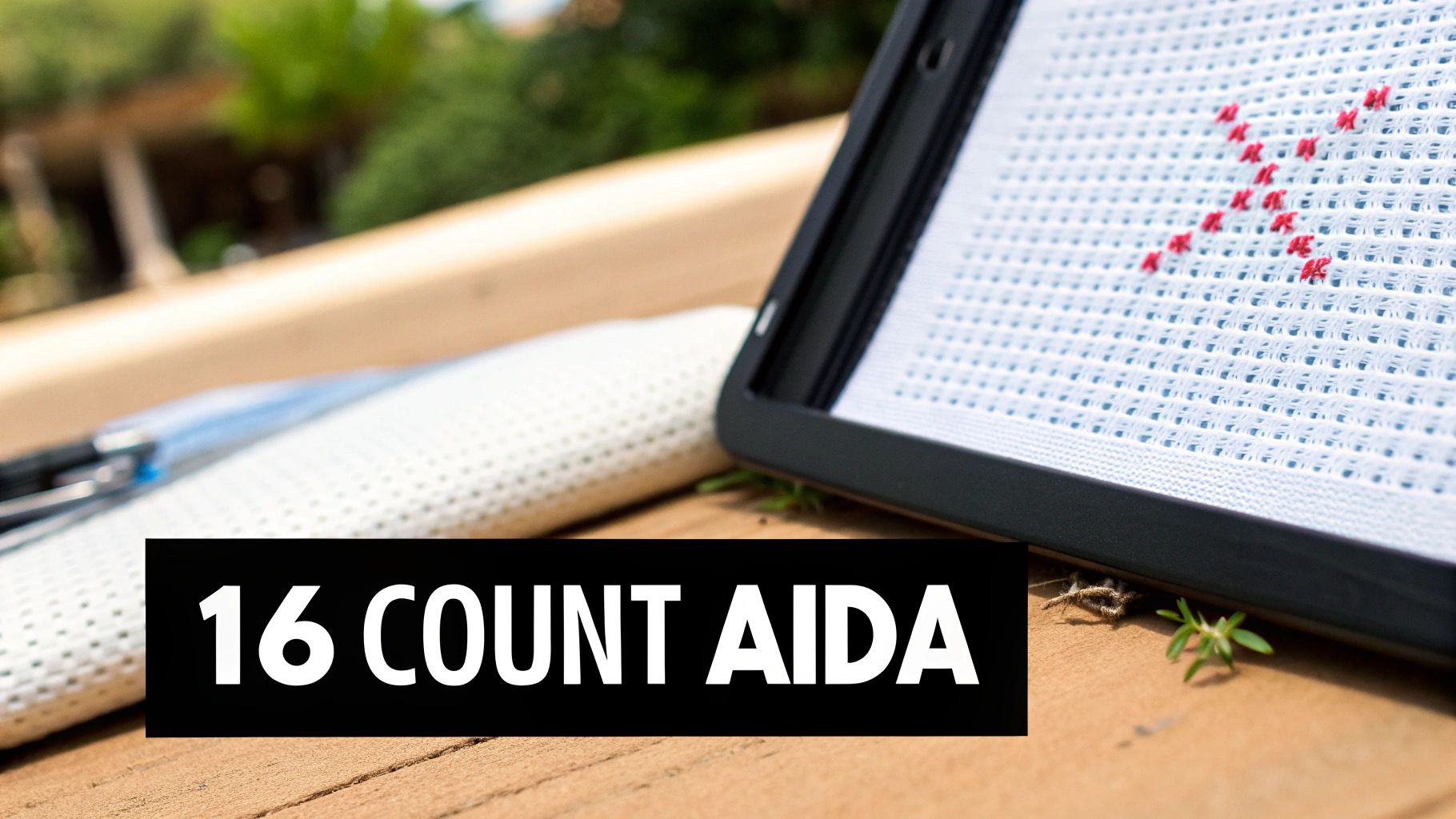 Aida fabric with red cross-stitches in a pattern, held in a black frame.">
If you've ever worked on 14-count, you'll immediately notice the difference with 16-count. The stitches are just a little bit smaller and closer together, which gives your finished piece a fuller, more "filled-in" look. It’s a step up in detail without the eye-squinting challenge of higher counts like 18 or 22.
The grid of woven squares is still clear and easy to see, so you can count your stitches and follow your pattern without much fuss.
The Perfect Balance of Detail and Ease
This fabric really hits the mark. Your stitches sit snugly in their squares, giving you fantastic thread coverage and a really professional finish. Plus, the holes are distinct enough that you can stitch for hours without feeling the eye strain that can come with finer fabrics.
This happy medium is a big reason why 16-count Aida is so popular. In the US market alone, which makes up 35% of all cross-stitch fabric sales, 52% of beginners gravitate towards this count. It’s all thanks to those 16 visible holes per inch that make precise stitching so much easier. If you want to dive deeper into Aida itself, you can learn more about what Aida fabric is in our full guide.
For many of us, 16-count Aida is our go-to fabric. It just tightens up the look of a design enough to feel more refined, but it’s still comfortable and forgiving to work with.
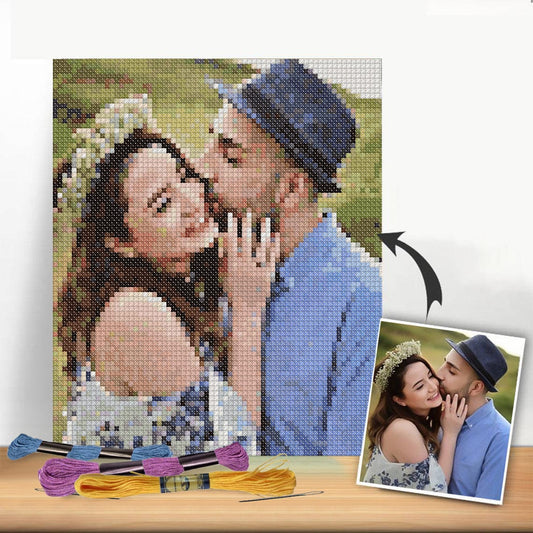
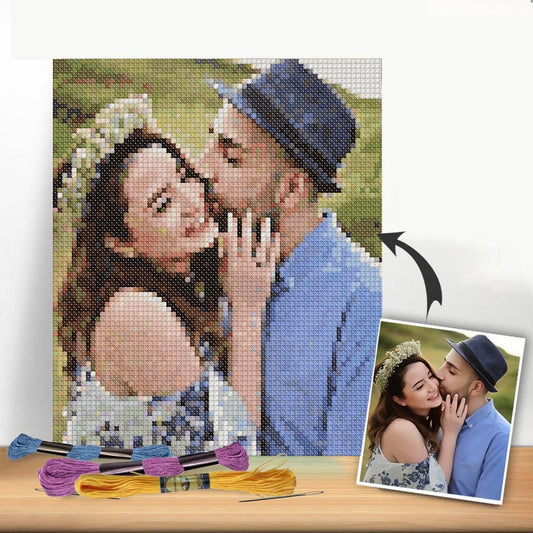
Whether you're tackling one of our personalised photo kits or a traditional pattern, this fabric gives your project a dense, high-quality appearance that you'll be proud to show off.
Choosing the Right Needle and Thread
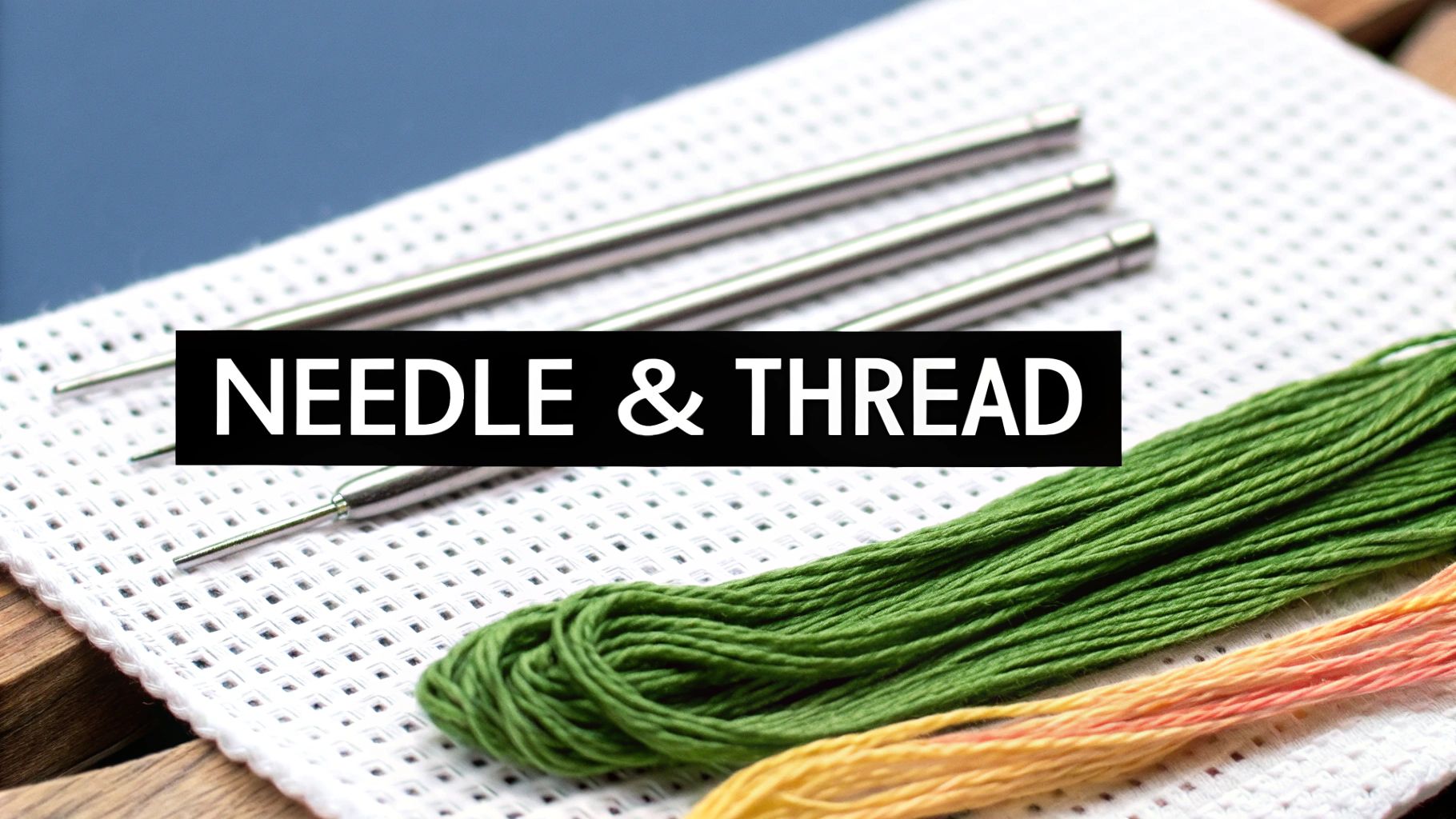
Half the battle in cross-stitch is simply matching the right tools to your fabric. When you're working with 16-count Aida, your needle and thread choices are what will make your stitches look smooth, even, and professional. The trick is to pick a needle that can slip through the fabric's holes easily, without forcing them wider or damaging the weave.
This is why a tapestry needle is your best friend. Unlike a sharp sewing needle, a tapestry needle has a blunt tip and a larger eye, making it perfect for counted-thread embroidery. It finds the natural holes in the Aida grid, protecting both the fabric and your floss from any fraying.
Finding Your Perfect Needle Size
For 16-count Aida, the sweet spot is a size 26 tapestry needle. It’s the go-to for most stitchers. However, a size 28 is also a great option, especially if you feel the size 26 is a bit tight or seems to be roughing up your thread as you pull it through.
Picking the right size from the start saves you a lot of potential frustration. It's one of those small details that makes the whole experience much more relaxing and fun. If you want to dive deeper, we have a complete guide to cross stitch needles and their sizes that breaks it all down.
Think of the needle and fabric hole like a key in a lock. The right size fits perfectly and turns with ease. The wrong one will jam, get stuck, and maybe even damage the lock itself.
How Many Strands of Floss Should You Use?
Once your needle is sorted, it's time to think about thread. For a standard full cross stitch on 16-count Aida, using two strands of embroidery floss is the magic number. This gives you beautiful, plump stitches with great coverage, so you don't see the white fabric peeking through.
Of course, not all stitches are the same. For delicate details like backstitching or lettering, you’ll want to switch things up.
To make it easy, here’s a quick guide for choosing the right needle and thread combination for 16-count Aida.
Needle and Thread Guide for Aida 16 Count
| Stitch Type | Recommended Needle Size | Number of Floss Strands |
|---|---|---|
| Full Cross Stitches | Size 26 or 28 | Two strands |
| Half Stitches | Size 26 or 28 | Two strands |
| Backstitching / Outlining | Size 28 | One strand |
| French Knots | Size 28 | One or two strands |
Using this as a starting point will help you get that polished, professional look every time. Don't be afraid to experiment, but these guidelines are a fantastic foundation for any project on 16-count Aida.
How Fabric Count Transforms Your Project Size
Have you ever seen two people stitch the exact same pattern, only to have them turn out in completely different sizes? The magic behind this isn't in the chart itself—it's all about the fabric count.
Think of it like the resolution of a photo. A higher count packs more stitches into every square inch, which gives you a smaller, more detailed final piece.
Doing the Math
Figuring out how big your finished project will be is surprisingly easy. There's a simple formula that works every time, and it's a lifesaver for making sure you buy the right amount of fabric.
Total Stitches ÷ Fabric Count = Size in Inches
That’s it! This little bit of math is your key to planning projects perfectly. It lets you know exactly how your stitched piece will fit in a specific frame or space.
Seeing the Difference in Action
Let's make this real. Imagine you have a pattern that’s 160 stitches wide by 160 stitches tall. Here’s how the finished size would change depending on your Aida choice:
- On 14-Count Aida: 160 stitches ÷ 14 = 11.4 inches
- On 16-Count Aida: 160 stitches ÷ 16 = 10 inches
- On 18-Count Aida: 160 stitches ÷ 18 = 8.9 inches
As you can see, stitching on aida 16 count fabric makes the design nearly an inch and a half smaller than it would be on 14-count. This gives your work a tighter, more refined look without needing the intense focus that 18-count often requires.
It really hits that sweet spot, which helps explain why beginner adoption of 16-count is at 68%. Plus, its clear weave can reduce eye strain by up to 30% compared to fabrics with a looser weave. You can find more info on this ideal fabric choice at Wizardi.com.
By simply changing your fabric, you control the final scale of your art. Aida 16 count gives you that sweet spot of visible detail in a manageable size, perfect for our personalised photo kits.
Once you get the hang of this relationship, you'll feel so much more in control. You can take any pattern and confidently resize it just by swapping out the fabric. If you want to go deeper, our guide on understanding cross stitch fabric counts has even more great info.
How Does 16-Count Aida Stack Up Against Other Fabrics?
Picking your fabric is more than just a practical step; it's a creative choice that defines the entire character of your finished piece. When you lay Aida 16 count fabric alongside its closest relatives, 14- and 18-count, you start to notice the unique personality each one brings to the table. The fabric you choose is always a balance between detail, the speed you can stitch, and how easy it is to work with.
This choice directly shapes both your stitching experience and how your project looks in the end. Aida's classic grid is a fantastic starting point for newcomers, while fabrics like evenweave or linen offer a softer, more traditional texture for those ready for a different kind of challenge.
Aida Showdown: 14-Count vs. 16-Count vs. 18-Count
Think of 14-count Aida as the sprinter of the group. Its holes are larger and more spaced out, which means your needle can fly across the fabric. This makes it perfect for beginners finding their rhythm or for any project you want to finish quickly. The trade-off? The individual 'X's of your stitches are more pronounced, giving the final piece a slightly more pixelated look.
At the other end of the spectrum is 18-count Aida, the perfectionist. Its tiny squares pack your stitches tightly together, creating a beautiful, dense finish that almost looks like a high-resolution print. Getting that level of detail, however, takes more patience, good lighting, and a steady hand. It’s a slower, more deliberate process.
This is where you can really see how the fabric "count" changes the final dimensions of the exact same pattern.
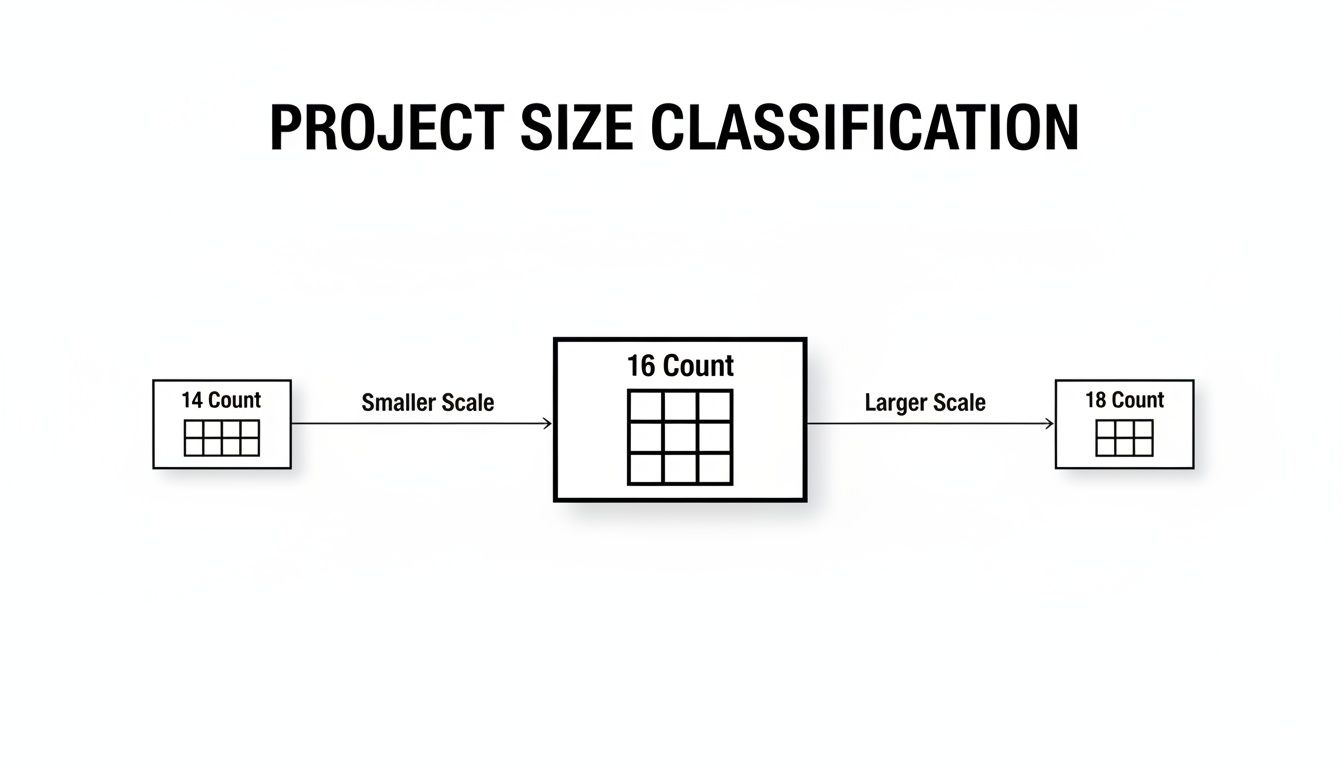
As the diagram shows, as you move from 14- to 18-count, the same number of stitches fits into a much smaller area, making the design more compact and detailed.
Finding the Sweet Spot with 16-Count
This brings us to 16-count Aida, which hits that perfect sweet spot right in the middle. It gives you a noticeably cleaner and more detailed finish than 14-count, but it’s still comfortable to work on and much easier on the eyes than 18-count.
Because the weave isn't quite as tight as finer fabrics, you can still stitch at a good pace. Many stitchers find their projects come together up to 25% faster on 16-count compared to 18-count. It’s no wonder that 72% of modern cross-stitch patterns now list 16-count Aida as the recommended fabric, cementing its status as the industry's go-to choice. You can see just how popular this fabric has become by checking out the wide selection of 16-count Aida at Walmart.com.
It's this ideal blend of quality and usability that makes 16-count our top recommendation for our personalised photo kits. It ensures your hard work pays off with a professional-looking piece you’ll be proud to display.
A Quick Look: Aida vs. Evenweave
While we've focused on Aida, it's helpful to see how it compares to another popular fabric type: evenweave. Evenweave fabrics like linen have a much softer and more fluid weave without the distinct grid of Aida. This gives projects a timeless, heirloom quality but requires more skill, as you have to count threads to place your stitches correctly (usually "over two" threads).
Here's a quick comparison to help you visualize the differences.
| Fabric Type | Stitches Per Inch | Best For | Ease of Use |
|---|---|---|---|
| 14-Count Aida | 14 | Beginners, quick projects, children's kits | Very Easy |
| 16-Count Aida | 16 | Detailed projects, full coverage, patterns | Easy |
| 18-Count Aida | 18 | Highly detailed work, realistic portraits | Intermediate |
| 32-Count Evenweave | 16 (stitched over 2) | Heirloom pieces, delicate designs, samplers | Advanced |
Ultimately, Aida provides a clear, gridded path for your stitches, making it reliable and straightforward. Evenweave offers a more organic texture but demands a bit more concentration. For most modern patterns, especially our custom photo kits, 16-count Aida offers the best of all worlds.
Preparing and Caring for Your Aida Fabric
 embroidery hoop with a beautiful floral design on white fabric.">
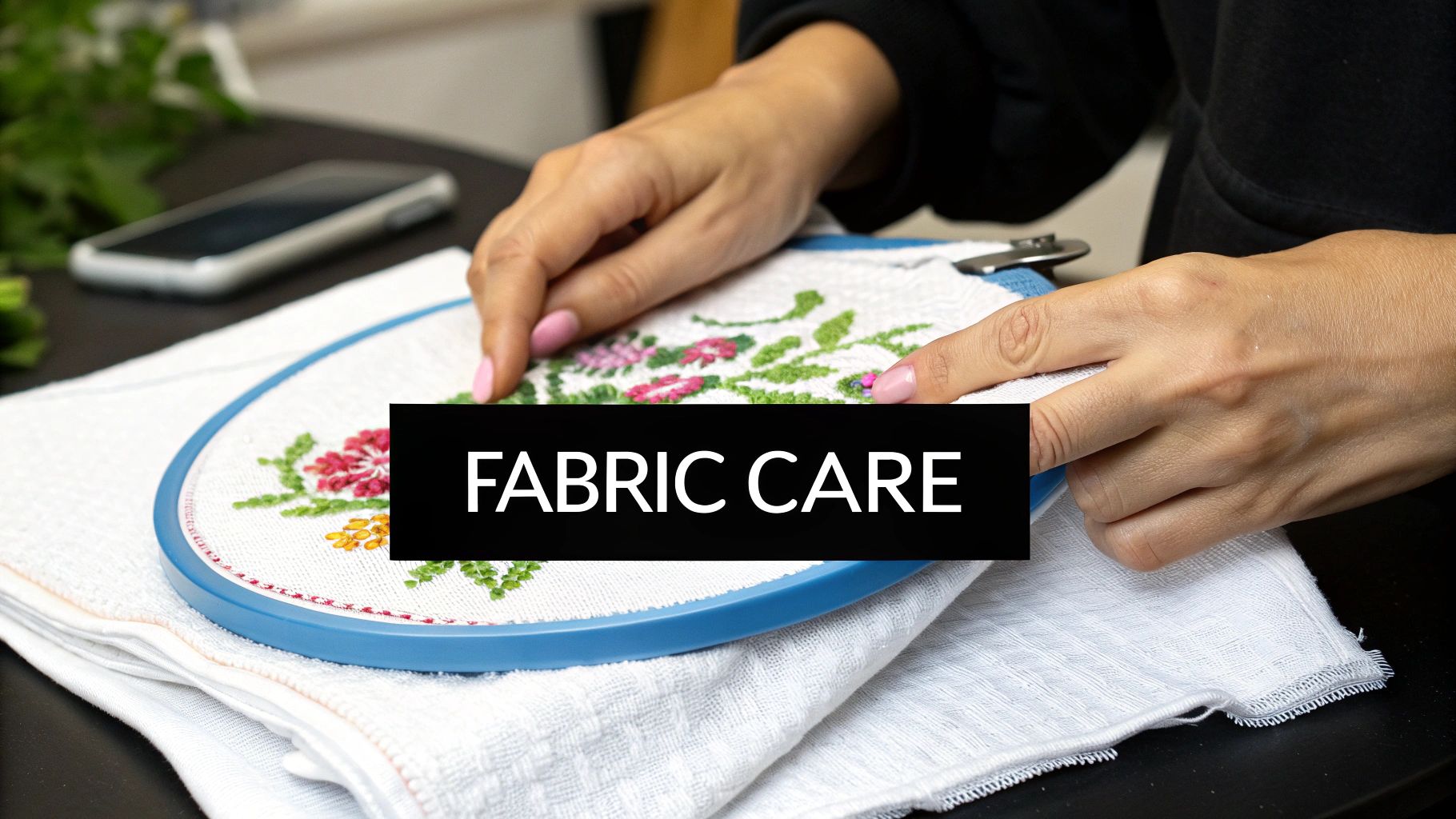
Taking proper care of your aida 16 count fabric is just as crucial as the stitching itself. Treating your fabric right, from the moment you take it out of the package to the final press, is what turns your hard work into a piece of art that truly lasts.
One of the first questions stitchers ask is whether they should wash their fabric before starting. The short answer is: no. Aida comes from the factory with a starch-like stiffener called sizing. This sizing is your friend—it makes the fabric firm, the grid easy to see, and the whole thing much simpler to handle. Washing it first makes it go soft and floppy, which can be a real headache to stitch on.
Before You Start Stitching
To stop your fabric from unravelling while you work, you'll want to secure the edges. This one simple step will save you from the frustration of frayed threads getting tangled up in your floss.
Here are a few easy ways to do it:
- Masking Tape: Just fold a piece of tape over the raw edges. It’s a quick and easy temporary fix.
- Serging or Zigzag Stitch: If you have a sewing machine, running a quick stitch around the border is a fantastic, long-lasting solution.
- Fray Check: This is a liquid seam sealant you can find at most craft stores. Just apply a thin line along the cut edges and let it dry.
And, of course, always wash your hands before you sit down to stitch. This keeps the natural oils from your skin off the fabric and your project looking clean.
A little prep work goes a long, long way. Securing the edges and keeping your hands clean are small habits that make a huge difference, protecting your work and making the finishing process so much smoother.
Washing and Finishing Your Project
Once that last stitch is in place, it’s time to give your project a gentle bath. This is the magic step that gets rid of any hoop marks, creases, and oils, leaving your fabric looking crisp and your colours bright.
Fill a clean sink or basin with lukewarm water and a tiny drop of mild, clear soap (like a gentle dish soap or a dedicated quilt wash). Let your piece soak for about 15 minutes, swishing it around carefully every now and then. Whatever you do, don't scrub or wring it out!
After its soak, rinse the fabric thoroughly under cool, running water until you can't see any more suds. Next, lay your project flat on a clean, thick towel. Roll the towel up with the project inside and press down gently to squeeze out most of the water.
Finally, place your piece face down on another clean, dry towel and press it with an iron on a medium heat setting until it’s perfectly dry. Ironing it face down protects your stitches, keeping them looking plump and full. Your aida 16 count fabric will look absolutely flawless and ready for framing.
Your Questions About 16 Count Aida Answered
Diving into the world of cross-stitch fabrics can bring up a lot of questions, especially when you're trying to pick the perfect canvas for your next project. When it comes to 16 count Aida, a few common queries seem to pop up for stitchers of all levels.
I've gathered the most frequent questions I hear from fellow stitchers to give you quick, straightforward answers. Think of this as your friendly guide to clear up any confusion before you even thread your needle.
Can I Use 16 Count Aida for a Pattern That Calls for 14 Count?
Absolutely! This is one of the most common and simple substitutions you can make in cross-stitch. The key thing to remember is that switching to a higher-count fabric will change the final size of your piece.
Using 16 count Aida instead of 14 count will shrink your finished design, making the stitches look a bit tighter and more detailed. It's a great trick for a more refined look. Just be sure to recalculate your fabric dimensions so you leave enough of a border for framing!
Is 16 Count Aida a Good Choice for Beginners?
Yes, it’s a fantastic choice. While 14 count is often the go-to recommendation for absolute beginners, 16 count is still incredibly easy to work with. The grid is well-defined and the holes are easy to spot, which means less frustration and eye strain.
I often think of it as the perfect "next step" for a beginner who has a project or two under their belt and wants their work to look a little more polished. It really hits that sweet spot between being easy to handle and creating a professional-looking finish.
The sweet spot for thread is almost always two strands of embroidery floss for a standard cross stitch on 16 count Aida. This gives you beautiful, full coverage without making the stitches look bulky. For delicate details or backstitching, dropping down to a single strand is usually best.
Should I Wash My Aida Fabric Before Stitching?
My advice is almost always no. Aida fabric comes from the manufacturer with a starch-like stiffener called "sizing." This is what makes the fabric feel a bit rigid and keeps the holes wide open and easy to see—a huge advantage while you're stitching.
If you wash it first, that sizing will rinse out, leaving you with a soft, floppy piece of fabric that can be a real pain to work with. It's much better to wait until you've finished stitching to wash your project. A gentle hand wash at the end will take care of any hoop marks or oils from your hands.
Ready to turn a cherished photo into a work of art? At Cross Stitched, our personalized photo-to-pattern kits make it simple. We give you everything you need—including high-quality 16 count Aida—to create something truly special. Start your custom cross-stitch project today!