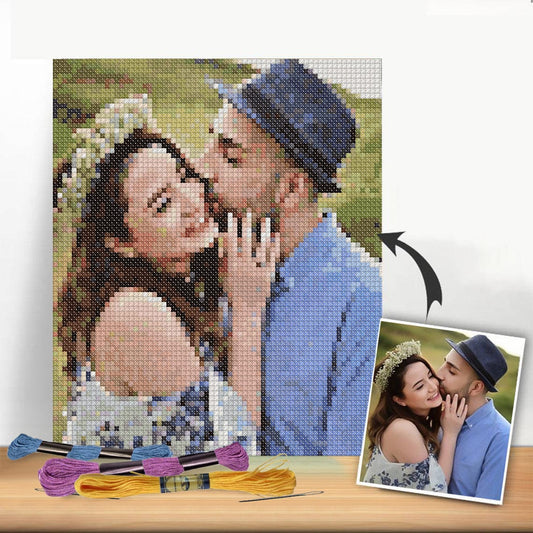
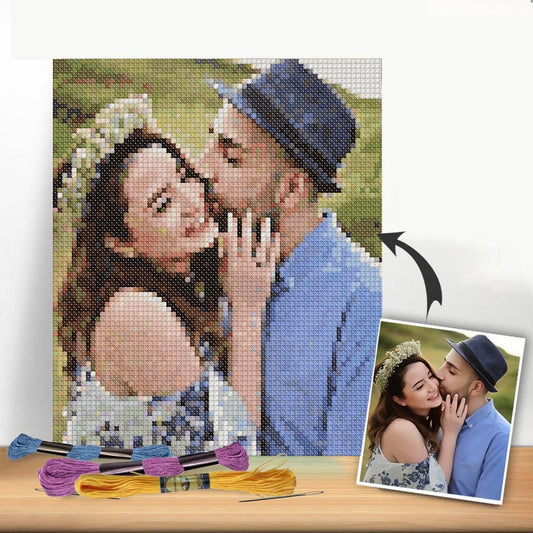
Finding a free DMC cross stitch pattern is one of the best ways to kick off a new project without spending a dime. Think of these high-quality patterns as your roadmap, using the world-famous DMC color system to guide every stitch you make.
Your Stitching Adventure Starts with Free DMC Patterns
Diving into a new cross-stitch project should be all about excitement, not cost. The great news is, the stitching world is wide open, thanks to a huge number of free resources you can find online. This guide is your starting point, showing you exactly how to find these patterns and turn them into your own beautiful pieces of art.
Why DMC Patterns are a Great Place to Start
There’s a good reason DMC threads are the gold standard in the stitching community. Their massive color system, featuring hundreds of specific shades, makes it possible to tackle even the most detailed designs. When a pattern calls out DMC colors, you can be confident that you’ll find the exact thread you need for a flawless finish.
This reliability is a game-changer, especially when you're still learning the ropes. It takes all the color-matching guesswork out of the equation so you can just relax and enjoy the rhythm of stitching.
The real magic is turning a digital file on your screen into a tangible piece of art you can hold. A good free pattern is the map, and your DMC threads are the vibrant colors you'll use to bring it to life.
The love for needlecraft has exploded, creating a bustling community and a growing market. In fact, the needlecraft patterns market was valued at an impressive USD 34,026.8 million in 2025 and is only expected to keep growing. This trend is fueled by a passionate community of creators who love to share their work and stitch together. You can read more about the growth of the needlecraft industry to see just how popular it's become.
Getting Your Essential Tools Together
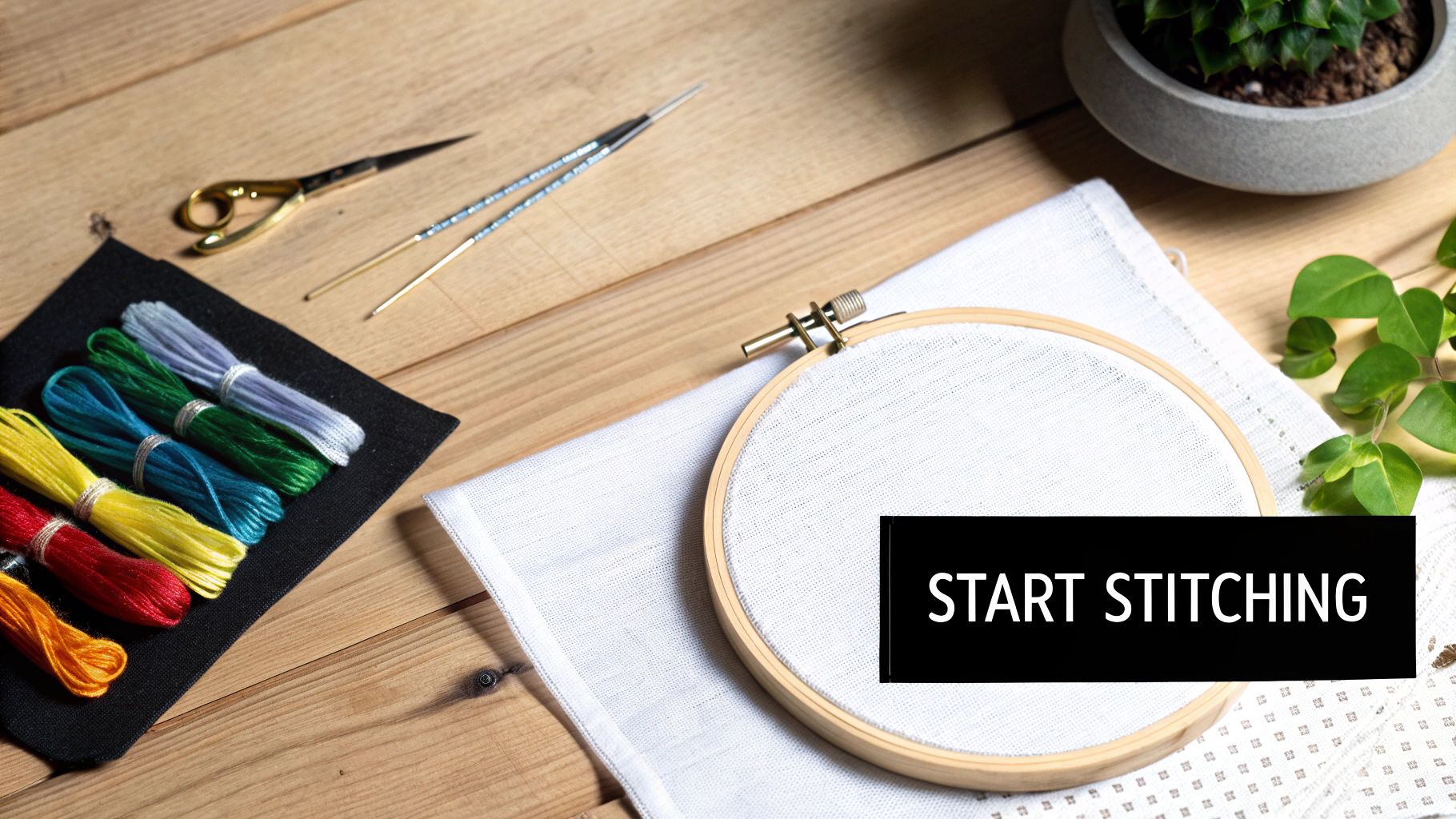
Before you dive in, you'll want to gather a few basic supplies. This is your essential starter kit for bringing any free dmc cross stitch pattern from the page into reality.
- Fabric: Aida cloth is the go-to for most stitchers. It comes in different "counts" (like 14 or 18 count), which just means how many stitches you can fit in an inch.
- Threads: Your pattern is the boss here. It will list the specific DMC color codes you'll need to grab.
- Needles: Look for tapestry needles. They have a blunt tip that won’t snag your fabric and a large eye that’s much easier to thread.
- Embroidery Hoop: This handy tool keeps your fabric tight and smooth, which is the secret to making your stitches look neat and even.
With these simple tools and an inspiring pattern, you have absolutely everything you need to get started on your next creative adventure.
Where to Find High-Quality Free DMC Patterns Online
Finding the perfect free DMC cross stitch pattern can feel like a treasure hunt, but once you know where to look, a whole world of incredible designs opens up. The trick is knowing how to spot the gems and which sources to trust.
Your first stop should almost always be the official DMC website. It’s a fantastic resource packed with professionally designed charts that are guaranteed to use their thread palette correctly. You'll find a ton of beautiful, reliable options straight from the source, often themed around seasons or holidays. It's a safe bet for quality.
But the real magic often happens when you venture off the beaten path. Independent designers, bloggers, and online communities are where you’ll unearth those truly unique, one-of-a-kind patterns that nobody else has.
Top Sources for Free DMC Cross Stitch Patterns
Navigating the sea of free patterns can be tricky. To help you get started, here's a breakdown of the most popular platforms and what they each bring to the table.
| Platform | Best For | Key Advantage | Potential Downside |
|---|---|---|---|
| DMC Website | Beginners and reliable, classic designs. | Guaranteed quality and accurate color lists. | Limited selection compared to larger communities. |
| Designer Blogs | Unique, niche, and modern patterns. | Direct connection with the artist and their work. | Quality can vary; requires more careful vetting. |
| Visual discovery and finding new designers. | Massive, searchable database of images. | Often links to broken pages or aggregators. | |
| Facebook Groups | Community-shared patterns and advice. | Great for finding specific, hard-to-find charts. | Files can be unvetted and may violate copyright. |
Each of these sources has its place in a stitcher's toolkit. The key is to use them wisely and always double-check the quality of a pattern before you invest your time and materials.
Vetting Your Sources
Not all freebies are created equal. Independent designers and bloggers are the heart and soul of the cross-stitch community, and they often give away amazing patterns to connect with fellow stitchers. The best ones pour just as much love into their free charts as their paid ones.
When you're on a blog, look for clear photos of the finished, stitched piece. It’s a great sign that the designer has actually tested their own pattern and worked out any kinks.
Pinterest is another goldmine, but you have to use it smartly. Think of it as a visual search engine, not the source itself. When you see a pattern you love, always click through to the original website. This ensures you’re downloading directly from the creator, respecting their work, and can check their terms of use.
This direct-from-the-designer approach is a huge part of what makes the needlework community so vibrant. In fact, industry reports from Needlework Retailer show that about half of all needlework shops are seeing stronger sales. That growth is fueled by a passionate community hungry for new projects, making free patterns a fantastic way for designers to meet new stitchers.
Checklist for a Quality Pattern
Once you find a chart that catches your eye, take 30 seconds to give it a quick quality check. A well-made pattern will save you a world of frustration down the road.
Here’s what to look for:
- A Clear Symbol Key: The chart must have a legend that clearly pairs each symbol with a specific DMC thread number. No exceptions.
- Readable Symbols: The symbols should be crisp and easy to tell apart. Avoid anything blurry or pixelated, which can lead to mistakes.
- Stitch Count Information: The pattern should tell you the design's dimensions in stitches (e.g., 100W x 85H). You need this to calculate your fabric size.
- Complete Color List: Quickly scan the chart and the key. Does every symbol in the design have a matching DMC color in the legend? Missing colors are a huge red flag.
A great free pattern is more than just a grid; it's a clear, well-organized roadmap for your project. Taking a minute to check for these quality markers ensures your stitching experience will be smooth and enjoyable from the very first stitch.
By being a little selective, you'll build a trusted library of patterns you can turn to again and again. For more curated options, you can also explore our own collection of DMC free cross stitch charts designed to get you stitching right away. A careful approach lets you spend less time searching and more time creating something beautiful.
How to Read Your Pattern and a DMC Thread Chart
So, you've found and downloaded a beautiful pattern. Now for the fun part: learning to speak its language. Every cross-stitch chart is basically a treasure map, and knowing how to read it is your ticket to a gorgeous finished piece.
Let's break down the grid, symbols, and that all-important DMC color key. Once you get the hang of it, you’ll be able to tackle any design with total confidence.
At its heart, a cross-stitch pattern is just a grid. Each and every square on that grid represents one single cross stitch you'll make on your fabric. It's a simple one-to-one relationship, which is what makes cross-stitch so wonderfully straightforward. The little symbols inside those squares are your instructions, telling you exactly which color of thread goes where.
Making Sense of Symbols and Colors
The real magic happens in the pattern's legend, or key. This is the Rosetta Stone that connects the abstract symbols on the chart to the actual skeins of DMC floss you'll be using.
You'll see a list where each symbol—it could be a star, a circle, a letter, anything really—is matched up with a specific DMC thread number.
For example, a square on the grid with a little black circle (●) might point to DMC 310, which every stitcher knows is classic black. A red triangle (▲) could correspond to DMC 666, that perfect, vibrant Christmas red. Your job is simply to find the symbol on the grid, look it up in the key, and grab the right color.
Here’s a great example of what part of a DMC thread chart looks like. You can see how every number has its own unique, specific shade.
Notice how the colors are grouped together? This is incredibly helpful when you need to find just the right shade of blue or green from a whole family of similar tones.
Understanding the DMC Numbering System
The DMC numbering system is truly the universal language of cross-stitch. With over 500 solid colors, each one has a unique number that is the same no matter where you are in the world. This is a huge deal. It means a pattern designed in Japan calling for DMC 743 will use the exact same shade of medium yellow as a pattern from a designer in the United States.
This consistency is one of the coolest things about the crafting community. A stitcher on Twitch can share their work-in-progress, and viewers from across the globe instantly recognize the colors they're using. It creates this amazing shared experience, all built on a common language of thread.
This system takes all the guesswork out of color matching. You don't have to hunt for "sky blue"; you just need to find DMC 3755. To really appreciate the incredible range of options, it's worth exploring a complete DMC thread chart with all the colours.
Beyond the Basic Cross Stitch
Many patterns, especially more detailed ones, use more than just the standard "X" stitch to add texture and definition. These special stitches will have their own unique symbols or line styles in the key.
- Backstitching: This is your outlining tool. It’s usually shown as solid lines on the pattern grid and is perfect for making shapes pop, defining lettering, or adding delicate facial features.
- French Knots: Often represented by small dots or circles, these create tiny, raised knots. They're fantastic for details like eyes, the centers of flowers, or little decorative polka dots.
- Fractional Stitches: These are the key to smooth curves and diagonals. You'll see symbols for quarter (¼) and three-quarter (¾) stitches, which allow for much more detail than a blocky full cross stitch.
Always take a moment to read the designer's notes on the pattern. A good free DMC cross stitch pattern will give you clear instructions on how to execute these special stitches, so you can add those beautiful finishing touches without any guesswork.
From Pattern to Fabric: Building Your Project Kit
So, you've found a fantastic free dmc cross stitch pattern and downloaded it. Think of that digital file as your blueprint; now it’s time to gather your materials and turn that plan into a real-life project.
Getting everything ready before you start is the secret to a stress-free stitching session. A little prep work now means you can sink into the relaxing rhythm of stitching later, instead of scrambling to find a missing color or discovering you've cut your fabric too small.
Choosing Your Fabric and Calculating the Size
Your first big decision is the fabric. For most cross-stitch projects, that means Aida cloth. Aida is available in different "counts" like 14-count, 16-count, or 18-count. That number simply tells you how many stitches you can fit into one inch of fabric.
This choice is crucial because it determines the final size of your piece. Let's say your design is 140 stitches wide. On 14-count Aida, it will measure 10 inches across (140 ÷ 14 = 10). But on 18-count Aida, that same design will be much smaller, just under 8 inches wide (140 ÷ 18 ≈ 7.8).
- 14-count Aida: This is the go-to for beginners. The holes are larger and much easier to see.
- 18-count Aida: This count gives your finished work a more refined, detailed look because the stitches are smaller and packed more tightly together.
Aida is the foundation for so many beautiful projects. If you want to dive deeper into how it's made and which type is best for you, our detailed guide on what is Aida fabric has all the answers.
Figuring Out Your DMC Thread Needs
Running out of a key color halfway through a project is every stitcher's worst nightmare. Thankfully, a little bit of math can save you from that fate. A standard skein of DMC floss gives you about 8.7 yards of thread.
As a solid rule of thumb for 14-count Aida, you can expect to get roughly 2,000 to 2,200 stitches from a single skein when using two strands of floss. Check your pattern's key—many modern designers include a stitch count for each color. If yours doesn't, you can estimate by counting the symbols in a 10x10 block of a solid color area.
Pro Tip: Always buy an extra skein of your most-used colors, especially if you have large blocks of background. It's so much better to have a little left over than to be playing "thread chicken" on those last few stitches!
The chart below breaks down the simple flow of reading your pattern and understanding how all the pieces fit together.
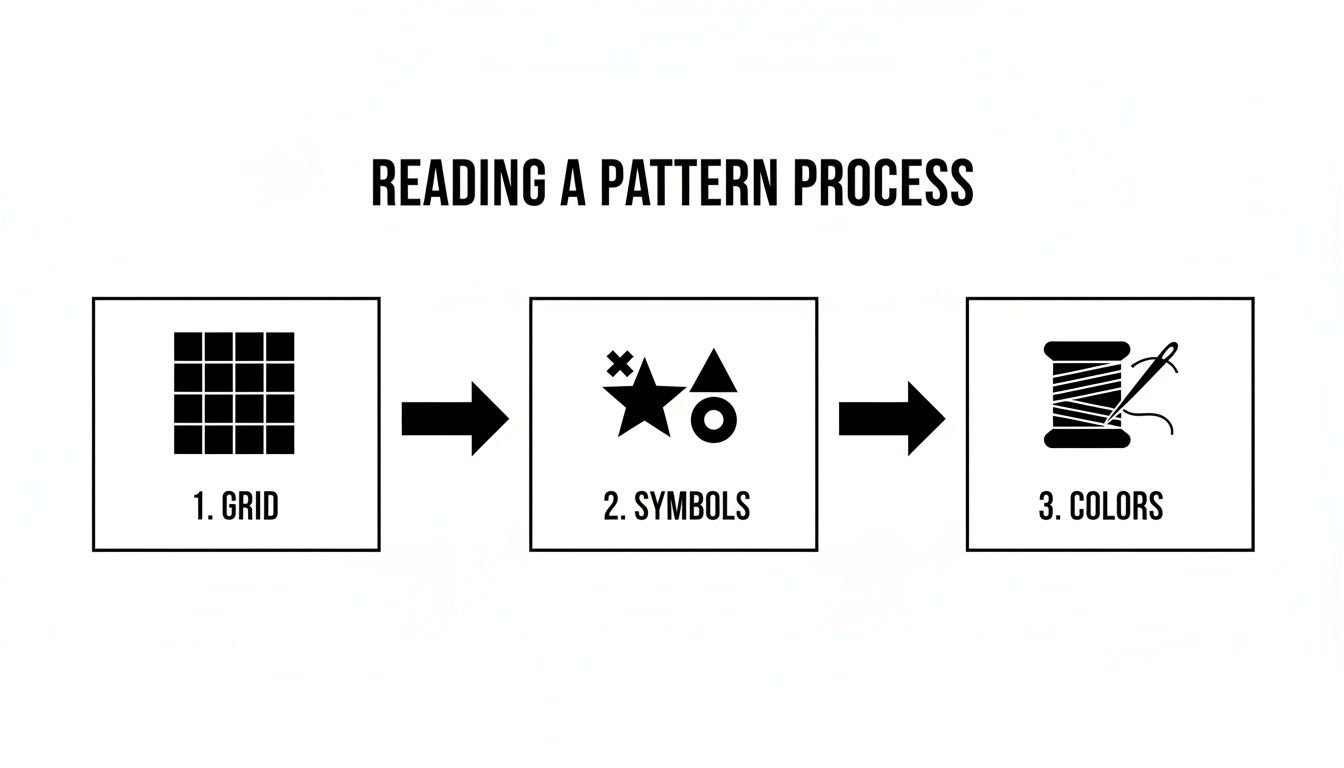
This process—moving from the grid to the symbols and finally to the colors—is the fundamental language of every cross-stitch chart you'll ever encounter.
Organizing Your Floss for Smooth Stitching
An organized project is a happy project. Before you even thread your needle, take a few minutes to get your floss in order. Winding your threads onto bobbins is the classic way to prevent a tangled mess and lets you see all your colors at a glance.
Don't forget to label each bobbin with its DMC number. Trust me, this tiny step will save you a massive headache later.
This whole preparation stage really speaks to a larger trend in the crafting world. The global cross-stitch market was valued at a surprising USD 0.15 billion in 2024, and it's projected to keep growing. This is all fueled by a vibrant DIY culture where makers enjoy the process just as much as the finished piece. Taking the time to build your own kit from a free pattern is a perfect example of that hands-on spirit in action.
Smart Stitching: Modern Tools and Essential Etiquette
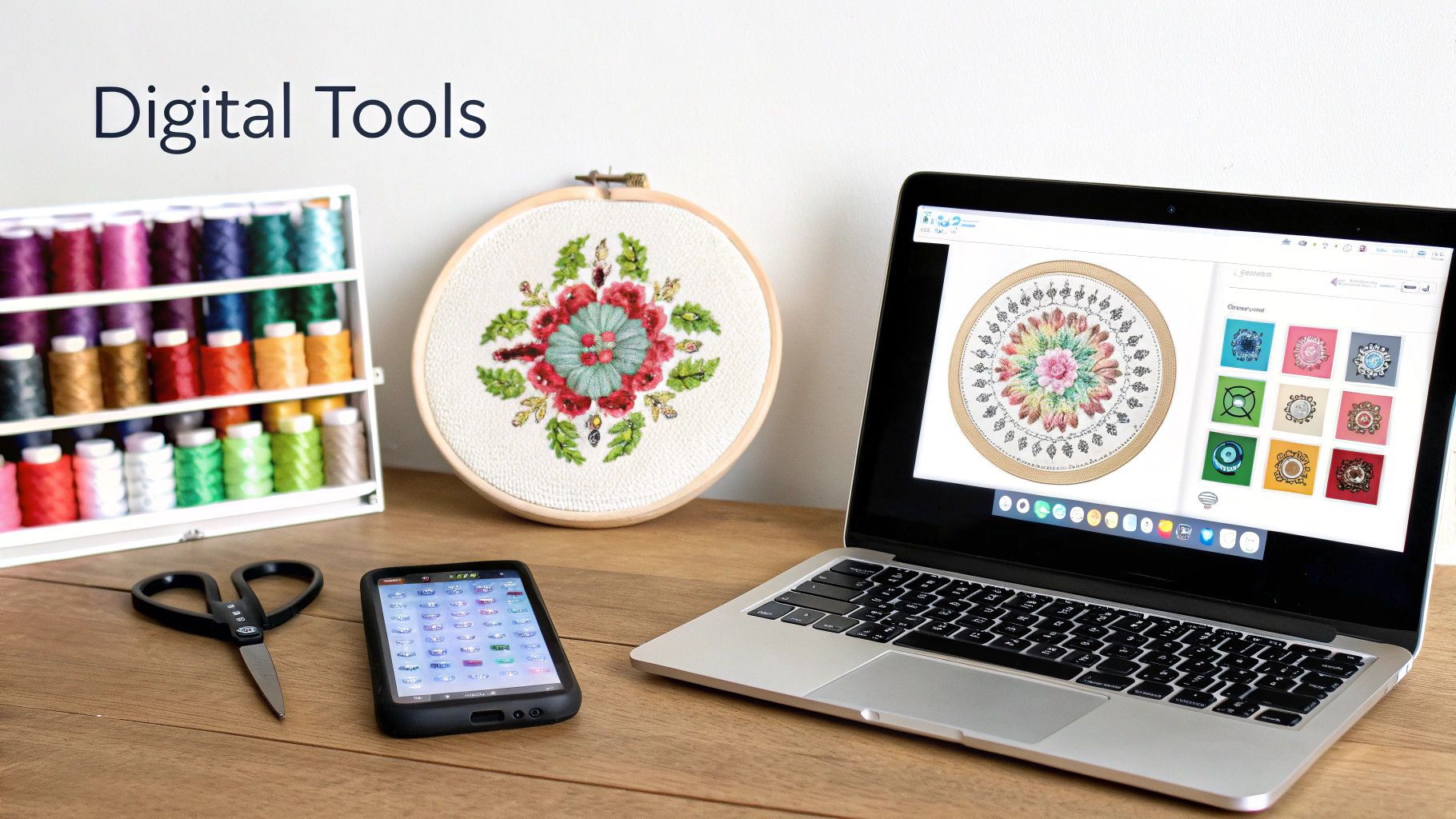
Finding a great free DMC cross stitch pattern is just the beginning. Today, we have a whole digital toolkit at our fingertips that can transform how we approach our craft, making it easier, more creative, and way more organized.
These resources are game-changers. Forget fumbling with paper charts or guessing at colors; there are apps and websites designed to smooth out nearly every step of the stitching process, from initial design to the final stitch.
One of the coolest things you can do is make your own patterns. Have you ever wanted to stitch a photo of your pet, a favorite vacation spot, or a family portrait? Now you can. Free tools like the Pic2Pat pattern maker let you upload a personal image and turn it into a complete, ready-to-stitch chart with a full DMC thread list.
Here’s a glimpse of how simple a photo-to-pattern generator can be.
The process is usually as easy as it looks: upload your picture, punch in your preferences—like fabric count and desired finished size—and the tool does the heavy lifting, spitting out a custom pattern just for you.
Managing Your Patterns: Print vs. Digital
So, you've got your pattern. What’s the best way to work with it? It really comes down to personal preference.
For many stitchers, a physical, printed copy is still the most comfortable way to go. If you're on Team Paper, here are a couple of tips I've learned over the years:
- Go Big: Don't squint! Print your chart across several pages so the symbols are large and easy to read. Your eyes will thank you later.
- Highlight as You Go: A simple highlighter is your best friend. Marking off the stitches you've completed is the single best way to keep your place and avoid mistakes.
On the other hand, a growing number of us have gone digital, using tablets or even smartphones to follow patterns. Apps like Pattern Keeper are built specifically for cross-stitchers. You can import PDF patterns, tap to mark off stitches, track which threads you're using, and zoom in on tricky sections with ease.
The Golden Rule: Stitching with Respect
The sheer volume of free patterns available is a huge gift to our community, but it's crucial to remember where they come from. Behind every one of those designs is a real person—often an independent artist—who invested their time and talent.
Using a free pattern is a bit like being invited into a designer's creative home. The respectful thing to do is admire their work, say thank you, and follow their house rules, especially regarding how you can use their creations.
Before you start stitching, always look for a copyright notice or terms of use. The vast majority of free patterns are intended for personal use only. This means you're welcome to stitch them for yourself or as a gift, but you can't sell the finished piece.
And if you share your project on social media, giving the designer credit is a wonderful way to show your gratitude. A simple tag or a name drop helps others discover their work and supports the artists who make our hobby so vibrant.
Answering Your Top Questions About Free DMC Patterns
Diving into the wonderful world of free patterns is exciting, but it's natural for a few questions to pop up along the way. Whether you're wondering about project details or the etiquette of using someone's design, getting the right answers will help you stitch with total confidence. Let's tackle some of the most common things stitchers ask when they download a free DMC cross stitch pattern.
Can I Sell Something I Made from a Free Pattern?
This is a big one, and the short answer is: it depends entirely on the designer. Most of the time, free patterns are shared for personal use only. Think of them as a gift to the stitching community—something for you to enjoy making for yourself or as a present for a loved one.
Selling the finished piece usually isn't okay unless the designer has explicitly said you can. You'll want to hunt for a copyright notice or a "terms of use" section, which is often on the pattern PDF itself or on the creator's website. If you can't find anything, the safest and most respectful route is to assume it’s just for personal enjoyment. This simple courtesy helps support designers and encourages them to continue sharing their amazing work with all of us.
What Should I Do If I Run Out of a Specific DMC Color?
There's nothing quite as frustrating as realizing your local shop is out of a DMC color you desperately need. Before you panic, check online retailers—they often have a much bigger inventory. But if you're in a real pinch and need a substitute right now, a DMC color substitution chart can be a lifesaver for finding the next best thing.
Expert Tip: When you're subbing in a new color, always hold the new thread up against the other colors in your project's palette. This quick visual check helps you see if it truly fits, which is especially important for things like skin tones or the main focal point of your design.
For those really detailed, intricate sections, my best advice is to wait for the exact color. It's often worth it to make sure the finished piece looks just like the designer imagined.
How Do I Figure Out My Project’s Finished Size?
Calculating the final size of your project is easier than it sounds, and it's a critical step for cutting your fabric correctly. All you need are two numbers: the pattern's stitch count (both width and height) and your fabric's count (like 14-count Aida).
Here's the simple math:
- Take the stitch count (width) and divide it by your fabric count. That's your finished width in inches.
- Do the same for the height: divide the stitch count (height) by the fabric count.
Let's say your pattern is 112 stitches wide and you're using 14-count Aida. Your design will be 8 inches wide (112 ÷ 14 = 8). Don't forget the most important part: always add a border of at least two to three inches of extra fabric on all sides. This extra space makes it so much easier to use a hoop or Q-snap and gives you plenty of room for framing down the line.
Ready to turn your favorite memories into a work of art? At Cross Stitched, we make it easy to create a personalized cross-stitch kit from any photo. You provide the picture, and we’ll send you everything you need—pre-sorted DMC threads, high-quality Aida fabric, and a custom pattern—to start stitching your masterpiece. Get your custom kit today.