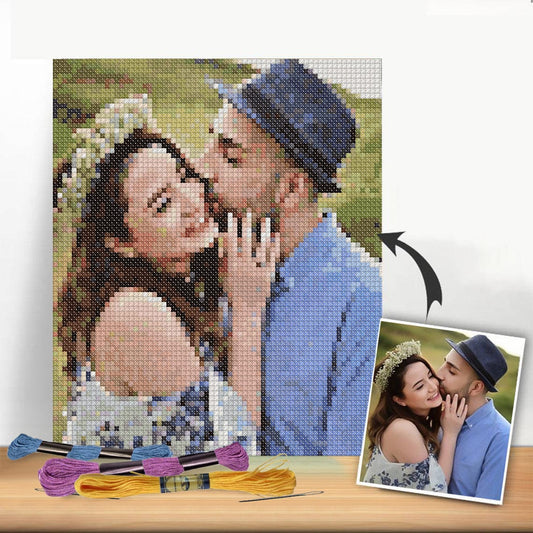
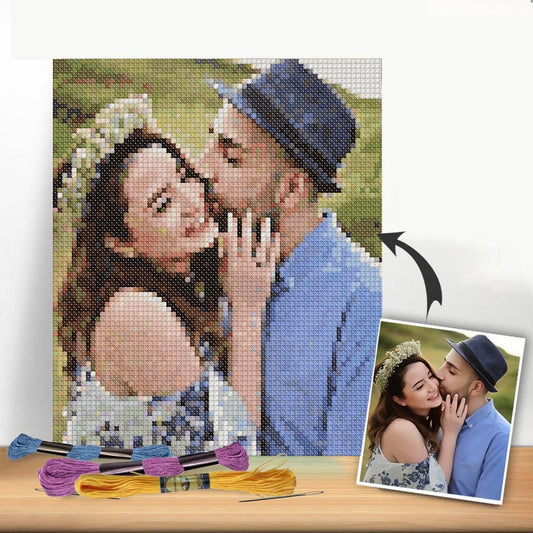
Step into the world of embroidery, and the first thing you'll likely reach for is cotton embroidery thread. It's the workhorse of the needle arts, the thread most of us learn with, and for good reason. Made from mercerized cotton, this fiber is known for being strong, easy to work with, and having a lovely, subtle sheen that catches the light just right.
Whether you're tackling a detailed cross-stitch pattern or adding bold accents to a jacket, getting to know your thread is the key to making your project sing.
Your Essential Guide to Cotton Embroidery Thread
At first glance, cotton embroidery thread looks simple enough. But the most common type, six-strand floss, has a clever secret. It’s not one single thread; it's actually six fine strands twisted together into a single, divisible cord. This is where the magic lies.
This unique structure is what makes it so incredibly adaptable. You have complete control over the weight and texture of your stitches. Need to stitch the delicate wisp of a cloud or the fine lines on a face? Just pull out a single strand. Want a bold, chunky line that really pops off the fabric? Use all six strands together. Most of the time, you'll find yourself working somewhere in the middle, using two or three strands for a nice, clean look.
What's It Actually Made Of?
The journey from a cotton boll to that neat little skein in your hand is pretty interesting. It all starts with long-staple cotton, which means the individual cotton fibers are longer than average. This is important because longer fibers spin into a smoother, stronger thread that’s less likely to fluff up or fray while you’re stitching.
But the real game-changer is a process called mercerization. This is a treatment that strengthens the cotton fibers and gives them that beautiful, signature luster. It also opens up the fibers so they can absorb dye more evenly and deeply. The result is richer, more vibrant colors that hold up much better over time.
Think of it like this: Mercerization is what turns a perfectly good cotton thread into a great embroidery thread. It's the finishing touch that gives well-known brands like DMC their reliable quality and that gentle sheen we all recognize.
Putting It All into Practice
Once you understand what makes your thread tick, you start making more intentional choices in your projects. That colorful skein is no longer just a "string"—it's a tool engineered for both beauty and durability.
Here’s how this plays out in a real project:
- For tiny details: Separate the floss and use just one or two strands. This gives you the precision you need for intricate patterns and delicate shading.
- For outlining or lettering: Using three or four strands creates a solid, easy-to-read line that stands out clearly.
- For filling in large areas: Grab all six strands for thick, plush coverage that quickly fills a space with rich color and texture.
Mastering the simple act of separating your floss unlocks a huge range of possibilities, all from a single skein. It’s a fundamental skill that lays the groundwork for everything else, from picking a color palette to confidently tackling more advanced stitches.
Decoding Thread Weights and Types
Stepping into the world of cotton embroidery thread can feel like learning a new language. You’ll hear terms like "six-strand floss," "pearl cotton," and a whole lot of numbers. It might seem confusing at first, but getting a handle on these differences is the secret to controlling the texture, detail, and final look of your work.
The thread most people know and love is the classic six-strand embroidery floss. Imagine a tiny rope made of six even smaller threads, all twisted together. Its magic lies in its divisibility. You can peel away just one or two strands for the finest, most delicate details, or use all six for a bold, chunky stitch that really pops. This control is what makes it a staple in every stitcher's toolkit.
The World Beyond Six-Strand Floss
While six-strand floss is the versatile go-to, other cotton threads have their own unique personalities. One of the most common is pearl cotton (sometimes spelled perle cotton). Unlike its divisible cousin, pearl cotton is a single, twisted thread that you use as-is. This tight twist gives it a beautiful, subtle sheen, almost like a tiny pearl.
It’s sized with a numbering system that feels a bit backward: the smaller the number, the thicker the thread. A Size 3 pearl cotton is quite chunky and fantastic for bold outlines, while a Size 12 is very fine, perfect for delicate work.
Here's a simple trick to remember the sizing: the lower the number, the thicker the thread. It’s just like with electrical wire gauges, where a lower number means a thicker wire. Keep that in mind, and you'll always grab the right weight for your project.
To help you keep track, here’s a quick-reference table comparing some of the most popular cotton thread types and what they’re best for.
Common Cotton Embroidery Thread Types and Their Uses
| Thread Type | Key Characteristic | Common Uses |
|---|---|---|
| Six-Strand Floss | Divisible into 6 strands | Cross-stitch, surface embroidery, blackwork, thread painting |
| Pearl Cotton (Size 3-5) | Thick, non-divisible, pearly sheen | Bold outlines, needlepoint, textured stitches, visible mending |
| Pearl Cotton (Size 8-12) | Fine, non-divisible, pearly sheen | Hardanger, delicate surface embroidery, redwork, lacework |
| Matte Cotton | Non-reflective, flat finish | Contemporary embroidery, projects needing texture without shine |
| Variegated Floss | Multi-colored on a single strand | Stitching natural elements (flowers, water), creating gradients |
This table makes it easy to see how each thread’s unique qualities make it the right tool for a specific job, helping you choose with confidence.
Specialty Threads for Creative Effects
Once you're comfortable with the basics, a whole new world of specialty threads opens up, designed to add incredible visual interest with very little effort.
-
Variegated Floss: This is where one strand of thread has multiple colors dyed along its length. As you stitch, the colors change on their own, creating beautiful, organic gradients. It’s a fantastic shortcut for stitching things like flower petals, sunsets, or flowing water without constantly changing your needle.
-
Matte Cotton: If you’re going for a more modern, rustic, or graphic look, matte cotton is your friend. It doesn’t have the typical shine of mercerized cotton, giving it a completely flat, non-reflective finish. This makes the texture of your stitches the star of the show.
This love for diverse and interesting threads isn't just a niche hobby; it’s a global phenomenon. The demand for handicraft cotton threads is soaring, with the Asia-Pacific region alone using around 800 million units each year. It’s a testament to the renewed appreciation for things made by hand.
The image below gives a great visual of how you can use different thread weights to create depth and focus in your embroidery.
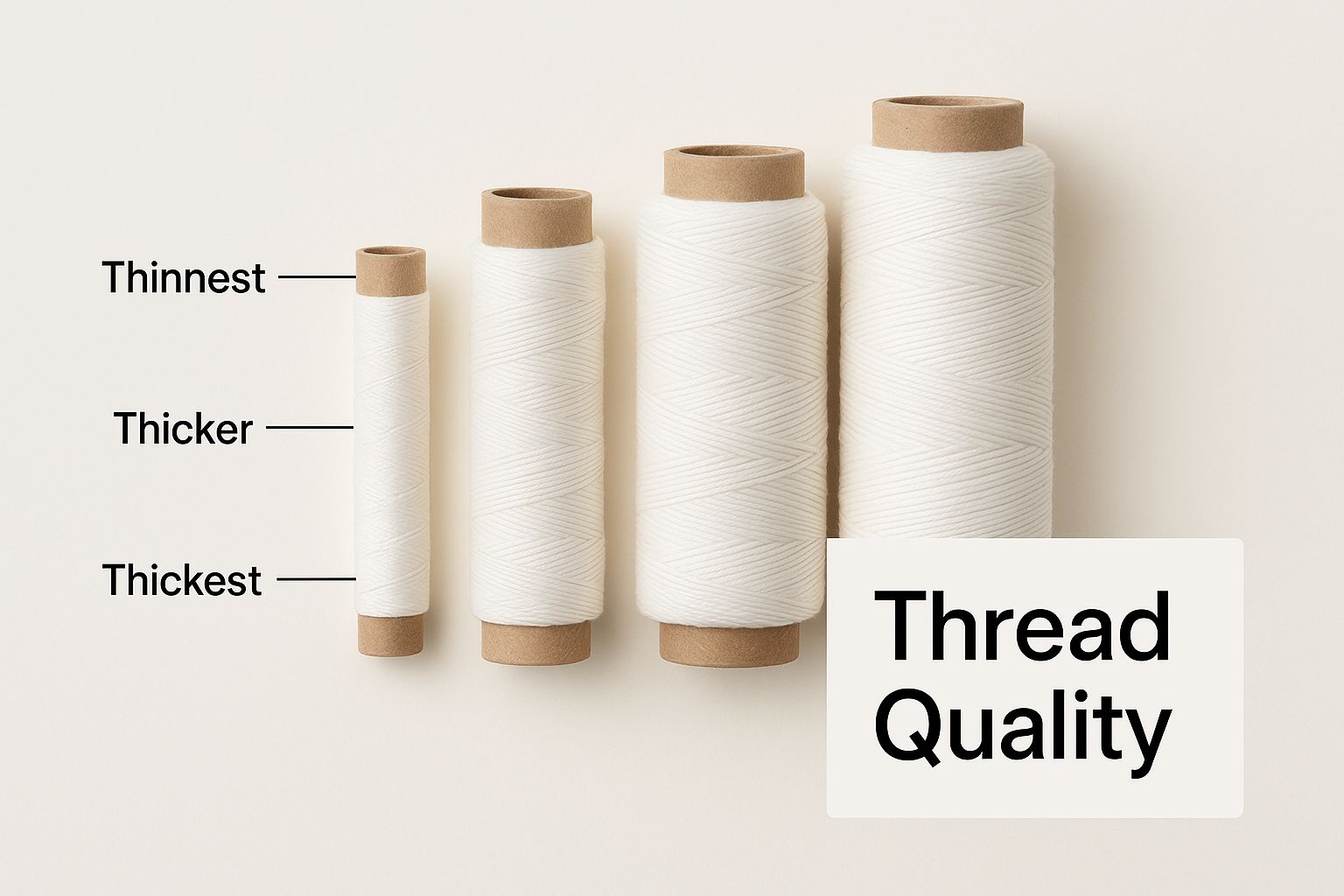
As you can see, choosing the right thread isn’t just about color—it’s a core part of your design. To dive even deeper, check out our comprehensive guide on the different types of embroidery floss. By understanding what makes each thread special, you can make more thoughtful choices that truly bring your creative vision to life.
Exploring Top Brands and Dye Quality
When you pick up a skein of embroidery thread, you’re not just choosing a color—you're choosing a brand. The quality of your cotton embroidery thread makes all the difference, influencing everything from how smoothly your needle glides through the fabric to how your finished piece holds up over time. Think of the top brands as your trusted partners in creativity.
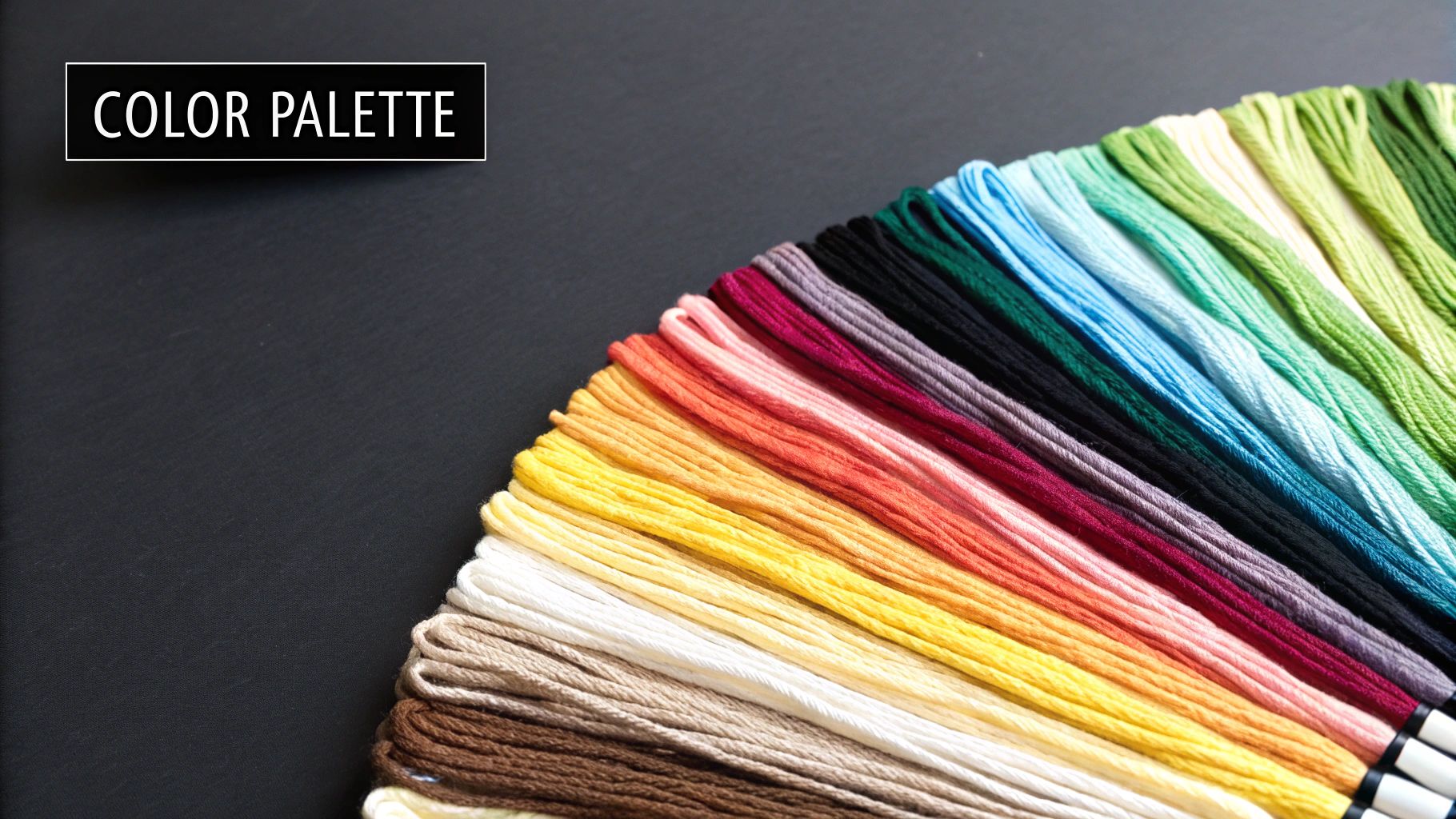
It can feel a little overwhelming with so many options out there, but a few names consistently stand out for their reliability and incredible color palettes. These are the brands stitchers come back to project after project, and for good reason. They just work.
Meet the Industry Leaders
In the embroidery world, a few brands have truly earned their stripes over decades (and in some cases, centuries!) of quality and innovation. They're known for producing smooth, strong thread that doesn't tangle easily and for colors that are dependably consistent from one dye lot to the next.
Here are a few of the most trusted names you’ll come across:
-
DMC (Dollfus-Mieg & Company): If you know one name in embroidery, it’s probably DMC. This French company has been making exceptional thread since 1746. Their six-strand cotton floss is the gold standard, loved for its brilliant sheen and a staggering color range of over 500 shades. Their quality control is legendary; a skein of DMC 310 (black) you buy today will be a perfect match for one you bought ten years ago.
-
Anchor: Another European titan, Anchor is celebrated for its silky-smooth floss made from 100% long-staple Egyptian cotton. Its color palette is just as vast as DMC’s and is often praised for having particularly rich, deep tones. Many stitchers find its texture a bit softer, making it a dream to pull through fabric.
-
Sulky: While Sulky is well-known for its rayon and polyester threads, their cotton options are fantastic. Their 12 wt. Petites are a game-changer. This thread is the same thickness as two strands of standard floss but comes wound on a neat little spool—no more separating strands! It’s a favorite for fine detail work and classic redwork.
These brands aren’t just popular; they're reliable. They invest in top-tier materials and manufacturing, which means you get a thread that makes your work better instead of causing headaches with knots and breaks.
The Critical Role of Dye Quality
Beyond the brand name, the single most important factor for the longevity of your project is dye quality. That beautiful, vibrant color is worthless if it bleeds all over your fabric the first time it gets wet. This is where the term "colorfast" comes into play.
A colorfast thread has been dyed so the color is locked in—it won’t run, bleed, or fade when you wash it or expose it to sunlight. On the flip side, cheaper threads or some hand-dyed varieties might not be colorfast. One wrong move and the dye could transfer, ruining hours of meticulous work.
For any project that will be worn, used, or washed—like embroidered napkins, tea towels, or clothing—using a colorfast cotton embroidery thread is non-negotiable. Reputable brands like DMC and Anchor guarantee their threads are colorfast, providing peace of mind.
This consistency is also tied to a brand's identity. For instance, getting to know the system behind the DMC embroidery floss numbers helps you organize your stash and choose colors confidently, knowing each one is reliably colorfast.
How to Test Your Thread for Colorfastness
Ever find an unmarked skein in your stash or want to try a new, unproven brand? It’s always a good idea to run a quick colorfast test at home. It only takes a few minutes and can save you from a potential crafting disaster down the road.
- Cut a small piece of the thread you want to test.
- Wet a scrap of white cotton fabric with warm water.
- Lay the thread on the damp fabric and press it with a hot iron until the fabric is dry.
- Lift the thread and check the fabric underneath.
If any color has bled onto the white fabric, that thread is not colorfast. You’ll want to save it for projects that will never see water. This simple check is your insurance policy, ensuring your beautiful stitches stay crisp and vibrant for years to come.
Choosing Cotton Over Other Thread Fibers
Walking into a craft store and seeing that wall of embroidery floss can be a little overwhelming. It's a rainbow of possibilities, but the color is just the beginning. The actual fiber you choose—whether it's cotton, silk, rayon, or polyester—is what will truly define your project's look, feel, and how well it holds up over time. The real question isn't "which thread is best?" but rather, "which thread is right for this project?"
Think of cotton embroidery thread as your go-to, high-quality acrylic paint. It's the dependable workhorse of the embroidery world—versatile, forgiving, and always gets the job done beautifully. It’s a dream to work with, easy to find anywhere, and tough enough for things that will actually get used, like stitching on a denim jacket or a set of napkins. Its soft, almost matte sheen gives your work a classic, handmade warmth that feels authentic.
Of course, other fibers have their own magic. Silk is like a rich oil paint; its brilliant, unmatched luster plays with light in a way that nothing else can. Rayon is another shiny contender, bringing that glossy, vibrant pop of color at a much friendlier price point than silk. Then there’s polyester, the synthetic powerhouse. It’s incredibly durable and colorfast, making it the top choice for machine embroidery on things that need to survive a lot of tough washes.
Each fiber really has its own personality. Getting to know them is the key to picking the right one to bring your creative vision to life.
When Cotton Is Your Best Bet
While those super-shiny threads definitely have their moments, cotton’s unique character makes it the perfect choice for an incredible range of projects. Its combination of strength, user-friendliness, and timeless appeal is tough to beat.
Here are a few times when reaching for good old cotton floss is absolutely the right move:
- For Anything That Needs to Be Washed: Cotton is surprisingly strong and handles washing and regular use like a champ. That makes it perfect for adding a personal touch to functional items like tea towels, pillowcases, and clothing.
- For a Classic, Rustic, or Vintage Vibe: The gentle, low-sheen finish of cotton gives any piece a warm, traditional feel. If you want your stitches to look soft and handcrafted instead of slick and glossy, cotton is your answer.
- When You're Just Starting Out: Honestly, cotton floss is so forgiving. The strands separate easily, it doesn't try to slide off your needle like silk or rayon, and it’s much less likely to shred while you're working. It’s the perfect thread for learning new stitches without all the frustration.
- For Projects That Need to Be Durable: From a patch on a backpack to a design on your kid’s jeans, cotton’s strength means your hard work won't wear out in a week. It can handle the friction and stress of daily life.
At the end of the day, cotton’s biggest selling point is its reliability. It does what you expect it to do, stands up to wear and tear, and gives you a beautiful result without needing any special treatment. It's the foundation so many incredible embroidery projects are built on.
A Head-to-Head Fiber Comparison
Sometimes, seeing the differences laid out side-by-side makes the decision crystal clear. Here’s a quick breakdown of how cotton stacks up against the other main players.
Embroidery Thread Fiber Comparison
| Fiber Type | Sheen Level | Best For | Care Instructions |
|---|---|---|---|
| Cotton | Low to medium (matte-like) | Everyday items, beginners, traditional looks, detailed work | Machine washable, can be ironed with medium-high heat |
| Silk | Very high (brilliant luster) | Fine art embroidery, heirloom pieces, decorative items | Hand wash gently in cool water, iron on low heat with a press cloth |
| Rayon | High (glossy shine) | Decorative projects, machine embroidery, adding vibrant highlights | Hand wash or delicate cycle, iron on low heat, can be prone to color bleeding |
| Polyester | High (shiny finish) | Machine embroidery, sportswear, items needing frequent washing | Machine wash and dry on high heat, highly colorfast and bleach-resistant |
This little chart really shows where cotton shines. It’s the most balanced and versatile fiber of the bunch. While silk gives you that incredible sheen and polyester brings industrial-level toughness, cotton offers the perfect blend of beauty, strength, and practicality. It’s the thread you can grab for almost any hand embroidery project and know it’s going to look great and last for years.
Practical Tips for Working With Cotton Thread
Knowing the ins and outs of cotton embroidery thread is a great start, but the real magic happens when you put that knowledge into practice. A few simple habits can make a huge difference in your stitching, giving your work a much cleaner, more professional look. And once you’re done, knowing how to care for your masterpiece ensures it’ll stick around for years to come.
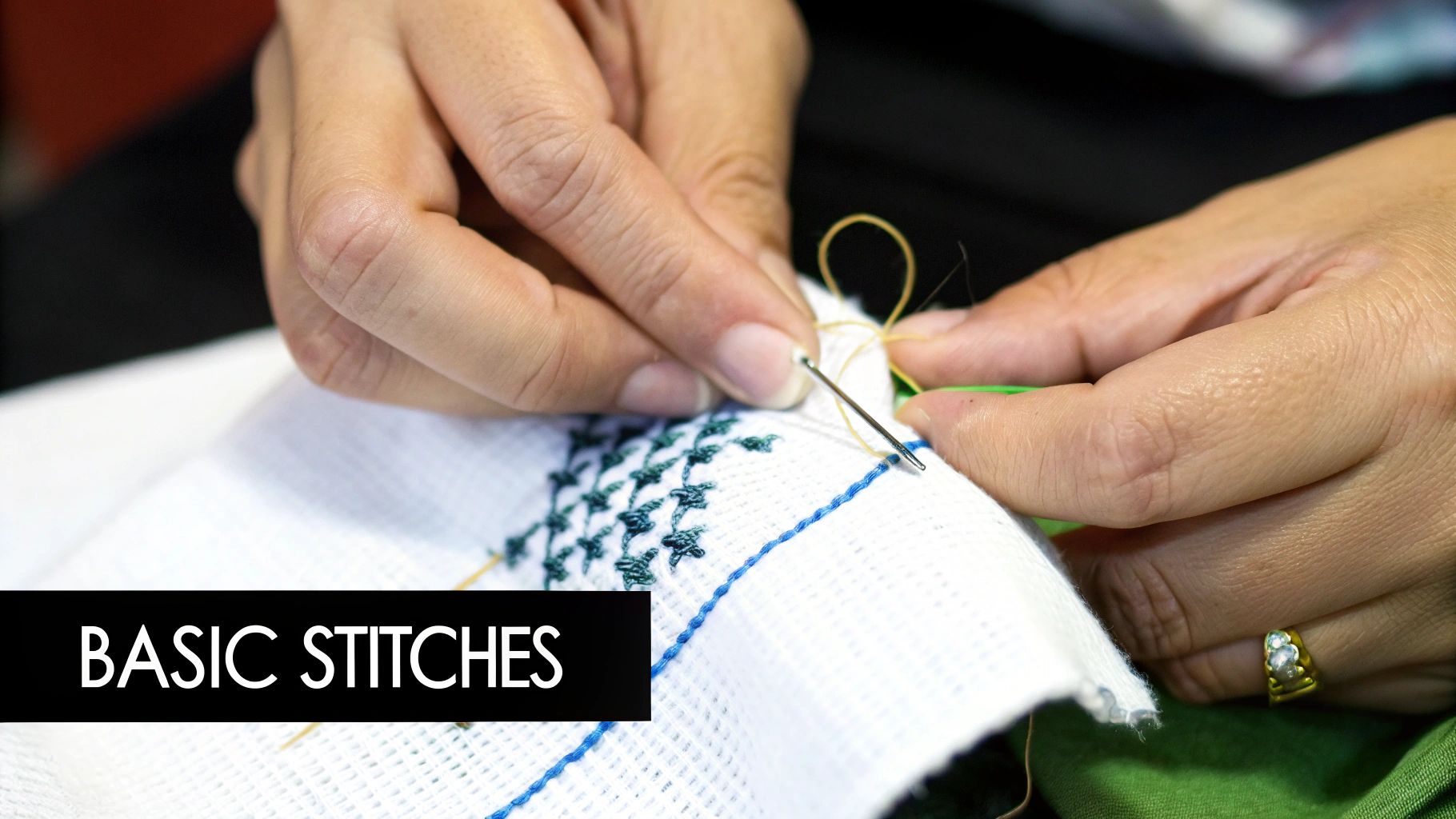
Think of these as the little secrets that seasoned stitchers swear by. We’ll cover everything from prepping your thread to giving your finished piece its final wash, helping you sidestep common frustrations and stitch with more confidence.
Little Tricks for Better Stitching
A smooth, enjoyable stitching session begins before your needle even meets the fabric. The way you prepare and handle your thread can be the difference between a relaxing creative flow and a tangled, frustrating mess.
First up: thread length. We’ve all been tempted to cut a super long piece to avoid re-threading the needle, right? It almost always backfires. Longer threads have a knack for twisting, tangling, and knotting up as you pull them through your fabric again and again.
My go-to is the "forearm rule." I cut a piece of thread that's no longer than the distance from my fingertips to my elbow. This sweet spot, usually around 18 inches, is just long enough to be efficient but short enough to stay out of trouble.
Next, let's tackle separating strands. If you've ever tried to peel one strand away from the six-strand bunch and ended up with a knotted birds-nest, this one's for you. Instead of pulling from the end, gently pinch the whole floss and pull one single strand straight up and out. The other strands might bunch up for a second, but they'll relax right back into place once the one you need is free.
For an even smoother ride, you might want to try a thread conditioner. It’s a small cake of silicone or wax that you simply run your thread across before you start stitching. This little step coats the fibers, cutting down on friction so your thread glides through the fabric like a dream, which also helps prevent it from fraying.
The demand for great thread to support these techniques is massive. Globally, we're talking about 62 shipments from 28 suppliers, with the United States leading the pack as the top importer. It just goes to show how many of us rely on a steady supply of quality materials. If you're curious, you can dig into more of these global trade insights on Volza.com.
Caring for Your Finished Embroidery
Once that last stitch is in place, a little post-project TLC will make your work truly shine and protect it for the long haul. Proper washing and ironing are the finishing touches that many beginners skip, but they can dramatically improve how your project looks and feels.
If your piece needs a wash, here’s how to do it without any stress:
- Hand Wash Gently: Fill a basin with cool or lukewarm water and add a tiny bit of mild, pH-neutral soap. Steer clear of harsh detergents or anything with bleach.
- Soak Briefly: Let your piece soak for just 10-15 minutes. You can swish it around a bit, but never, ever scrub or wring the embroidered areas.
- Rinse Well: Drain the soapy water and rinse the fabric under cool running water until it's completely clear of suds.
- Press, Don't Wring: Squeeze out the extra water gently. Then, lay your embroidery on a clean, thick towel, roll it up like a burrito, and press down firmly to soak up the rest of the moisture.
When it's time to iron, always work from the back. Place your project face-down on another clean, fluffy towel. This gives your stitches a soft cushion to sink into, so they don't get squashed flat and lose all their lovely texture. A medium-hot iron and a pressing cloth for an extra layer of protection is the perfect setup, especially if you used dark-colored threads.
Getting Started: Buying and Organizing Your Thread
Let's be honest—building a collection of cotton embroidery thread is one of the best parts of the hobby. There's nothing quite like walking into a craft store and seeing that entire wall of color. It's pure inspiration! But knowing what to look for can help you build a fantastic stash without spending a fortune.
You'll generally find thread at local craft stores or online specialty shops. Heading to a brick-and-mortar store is great because you can see the colors with your own eyes, which is a huge plus. Online shops, on the other hand, often have a much wider selection and can be the go-to for bulk deals or those hard-to-find specialty brands.
Here's a pro tip for bigger projects: always check the dye lot number on the paper band of the skein. This little number tells you that all the skeins were colored in the same batch, so you won't get any surprise color variations. While big names like DMC have amazing consistency, taking a second to check the dye lot can save you a lot of headaches later on.
Shopping Smart for Your Stash
As you start building your collection, it's interesting to think about where all this thread comes from. The global production of cotton embroidery thread is enormous, reaching about 63,000 tons worldwide. China is the biggest player, producing around 24,000 tons, which is roughly 38% of the total. It puts into perspective the journey that one little skein takes to get to you. If you're curious, you can dig into these production trends and market insights on IndexBox.io.
When you're ready to start buying, the key is to build a core palette first. Don't just grab every color that catches your eye (as tempting as that is!).
- Start with the Essentials: First, pick up the basics like black, white, and a good range of primary colors like reds, blues, and yellows.
- Add Neutrals: Next, grab some grays, browns, and creams. You'll be surprised how often you reach for these for shading and adding subtle depth.
- Expand as You Go: From there, just buy new colors as your projects call for them. This is the best way to avoid ending up with a drawer full of shades you never actually use.
Following this simple plan will help you build a versatile collection that's ready for whatever creative idea pops into your head.
Keeping Your Collection Tangle-Free
Once you start bringing those beautiful skeins home, you'll quickly realize that organization is everything. Good storage does more than just keep things neat—it protects your thread from dust, sunlight, and the dreaded tangles. A little organization upfront saves a ton of time and frustration down the road.
Proper thread storage isn't just about being tidy; it's about preserving the quality of your materials. Shielding your cotton embroidery thread from things like sunlight prevents fading and keeps the fibers strong, ensuring your work looks beautiful for years to come.
By far the most popular way to store floss is by winding it onto plastic or cardboard bobbins. You can label each one with the brand and color number, making it super easy to find what you need. Most people then tuck these bobbins into clear plastic organizer boxes with movable dividers. For a really thorough guide, check out our post on how to organize your craft supplies.
If bobbins aren't your thing, there are other creative ways to keep things in order:
- Floss Rings: You can slip bobbins onto a large metal ring to keep all the colors for one project together.
- Hanging Organizers: Those clear pocket organizers made for jewelry work great! Hang one in a closet, and you can see your whole collection at a glance.
- Pegboards: For a more decorative touch, a pegboard with small dowels can turn your thread collection into a vibrant piece of wall art.
No matter what you choose, the goal is the same: find a system that works for you, protects your investment, and makes your stitching time that much more enjoyable.
Your Cotton Thread Questions, Answered
As you get more comfortable with stitching, you'll inevitably run into some common questions. I've been there! Let's clear up a few of the most frequent queries about cotton embroidery thread so you can spend less time wondering and more time stitching.
Think of this as a quick-reference guide for those little things that can make a huge difference in your projects. Getting these details right will make the whole process smoother and more enjoyable.
What's the Deal with "Mercerized Cotton"?
You've probably seen "mercerized cotton" on thread labels and wondered what it meant. It's actually a sign of a higher-quality thread. Mercerization is a treatment process that makes cotton fibers stronger, shinier, and better at holding dye.
Basically, the cotton is given a special bath that causes its fibers to swell up and become smoother and more rounded. This new shape reflects light beautifully, giving the thread that signature luster we all love. It also means the thread is less prone to shrinking and the colors will stay vibrant for years to come.
How Can I Stop My Thread from Twisting and Tangling?
Ah, the dreaded thread tangle. It happens to everyone, but there are a few simple tricks to keep it under control. First, work with a manageable length of thread. A piece about 18 inches long is the sweet spot—any longer is just asking for knots.
A great habit to get into is letting your thread dangle before you start stitching. Just hold it up and let the needle and thread hang freely for a second. This allows any built-in twist to unwind on its own. If you notice it starting to twist up as you work, just pause and let it hang again.
A little bit of thread conditioner can work wonders. Running your floss over a small block of beeswax or a silicone-based conditioner makes it glide through fabric like a dream, which dramatically cuts down on both twisting and fraying.
Can I Put Embroidery Floss in My Sewing Machine?
This is a big one, and the short answer is no, you really shouldn't. Standard six-strand embroidery floss is way too thick for a sewing machine. It's not designed to run through the complex path of tension discs and guides.
If you try to use it, you're likely to end up with a jammed machine, shredded floss, and a whole lot of frustration. It can even damage your machine's internal mechanisms. There are, however, special cotton threads made specifically for machine embroidery. So, if that's what you're doing, make sure you grab a spool that's explicitly labeled for machine use. It's all about matching the right tool to the job.
Ready to turn your favorite photos into timeless works of art? At Cross Stitched, we provide everything you need to start your next project, from premium DMC threads to custom, easy-to-follow patterns. Explore our collections and create a personalized masterpiece today.