

When you're ready to tackle projects with a bit more detail, Aida 28 count fabric is a fantastic choice. This finely woven material packs 28 threads into every linear inch, which opens up a world of creative possibilities for your needlework.
Think of it like the difference between standard and high-definition TV. A lower count fabric, like the popular 14 count Aida, has larger, more visible squares—perfect for beginners. But 28 count Aida has a much tighter weave, allowing you to create incredibly intricate and detailed designs.
If you're new to the world of Aida in general, our complete guide to Aida fabric is a great place to start.
What makes 28 count so special is its versatility. You can approach it in two completely different ways: stitching "over two" threads or "over one" thread. Each method will give your finished piece a unique look and size, even when using the exact same pattern.
The Two Ways to Stitch on 28 Count
The secret to this fabric's flexibility lies in its density. Since 28 count has double the threads per inch of 14 count, how you form your stitches makes a big difference.
Your choice really comes down to the effect you're going for:
-
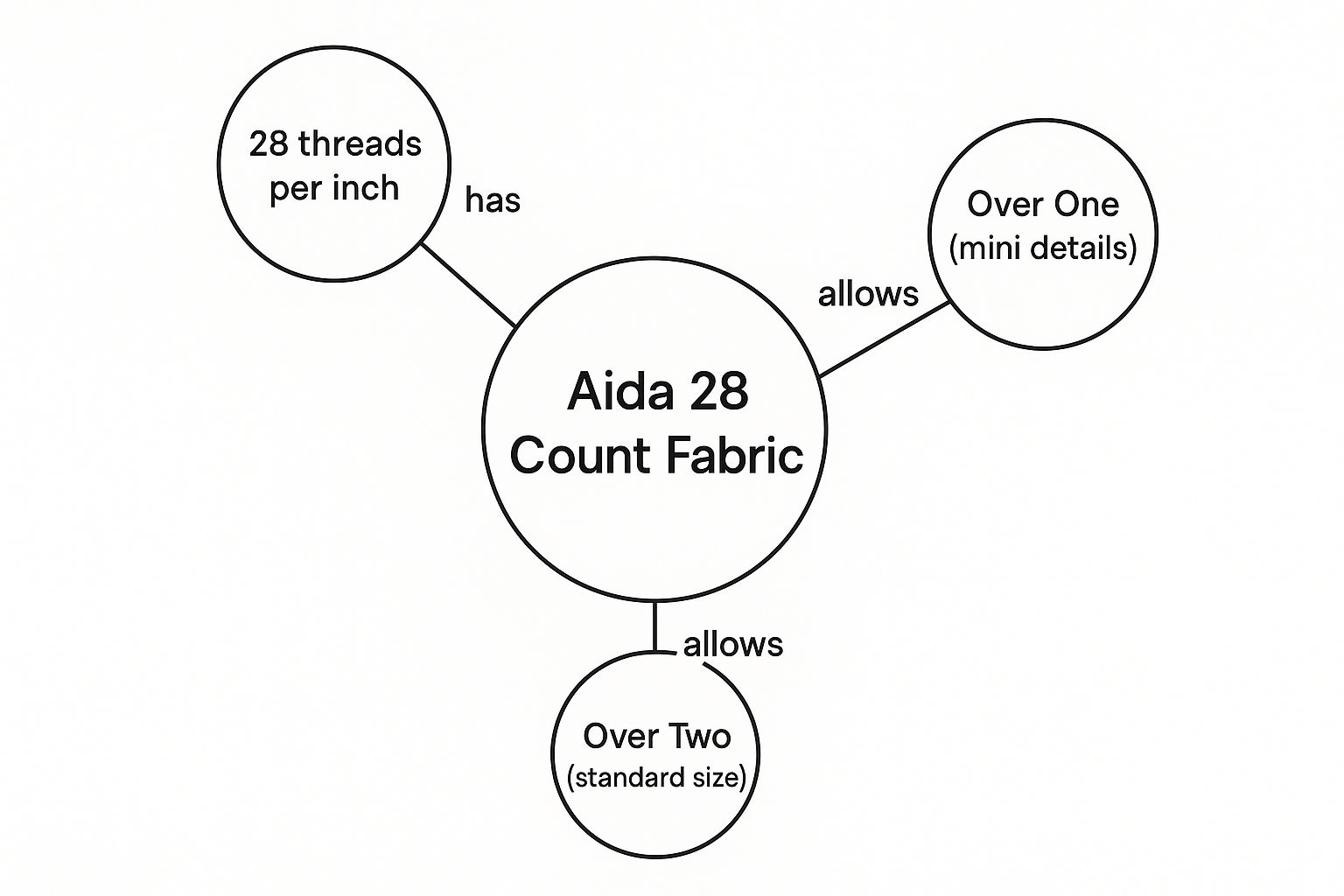
Stitching Over Two Threads: This is the most common way to use 28 count fabric. You make each "X" stitch over a 2x2 square of threads. The result? Your finished design will be the exact same size as if you stitched it on 14 count Aida, but the background fabric will look softer and less pronounced.
-
Stitching Over One Thread: This is where the magic of miniatures happens. By making each "X" over a single 1x1 square, you create incredibly tiny, delicate stitches. This technique is perfect for projects like cross-stitch jewelry, detailed ornaments, or even tiny tapestries for a dollhouse.
This infographic gives a great visual breakdown of what Aida 28 count is all about.
To make it even clearer, let's look at how these two stitching methods compare side-by-side.
Stitching on 28 Count Fabric At a Glance
This table sums up the key differences and helps you decide which approach is right for your next project.
| Stitching Method | Equivalent Aida Count | Best For | Finished Size |
|---|---|---|---|
| Stitching Over Two | 14 Count | Standard projects, achieving a softer look | Same as on 14 count |
| Stitching Over One | 28 Count | Miniatures, jewelry, highly detailed work | Half the size of 14 count |
Ultimately, how you stitch on 28 count fabric is a creative decision. You can either produce a standard-sized piece with a more traditional, refined feel or dive into the world of miniature art.
Comparing 28 Count to Other Stitching Fabrics
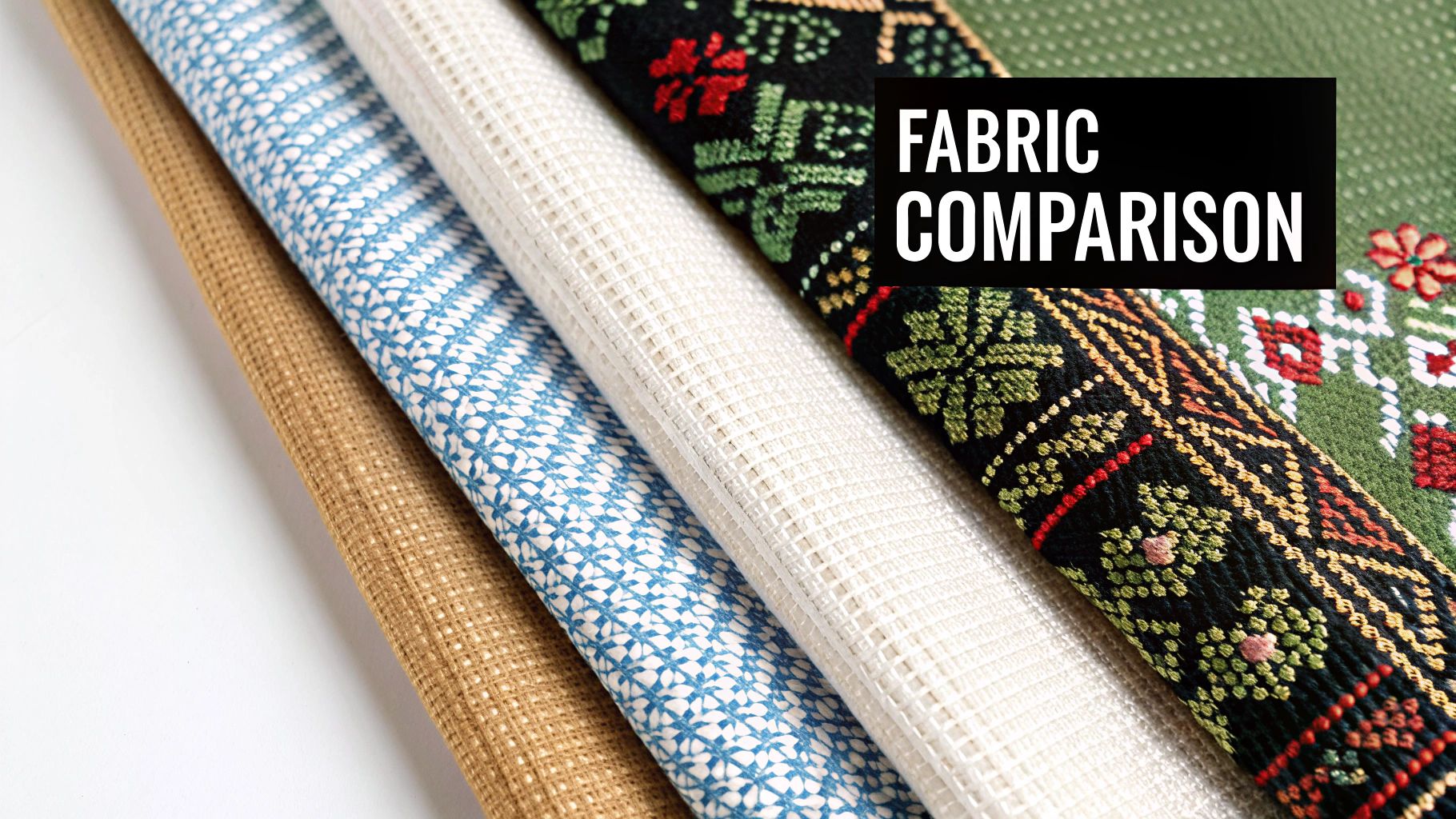
Picking your fabric count is a lot like choosing the right canvas for a painting. A pattern might look the same on paper, but the fabric you stitch it on completely changes the final size, the level of detail you can achieve, and the overall feel of the piece.
Most of us got our start with 14 count Aida. It’s the go-to for beginners because its larger squares and obvious holes are easy on the eyes. Let’s say you have a design that's 100 stitches wide. On 14 count Aida, that pattern will finish up at just over seven inches across.
Now, imagine that same 100-stitch pattern on Aida 28 count. If you stitch "over two" threads (treating it just like 14 count), your finished piece will be the exact same size. The magic is that the fabric itself looks smoother and more elegant. But if you stitch "over one" thread, that design shrinks down to a tiny 3.5 inches wide, creating a stunning miniature with incredible detail.
The real difference boils down to density. Higher count fabrics like 28 count pack more threads into every inch, creating a much tighter weave. This is what lets you create either a standard-sized project with a more refined look or a much smaller, incredibly intricate piece.
Beyond Standard Aida Counts
The world of needlework fabric goes way beyond just Aida. You can find other materials with the same thread count that offer a totally different stitching experience and final result. Let's see how 28 count Aida stacks up against its cousins, Evenweave and Linen.
-
28 Count Evenweave: This fabric is woven with single, uniform threads, so you don't see the distinct "blocks" that Aida has. When you stitch over two threads on 28 count Evenweave, you get the same size as 14 count Aida, but the fabric has a much softer drape and a classic, heirloom feel.
-
28 Count Linen: As a natural fiber, linen has a beautiful, slightly irregular texture with threads (or "slubs") that can vary in thickness. This gives projects a ton of character, but it can also be a bit of a challenge if you're new to it.
Ultimately, the choice comes down to what you want your finished project to look like. Aida gives you a perfect, structured grid, while Evenweave and Linen deliver a softer, more traditional finish. Our guide to the best fabric for cross stitch can walk you through even more options.
Choosing the Right Needles and Floss
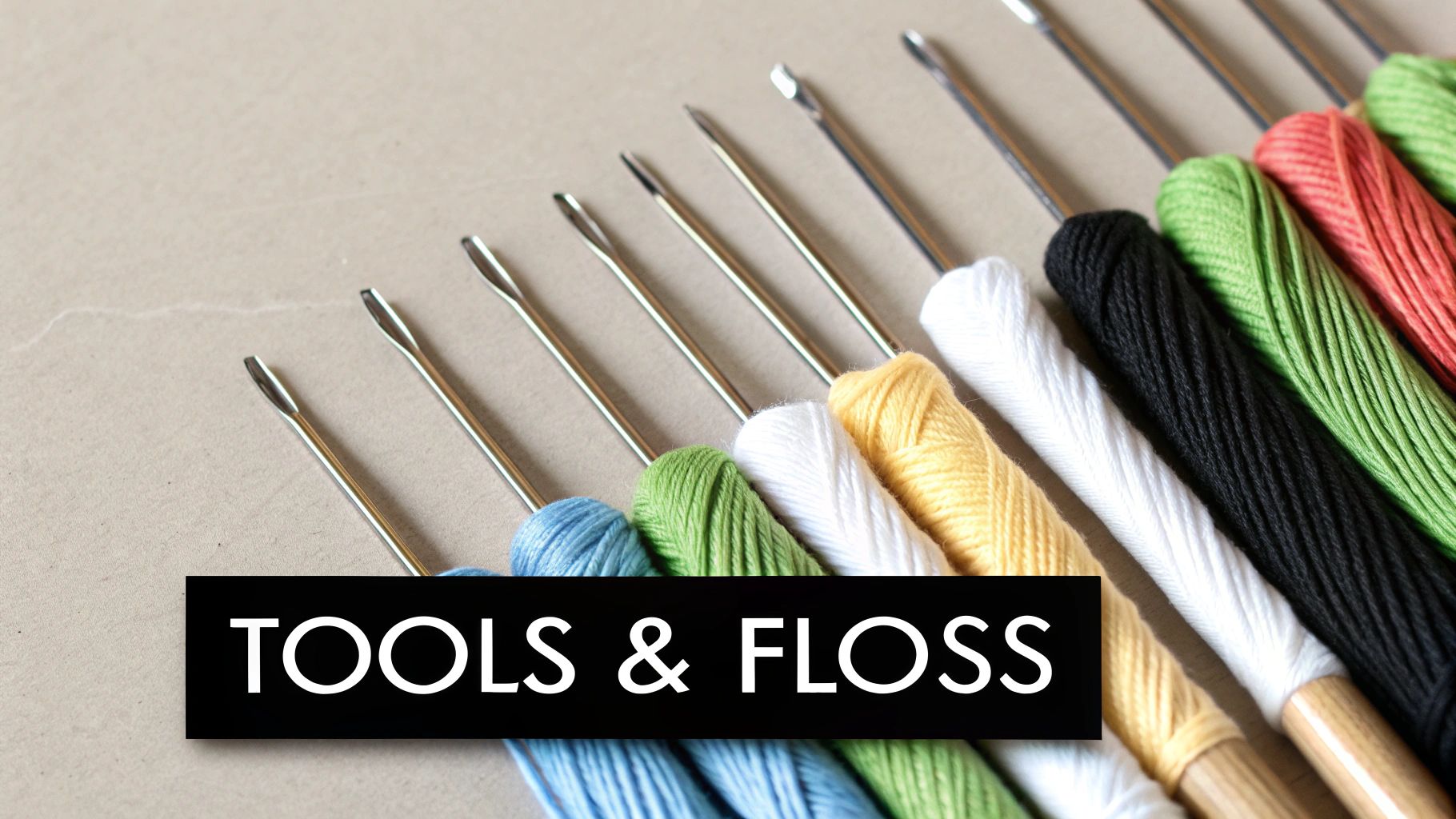
When you're working with the tight, delicate weave of Aida 28 count, your tools make all the difference. Think of it like a painter choosing a fine-tipped brush for detailed work—the right needle and floss are essential for creating clean, beautiful stitches without stretching or distorting the fabric.
A needle that’s too big will force the threads apart, leaving behind noticeable holes and warping that perfect grid you rely on. For a fabric this fine, you need a more delicate touch.
Selecting the Perfect Needle Size
The rule is simple: the higher the fabric count, the finer the needle. For Aida 28 count, a size 26 or 28 tapestry needle is your best bet. These needles are slim enough to slip through the fabric’s holes without a fight.
If you want to dive deeper into how fabric count and needle size are related, our guide on what size needle to use for cross stitch is a great resource.
Using the right needle isn't just a suggestion—it's the key to protecting your fabric. A smaller needle keeps the grid uniform and helps your stitches lie flat and even, which is an absolute must for creating pieces that look polished and professional.
How Many Strands of Floss to Use
With your needle sorted, it's time to think about floss. The goal here is to get full, lush stitches that completely cover the fabric square without looking bulky or crammed.
How many strands you'll need really comes down to how you decide to stitch on this fabric:
- Stitching Over Two Threads: This is the most common method, making your 28 count behave like a 14 count. For this, two strands of embroidery floss will give you that classic, perfect coverage.
- Stitching Over One Thread: If you're tackling a highly detailed pattern with tiny stitches, stick with one strand of floss. This keeps the stitches looking delicate and crisp.
When it comes to picking colors, having reliable embroidery thread color charts can be a lifesaver. And a little pro-tip: good lighting and a magnifier can make a world of difference, saving you from eye strain and making the whole process much more relaxing.
When to Choose Aida 28 Count for Your Projects
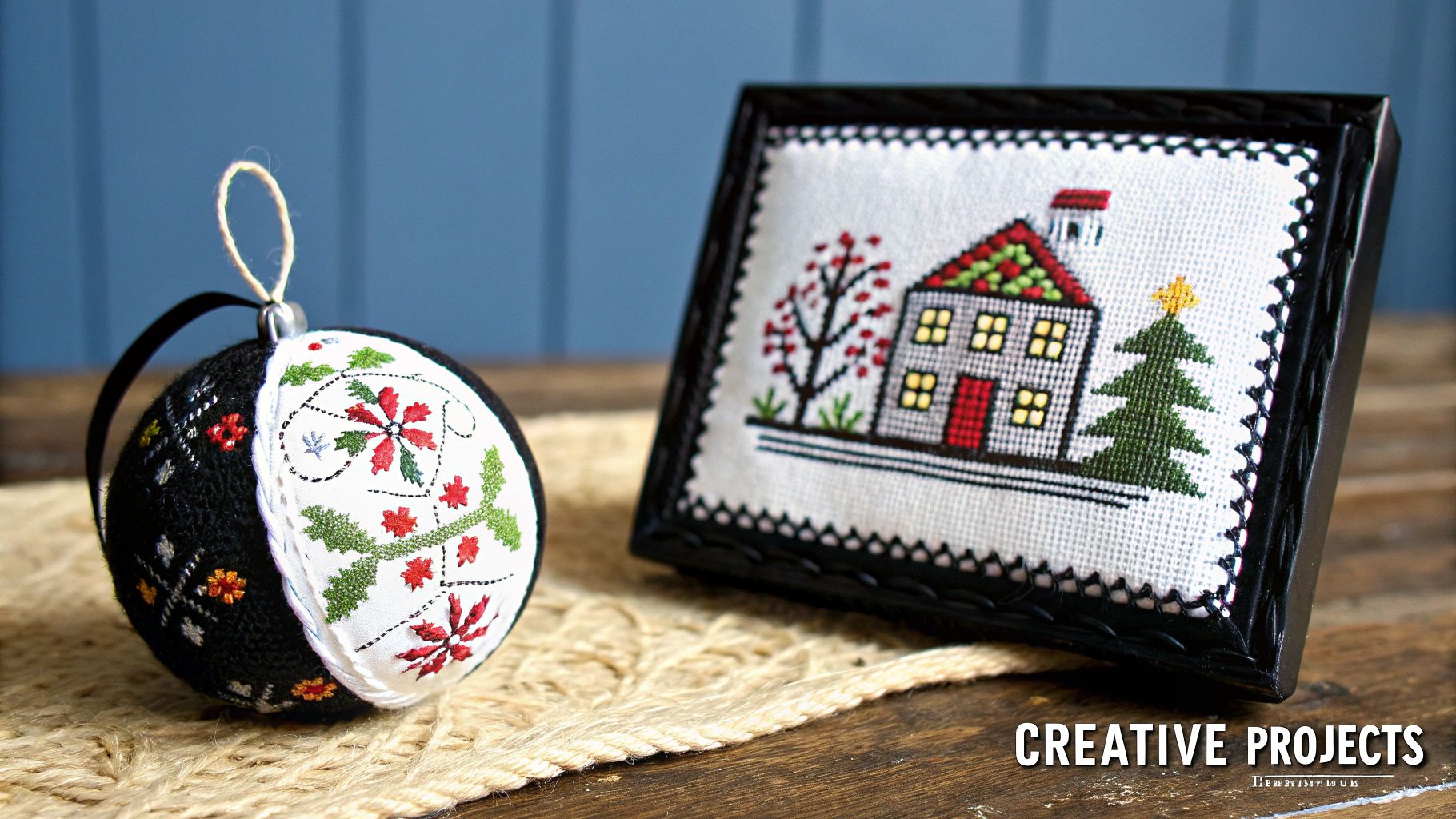
So, when should you reach for Aida 28 count? It’s less about a pattern telling you to and more about a creative choice you make to give your work a certain elegance. This fabric is the perfect stage for specific types of projects where the details need to shine in a way that lower-count fabrics just can't deliver.
The incredibly tight weave creates a beautiful, solid foundation for patterns that are packed with detail. I'm talking about designs loaded with intricate backstitching, delicate fractional stitches, or tons of subtle color blending. When you stitch "over two" on this fabric, those details pop against a smooth, refined background, giving the whole piece a professional, heirloom quality.
Projects Perfect for Over-Two Stitching
If you love the final size of a project on 14 count but crave a more polished, less "holey" finish, Aida 28 count is your secret weapon. It’s a fantastic choice for:
- Detailed Portraits: When you need to capture those subtle shifts in skin tone or the nuance of a facial expression, a fine canvas like this won’t overpower your delicate stitches.
- Complex Samplers: Traditional samplers are often a beautiful mix of motifs, tiny lettering, and intricate borders. They look incredibly crisp and clean on 28 count fabric.
- Heirloom-Quality Pieces: For those once-in-a-lifetime projects—think wedding announcements, birth records, or commemorative art—the elegant drape and look of this fabric adds a truly timeless touch.
By picking 28 count fabric, you’re making a deliberate choice for a foundation that enhances fine details. The smaller fabric holes and tighter weave ensure that intricate work, like backstitching, appears sharp and defined instead of getting lost in the fabric.
The Magic of Stitching Over One
On the flip side, the real magic of Aida 28 count comes alive when you decide to stitch "over one." This technique turns your fabric into a canvas for miniature art, effectively shrinking your design to half its standard size.
This is the go-to method for creating tiny, exquisite items. Think charming little brooches, delicate Christmas ornaments, or even incredibly detailed decor for a dollhouse. It's a whole new world of tiny stitching possibilities.
Mastering Your Stitches on High Count Fabric
Jumping into a project on Aida 28 count is a bit different, but the results are absolutely worth it. The key to success is a technique called stitching "over two," which sounds more complicated than it really is. It’s the standard way to handle this fabric and gives you a beautiful, detailed finish.
Think of the fabric's grid as a collection of tiny squares. When you stitch over two, you're essentially treating a 2x2 block of those tiny squares as one single stitch. You’ll bring your needle up in the bottom left hole and go down in the top right hole of that 2x2 block, spanning two threads horizontally and two vertically.
Keeping Your Stitches Uniform
With a fabric this fine, consistent tension is everything. If you pull your floss too tight, the fabric will pucker and distort. On the other hand, if your stitches are too loose, they can look a bit sloppy. The goal is to find that sweet spot where each stitch lays flat and smooth without pulling on the fabric's weave.
It's also really easy to lose your place on such a dense grid. This is where gridding becomes your best friend. Many stitchers use a water-soluble pen or a special gridding thread to mark out 10x10 stitch blocks on their fabric. It creates a simple roadmap that dramatically cuts down on counting mistakes.
Pro Tip: Knots are a no-go on fine fabrics because they create noticeable lumps on the front. To start and end your threads cleanly, try a loop start (if using an even number of strands) or gently weave the tail of your thread under a few completed stitches on the back.
Finally, don't underestimate the power of good lighting and maybe even a little magnification. Working on Aida 28 count can be tough on the eyes, and having a bright light and a magnifier will make the whole process much more enjoyable and precise.
Common Questions About Aida 28 Count
Stepping up to a high-count fabric like Aida 28 can feel a little daunting, and it's totally normal to have a few questions. Let's tackle some of the most common ones so you can dive in with confidence.
A big one I hear all the time is, "Is this fabric okay for a beginner?" It's a great question. While the tiny squares can seem intimidating, if you stitch "over two," you're essentially making it work just like 14 count Aida. So, if you've handled 14 count before, you're more than ready for this.
Practical Concerns and Quick Answers
Every time you switch fabrics, a few practical questions pop up. Here are some quick answers to get you started on the right foot with Aida 28 count.
-
Is it the same as 28 count linen? Nope! They share a thread count, but that's where the similarity ends. Aida is woven in a block pattern that gives you those unmistakable, easy-to-see squares. Linen has a much softer, more organic single-thread weave, which creates a totally different look and feel.
-
Do I really need a hoop or frame? Yes, I'd say it's non-negotiable. Keeping the fabric taut is key with high-count Aida to make sure your stitches lie flat and even. A good q-snap or a solid hoop will make a world of difference.
-
How do I wash it when I'm done? Always hand wash, nice and easy. Use cool water and a tiny bit of gentle soap. When you're done, don't wring it out! Instead, gently roll your piece in a clean towel to soak up the extra water. Lay it flat to air dry, and then iron it from the back on low heat, maybe with a pressing cloth for extra protection.
The real magic of Aida 28 count is its split personality. Stitch over one for tiny, detailed work, or stitch over two for a classic look—you get two completely different results from the same piece of fabric.
This flexibility is what makes it such a fantastic choice for so many projects, from big, detailed heirlooms down to the most delicate miniature pieces. Don't let the high number scare you off; think of it as your secret weapon for creating incredibly refined and beautiful needlework.
Ready to create a masterpiece from your own photos? At Cross Stitched, we turn your cherished memories into beautiful, custom cross-stitch kits. Find the perfect Aida fabric and everything else you need to start your next project today at https://cross-stitched.com.