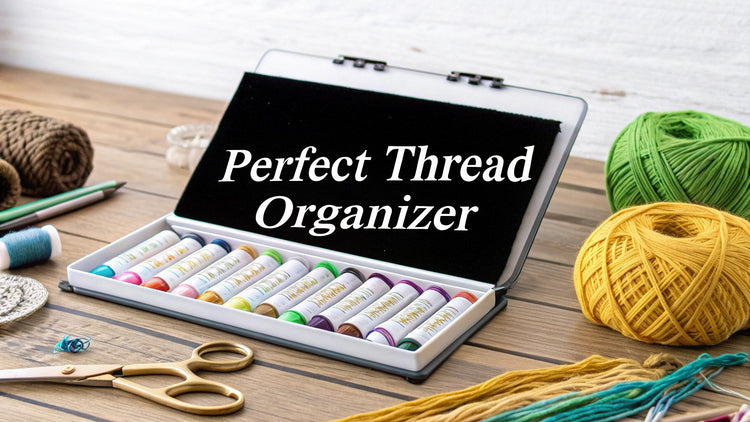
We’ve all been there. You’re in the zone, ready to stitch, and then you’re faced with a tangled, chaotic mess of floss. It’s enough to kill your creative vibe in an instant. The good news is that a solid cross stitch thread organiser is all you need to fix it. This isn't just about being neat; it's about getting your valuable stitching time back and making the whole process more enjoyable.
Why Your Floss Deserves a Better Home
Honestly, is there anything more frustrating than rummaging through a jumbled bag of skeins for that one specific DMC colour? A good organising system changes everything. It turns that colourful chaos into a clean, accessible library of thread, setting you up for a much less stressful and way more productive stitching session.
But the benefits are bigger than just being tidy. A proper system actually protects your investment. When floss is stored correctly, it's safe from dust, sunlight, and the kind of tangles that can fray and damage the fibres. You'll also save money by not accidentally buying duplicate colours and reduce waste by easily finding and using every last bit of thread.
Reclaiming Your Creative Time
Just think about how much time you've lost to untangling a monster knot or searching high and low for a missing skein. That's time you could have been stitching! When you set up a system that really works for you and how you stitch, you build efficiency right into your hobby.
A well-organized stash means you can go from picking a pattern to pulling your first thread without a hitch, keeping that creative momentum alive.
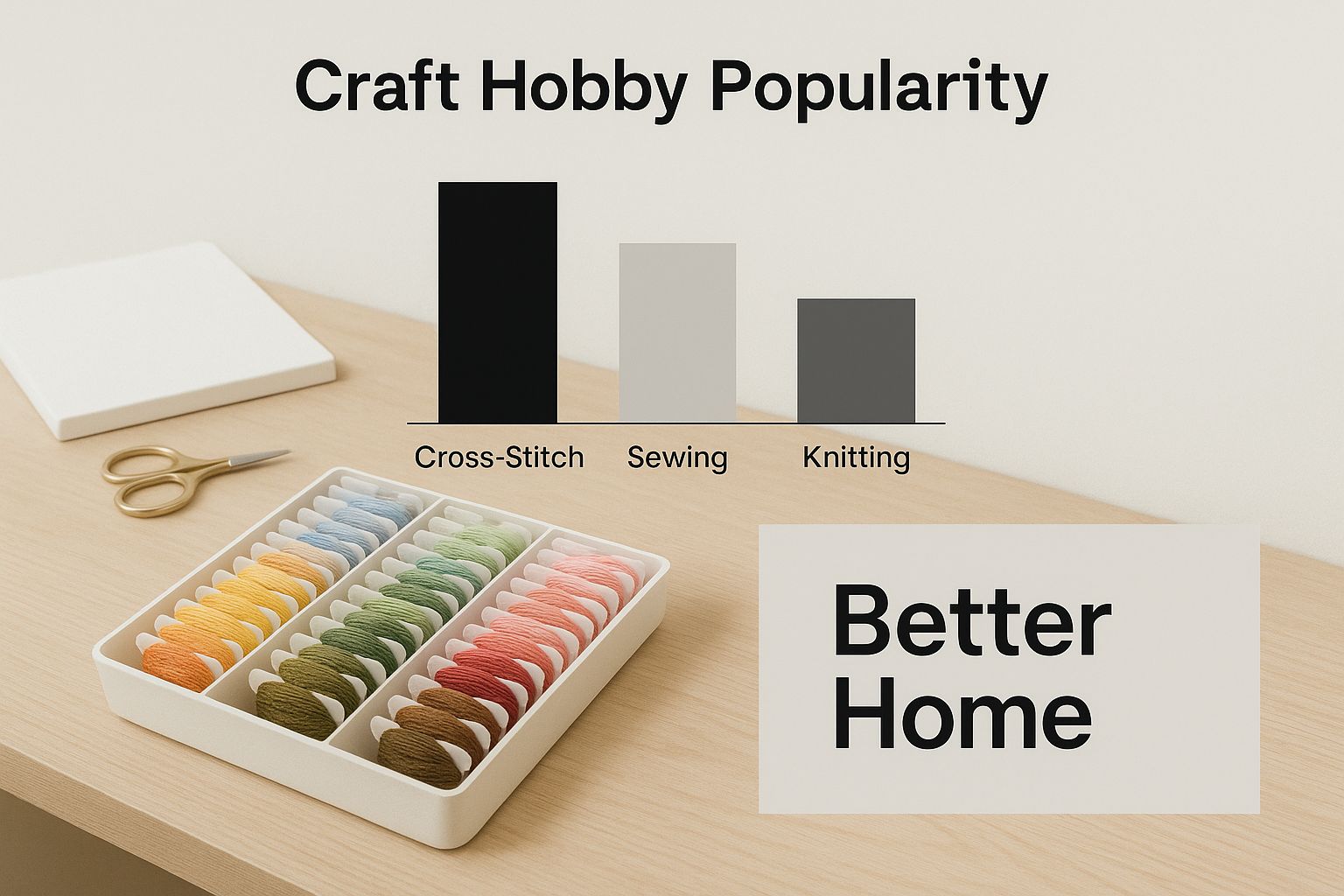
The huge growth in cross-stitching’s popularity has thankfully led to better tools. The global market is set to get much bigger, partly because of new and better ways to manage our threads that just make crafting more fun.
This infographic really shows how much better a dedicated space is for your threads.
At the end of the day, giving your floss a proper home is about treating your craft—and your time—with respect. Whether you're tackling massive, full-coverage projects or stitching up small designs on the go, having your threads in order makes every single stitch that much better. Knowing the differences between various types of embroidery floss and cotton can also help you figure out the best way to store them.
A Look at Popular Thread Organisation Methods
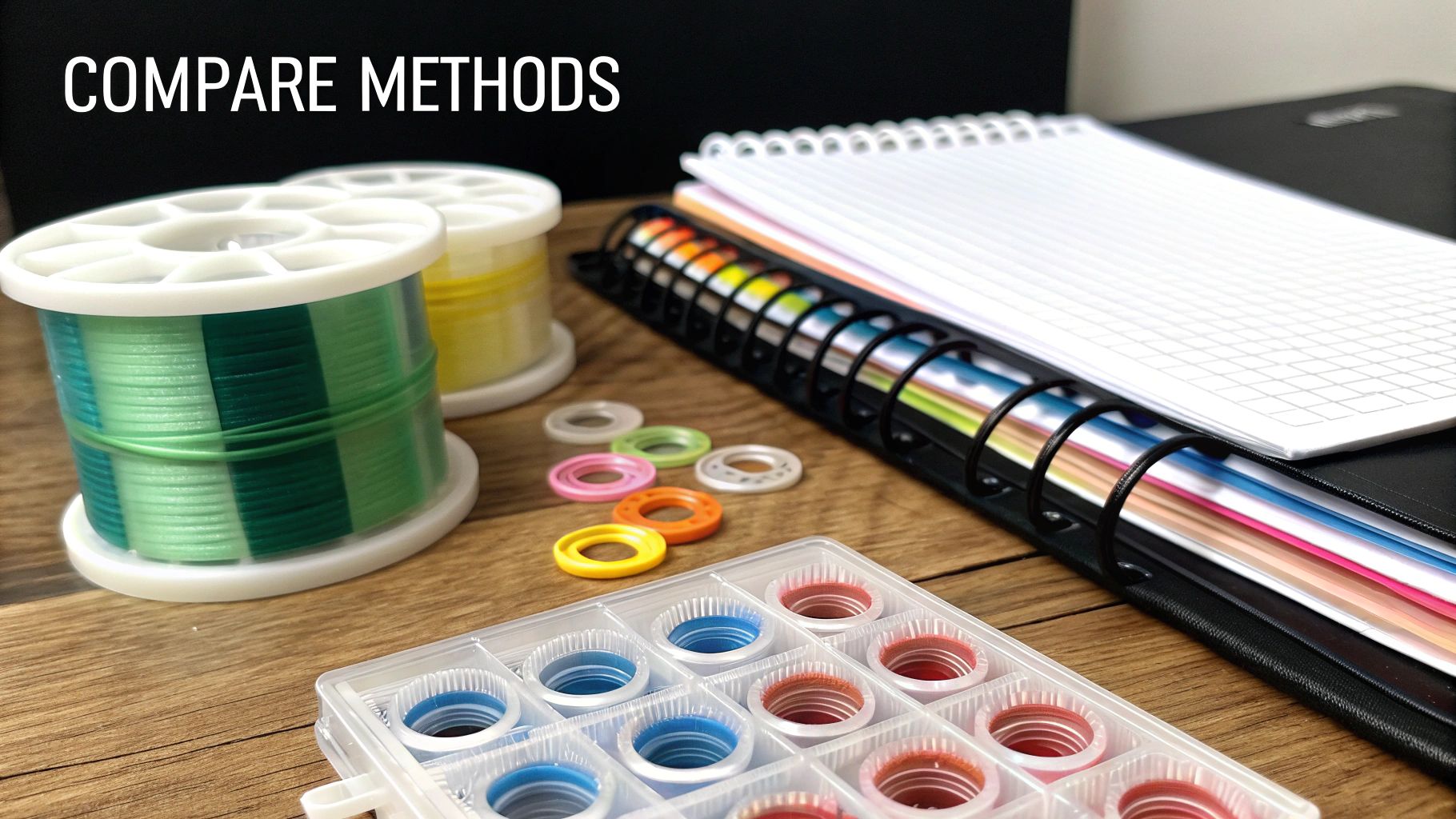
Picking the right cross stitch thread organiser is a lot like choosing your next project—it’s a personal decision that needs to fit your own unique style. There's no single "best" method that works for everyone. The perfect system for you will depend on your space, how much you want to spend, and your personal stitching habits.
Let's walk through the most common ways stitchers keep their floss from becoming a tangled mess, so you can find the one that feels right for you.
The Classic: Bobbins in Boxes
The most tried-and-true method is winding your floss onto little plastic or cardboard bobbins. You then file them away numerically in clear plastic boxes. This system is a classic for a reason: it's incredibly neat, keeps your threads protected from dust and sunlight, and makes finding a specific color number a piece of cake.
If you have a massive thread collection and love following patterns down to the last symbol, this is probably your gold standard. The only real catch? The initial setup takes time. Winding hundreds of skeins requires a bit of patience, though I know plenty of stitchers who find it pretty therapeutic.
The Quick Alternative: Floss Drops
If the thought of winding all those bobbins sounds like a chore, floss drops might just be your new best friend. These are small tags (often acrylic or sturdy cardstock) with a hole for you to loop an entire skein of floss through. You can then group them on a metal ring by project or just keep them in color families.
This method is super fast to set up and fantastic for stitchers who are always on the go. Just grab the ring with the colors for your current work-in-progress, and you're out the door. The main trade-off is that the threads are more exposed and can sometimes get a little tangled if you're not careful.
Ultimately, the choice often boils down to this: Do you crave the perfect, meticulous order of bobbins, or do you prefer the grab-and-go convenience of floss drops?
The Sleek Solution: Binder Systems
For stitchers who appreciate the neatness of bobbins but want something a bit more compact, binder systems are a brilliant option. These use special transparent pages with little pockets designed to hold your bobbins, all stored neatly inside a standard three-ring binder.
This approach lets you store your entire collection on a bookshelf, almost like a library of color. It's a lifesaver if you're short on drawer space but have plenty of shelves. You can just flip through the pages to find the exact shade you need. While the initial cost for the binders and inserts can be a little higher, the result is a beautifully organised and easy-to-browse collection.
Cross Stitch Thread Organiser Method Comparison
To make the decision a little easier, here's a quick side-by-side look at how these popular methods stack up.
| Method | Best For | Portability | Cost | Setup Time |
|---|---|---|---|---|
| Bobbins & Boxes | Large collections & precise organisation | Moderate | Low to Medium | High |
| Floss Drops | Kitting up projects & speed | High | Low | Very Low |
| Binder System | Space-saving & visual browsing | High | Medium | High |
No matter which system you lean toward, a well-thought-out approach is what really matters. For even more ideas on taming your creative space, check out our complete guide on how to organize craft supplies. The best system is always the one that prevents tangles and helps you spend more time stitching.
Setting Up Your New Thread Organiser System
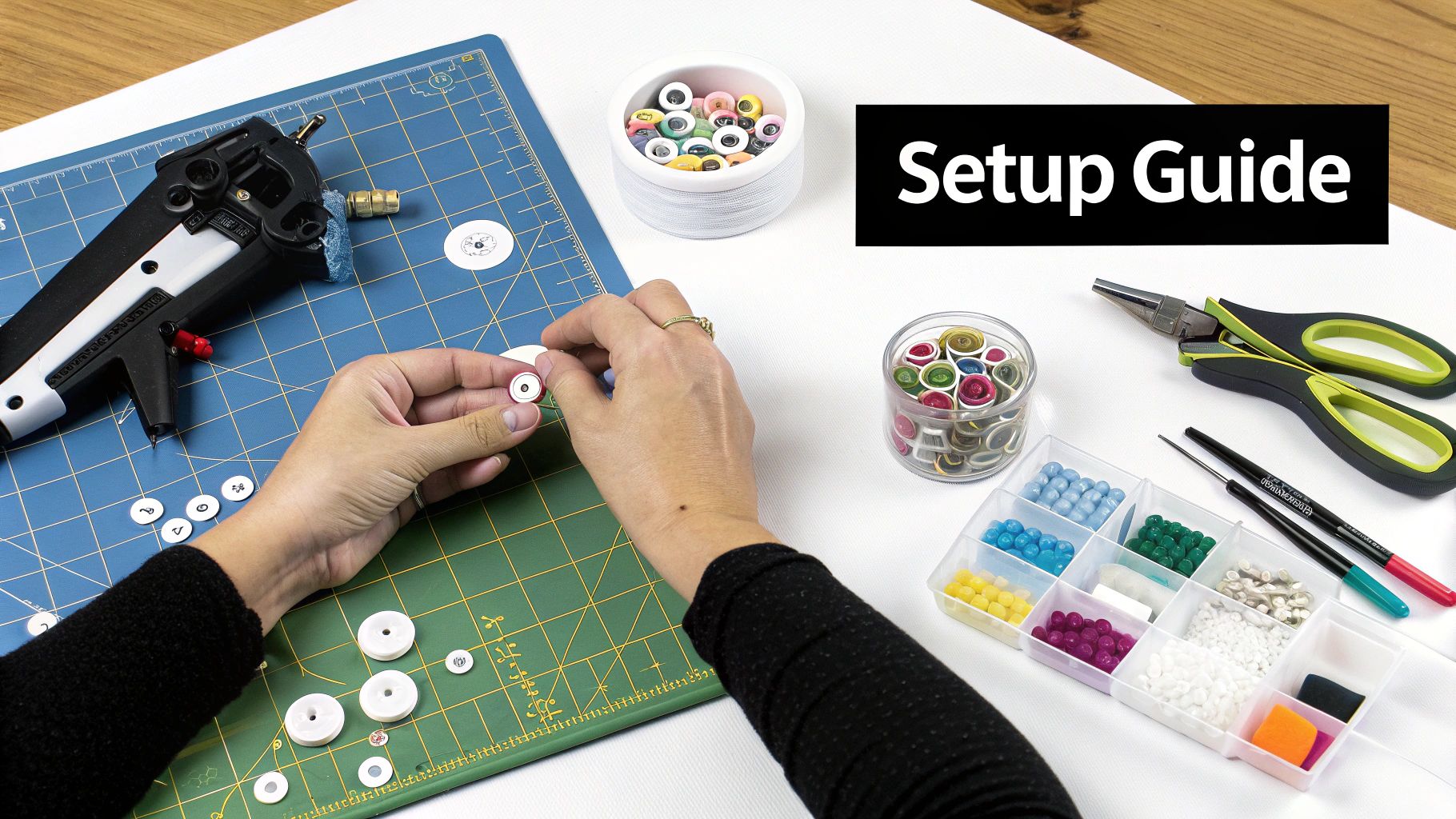
Alright, you've picked your new system. Now for the really satisfying part: turning that chaotic pile of skeins into a functional—and beautiful—collection. Think of this initial setup as an investment. The time you spend now will pay off every single time you start a new project.
Before you dive in, get your tools ready. If you went with bobbins, a simple hand-crank bobbin winder is a total game-changer. It makes the job so much faster and more enjoyable than winding by hand. For those using floss drops, a good, sturdy hole punch is all you really need.
No matter which cross stitch thread organiser you chose, clear labeling is absolutely non-negotiable. You can find tiny, pre-printed number stickers specifically for DMC floss, and they’ll save you from trying to decipher your own handwriting down the line. Trust me on this one—it’s a small detail you’ll thank yourself for later.
The Great Organisation Debate
Now you’ve reached the big question every stitcher has to answer: Do you organize by number or by color? There are passionate arguments for both sides, and the right answer really just depends on how your brain works and the way you stitch.
Organizing by DMC number is easily the most practical choice if you mostly follow patterns. You can grab 310 or 742 without a second thought, which makes kitting up a new project incredibly fast and accurate.
On the other hand, arranging your threads by color family—all the reds together, followed by oranges, and so on—is just plain inspiring. It creates a stunning visual rainbow that's perfect for stitchers who design their own patterns or love pulling together custom color palettes.
- Numeric System: This is all about efficiency. It's ideal for following charts precisely and finding what you need in a hurry.
- Color System: This one is for creative inspiration. It's best if you're doing custom design work or just love seeing all your colors laid out.
Have a massive collection? A hybrid approach can work wonders. You could store your main stash numerically, but when you pull threads for a specific project, arrange just those on a project card by color.
Ultimately, the goal is to create a system that feels intuitive to you. The setup process itself can be a pretty relaxing ritual. So put on some music, settle in, and enjoy building the thread library of your dreams. Your future self will be very grateful.
Pro Tips for Managing a Growing Floss Collection
Your thread collection is alive. It grows and changes with every new project you start. A great organizational system isn't just one you set up once; it's one that can breathe and expand with your stash. Here are a few tricks I've learned over the years to keep my own collection from turning into a chaotic mess.
One of the biggest culprits of floss chaos? Those little leftover "orphan" threads from a finished piece. It feels wasteful to toss them, but they can quickly tangle up a drawer. My solution is simple: I keep a dedicated "orphan bobbin" or a small floss drop just for these leftovers. They stay neat and tidy, perfect for small projects or future repairs.
Smart Inventory and Project Kits
Nothing is more frustrating than coming home from the craft store to find you bought three skeins of a color you already have. This is where a simple inventory system becomes your best friend. You don't need anything fancy—a basic spreadsheet, a note on your phone, or a dedicated crafting app will do the trick. A quick check before you shop saves you money and headaches.
With the needlecraft market booming—it's expected to hit USD 63,872.9 million by 2035, according to Future Market Insights—we're going to see even more patterns and colors. Keeping track of what you own is more important than ever.
Another habit that completely changed my stitching life is creating project kits. Instead of digging through my entire collection every time I sit down to stitch, I pull only the threads I need for my current work-in-progress.
- Gather the required colors: Pull just the bobbins or floss drops your pattern calls for.
- Use a portable case: Pop them into a small project bag or loop them onto a metal ring.
- Keep it separate: This little kit can go anywhere with you, leaving your main stash safe and sound at home.
This grab-and-go method makes stitching on the move a breeze and prevents constant rummaging, which reduces the wear and tear on your full collection. It’s a total game-changer.
If you organize your floss by number, knowing the system inside and out is crucial for fast and accurate sorting. To get a better handle on it, check out our guide on DMC embroidery floss numbers.
Thinking Beyond Plastic: Choosing Quality & Sustainable Organizers
When it comes to your cross stitch thread organiser, the materials really do matter. It's easy to just grab the first plastic box you see, but taking a moment to consider quality options like wood, metal, or even high-grade recycled plastics can completely change your stitching experience. Think of it as an investment in your craft—a system that will not only look beautiful but will also protect your precious threads for years to come.
There's just something satisfying about using well-made tools. A sturdy wooden floss box or a smooth metal ring system feels substantial in your hands, adding to the joy of the process rather than causing frustration.
Crafting with a Conscience
More and more, stitchers are thinking about the environmental footprint of their hobby. A good organization system is actually a big step toward sustainability. When your floss is well-managed, you stop wasting tangled skeins and avoid buying duplicate colors you forgot you had. It’s a simple change that makes your craft a little kinder to the planet.
This mindset is part of a bigger picture. The global sewing thread market, which was valued at a staggering USD 4473.45 million in 2024, is seeing a huge shift towards premium, sustainable fibers. We're seeing this in our own cross-stitch community, too, as people seek out higher-quality materials that align with their values. You can dive deeper into these global thread market trends on Global Growth Insights.
Choosing a durable cross stitch thread organiser and managing your floss with care is about more than just being tidy. You're actively creating a more sustainable and enjoyable crafting practice for the long haul.
At the end of the day, investing in quality tools benefits you and the environment. Your supplies will last longer, you’ll waste less, and your stitching corner will become a space that truly inspires you, filled with tools you love to use. And that makes every single stitch feel that much more special.
Answering Your Top Thread Organization Questions
Even with a system you love, questions are bound to pop up. It's totally normal to fine-tune your process as you go. Let's dig into some of the most common things stitchers ask when they're trying to get their floss collection in order.
What's the Best Way to Handle Leftover Thread?
This is the classic stitcher's dilemma! You've finished a section, but you're left with a piece of thread that's too long to waste but too short for the next big area. What do you do?
For those perfectly usable leftover lengths, I like to wind them onto a dedicated "orphan" bobbin or a spare floss drop. The key is to label it with the right color number immediately. This keeps them from becoming a tangled mess and makes them easy to find for small projects or confetti stitches later on.
And what about those tiny, unusable snips? We call those "orts" in the stitching world. Lots of us keep a decorative jar on our desks to collect them. Watching it fill up with a rainbow of colors is a surprisingly satisfying way to see your progress over time.
The Big Debate: Number or Color Order?
Ah, the age-old question. Should you organize your floss by number or by color? Honestly, there’s no single correct answer—it really boils down to how you stitch.
- Organizing by number is incredibly practical if you mostly follow patterns. When a pattern calls for DMC 310, you know exactly where to go. It makes kitting up new projects a breeze.
- Organizing by color family, on the other hand, is a visual dream. It's perfect for stitchers who design their own patterns or love to play with custom color palettes. You can see all your shades of blue or green at a glance, which is really inspiring.
My personal take? If you have a big enough collection, try a hybrid approach. I keep my main stash sorted numerically for efficiency, but when I'm working on a project, I'll often arrange the colors I need on a project card in a way that’s visually pleasing. It’s the best of both worlds.
How Can I Stop My Thread from Tangling While Stitching?
A smooth stitching session is a happy one, and preventing knots before they even start is the secret. It all begins with using a manageable length of floss—I find that about 18 inches is the sweet spot. Anything longer is just asking for trouble.
When you separate a single strand from the six, pull it straight up and out, slowly and deliberately. This simple trick prevents the strand from twisting back on itself, which is a major cause of knots.
Here’s another little tip: before you take that first stitch, just let your threaded needle hang for a moment. You'll see it spin as the tension in the floss releases. Taking a second to do this can save you a huge headache later. Some people also love using a thread conditioner like Thread Heaven or beeswax to help the floss glide more smoothly through the fabric.
Ready to create a masterpiece from your favourite memories? At Cross Stitched, we turn your photos into beautiful, all-in-one cross-stitch kits. Find your perfect project today.