Quick answer: Cross stitch uses blunt tapestry needles. For 14-count Aida, the standard is a size 24 tapestry needle; 18-count uses size 26; 28-count and finer linen requires size 28. The blunt tip slides through fabric holes without piercing individual threads, which prevents fabric distortion.
Frequently asked questions
What size needle do you use for cross stitch?
The correct needle size depends on fabric count. Size 24 tapestry needles suit 14-count Aida. Size 26 is used for 18-count or 28-count evenweave. Size 28 is appropriate for 32-count and finer linen.
What type of needle is used for cross stitch?
Cross stitch uses tapestry needles, which have a blunt tip and a large eye. The blunt point passes through the holes in the weave without splitting fibres, unlike sharp embroidery needles.
Can I use an embroidery needle for cross stitch?
Sharp embroidery needles are not recommended for counted cross stitch on Aida or evenweave, as they can split the fabric threads and distort the weave. A blunt tapestry needle is the correct choice.
How do I know if my cross stitch needle is the right size?
The needle should pass through the fabric holes smoothly without stretching or distorting them. If the needle drags the fabric or leaves visible holes, try a size smaller.
Picking the right cross stitch needle size might just be the most important decision you make for your project. A good needle will glide through your fabric like a hot knife through butter, making perfect stitches every time. The wrong one? It's a one-way ticket to shredded thread and a whole lot of frustration.
The sizing system seems backward at first, but you'll get the hang of it: the bigger the number, the smaller the needle.
Why Your Needle is Your Most Important Tool
Walking into a craft store and seeing a wall of needles can be a bit much. But once you know what you're looking for, you'll see how this simple choice can completely change your stitching experience.
Think of your needle as the perfect partner for your fabric. The right size will gently part the threads of your Aida or linen, opening up just enough space for your floss to pass through. This is how you get those plump, even stitches without warping the fabric.
If your needle is too big, it will force the holes in the fabric open, leaving noticeable gaps around your stitches. Go too small, and you'll be fighting to pull the thread through. That constant friction shreds and weakens your floss, making it look fuzzy and worn before you've even finished.
This single choice impacts everything from your tension to how your finished piece looks. It’s a foundational skill, which is why we always cover it in our guide to cross stitch basics.
The right needle makes the whole process feel smooth and enjoyable. It lets you focus on the creative side of your pattern instead of wrestling with your tools. It’s a tiny detail that makes a huge, professional-quality difference.
The love for DIY crafts is booming, bringing more people than ever into the world of needlecraft. In fact, the global market is expected to grow from USD 34 billion in 2025 to an incredible USD 63.87 billion by 2035, all thanks to creative hobbies like cross stitch taking root at home.
Matching Needle Size to Fabric Count
The real secret to beautiful, uniform cross stitches isn't some complex technique—it's the simple harmony between your needle and your fabric. Think of it like a key for a lock. The right one makes everything effortless. In cross stitch, our "keys" are blunt-tipped tapestry needles, made specifically to glide through the weave of fabrics like Aida and linen without splitting the threads.
The sizing system can feel a little backward at first, but it's easy once you get it. Just remember this one rule: the higher the fabric count, the higher the needle number. This means a smaller, finer needle is needed for fabric with a denser weave. A perfectly matched cross stitch needle size will gently part the fabric threads just enough for your floss to slip through. No stretching, no damage, no friction.
This precision is what prevents those frustratingly distorted stitches and keeps your fabric looking crisp from the first stitch to the last.
The Rule of Thumb for Perfect Pairing
Your goal is to have the needle's shaft widen the hole in the fabric just enough to create a clear path for the thread. This lets the floss fill the space perfectly, giving you those plump, even stitches we all strive for.
For example, a size 22 needle is a great starting point for 11-count Aida, but you’ll want a much finer size 28 needle for a detailed project on 18-count Aida. Working on evenweave or linen? A 28-count fabric (stitched over two threads) pairs beautifully with a size 24 needle, while 32-count fabric is best friends with a size 26.
Pro Tip: A correctly sized needle should glide through the fabric with a gentle whisper. If you hear a loud "pop," that's your fabric telling you the needle is too big and is forcefully stretching the fibers.
To make things even easier, here is a quick reference chart to help you find the perfect match every time.
Cross Stitch Needle and Fabric Matching Guide
Use this handy chart to select the perfect needle size for your Aida, linen, or evenweave fabric. It takes the guesswork out of getting started!
| Needle Size | Best for Aida Count | Best for Linen/Evenweave Count | Common Thread Count |
|---|---|---|---|
| Size 22 | 11-count | 22-count | 3-4 strands |
| Size 24 | 14-count, 16-count | 28-count, 32-count | 2 strands |
| Size 26 | 16-count, 18-count | 32-count, 36-count | 2 strands |
| Size 28 | 18-count and higher | 36-count and higher | 1-2 strands |
This table should get you started, but remember that personal preference plays a role too! Don't be afraid to experiment to see what feels best for you and your project.
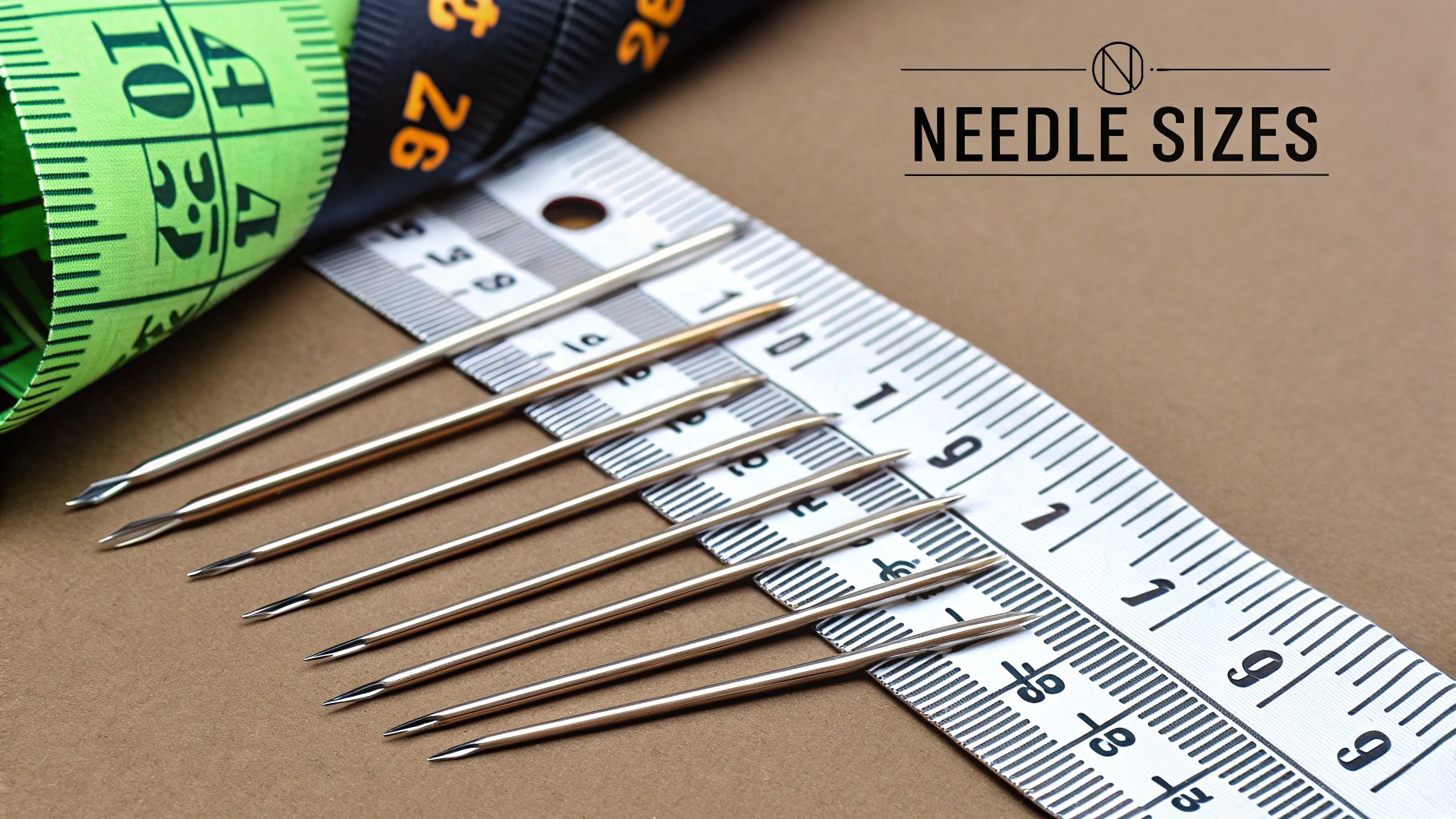
Understanding the parts of your needle helps clarify why this all matters so much.
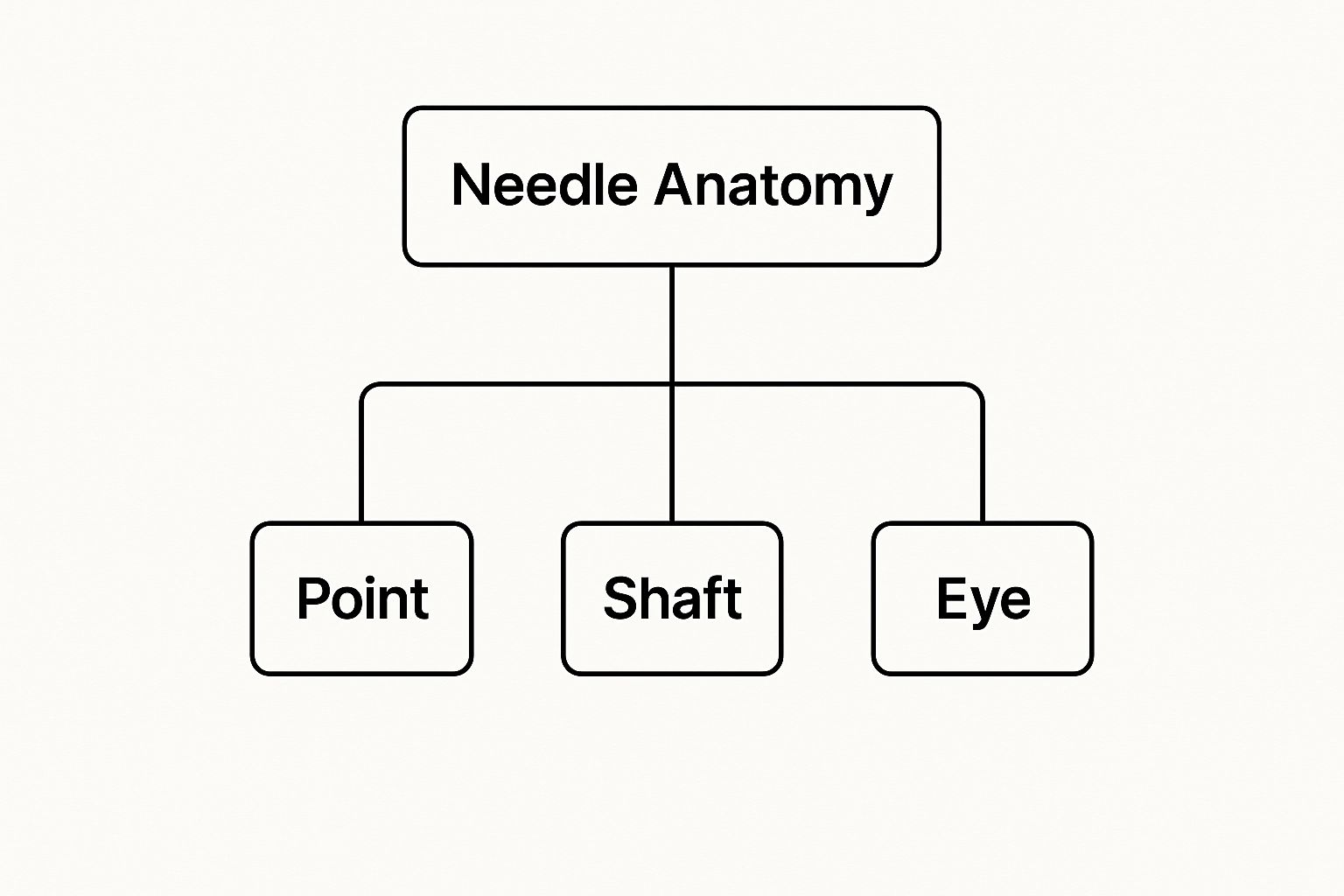
The blunt point, wide shaft, and large eye are all designed to work in concert, protecting both your fabric and your thread. For a closer look at these details, feel free to explore our complete guide on choosing the right size needle for cross stitch.
Understanding Your Tapestry Needle
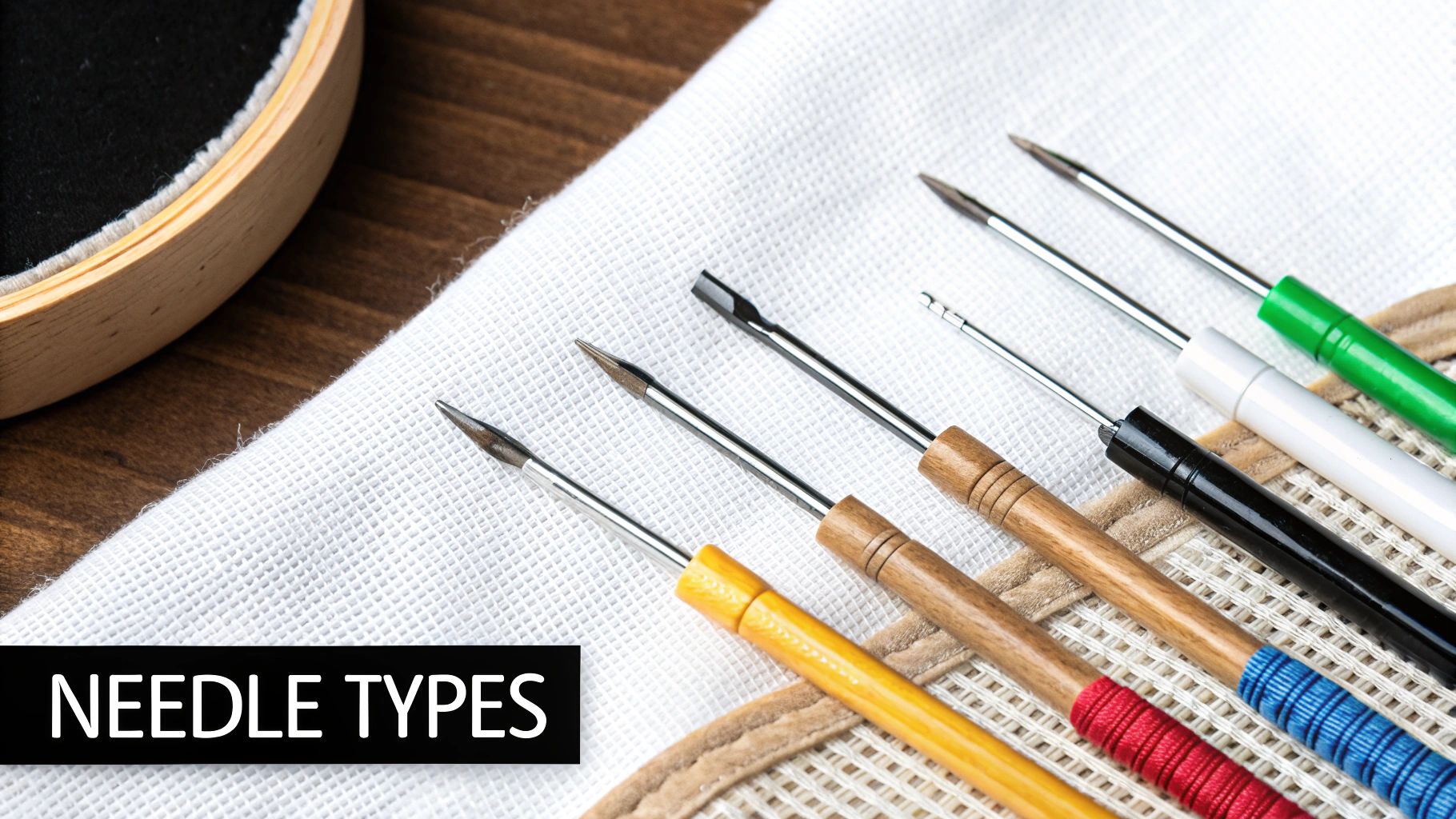
If you've ever held a tapestry needle, you know it’s not your average sewing needle. It feels different, looks different, and for good reason. Every part of it is designed specifically for cross-stitching, and understanding why it's built this way is the first step toward getting that clean, professional finish on your projects.
The most obvious feature is its blunt tip. A regular needle needs a sharp point to pierce through fabric, but a tapestry needle has the opposite job. It’s made to glide smoothly between the woven threads of your Aida or evenweave without snagging or splitting them. This is absolutely crucial for keeping your fabric pristine and your stitches neat.
The Eye and the Shaft
Now, let's talk about that large, elongated eye. This isn't just for making threading easier (though it's a huge help!). The generous opening gives your embroidery floss room to breathe, reducing friction as you stitch. Less friction means your thread won't shred, fray, or tangle, keeping its beautiful sheen from start to finish.
The shaft's diameter might seem like a small detail, but it plays a huge role. It’s engineered to be just a bit wider than the floss you’re using.
Think of it like a tunnel-boring machine. The shaft gently parts the fabric threads, creating the perfect-sized hole for your floss to glide through right behind it.
This simple bit of physics allows your stitches to lie flat and full, giving you that plump, even look we all strive for in cross-stitch.
When you see how the blunt tip, large eye, and thick shaft all work together, it's clear why a proper tapestry needle is a must-have. It’s a specialized tool that protects your fabric, saves your thread from wear, and sets the stage for flawless stitches. Getting the right cross stitch needle size just ensures this whole system works perfectly with the fabric you've chosen.
When to Break the Fabric Count Rules
While the fabric count chart is a fantastic starting point, it's best to think of it as a strong suggestion rather than an unbreakable law. Experienced stitchers know that sometimes the project itself demands a different approach. Learning when to intentionally pick a different cross stitch needle size is a skill that can take your work from good to great, giving you much more control over the final look and feel.
This is especially true when you're working with specialty threads. Metallic floss, for example, is notoriously fragile and loves to shred. To get ahead of this, you can "size up" your needle. By choosing a size 22 needle for 14-count Aida instead of the usual 24, you create a slightly larger path through the fabric. This simple change reduces the friction on the thread, helping it glide through smoothly without fraying.
Adjusting for Technique and Precision
The number of floss strands you're using and the complexity of your stitches also play a big part. If a pattern is packed with tiny, precise fractional stitches, a smaller, finer needle can be a massive help. Using a size 26 needle on 14-count Aida, for instance, gives you the pinpoint control you need to accurately pierce the very center of an Aida square.
Likewise, if you're using fewer strands of floss to create a more delicate, airy effect, a smaller needle is often the way to go. It makes sure the hole in the fabric isn't too large for the thinner thread, which keeps your stitches looking neat and tidy.
Personal preference is the final, and perhaps most important, factor. Some stitchers simply prefer the feel of a longer or shorter needle, or one with a slightly larger eye for easier threading, regardless of what the fabric count chart says.
Ultimately, these guidelines are here to support you, not restrict you. Think about these factors when making your choice:
- Thread Type: For delicate or thick threads like metallics or wool, try going up one needle size to create a wider path and reduce friction.
- Stitch Complexity: For projects heavy on fractional stitches or backstitching, a smaller needle offers much greater precision and control.
- Personal Comfort: Don't underestimate what feels right in your hand. Experimenting with different sizes is the best way to find what makes your stitching process more enjoyable and efficient.
How to Tell If You're Using the Wrong Needle
Is your latest project feeling more like a battle than a relaxing hobby? Before you start questioning your thread or fabric, take a hard look at that tiny tool in your hand: the needle. Using the wrong cross stitch needle size is an incredibly common hiccup that can cause a world of frustration.
The good news is, your project will give you plenty of clues. You just need to know what to look for.
Signs Your Needle Is Too Big
When your needle is too chunky for your fabric count, it bulldozes its way through the weave instead of gliding. It’s forcing the Aida threads apart, and the evidence is hard to miss.
Here are the tell-tale signs:
- You can see obvious holes. The needle leaves behind little craters in the fabric that don't shrink back around the floss, which can distort the look of your finished piece.
- You hear a loud "pop" with every stitch. That's the sound of the needle violently punching through the fabric, rather than gently separating the fibers.
- Your stitches look cramped and bunched up. They just don't have enough room to lay flat and neat because the oversized needle barrel is hogging all the space.
Signs Your Needle Is Too Small
On the flip side, a needle that’s too tiny can't clear a proper path for your embroidery floss. This creates a ton of friction, which is tough on your materials and makes the whole process feel like a workout.
Look out for these symptoms of a too-small needle:
- Your floss is getting fuzzy or shredding. The thread is literally getting scraped and roughed up as you pull it through the tight fabric holes.
- You're constantly fighting your stitches. Pulling the needle and thread through the fabric requires a surprising amount of force.
- Your stitches look a bit loose or sloppy. Because the hole is too small, the floss doesn't fill it in properly, leading to uneven tension.
Quality matters, too! A well-made needle from a reputable brand will have smoother plating and a more durable finish, which makes a huge difference in your stitching experience. If you’re getting serious about your craft, it’s worth exploring advanced cross stitch techniques and the tools that support them.
Common Cross Stitch Needle Questions, Answered
Even with the best charts on hand, questions always come up when you’re deep in a project. Let's clear up some of the most common questions stitchers ask about needles. Think of this as a quick-reference guide to help you get back to stitching with confidence.
What Is the Most Common Cross Stitch Needle Size?
The hands-down winner is the size 24 tapestry needle. It's the one you'll find in almost every cross stitch kit, and for a good reason. It's the perfect partner for 14-count Aida cloth, which is by far the most popular fabric for beginners and seasoned stitchers alike.
If you're just starting out or simply want a do-it-all needle for your stash, you can't go wrong with a pack of size 24s. They are the trusty workhorse of the cross stitch world.
You can think of the size 24 needle as the "default setting" for cross stitch. It strikes a great balance for the most common fabric, making it a fantastic starting point before you dive into finer counts or specialty threads.
Its versatility makes it an essential part of any stitcher's toolkit, ready to tackle countless patterns.
Can I Use a Sharp Needle for Cross Stitch?
Technically, yes, but you really, really shouldn't. Grabbing a sharp sewing needle is a classic beginner mistake, and it can do some serious damage to your fabric. Needles for sewing or surface embroidery are designed to pierce through tightly woven material.
Cross stitch works differently. The whole point is to guide the thread between the woven squares of Aida or linen, not to stab right through them. A sharp tip will split the fibers, fray your fabric, and leave you with messy, uneven stitches. It can even create snags that are impossible to fix. Always, always stick with a blunt-tipped tapestry needle—it's made for the job and will protect your work.
How Often Should I Change My Needle?
Needles aren't meant to last a lifetime, and swapping out an old one can make a huge difference. The most obvious sign of a worn-out needle is when the plating starts to rub off, making it feel rough or look discolored. That extra friction can be a real drag—literally—and can shred your floss as you stitch.
If your needle gets bent or the eye becomes chipped, toss it immediately. While a good quality needle can see you through a few projects, they're inexpensive. It’s always a good idea to start any large or special project with a fresh needle. You’ll get a smoother experience and better-looking stitches from the get-go.
Do Specialty Threads Need a Different Needle?
They sure do, and this one simple change can save you a world of headaches. If you've ever worked with metallic or glow-in-the-dark floss, you know how delicate and... well, fussy they can be. They love to fray, catch, and snap when pulled through a standard needle eye.
To avoid a tangle of frustration, switch to a needle designed for these fibers. They're often called "metallic" or "chenille" needles and have a larger, polished eye that cuts down on friction. This lets the thread glide through the fabric instead of being scraped by it, preserving its shine and saving you from a major stitching headache.
Ready to turn your favorite memories into beautiful works of art? At Cross Stitched, we provide custom, all-in-one kits that make it easy. Find everything you need to start your next masterpiece at https://cross-stitched.com.