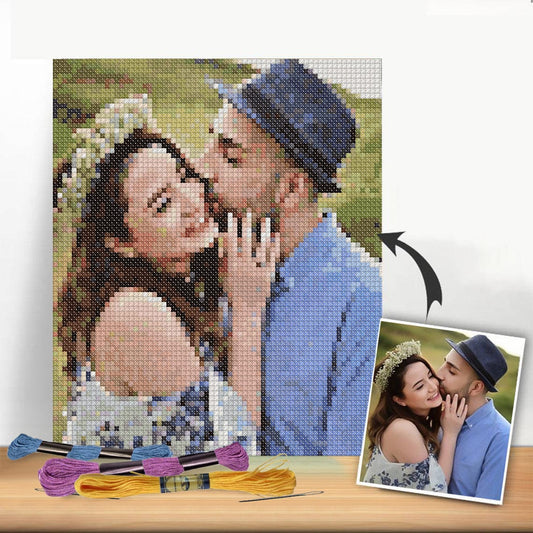
Picking the right cross stitch needle can feel a bit overwhelming at first, but it really boils down to one simple idea: match the needle to your fabric's weave, or 'count'. It's like finding the right key for a lock. The right one will glide through effortlessly, but the wrong one will just cause a lot of wiggling and frustration.
Your Quick Guide to Selecting the Right Needle
When you get the size right, your needle will slide through the fabric holes smoothly, parting the threads just enough for your floss to follow. This is the secret to those neat, uniform stitches that make a finished piece look so good.
If you use a needle that’s too big for your fabric, it will stretch and distort the holes, leaving noticeable gaps. On the flip side, a needle that's too small will make you struggle to pull the floss through. This constant friction can fray your thread and throw off your stitch tension, which nobody wants.
Needle Sizes Explained
Cross stitch needles—specifically tapestry needles—have a bit of a quirky sizing system. They range from size 18 to 28, but here’s the trick: the larger the number, the smaller and finer the needle.
This means you’ll use a smaller needle (like a size 26 or 28) for high-count fabrics with tiny, dense weaves. For lower-count fabrics with more open weaves, you'll reach for a larger needle (like a size 22 or 24).
Common Pairings to Get You Started
To make it easy, here are the most popular combinations you'll run into:
- For 14-count Aida, a size 24 tapestry needle is the go-to choice.
- For 16-count Aida, you'll want to use a slightly finer size 26 needle.
Getting this pairing right is just as important as choosing the perfect embroidery floss for cross stitch projects. Think of them as a team working together to create your masterpiece. This guide will help you pick the perfect needle with confidence, right from your very first stitch. For even more detailed guidance, Makenstitch.com offers a great deep dive into selecting the best needle for your fabric.
Cross Stitch Needle Size Chart for Common Fabrics
Here's a handy chart to take the guesswork out of it. Just find your fabric count and see which needle is recommended.
| Fabric Count (Threads per inch) | Recommended Needle Size | Best For |
|---|---|---|
| 11-count Aida | Size 22 | Beginner projects, easy on the eyes |
| 14-count Aida | Size 24 | The most common and versatile fabric |
| 16-count Aida | Size 26 | A step up in detail from 14-count |
| 18-count Aida | Size 26 or 28 | Projects with lots of fine detail |
| 28-count Linen/Evenweave | Size 24 or 26 | Stitching "over two" threads (equals 14-count) |
| 32-count Linen/Evenweave | Size 26 | Stitching "over two" threads (equals 16-count) |
| 36-count Linen/Evenweave | Size 28 | Stitching "over two" threads (equals 18-count) |
Keep this chart bookmarked! It’s a great quick reference tool that will save you time and help you start every project with the perfect needle in hand.
Why Needle Numbers Seem Backward (And What They Really Mean)
If you're just getting into cross stitch, the way needles are numbered can feel a little backward at first. You'll see sizes like 24, 26, and 28, and your brain probably tells you that a bigger number should mean a bigger needle. It’s a common mix-up!
But in the world of needlework, it's the complete opposite: the larger the number, the smaller and finer the needle.
So, a tiny size 28 needle is actually much thinner and more delicate than a chunkier size 18. This isn't just a random quirk; there's a good reason for it. Finer fabrics, like high-count linens, have a much tighter weave with smaller holes. You need a sleeker needle to glide through those holes without stretching or distorting your beautiful fabric.
And it's not just about the size. The entire design of a tapestry needle is brilliant. It has a blunt tip that's made to find the existing holes in the fabric, gently parting the threads instead of piercing them. Combine that with a nice, large eye that can handle multiple strands of floss, and you have the perfect tool for making neat, even stitches every time.
How to Perfectly Match Your Needle to Your Fabric
This is where the rubber meets the road. Picking the right needle for your fabric is what separates a good-looking project from a truly stunning one. It's the secret to getting those perfect, uniform stitches that make a finished piece look so clean and professional.
For instance, if you're tackling a big, full-coverage piece on 18-count Aida, you’ll want a slender size 28 needle. A bigger needle would stretch the holes and make your stitches look clunky. On the other hand, the ever-popular 14-count Aida works beautifully with a slightly larger, sturdier size 24 needle.
One of the most confusing things for beginners is how needle sizes work. It's a bit counterintuitive: the bigger the number, the smaller the needle.
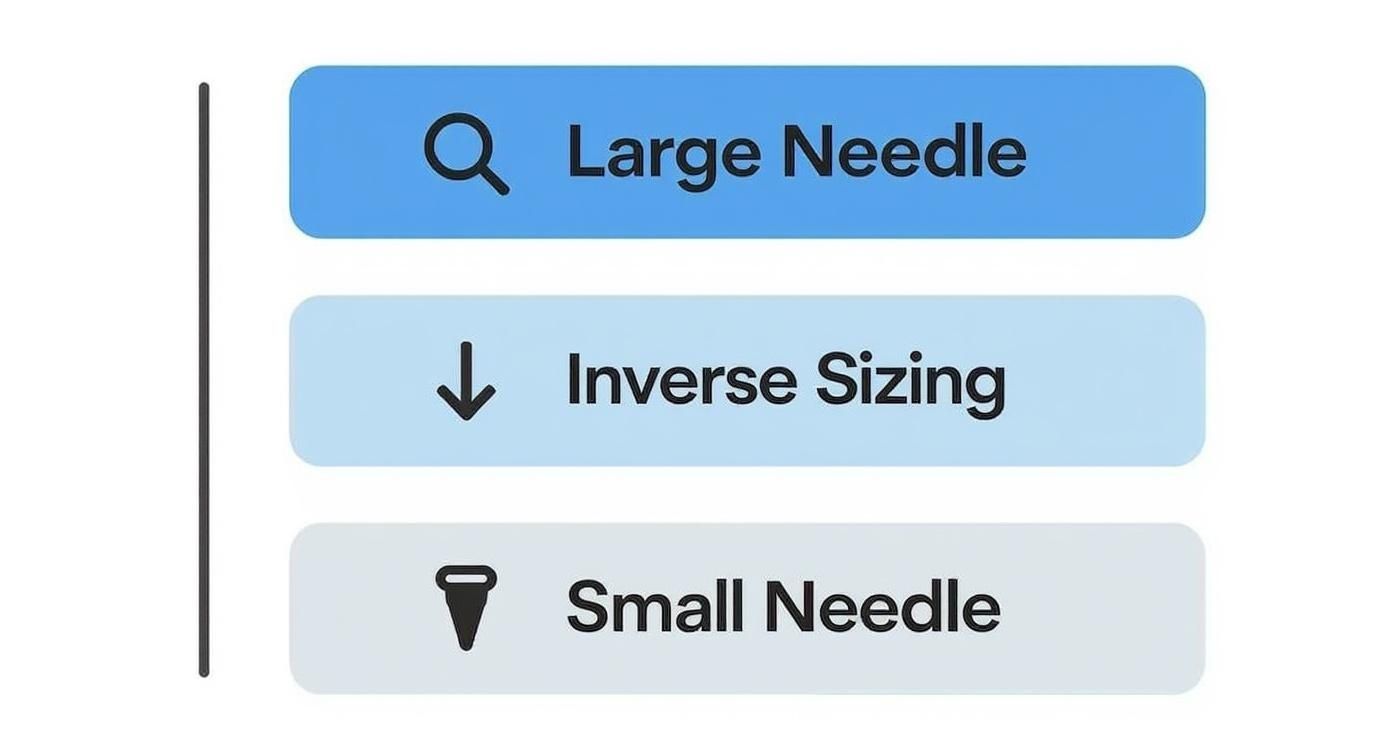
As you can see, higher numbers mean you're getting a finer, thinner needle. It all starts with knowing your material, so getting comfortable with cross stitch fabric counts is your first step. This idea of matching your tool to your medium is a universal truth in creative work, much like in this guide to ordering the perfect custom canvas size.
Needle and Floss Recommendations by Fabric Type
To make things even easier, I've put together a quick reference chart. This table breaks down the most common fabric counts and suggests the best needle size and number of floss strands to use for each.
| Fabric Count & Type | Recommended Needle Size | Typical Floss Strands | Project Suitability |
|---|---|---|---|
| 11-count Aida | Size 22 | 3 | Great for kids, beginners, or projects with a bold look. |
| 14-count Aida | Size 24 | 2 | The most common choice for kits and general stitching. |
| 16-count Aida | Size 26 | 2 | Offers more detail than 14-count with good coverage. |
| 18-count Aida | Size 28 | 2 | Ideal for detailed, full-coverage patterns. |
| 28-count Linen/Evenweave | Size 26 | 2 (over 2 threads) | A popular choice for a more refined, traditional look. |
| 32-count Linen/Evenweave | Size 28 | 2 (over 2 threads) | Perfect for intricate, heirloom-quality pieces. |
Think of this table as your starting point. While these are the standard recommendations that work for most projects, don't be afraid to experiment a little to see what feels right for you and your specific pattern.
The Hidden Problems of Using the Wrong Needle Size
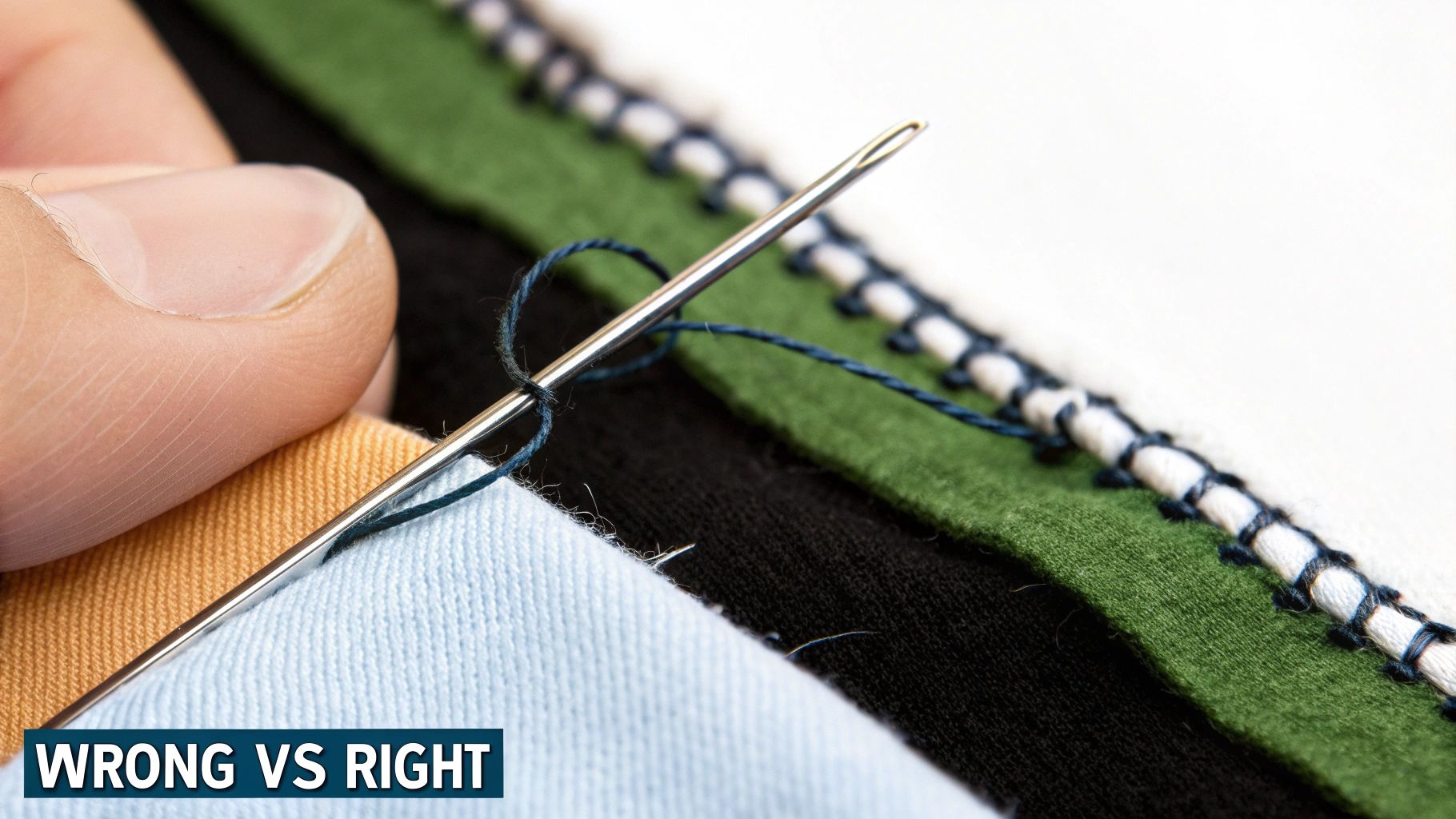
It might seem like a tiny detail, but the wrong needle can quietly wreak havoc on your cross stitch project. Think of it this way: if your needle is too big for your fabric, it's like a bulldozer. It forces the delicate fabric threads apart, leaving behind obvious, gaping holes around your beautiful stitches.
Over time, this stretching warps the fabric and can make your finished work look messy and uneven. It’s a frustrating outcome after putting in so much effort.
But going too small isn't the answer either. A needle that's too tiny for your thread creates its own set of headaches. You'll constantly be fighting to pull the floss through the fabric. This friction is the enemy of embroidery floss—it shreds and frays the strands, making them weak and fuzzy.
This constant tug-of-war not only ruins your thread but also puts a real strain on your hands. Suddenly, your relaxing hobby feels more like a frustrating chore. Getting the needle size right is absolutely fundamental to both the final quality of your work and your enjoyment of the process.
Getting to Know Specialty Needles
Once you feel comfortable with the standard tapestry needle, you'll discover a whole world of specialty needles designed to solve very specific stitching challenges. Think of it like a chef's knife set—you have your main go-to blade, but you also have special tools for specific jobs.
For instance, you might find that shorter ‘petite’ needles give you incredible control when you're working on highly detailed sections. If you're tackling a project on waste canvas, ball-point needles with their rounded tips are a game-changer, slipping between threads instead of piercing them. And for stitchers with nickel sensitivities, gold-plated needles aren't just for looks; they offer a smooth, hypoallergenic glide through the fabric.
Exploring different cross stitch needles sizes and types is all about personalizing your toolkit. It's how you turn a good stitching session into a great one, matching the right tool to your project and your hands.
This ever-expanding variety of tools is a great sign for our craft. The needlecraft market is actually projected to hit an incredible $63,872.9 million by 2035, and that growth is fueled by our demand for better, more specialized gear. You can learn more about the other accessories for cross stitch that help elevate your projects. If you're curious about this trend, you can read more industry insights from Future Market Insights.
Taking Care of Your Needles and Knowing When to Say Goodbye
Think of your needle as the unsung hero of your cross stitch project. It does all the heavy lifting, so a little TLC goes a long way. Storing your needles properly—in a magnetic case or a classic emery-filled pincushion—is the best way to keep them clean, sharp, and rust-free.
But even the most well-cared-for needle has a lifespan. You'll start to feel it when a needle is ready to retire. Does it drag through the fabric instead of gliding? Does it look a bit dull or tarnished? These are the first signs.
Here’s what to look out for:
- Roughness or Snagging: If you feel the needle catching on your floss, it's time for it to go. A damaged eye can shred your thread, which is incredibly frustrating.
- Bent or Damaged Tip: A bent needle is a recipe for wonky, uneven stitches. Don't try to force it; just grab a new one.
- Visible Tarnish or Rust: Any discoloration means the needle's protective coating has worn off, making it more likely to snag or stain your fabric.
Swapping out a tired needle is one of the smallest, cheapest investments you can make for a huge return in quality. Don't let a worn-out tool compromise the beautiful work you've put so much time into. Needles are a consumable part of our craft, and keeping a fresh supply is just good practice in a hobby that continues to grow worldwide. You can even see how much the cross-stitch market is expanding on Stats and Data.
Common Questions About Cross Stitch Needles
Even once you get the hang of needle sizes, a few tricky questions always seem to come up. Let's tackle some of the most common ones so you can get back to stitching with confidence.
What Is the Difference Between a Tapestry and Embroidery Needle?
It all comes down to the point. A tapestry needle has a blunt, rounded tip that’s designed to slide neatly between the threads of your fabric without splitting them. This is exactly what you want for Aida or evenweave.
An embroidery needle, on the other hand, has a sharp point meant to pierce fabric. Think of it like this: tapestry needles part the threads, while embroidery needles puncture them. For cross stitch, the tapestry needle is almost always the right tool for the job.
Can I Use the Same Needle for an Entire Project?
You definitely can, but it’s not always the best idea, especially on a big project. Over time, the oils from your hands can tarnish the needle's coating, and constant friction can wear down the finish.
A worn needle can start to feel "draggy" and might even snag or fray your floss. Swapping for a fresh needle every so often keeps your stitching smooth and hassle-free. It's a small change that makes a surprisingly big difference.
Ready to turn your favorite photos into timeless art? At Cross Stitched, we create custom cross-stitch kits from your images, delivering everything you need right to your door. Start creating your personalized masterpiece today by visiting https://cross-stitched.com.