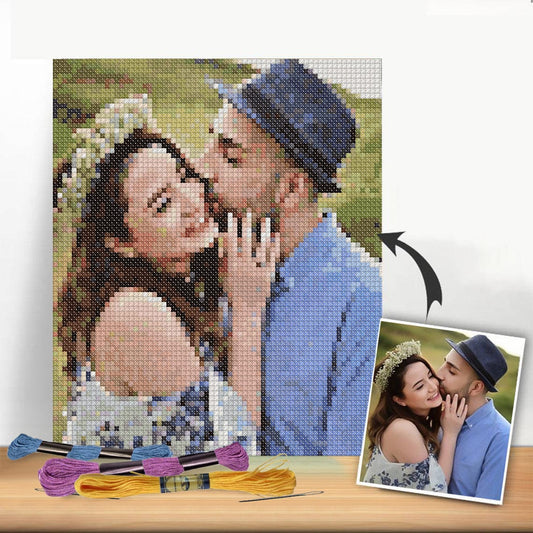
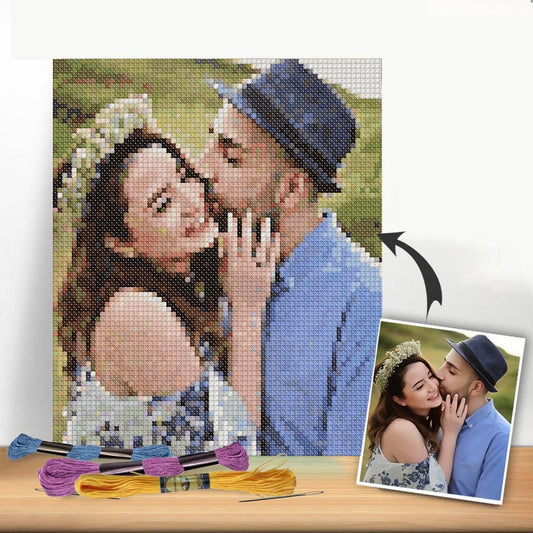
Quick answer: Cross stitch is a counted needlework embroidery technique where X-shaped stitches are worked on even-weave fabric (typically Aida cloth) to form a pixelated image following a charted pattern. It is one of the oldest and most accessible forms of embroidery, requiring only a needle, thread, and fabric to begin.
Frequently asked questions
What is cross stitch?
Cross stitch is an embroidery craft where pairs of diagonal stitches form an X shape, worked on grid-like fabric such as Aida cloth. Each X corresponds to one square on a charted pattern, building up designs stitch by stitch.
What materials do you need for cross stitch?
The essential materials are Aida or evenweave fabric, stranded cotton embroidery floss (such as DMC), a blunt-tipped tapestry needle, and an embroidery hoop to keep the fabric taut. A printed or digital pattern completes the basic kit.
Is cross stitch the same as embroidery?
Cross stitch is a specific type of embroidery. Embroidery is the broader category covering all decorative needlework; cross stitch is a counted form within it, defined by its uniform X-shaped stitches worked on even-weave fabric.
How long does it take to learn cross stitch?
Most beginners can complete their first small design within a single afternoon. The basic stitch itself takes minutes to learn; building speed and confidence on larger projects typically develops over a few sessions.
Is cross stitch suitable for beginners?
Yes. Cross stitch is widely considered one of the most beginner-friendly needlecrafts because the technique is repetitive, the materials are inexpensive, and starter kits include everything needed including a pre-printed pattern.
Welcome to the wonderfully relaxing world of cross stitch! It's often called "painting by numbers with thread," and that's a perfect way to think about it.
So, what exactly is cross stitch? At its core, it's a type of counted thread embroidery. You create pictures by making a series of tiny, X-shaped stitches on a special grid-like fabric.
Your Introduction to Cross Stitch
The real beauty of cross stitch is how straightforward it is. The fabric, usually something called Aida cloth, acts like a blank canvas that already has a grid built right in. Each little square on that grid is a perfect spot for one of your "X" stitches.
Your guide is a pattern, which is basically a chart full of symbols. Each symbol tells you which color of thread to use and exactly where to place your stitch. This simple, methodical process means there's no guesswork involved, making it incredibly welcoming for beginners.
There's a special kind of magic in watching a detailed picture slowly emerge from your hands, one stitch at a time. It's a craft celebrated for its mindful, calming rhythm, and literally, anyone can learn the basic stitch in minutes. Many newcomers wonder if it's really as simple as it sounds. We actually dive deeper into that in our guide on whether cross stitch is easy.
The whole craft boils down to this: Follow the chart, make an "X" on the right square of fabric, and repeat. That's how a complex-looking design becomes a series of easy, manageable steps.
From timeless, traditional samplers to quirky patterns of your favorite pop culture characters, the possibilities are truly endless. This introduction will help you see why this hobby has captivated people for centuries—and why you might just be the next one to fall in love with it.
2. Uncovering the Rich History of Cross Stitch
Every little ‘x’ you stitch connects you to a tradition that goes back centuries. Cross stitch isn't some new-fangled craft; it's one of the oldest forms of embroidery out there, linking makers and storytellers across generations. Knowing where it comes from adds a whole new layer of appreciation to your work.
This beautifully simple craft has roots that stretch back thousands of years. Ancient civilizations used early forms of embroidery for just about everything, from sprucing up clothing to weaving stories into textiles. The technique really took off across Europe during the Middle Ages, becoming both a practical skill and a beloved art.
It was especially popular in places like Germany and England, where people used it to decorate household linens and create detailed samplers. Even today, it's a craft practiced all over the world, with a surprisingly strong commercial market. You can actually dive deeper into the cross stitch market’s growth and history to see just how relevant it remains.
From Schoolwork to Art
For a long time, cross stitch was a key part of a young woman's education. They would create samplers—pieces of fabric stitched with alphabets, numbers, and various designs—to practice and prove their needlework skills. These weren't just homework assignments; they became treasured family heirlooms that often recorded names, dates, and important family milestones.
Think of a sampler as a stitcher's resume. It was a tangible record of her skill, patience, and artistic eye—a beautiful piece of personal history passed down through the family.
Slowly but surely, the humble 'X' stitch went from a practical way to mark linens to a full-blown art form. People started stitching decorative pictures, scenes from the Bible, and complex patterns, using cross stitch to show off their creative talents. This evolution cemented its place as the hobby we know and love today.
So, when you pick up your needle and thread, remember you're not just starting another project. You're tapping into a long, beautiful history of handmade art. Every single stitch is a little nod to all the creators who came before.
Gathering Your Essential Cross Stitch Supplies
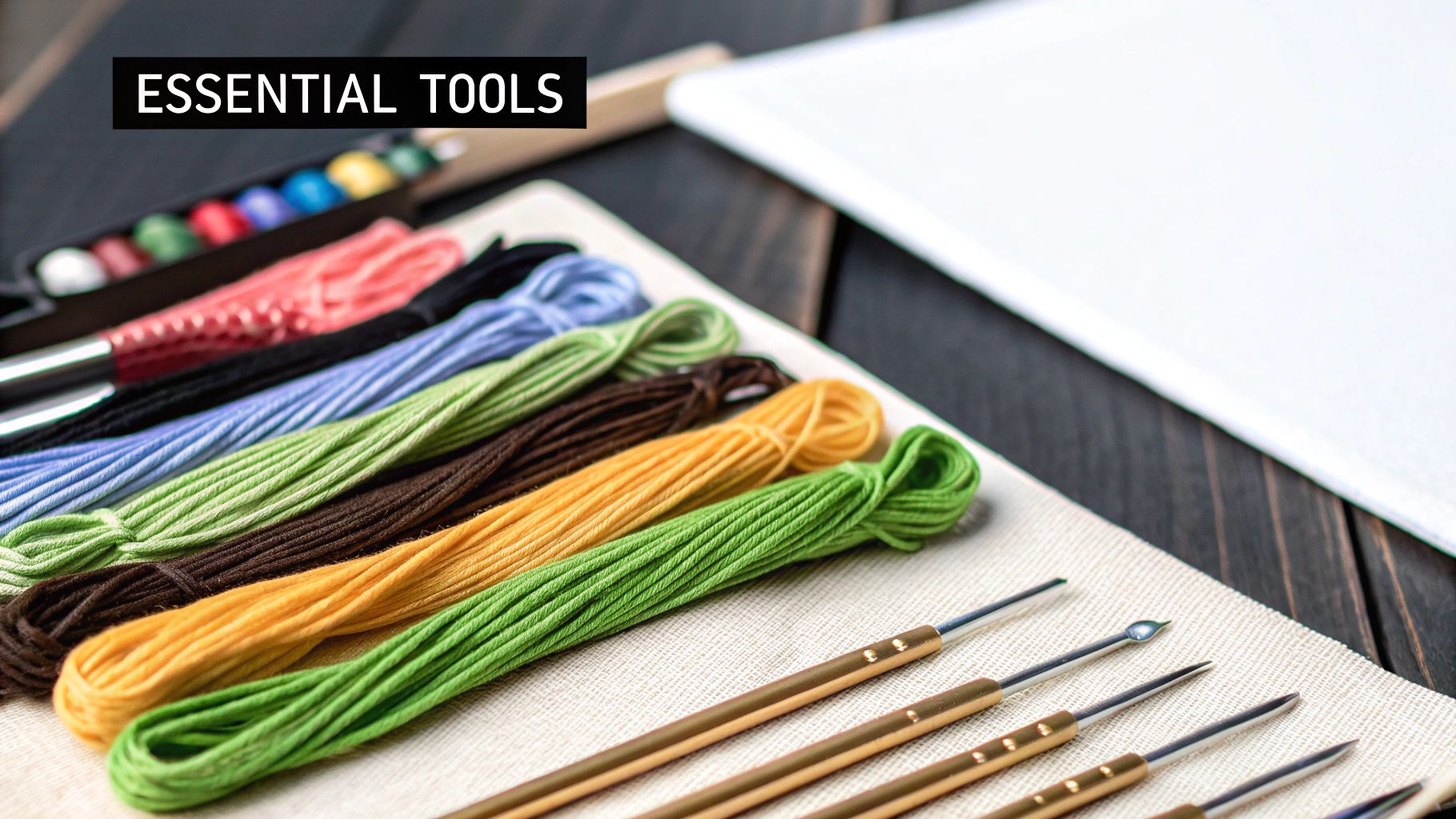
One of the best things about starting cross stitch is that you don't need a mountain of expensive gear. Unlike a lot of other crafts, you can get everything you need to make something beautiful with just a few core items. Let's walk through the absolute must-haves for your first project.
Think of it like building a starter toolkit. Each piece has a specific job, and together, they make the whole process smooth and fun right from the get-go.
Fabric: The Foundation of Your Project
For beginners, the go-to fabric is almost always Aida cloth. It’s a wonderfully user-friendly cotton material woven into a grid of tiny squares with easy-to-see holes. This grid is your roadmap, making it simple to place those perfect little X-shaped stitches.
You'll see Aida sold in different "counts," like 11, 14, 16, or 18. This number just tells you how many squares (or stitches) fit into one inch of fabric. For anyone just starting out, 14-count Aida is the ideal choice. The squares are big enough to work with comfortably without straining your eyes.
Once you get the hang of it, you might want to try other fabrics. For instance, there are many different types of linen fabric that give projects a more traditional, heirloom feel. But for now, sticking with Aida is the best way to build confidence. If you'd like to learn more, we have a complete guide explaining https://cross-stitched.com/blogs/what-is-cross-stitch/what-is-aida-fabric.
Your Core Stitching Tools
To get started, you really only need a few key supplies. Here's a quick look at the essentials every beginner should have in their project bag.
| Tool | What It Is For | Beginner's Tip |
|---|---|---|
| Embroidery Floss | This is the colored thread you'll use to create your design. It's the "paint" for your fabric canvas. | Floss comes in a six-strand skein. For 14-count Aida, you'll typically separate and use just two of those strands. |
| Tapestry Needles | These have a blunt tip and a large eye, designed to glide through Aida holes without piercing the fabric. | A size 24 needle is the perfect partner for 14-count Aida and two strands of floss. |
| Embroidery Hoop | Two rings that clamp together to hold your fabric tight and flat while you stitch. | Using a hoop keeps your stitch tension even and prevents the fabric from puckering, leading to a much neater finish. |
And that's it! With these four items—fabric, floss, needle, and a hoop—you're officially ready to start stitching your very first cross stitch piece.
How to Make Your First Cross Stitch
Alright, you've got your supplies gathered, and now it's time for the fun part—actually making your first stitch. This is where the magic happens, and it's a wonderfully simple and satisfying process. The whole idea is to create a series of neat, uniform 'X' shapes that will build up to form your design.
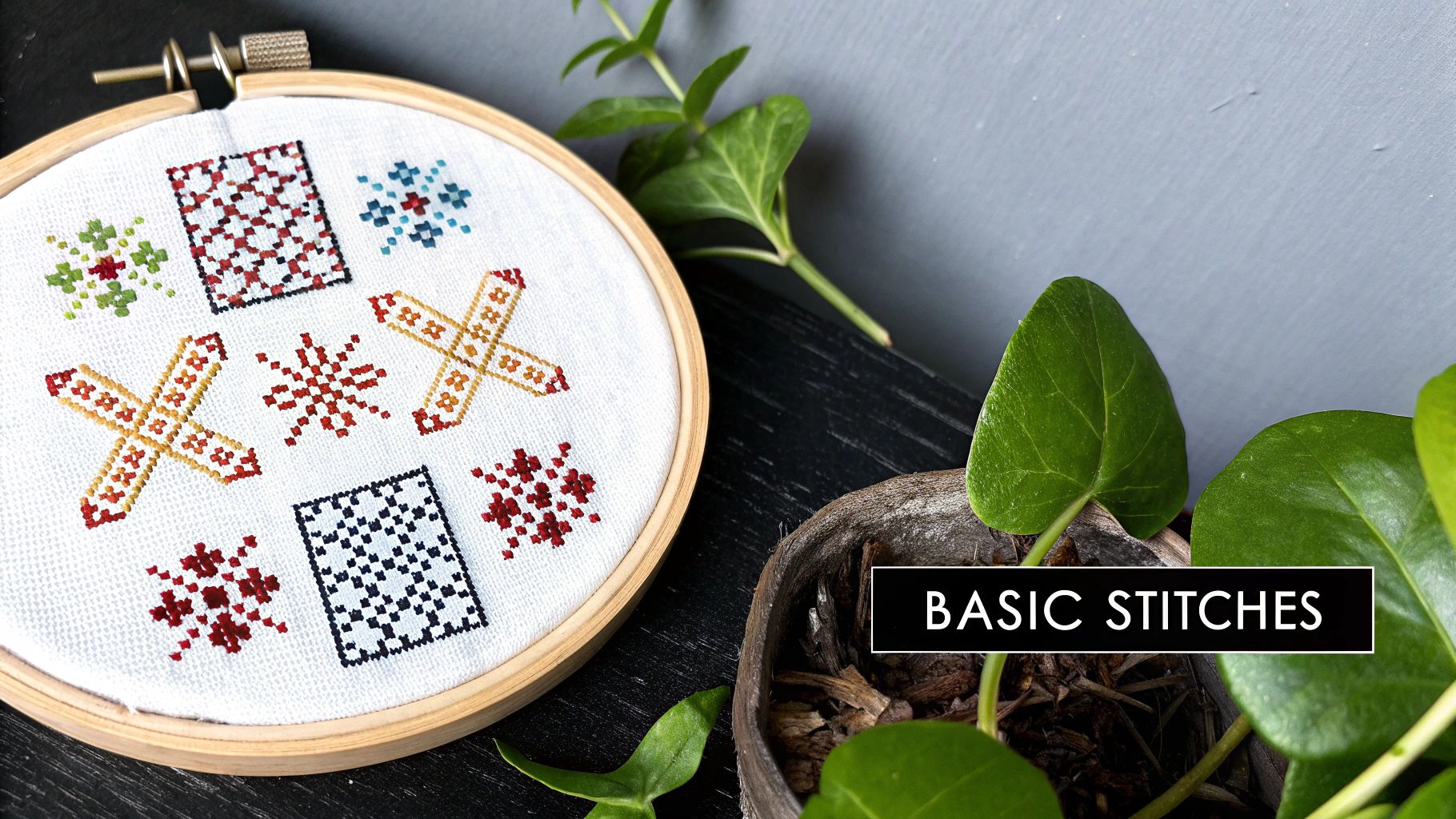
Most people start with what's called the English method, and it's perfect for beginners. You’ll stitch a whole row of half-stitches (like this: / / /) and then work your way back across that same row to complete the 'X's (like this: \ \ ).
It's a straightforward approach that helps keep all your stitches looking consistent and gives your finished piece a lovely, smooth appearance.
Starting and Ending Your Thread
Here’s a pro tip for keeping your work looking neat: avoid knots. Instead of tying a knot at the beginning, just leave a small tail of thread—about an inch long—on the back of your fabric. As you make your first few stitches, you'll simply catch that tail under them on the backside. This holds it securely in place.
When you're ready to end a thread, just flip your work over. Weave your needle under the last three or four stitches on the back, pull it snug, and snip the thread close to the fabric. It’s a clean finish that keeps both sides of your project tidy.
Before you even thread your needle, though, you have to pick a pattern. The right first project makes all the difference.
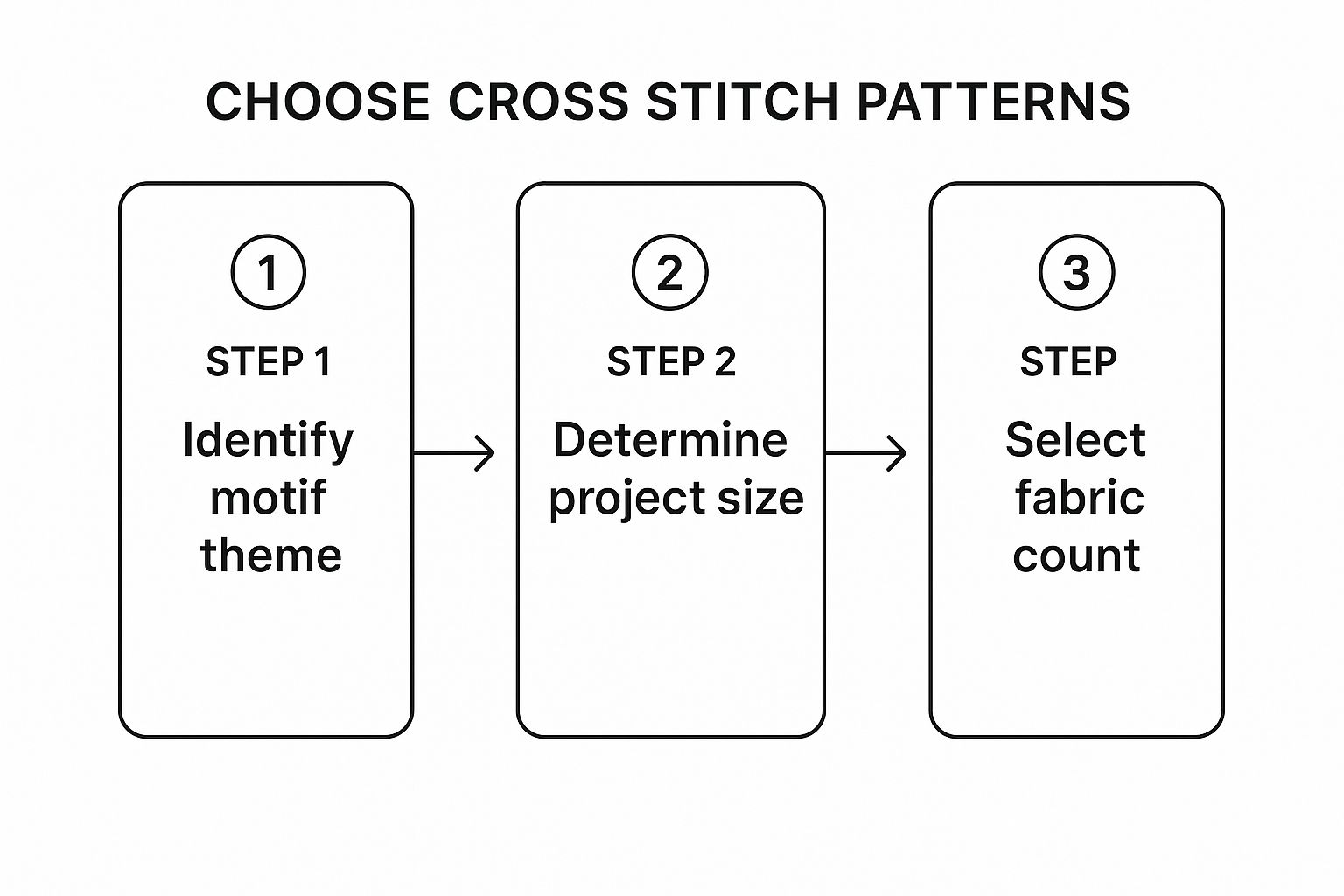
As you can see, thinking about the theme, size, and fabric count ahead of time really sets you up for a project you'll actually enjoy and finish.
Reading a Cross Stitch Chart
Your pattern is your roadmap. Think of the chart as a grid that perfectly matches the woven grid of your Aida cloth. Every single square on that chart represents one full cross stitch you’ll make on the fabric.
Look closer at the chart, and you'll see a symbol inside each square. That symbol tells you which color of embroidery floss to use. The pattern’s color key, or legend, will show you which symbol corresponds to which floss number. So, you just find a symbol on the chart, grab the matching thread, and make a stitch on the corresponding square of your fabric. To see this in action, check out our guide on the basic cross stitch stitches.
Think of a cross stitch chart as a simple, visual language. Once you understand that each symbol is just an instruction for 'what color to stitch here,' the whole process becomes incredibly intuitive.
As you match the symbols on the chart to your fabric grid, you'll slowly but surely see your picture come to life. It’s this methodical, one-stitch-at-a-time process that makes cross stitch so wonderfully relaxing.
Understanding the Modern Cross Stitch Community
Cross stitch has come a long way from being just a traditional pastime. It's now a vibrant, modern craft that’s backed by a surprisingly passionate and global community. Picking up a needle and thread isn't just a solitary activity anymore—it's your ticket into a massive, supportive, and incredibly creative network.
Today, this hobby fuels a bustling economy all on its own. You can find everything from elaborate kits sold by major brands to one-of-a-kind digital patterns from independent designers on platforms like Etsy. This isn't just a niche market; it's a real economic force. For a deeper dive, you can explore the needlecraft market's structure and trends to see just how big it's become.
Finding Your Stitching Tribe
Social media is the new town square for modern stitchers. Platforms like Instagram, Pinterest, and Reddit have become these incredible hubs where people show off their finished pieces, ask for advice when they're stuck, and discover their next favorite pattern. It's a goldmine of inspiration and a fantastic way to connect with people who get just as excited about Aida cloth and DMC floss as you do.
Joining an online group or even just following a hashtag like #crossstitch instantly plugs you into a world with thousands of fellow crafters. It takes a personal hobby and turns it into a shared experience, full of encouragement and a real sense of belonging.
So, whether you decide to join a local craft circle, participate in an online stitch-along, or simply share your work-in-progress on social media, you’re stepping into a thriving world. Your new hobby connects you to a worldwide community of creators, one stitch at a time.
Why Cross Stitch Is Good for Your Brain
It turns out that making all those tiny Xs isn't just about creating a beautiful piece of art. The simple, rhythmic motion of pulling thread through fabric is incredibly calming, making it a perfect mindfulness tool in our constantly buzzing world.
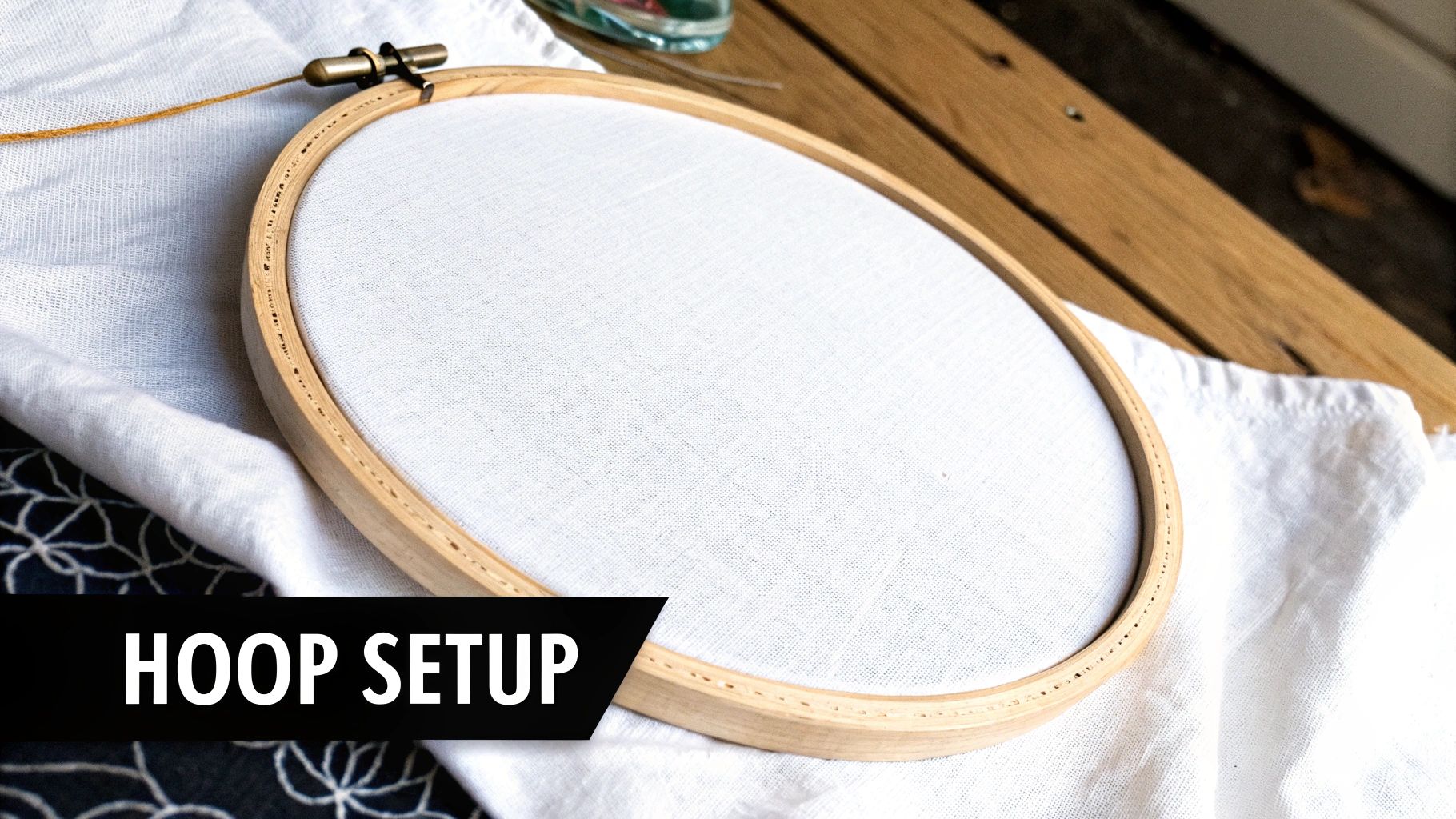
This repetitive action has a way of quieting a busy mind and can genuinely help dial down feelings of anxiety. As you get lost in counting stitches and following your pattern, you can slip into a state of ‘flow’—that wonderful, meditative zone where daily stressors just seem to fade into the background.
This kind of focus does more than just relax you; it actually sharpens your ability to concentrate. Every single stitch is a small, manageable goal, giving you an immediate sense of purpose and a much-needed break from whatever else is on your mind.
The act of stitching is a form of active meditation. It quiets the noise, centers your thoughts, and gives your brain a structured, creative task to focus on, boosting both mood and mental clarity.
The Power of a Finished Project
And then there's the incredible feeling you get when you finish a project. There's nothing quite like watching an image slowly emerge from a blank piece of fabric, all because of your own time and effort. This whole process is a masterclass in patience, and it can give your self-esteem and confidence a serious boost.
So, picking up a needle and thread is far more than just a hobby; it’s a genuine act of self-care. It's a quiet, simple way to unwind, refocus your mind, and create something uniquely wonderful.
Got Questions? We've Got Answers
As you start exploring the world of cross stitch, you're bound to run into a few head-scratchers. It happens to everyone! To help you get stitching with confidence, here are some straightforward answers to the questions we hear most often from newcomers.
Fabric, Floss, and Finishing Touches
Getting your materials and methods right from the get-go can make your first project a joy instead of a chore. Let's tackle the big three.
-
What's the easiest fabric for a beginner? Hands down, start with 14-count Aida cloth. The "count" simply means how many squares (or stitches) fit into one inch of fabric. A lower number like 14 gives you bigger squares with very clear holes, which is a lifesaver when you're just learning to see and count your stitches.
-
How many strands of floss should I use? Your typical embroidery floss comes with six strands all twisted together. For most projects on 14-count Aida, you'll want to separate out and use two strands. This gives you nice, full coverage without your stitches looking too chunky. That said, always double-check your pattern’s instructions—some designs call for one strand for delicate details or three for a bolder look.
Think of thread count like changing the font weight on a document. Two strands is your standard "regular" text, but sometimes you'll want a lighter or bolder effect.
- Can I wash my finished cross stitch piece? Absolutely! In fact, it's a great idea. A gentle hand wash can remove any oils from your hands or marks left by your hoop. Just use lukewarm water and a mild soap, swish it around, and rinse with cool water. To dry, roll it up in a clean towel to blot out the extra moisture, then lay it flat. For a perfectly smooth finish, iron it from the back on a low setting while it's still a little damp.
Ready to stitch your favorite memories? At Cross Stitched, we turn your photos into one-of-a-kind, all-inclusive cross stitch kits. You can start creating a truly personal work of art today by visiting our website: https://cross-stitched.com.