Ever seen stitches that seem to jump right off the fabric? Stitches that are perfectly round, almost luminous, and just bursting with texture? That’s the magic of DMC Pearl Cotton. This isn’t your standard embroidery floss; it's a highly mercerized, non-divisible thread with a distinctive twisted construction. This unique structure gives it a brilliant, pearl-like sheen and a defined texture that makes every single stitch stand out.
What’s the Big Deal with DMC Pearl Cotton?
When a project calls for extra dimension and a pop of brilliance, experienced stitchers often reach for DMC Pearl Cotton. Its most defining feature is that it's a single, non-divisible strand.
Think of it this way: regular six-strand floss is like a paintbrush. You can separate the strands to paint fine, delicate lines or use all six for bold, thick strokes. Pearl Cotton, on the other hand, is like a high-quality art pen—it gives you a consistent, beautifully crisp line every time, with no splitting or fussing required. This built-in integrity is why it’s so beloved for techniques where the definition of each stitch is key.
The journey from a simple cotton fiber to a lustrous skein of Pearl Cotton is all about quality. The thread undergoes a special process called mercerization, which not only strengthens the cotton fibers but also makes them absorb dye more deeply, resulting in richer, more vibrant colors. Most importantly, this process is what creates that signature pearlescent sheen and helps the thread glide smoothly through fabric without fraying.
More Than Just Embroidery
Because of its unique qualities, Pearl Cotton is a star player in a whole range of needlecrafts. You’ll find it’s perfect for:
- Surface Embroidery: It creates fantastic, bold outlines and beautifully textured fills, especially with stitches like the satin stitch and French knots.
- Needlepoint: Its sturdiness and excellent coverage make it a go-to for creating vibrant, durable needlepoint canvases.
- Hardanger Embroidery: The thread’s smooth, firm texture is ideal for the precise cutwork and intricate stitching that this traditional Norwegian technique demands.
- Bold Cross-Stitch: Try using a thicker Pearl Cotton on a lower-count Aida fabric. You’ll get a wonderfully chunky, modern look with amazing texture.
The high quality of this thread is tied directly to the global market for cotton, which is the second most produced fiber worldwide. The demand for premium, long-staple cotton is what makes exceptional products like DMC Pearl Cotton possible. For those interested in the bigger picture, reports from organizations like Textile Exchange offer deep insights into the materials market.
Pearl Cotton offers a tactile experience that's completely different from other threads. Its twisted, rope-like feel creates stitches that sit proudly on top of the fabric, catching the light and adding a truly three-dimensional quality to your work.
This guide will walk you through everything you need to know to master this versatile thread, from its different sizes to project ideas. To see how it stacks up against its more common cousin, check out our deep dive into traditional cotton embroidery thread. Now, let’s get started and see how you can use its unique properties to elevate your next project.
Choosing the Right DMC Pearl Cotton Size
The first thing to get your head around with DMC Pearl Cotton is its unique numbering system. It’s a little counterintuitive, but once you get it, it makes perfect sense. Unlike most threads where a bigger number means a thicker strand, Pearl Cotton is the exact opposite.
It’s an inverse relationship: the smaller the number, the thicker the thread.
Think of it like a set of artist’s drawing pens. A Size 3 is your big, bold marker, perfect for making a dramatic statement. On the other end of the scale, a Size 12 is like a super-fine technical pen, ideal for all those tiny, intricate details. Which one you grab depends entirely on the look you’re going for.
This decision tree gives you a great visual for how your project idea can lead you straight to the perfect thread.
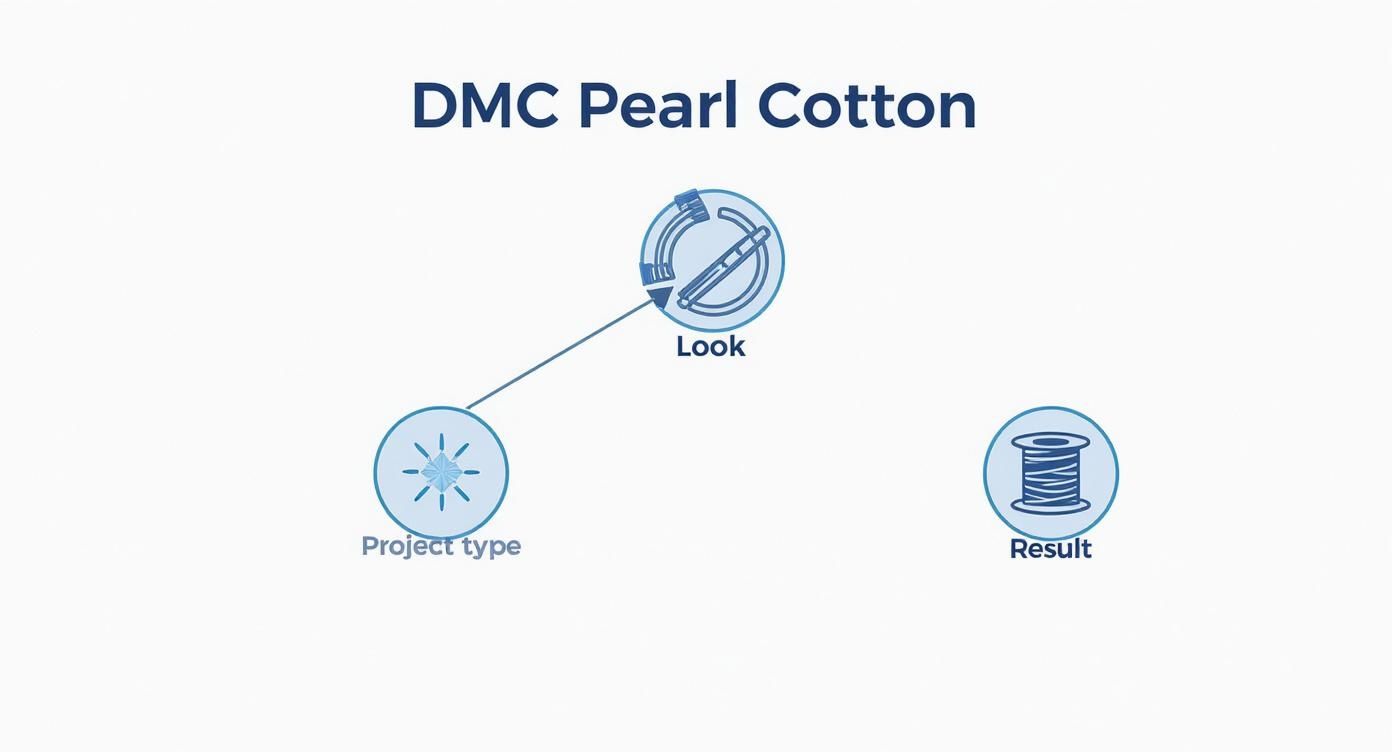
As you can see, if you start with your end goal in mind—whether that's bold texture or fine detail—picking the right thread becomes much easier.
A Breakdown of Popular Sizes
While Pearl Cotton comes in a few different weights, there are four that you’ll see pop up again and again in projects from surface embroidery to needlepoint. Let’s get to know each one a little better.
DMC Pearl Cotton Size and Usage Guide
This quick-reference chart breaks down the most common sizes to help you pick the perfect one for your next project.
| Size | Thickness | Best For | Recommended Aida/Evenweave Count |
|---|---|---|---|
| Size 3 | Thickest | Bold surface embroidery, needlepoint, tassels, and chunky details. | 6 to 8-count |
| Size 5 | Medium-Thick | General embroidery, Hardanger, cross-stitch with bold coverage. | 11-count |
| Size 8 | Medium-Fine | Detailed embroidery, hand quilting, tatting, cross-stitch patterns. | 14 to 16-count |
| Size 12 | Finest | Intricate, delicate embroidery, smocking, miniature work. | 18-count and higher |
As you can see, matching the thread weight to your fabric count is key for getting that beautiful, professional finish.
Heavier Threads for Bold Statements
DMC Pearl Cotton Size 3: This is the heavyweight champion of the Pearl Cotton family. As the thickest size, it creates bold, highly textured stitches that really pop off the fabric. It’s what you reach for when you want the thread itself to be the star of the show.
- Best For: Big, impactful embroidery, needlepoint, making tassels, and adding chunky details on low-count fabrics like 6 or 8-count Aida.
- Appearance: You get a thick, rope-like line with a dramatic, high-lustre finish.
DMC Pearl Cotton Size 5: A wonderfully versatile, medium-weight thread, Size 5 is a go-to for so many types of needlework. It gives you fantastic stitch definition without the bulk of a Size 3, making it a brilliant all-rounder.
- Best For: General surface embroidery, Hardanger, needlepoint, and even cross-stitch on 11-count Aida if you’re after a bold, modern look with full coverage.
- Appearance: It delivers a substantial, rounded stitch that covers fabric beautifully and has a gorgeous sheen.
Finer Threads for Detailed Work
When your project calls for more precision and less bulk, the higher-numbered sizes are your best friends. These threads are designed for more intricate stitching and play nicely with higher-count fabrics where space is limited.
A stitcher's golden rule: The thread should glide through your fabric without warping the weave. If you're really having to tug it through, you probably need a finer thread, a bigger needle, or a lower-count fabric.
DMC Pearl Cotton Size 8: This is arguably the most popular and widely used size, and for good reason. It’s fine enough for detailed work but still has enough body to provide good coverage and that classic pearly texture. Many stitchers feel it's the perfect sweet spot between definition and delicacy.
- Best For: Detailed embroidery, hand quilting, tatting, and adapting cross-stitch patterns on 14 or 16-count fabric. One strand of Size 8 is often a great substitute for two strands of standard embroidery floss.
- Appearance: It produces a fine, pearly stitch that looks elegant and incredibly well-defined.
DMC Pearl Cotton Size 12: The finest of the commonly used sizes, Size 12 is what the experts grab for truly delicate, intricate needlework. Its slender profile lets you create incredibly detailed patterns and is a must-have for miniature projects.
- Best For: Very fine embroidery, delicate Hardanger, intricate smocking, and detailed tatting. It’s the ideal choice for high-count fabrics (18-count and up).
- Appearance: The result is a delicate, almost lace-like stitch with a subtle, elegant lustre.
Of course, choosing the right needle is just as important as the thread. A needle with an eye that’s too small will shred and fray your beautiful thread, while one that’s too big can leave noticeable holes in your fabric. Our comprehensive guide to cross-stitch needle sizes can help you find the perfect partner for any thread and fabric combo.
Pearl Cotton vs. Stranded Floss Explained
Every stitcher eventually faces a choice: DMC Pearl Cotton or standard six-strand floss? From a distance, they might look like close cousins, but get them on your needle, and you’ll find they’re two completely different beasts. Choosing the right one really comes down to understanding what they are and the unique look each creates on the fabric.
Think of standard embroidery floss as a bundle of tiny, individual threads. It’s made of six separate strands that are just loosely twisted together. This is its superpower—versatility. You can peel off a single strand for the most delicate detail work or use all six for a bold, chunky effect.
Pearl Cotton, on the other hand, is a single, unified thread. It’s been twisted tightly and then mercerized, giving it a sturdy, rope-like feel that can’t be separated. It’s designed to do one thing exceptionally well: create a perfectly round, defined stitch, every single time.
Understanding the Visual Differences
The first thing you'll notice is the finish. Stranded floss has a much softer, almost matte look. Because you can separate the strands, they tend to lie flat against the fabric, which is perfect for smooth blending and shading. This is why it’s the go-to for photorealistic cross-stitch, where you need colors to melt into one another.
DMC Pearl Cotton is all about that beautiful, pearlescent sheen. Its tight twist and mercerized finish make it catch the light, and its rounded structure makes it sit up proudly on the fabric. The result is a stitch with real dimension and texture. This makes it a terrible choice for subtle blending but an amazing one for stitches you want to pop.
The core distinction lies in texture and divisibility. Pearl Cotton offers a bold, uniform, and lustrous stitch, while stranded floss provides a softer, matte finish with adjustable thickness for nuanced detail.
When to Choose Each Thread
Figuring out which thread to grab gets a lot easier when you know what you’re trying to achieve. Are you going for texture and definition, or do you need softness and blendability?
Choose DMC Pearl Cotton for:
- Dimensional Stitches: Its firm body is a dream for making plump French knots, crisp Colonial knots, and beautifully raised bullion stitches that won't squish flat.
- Bold Outlines: The consistent, rope-like quality is fantastic for creating strong, clean outlines in surface embroidery that really stand out.
- Textured Fills: Used for satin stitch, the rounded threads nestle up against each other to create a fill with an incredible luster and a beautiful, corded texture.
- Hardanger and Needlepoint: Its durability and smooth glide are essential for the precise grid work in Hardanger and the full, even coverage needed in needlepoint.
Choose Stranded Floss for:
- Photorealistic Cross-Stitch: Using just one or two strands is the only way to get the fine detail and subtle color shifts needed for those complex, gradient-heavy designs.
- Delicate Shadow Work: A single strand of floss is perfect for creating the sheer, ethereal effect that shadow embroidery on fine fabrics is known for.
- Blackwork: The flat nature of the thread lends itself beautifully to the intricate, geometric patterns of traditional Blackwork.
- Complete Customization: When a pattern calls for a very specific number of threads to get a certain look, stranded floss is your only option.
In the end, neither thread is "better"—they’re just different tools for different jobs. Stranded floss gives you incredible flexibility for blending and detail, while DMC Pearl Cotton brings unparalleled texture, sheen, and definition to the table. Having both in your stash means you’re ready for whatever your next project throws at you.
Mastering Key Stitches with Pearl Cotton
Alright, let's move from theory to practice. It's time to talk about the stitches that really come alive when you use DMC Pearl Cotton. Some techniques don't just work with this thread; they positively sing, turning simple stitches into the standout feature of your piece. The thread's firm, non-divisible nature is its secret weapon for creating incredible texture and definition.
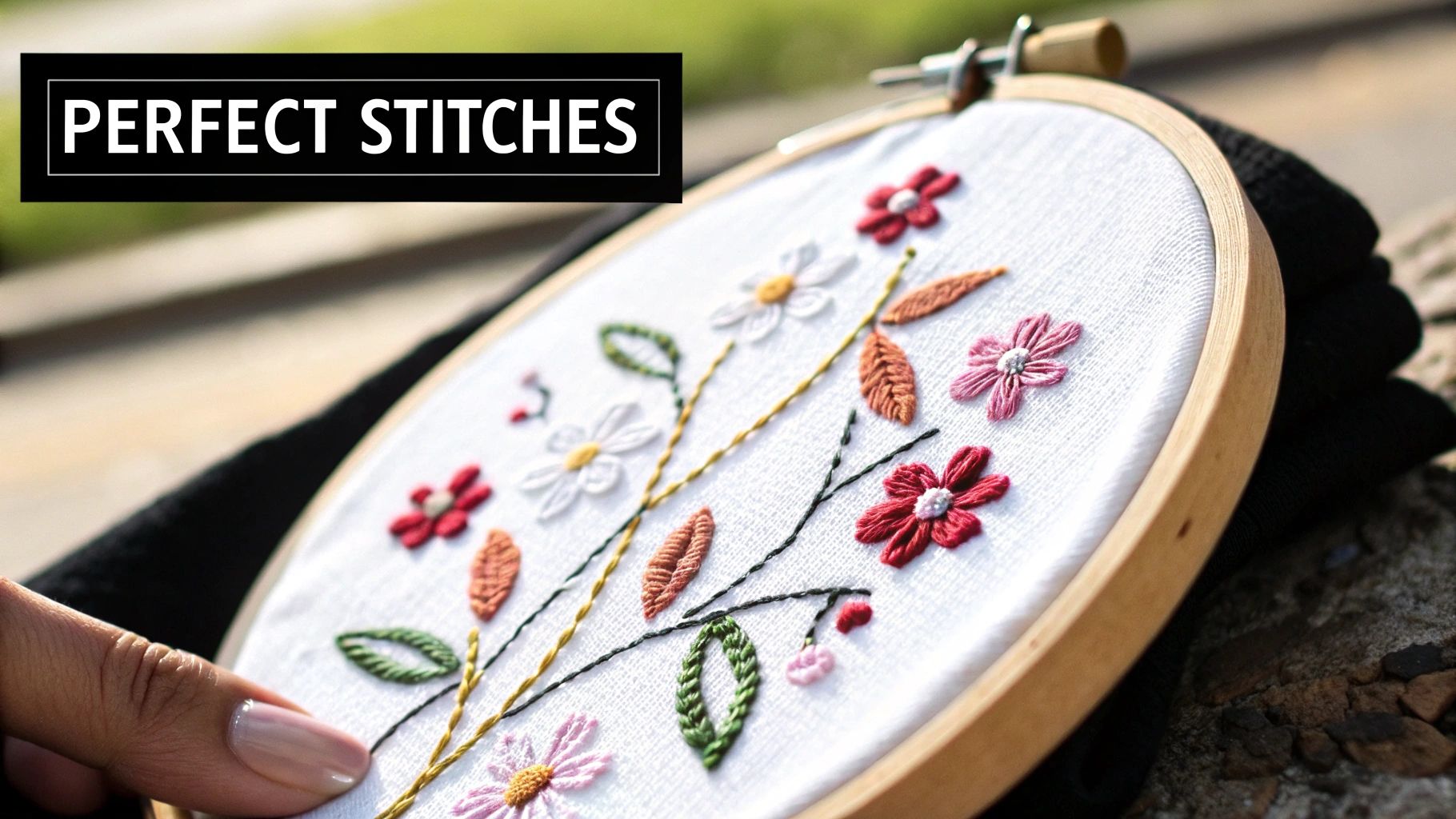 embroidery hoop showcasing vibrant floral stitches, with 'PERFECT STITCHES' text overlay.">
This structural integrity all comes down to how it's made. DMC uses long-staple cotton that goes through a process called mercerization. This chemical treatment strengthens the fibres, helps them soak up more dye for deeper colour, and creates that signature pearly sheen. It’s what gives the thread its distinctively smooth, almost slick feel and makes every single stitch pop with clarity.
Stitches That Shine with Pearl Cotton
The tight twist of Pearl Cotton is what makes it a superstar for any stitch that needs a bit of dimension. Unlike stranded floss, which can sometimes flatten out as you work, Pearl Cotton holds its rounded shape, giving your projects a beautiful, almost three-dimensional quality.
- French Knots: Ever struggled with French knots that look a bit sad and limp? Pearl Cotton is your answer. Its single, twisted strand means each wrap around the needle forms a perfectly round, plump little knot that sits proudly on the fabric. No more flat, uneven dots!
- Colonial Knots: As a close cousin to the French knot, the Colonial knot is even more robust. Using Pearl Cotton for this stitch gives you a tight, high-profile knot that adds fantastic texture to things like flower centres or scattered dot patterns.
- Satin Stitch: While stranded floss gives you that classic smooth, matte finish, Pearl Cotton transforms the satin stitch into something with a luxurious, corded look. The individual threads lie next to each other like tiny, gleaming ropes, catching the light and making any filled area absolutely glow.
These are just a handful of examples, of course. For more ideas, you can always explore a comprehensive cross-stitch stitches chart and think about how you could adapt other stitches to create more texture.
Techniques for Lines and Outlines
When it comes to creating crisp, flowing lines, the consistency of Pearl Cotton is hard to beat. It produces a steady, uniform line that’s perfect for outlining shapes or stitching decorative borders.
The real trick to stitching with Pearl Cotton is to let the thread do the work. Its natural twist and body create beautiful texture on their own, so just focus on even tension and consistent stitch length to let those qualities shine.
Chain Stitch: This stitch creates a lovely linked line that looks just like a delicate chain. With Pearl Cotton, each loop is perfectly defined and rounded. It’s ideal for bold outlines or even textured fill patterns that have a braided appearance.
Stem Stitch: A true classic for stitching stems and vines, the stem stitch takes on a new life with Pearl Cotton. It results in a smooth, rope-like line with a subtle twist, and the thread’s body gives the stitch a raised profile that adds wonderful dimension.
Pro Tips for a Flawless Finish
Working with this thread is a real joy, but a few simple tips can help make sure your results are always polished and professional. It really just comes down to managing the thread's natural twist and securing your ends properly.
-
Manage Your Tension Carefully: Pearl Cotton has a bit of a "memory" and can sometimes kink up as you stitch. To stop this from happening, just let your needle and thread dangle freely every few stitches. This allows the thread to untwist itself naturally, which prevents knots and helps you make smooth, even stitches.
-
Cut Shorter Lengths: I know it’s tempting to cut a super long piece of thread to avoid re-threading your needle, but this is a recipe for tangles and fraying. Working with a shorter length, around 18 inches (45 cm), is the sweet spot.
-
Secure Your Ends Neatly: Because Pearl Cotton is thicker, bulky knots on the back of your work can create annoying lumps on the front. Instead of tying knots, just secure your thread by weaving the tail under several stitches on the back. This gives you a flat, invisible finish and keeps both sides of your embroidery looking tidy.
Creative Project Ideas for Pearl Cotton
So, you're ready to take your stitching beyond the embroidery hoop? Good! DMC Pearl Cotton is one of the most versatile threads out there, perfect for adding a touch of handmade luxury and vibrant texture to all sorts of everyday items. Its beautiful sheen and unique twisted structure make it stand out, turning your stitching into a real design feature.
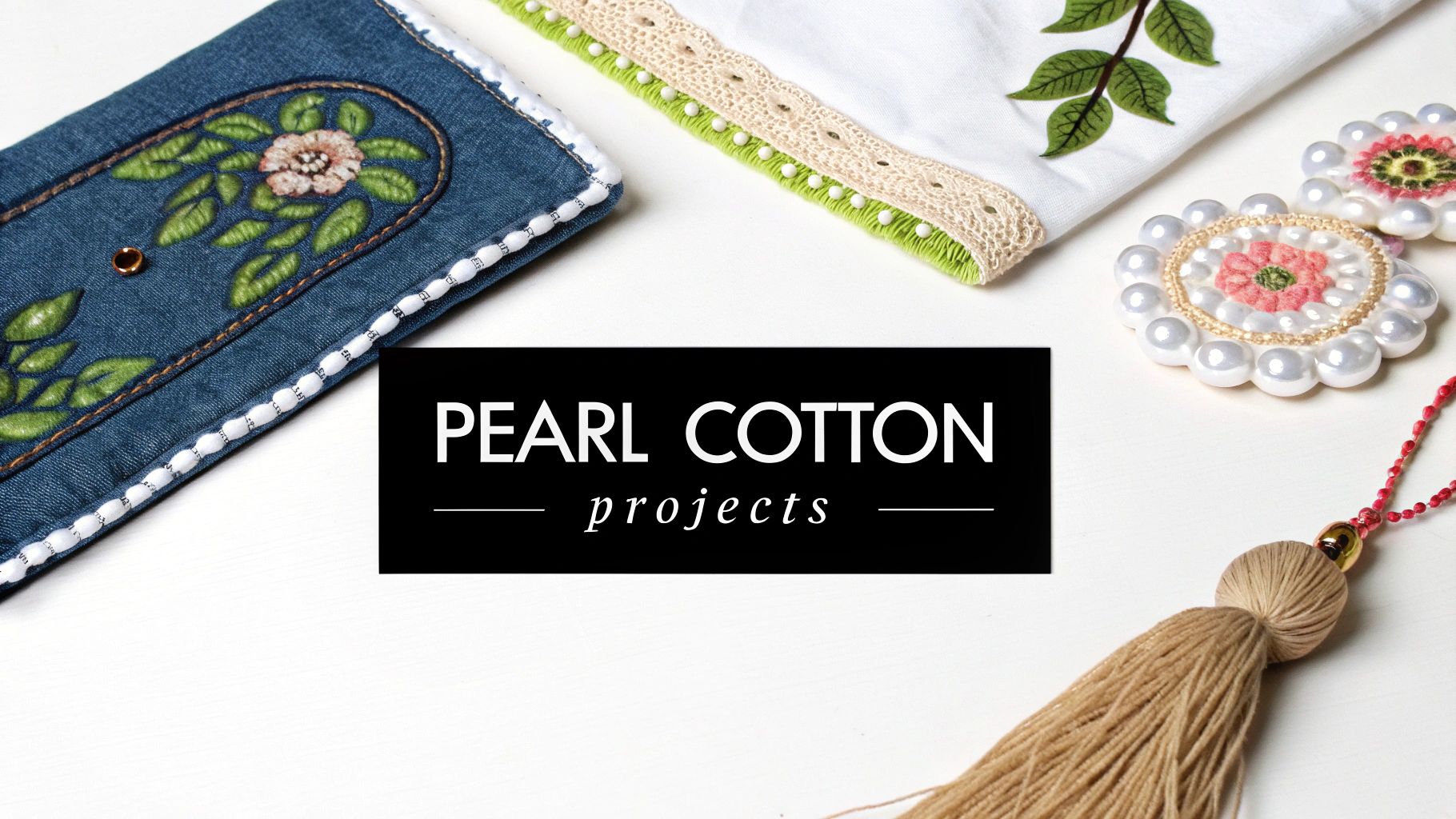
The best way to think about it is as an embellishment in its own right. That bold, rope-like quality can transform something plain into a piece that’s truly special and personal to you.
Elevating Everyday Textiles
One of the easiest ways to get started is by upgrading simple home goods and accessories. The great thing about DMC Pearl Cotton is its sturdiness. It holds up really well to wear and washing, which makes it ideal for things that will actually get used.
Here are a few simple but high-impact ideas:
- Decorative Tea Towels: Grab a medium-weight thread like a Size 5 and stitch some bold geometric borders or simple floral motifs along the edge of plain cotton or linen tea towels. It's a quick project with a beautiful result.
- Customized Denim: This is always a fun one. Add a splash of personality to a denim jacket or your favourite pair of jeans. A chunky Size 3 Pearl Cotton is perfect for creating thick, colourful outlines around pockets or stitching a bold monogram on the back.
- Vibrant Needlepoint Cushions: Pearl Cotton is a classic choice for needlepoint for a reason—the coverage is excellent and it's incredibly durable. You can create a vibrant, textured cushion cover that’s both beautiful and built to last.
Pearl Cotton's strength and lustrous finish are what make it so perfect for functional art. It allows you to create beautiful, touchable textures on items you can use every day, from a favorite tote bag to a set of cloth napkins.
Thinking Outside the Fabric Box
But the creative possibilities don't just stop with fabric. Because of its firm body and the fact it doesn't fray easily, Pearl Cotton is a fantastic material for all kinds of craft projects. It lets you explore texture and colour in some really new and exciting ways.
Why not branch out with projects like these?
- Handmade Tassels and Jewellery: The thicker sizes, especially Size 3 and Size 5, are brilliant for creating lush, full-bodied tassels. Use them for keychains, bag charms, or even a unique pair of earrings.
- Greeting Cards and Paper Crafts: Try stitching directly onto heavy cardstock with a fine Size 8 or Size 12. It adds a beautiful, tactile element to handmade cards and scrapbook pages that you just can't get with ink.
- Visible Mending: Turn a repair into a statement! Use a contrasting colour of Pearl Cotton to mend a hole in a sweater or a tear in your jeans with a decorative sashiko-style pattern.
A Modern Twist on Cross-Stitch
While stranded floss is the go-to for traditional cross-stitch, swapping in Pearl Cotton can completely change the look and feel of a pattern. It's a fantastic way to give your favourite designs a modern, highly textured finish.
The trick is to match the right thread size with a lower-count fabric. For instance, if you use a single strand of DMC Pearl Cotton Size 5 on 11-count Aida, you’ll get these incredibly plump, shiny stitches with amazing coverage. This technique gives the finished piece a chunky, almost pixelated appearance that makes any design pop. It’s a simple way to turn a classic pattern into a bold, contemporary work of art.
Caring for Your Stitched Masterpieces
You’ve poured hours into your project, so the last thing you want is for those vibrant colours to wash away. The good news is that caring for pieces made with DMC Pearl Cotton is surprisingly simple. That same mercerisation process that gives the thread its signature lustre also makes it incredibly colourfast, meaning your stitches will stay brilliant for a lifetime with just a little TLC.
The most important rule? Always protect the texture of your stitches. That’s why we always recommend hand-washing your embroidered items separately, even if the base fabric says it's machine-safe. A gentle hand wash keeps the beautiful, plump profile of your stitches from getting crushed or snagged in a machine.
The Gentle Washing Process
To get started, fill a basin with lukewarm water. Hot water is a no-go, as it can cause certain fabrics to shrink or bleed colour. Mix in just a touch of mild, pH-neutral soap – think something you'd use for delicates. Definitely steer clear of harsh detergents or bleach, which can strip the colour and weaken the cotton fibres over time.
Gently submerge your piece and give it a light swish. You can let it soak for about 10-15 minutes to lift any grime, but resist the urge to scrub or wring it out, as that can easily distort your careful stitching.
A quick pro tip: If you’re washing a piece for the first time or using a new soap, always test it on a small, hidden corner first. This little spot-test can save you a world of heartache by making sure the fabric dye and thread colours play nicely together.
After its bath, rinse the item thoroughly under cool, running water until the water runs clear and all the soap is gone. To get the excess water out, give it a gentle squeeze, but never, ever twist or wring the fabric.
Drying, Pressing, and Storing
How you dry and store your work is just as crucial as how you wash it. Start by laying your project flat on a clean, thick towel. Roll the towel up like a swiss roll with your embroidery inside, pressing gently to blot out most of the moisture.
Next, unroll it and lay it perfectly flat on a fresh, dry towel or a mesh rack to air dry. Make sure to keep it out of direct sunlight or away from intense heat. To get it perfectly crisp, iron it from the back. Just place the embroidery face-down on a fluffy towel and press gently with a warm iron. This little trick protects the raised profile of your stitches, keeping them from getting flattened.
As for your thread stash, keep your skeins and balls of DMC Pearl Cotton tucked away in a cool, dry spot, far from any sunny windows. Storing them in clear organisers or bags not only keeps them tangle-free but also ensures they’re pristine and ready for your next creative spark.
Got Questions About DMC Pearl Cotton? Let's Get Them Answered
Even after getting the full rundown, you might still have a few questions rattling around. It's totally normal, especially when you're trying a new thread for the first time. Let's tackle some of the most common ones I hear from fellow stitchers.
So, Can I Actually Use Pearl Cotton for Cross-Stitch?
You absolutely can, and it's a brilliant way to give your projects a completely different feel! Traditional cross-stitch almost always uses standard six-strand floss, but swapping in Pearl Cotton creates a bold, almost sculptural look with a fantastic texture.
The trick is matching it to the right fabric. It really shines on lower-count fabrics like 11 or 14-count Aida, where the thicker, non-divisible strand has plenty of room to form a lovely, plump stitch. For example, a single strand of Size 5 or Size 8 Pearl Cotton can often stand in for two strands of regular floss, giving you incredible coverage and that signature pearly sheen. It’s a simple change that can bring a modern twist to any classic pattern.
How Does DMC Package Pearl Cotton?
You'll spot DMC Pearl Cotton in a couple of different forms, and how it's packaged is usually a dead giveaway for its thickness. It’s a smart system that helps you keep your threads from turning into a tangled mess.
- Twisted Skeins: The chunkier threads, like Size 3 and Size 5, almost always come in these classic twisted skeins or hanks.
- Small Balls: The finer sizes, like Size 8 and Size 12, are typically wound into these tidy little balls.
I personally love the balls for the finer threads. They're much less likely to knot up, and you can pull the thread from the center or the outside without having to unwind the whole thing first. It makes for a much smoother, tangle-free start to your project.
What's the Right Needle for Pearl Cotton?
Getting the needle right is one of the most important things for a frustration-free stitching session. You're looking for that "Goldilocks" needle—one with an eye big enough for the thread to glide through without a fight, but not so big it leaves a gaping hole in your fabric.
Here's my go-to rule: the thread should slide through the needle's eye easily. If you have to yank or force it, the eye is too small, and that friction will shred your beautiful Pearl Cotton over time.
To get you started, here are some pairings that have always worked well for me:
- For Size 3: A size 18 Chenille needle is your best bet.
- For Size 5: Go for a Chenille size 20 or a Tapestry size 22.
- For Size 8: A size 7 Embroidery needle or a size 24 Tapestry needle works beautifully.
- For Size 12: Stick with a size 9 Embroidery needle for this delicate thread.
Think of these as solid starting points. The perfect needle often comes down to personal preference, so feel free to experiment and see what combination feels best in your hand.
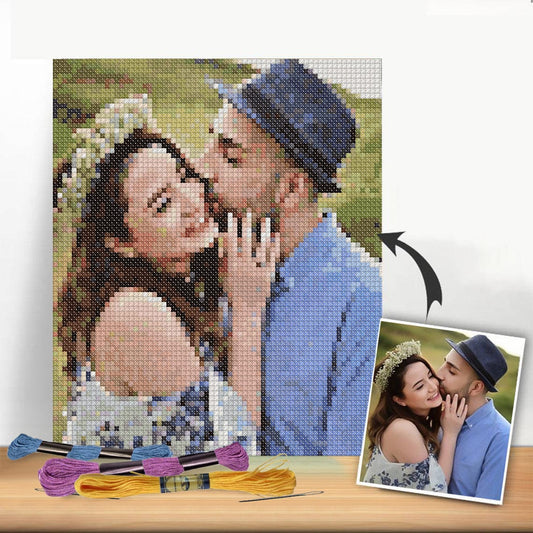
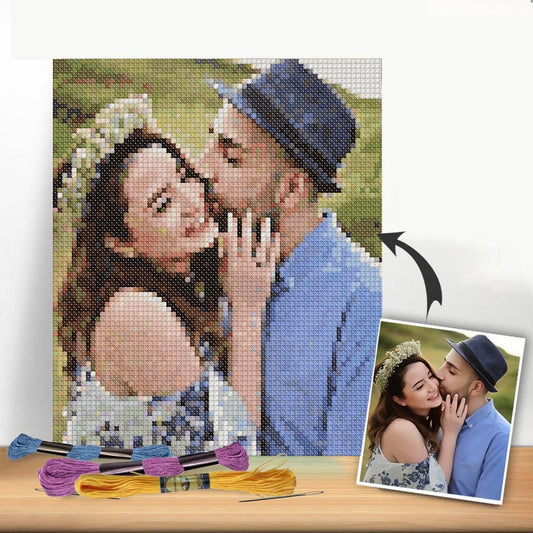
Ready to turn your favorite memories into a work of art with the beautiful texture of DMC threads? At Cross Stitched, we take your photos and create one-of-a-kind, custom cross-stitch kits with everything you need. Explore our personalized kits and start stitching a timeless keepsake today.